EV Charger Installation Guides
Honest, practical guides on home EV charger installation in Austin — from picking the right brand to avoiding a panel upgrade.
General EV Charger Guides
View hub →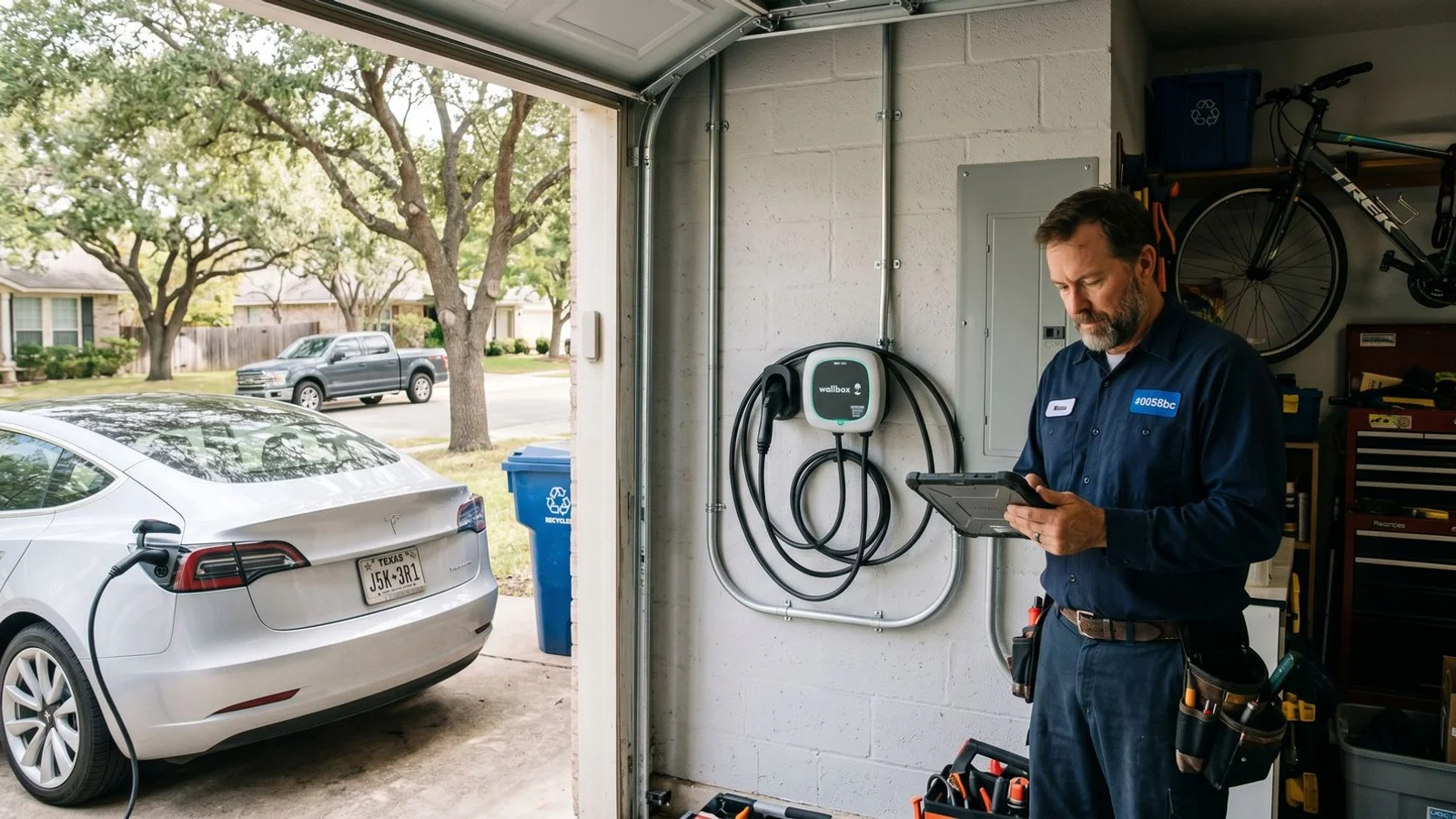
decision-stage
Austin Energy EV Charger Rebate: How to Qualify
Claim the Austin Energy home EV charger rebate: amount, OCPP-compliant charger requirement, eligible models, and application steps.
process
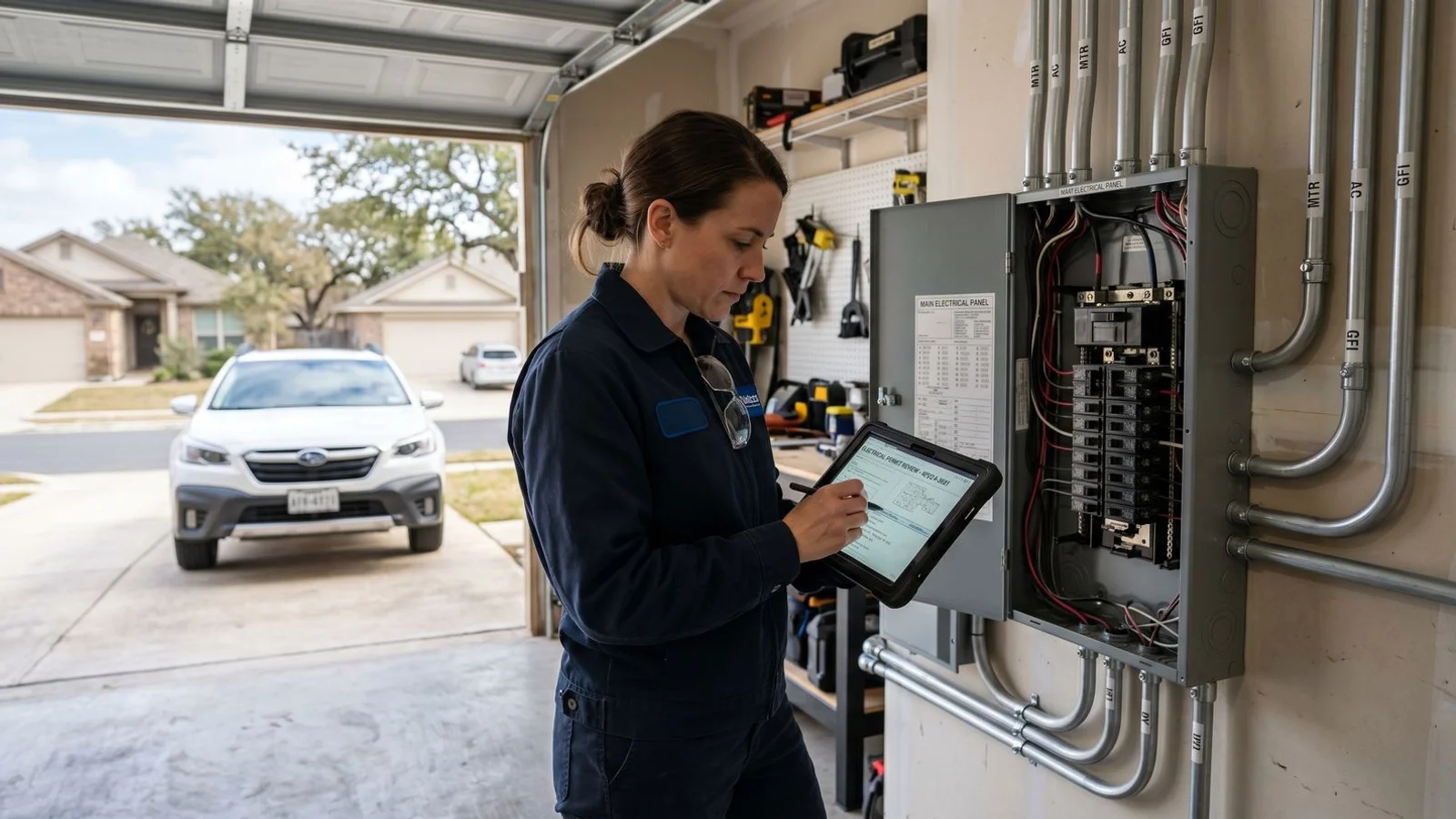
Do I Need a Permit to Install an EV Charger in Austin?
Yes, Austin requires a permit and inspection for hardwired Level 2 chargers. We handle the full City of Austin process for you.

decision-stage
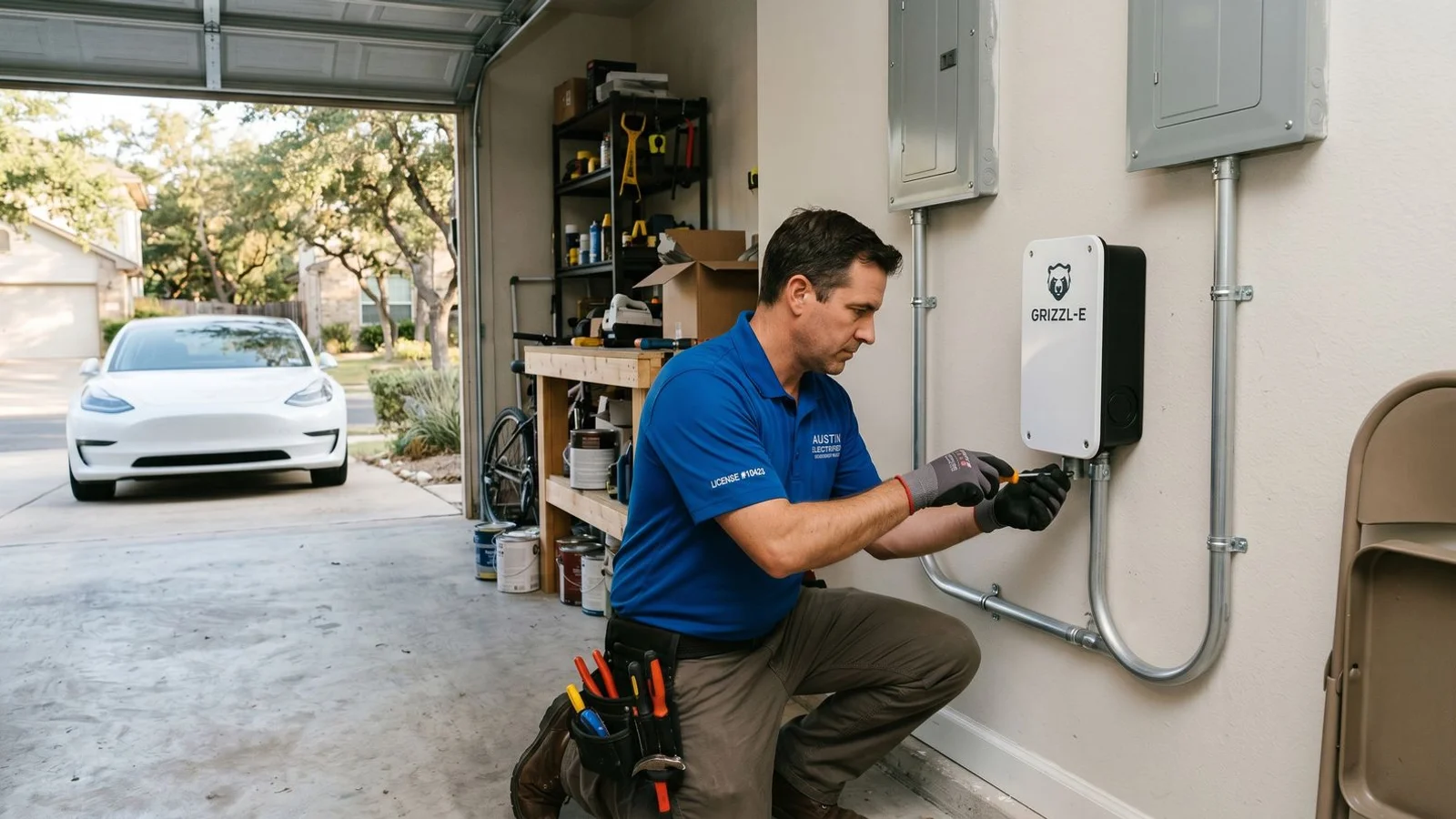
Do I Qualify for the 30C Federal EV Charger Tax Credit?
The 30C federal credit covers up to $1,000 of a home EV charger. Eligibility, census-tract rules, and the docs you need to file.
process
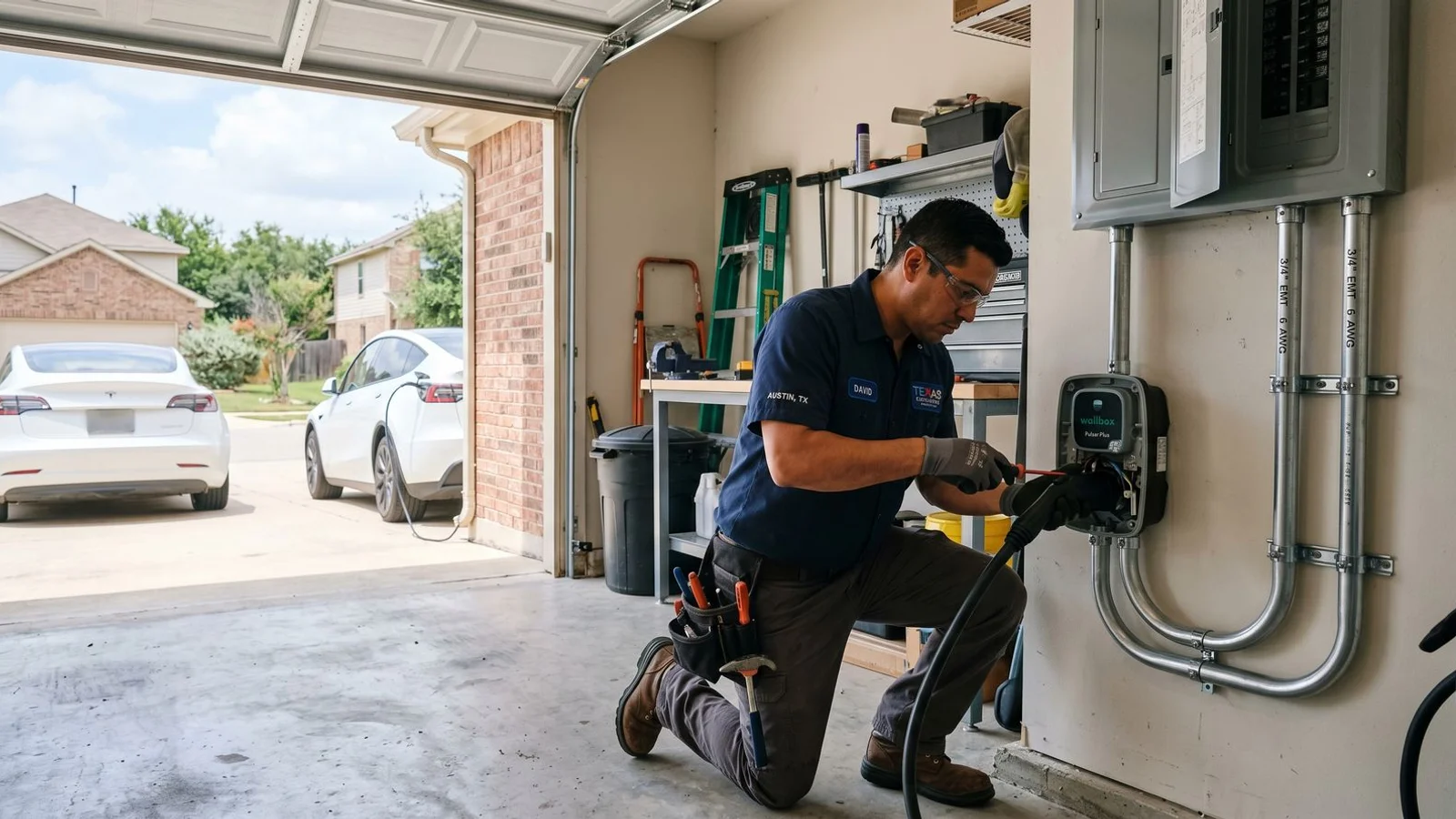
How Long Does a Home EV Charger Installation Take?
Most home EV installs take ~2 hours on the scheduled day, with same-week availability. The timeline from quote to inspection.
cost
How Much Does EV Charger Installation Cost in Texas? (2026)
Real Texas EV charger prices: labor from $895, typical projects $1,200-$1,850. Cost drivers and how load management saves money.
comparison
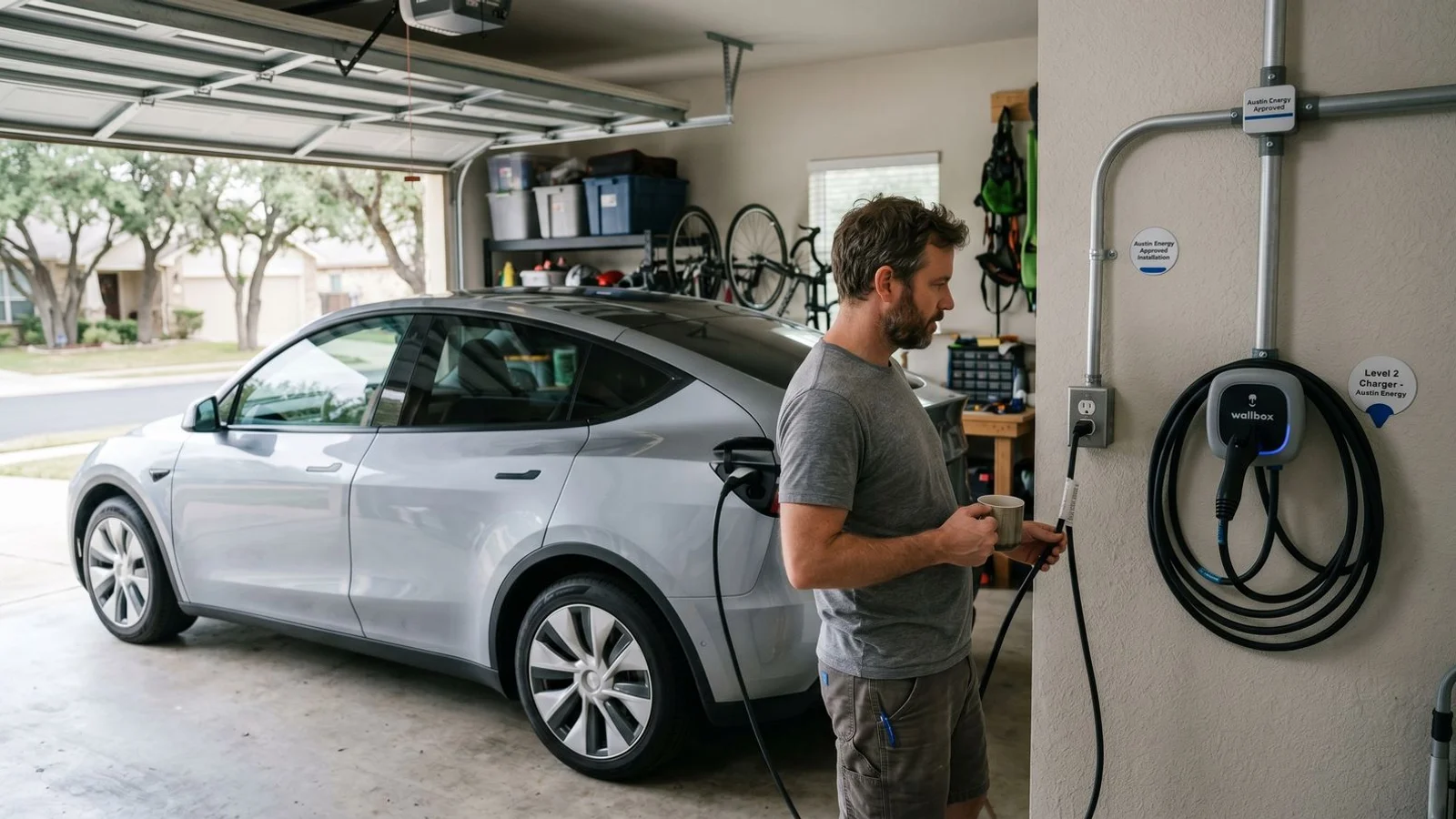
Level 1 vs Level 2 Home Charging: Why Your Charging Is Slow
Level 1 adds ~4 mi/hr; Level 2 adds 25-44. Why charging is slow, what Level 2 needs, and how to upgrade for overnight full charges.
scenario
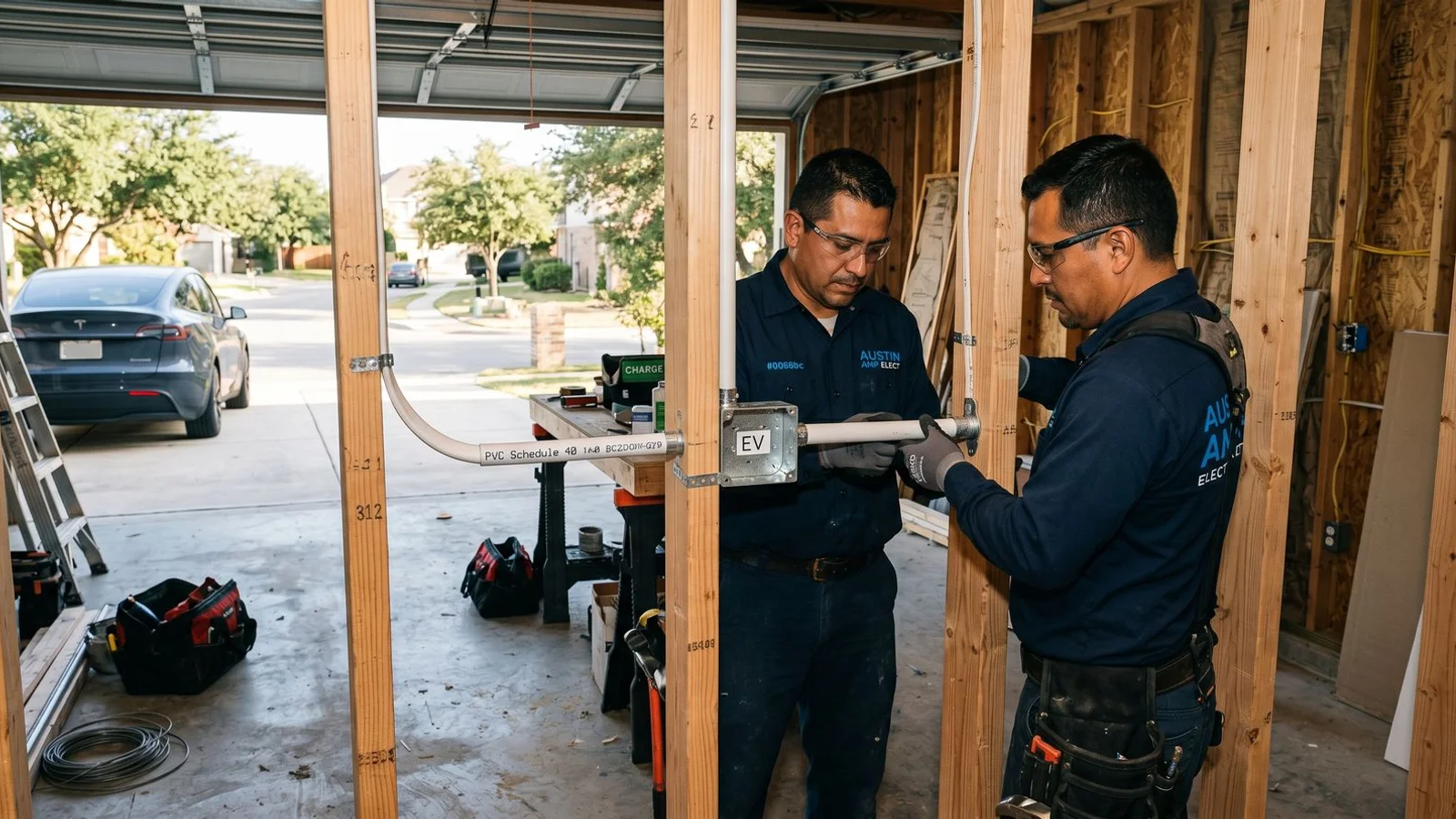
New Construction EV Charger Pre-Wiring (Future-Proofing)
Roughing in EV conduit before drywall saves money later. Correct wire gauge, panel space to reserve, and multi-vehicle readiness.
scenario
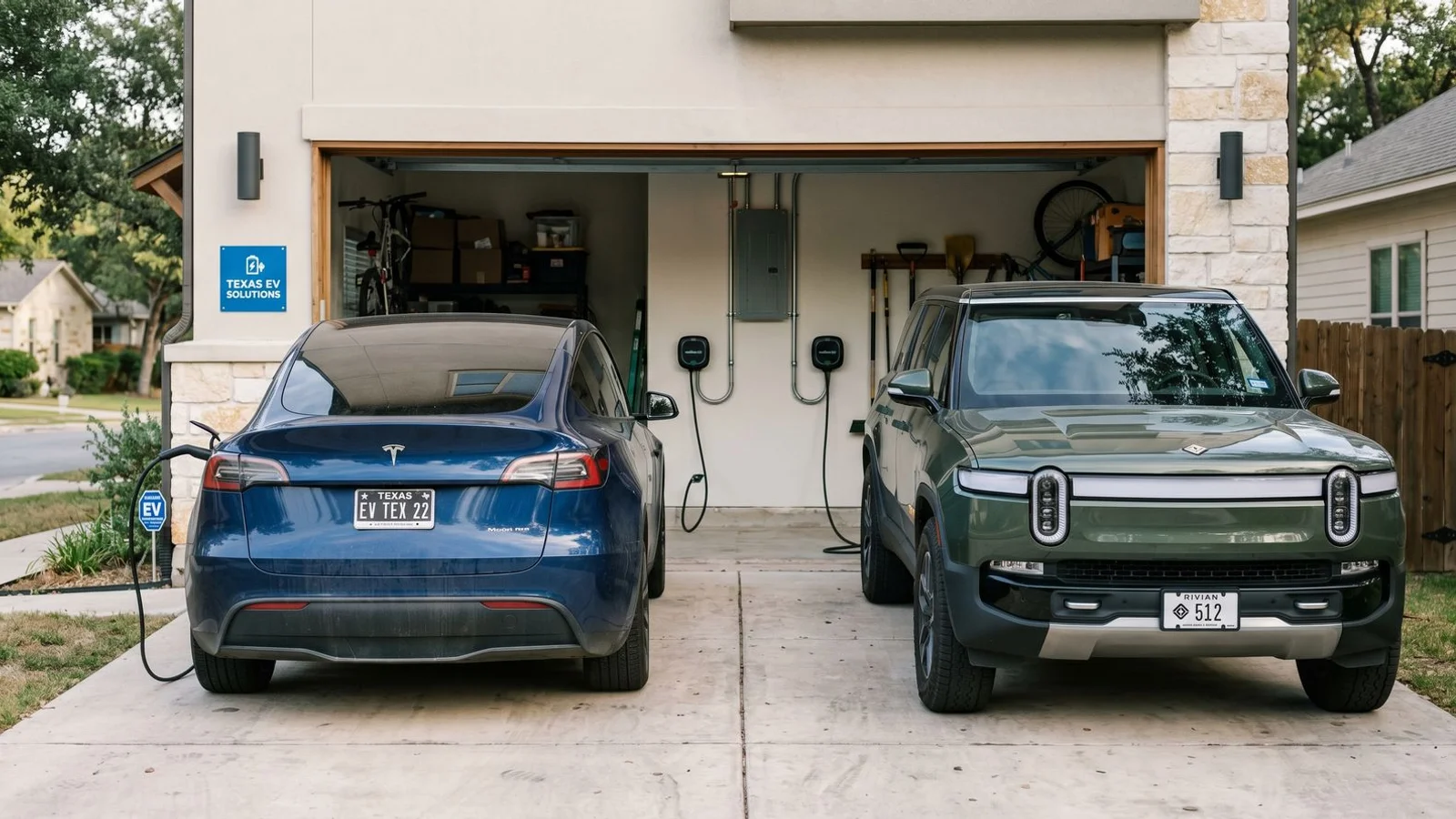
Planning a Home Charger for a Two-EV Household
Going from one EV to two? Load sharing, reserving panel space, the right wire gauge, and when load management is required.
Group Power Management (Smart Load Management)
View hub →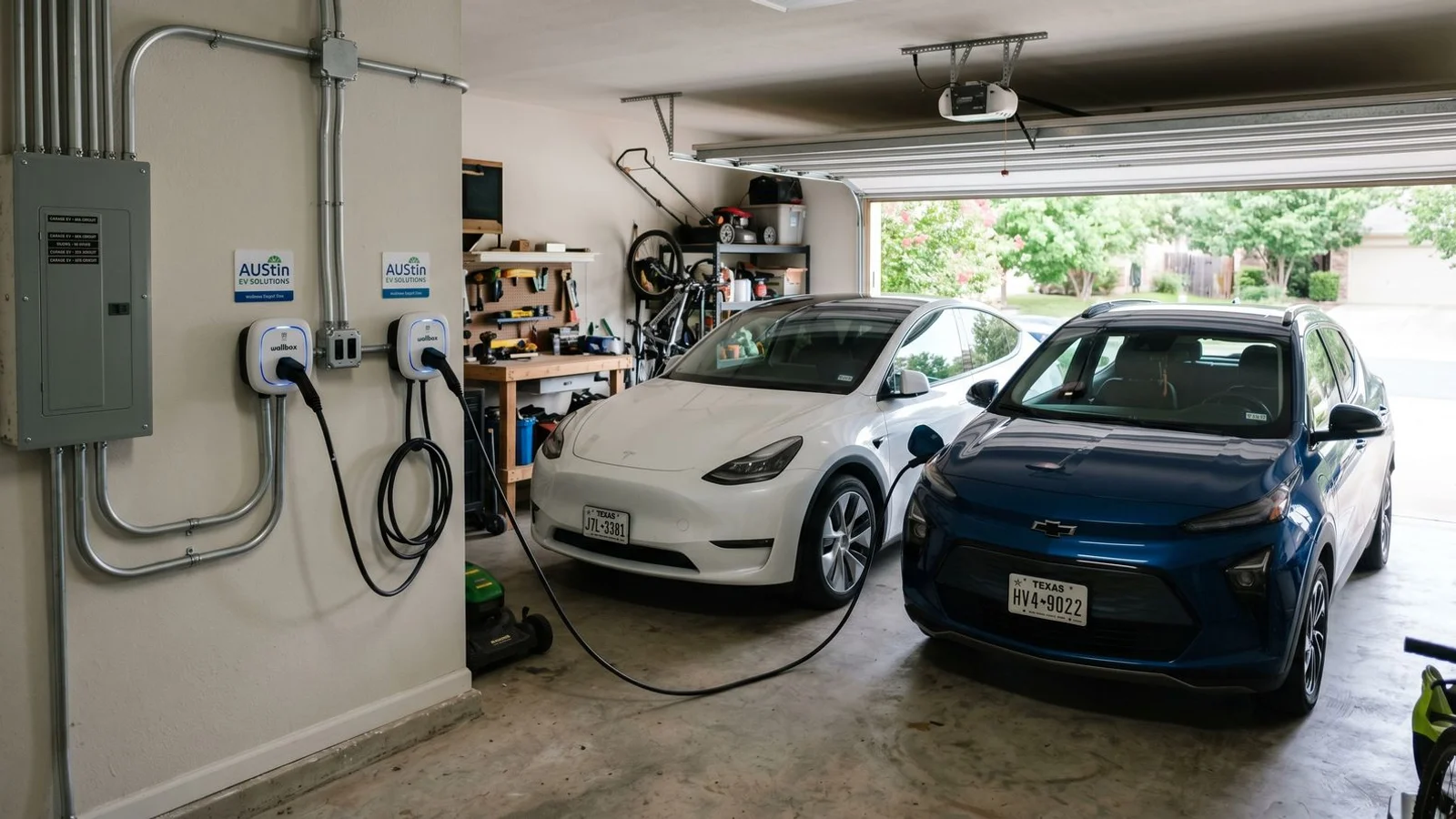
scenario
Charging Two EVs on One Circuit: Load Sharing Explained
How two chargers share one circuit, charge speeds when sharing, supporting hardware, and when a dedicated circuit is better.
process
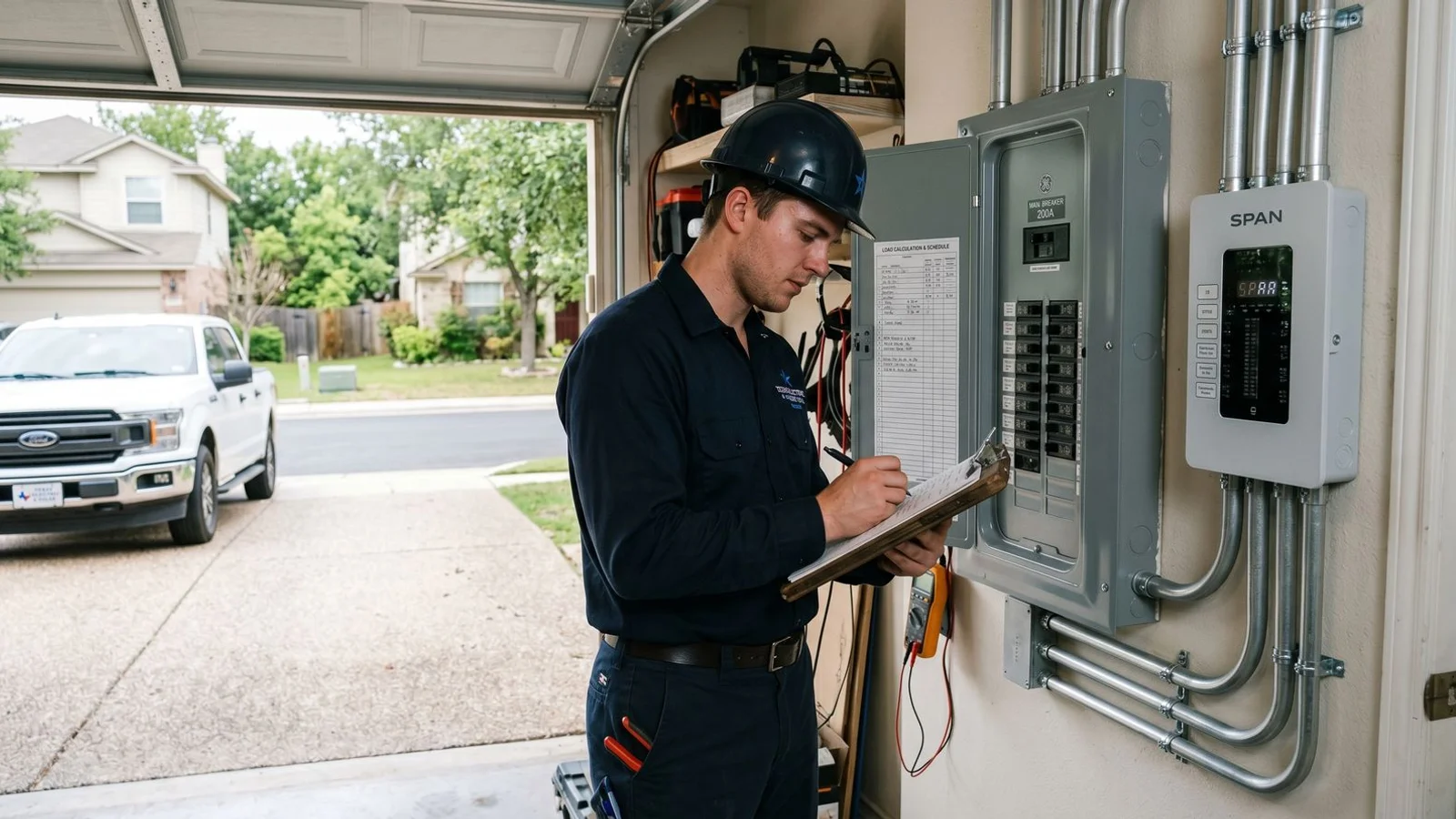
How Dynamic Load Sharing Keeps You NEC-Compliant
NEC Article 220.87 sizes a charger to real peak demand. How real-time monitoring throttles the charger to stay code-compliant.
comparison
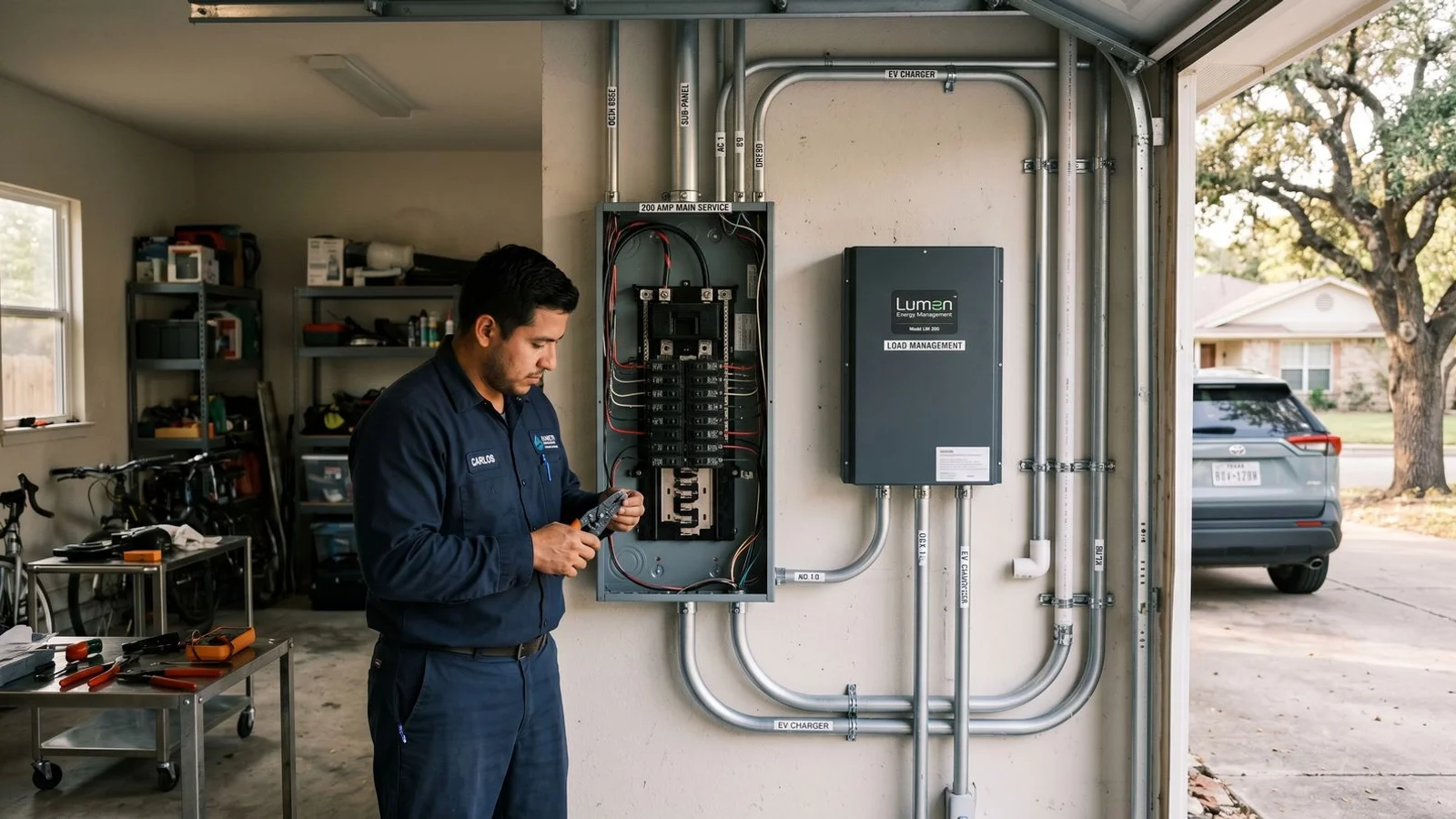
Load Management vs a 200-Amp Panel Upgrade
A panel upgrade runs $3,000-$8,000; load management often avoids it. Compare cost, timeline, and when each is the right call.
qualifier
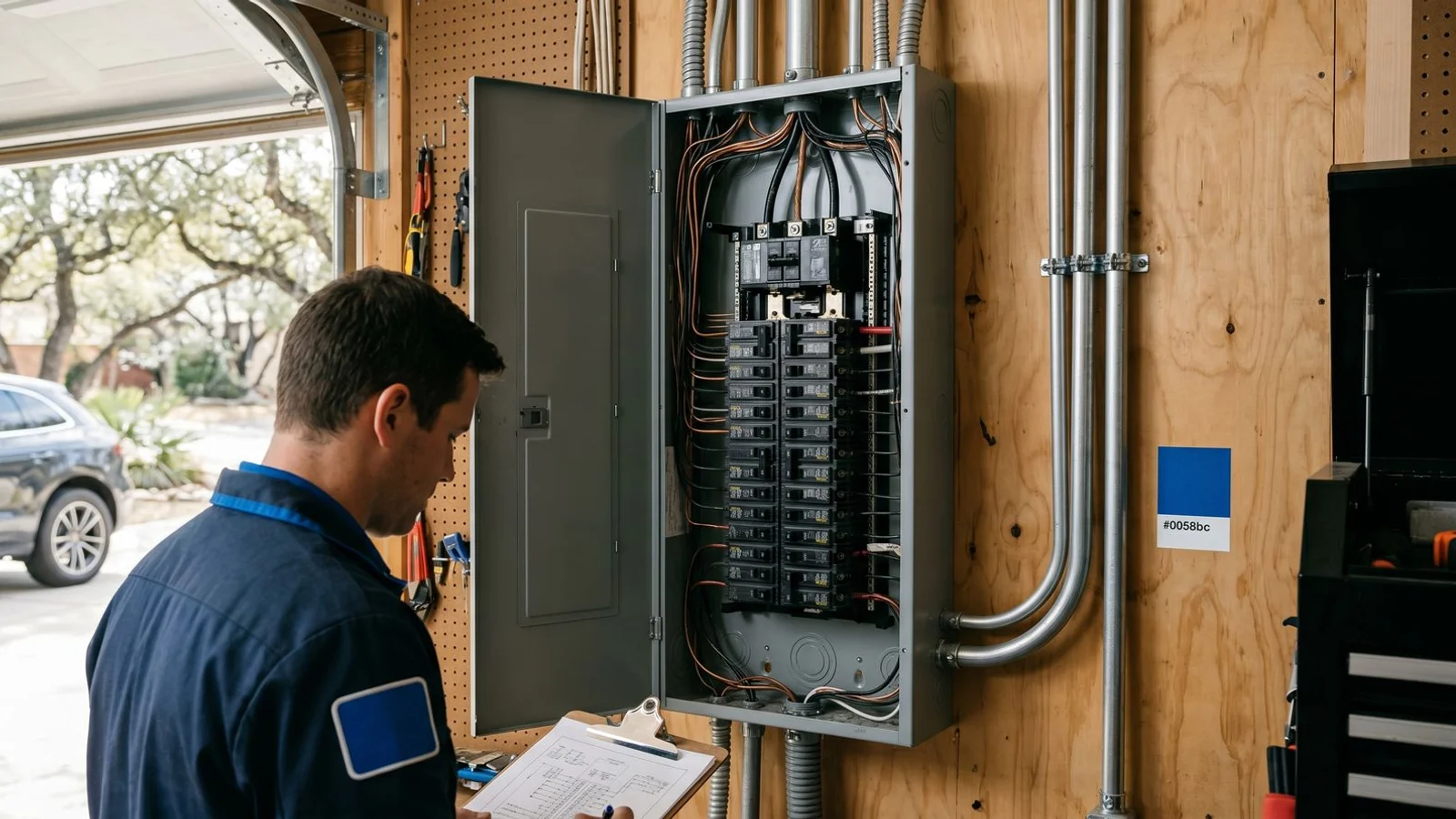
Signs Your Panel Is Too Full for an EV Charger
No breaker spaces, 100A/150A service, or tripping breakers? Self-diagnose a full panel and learn when load management solves it.
cost
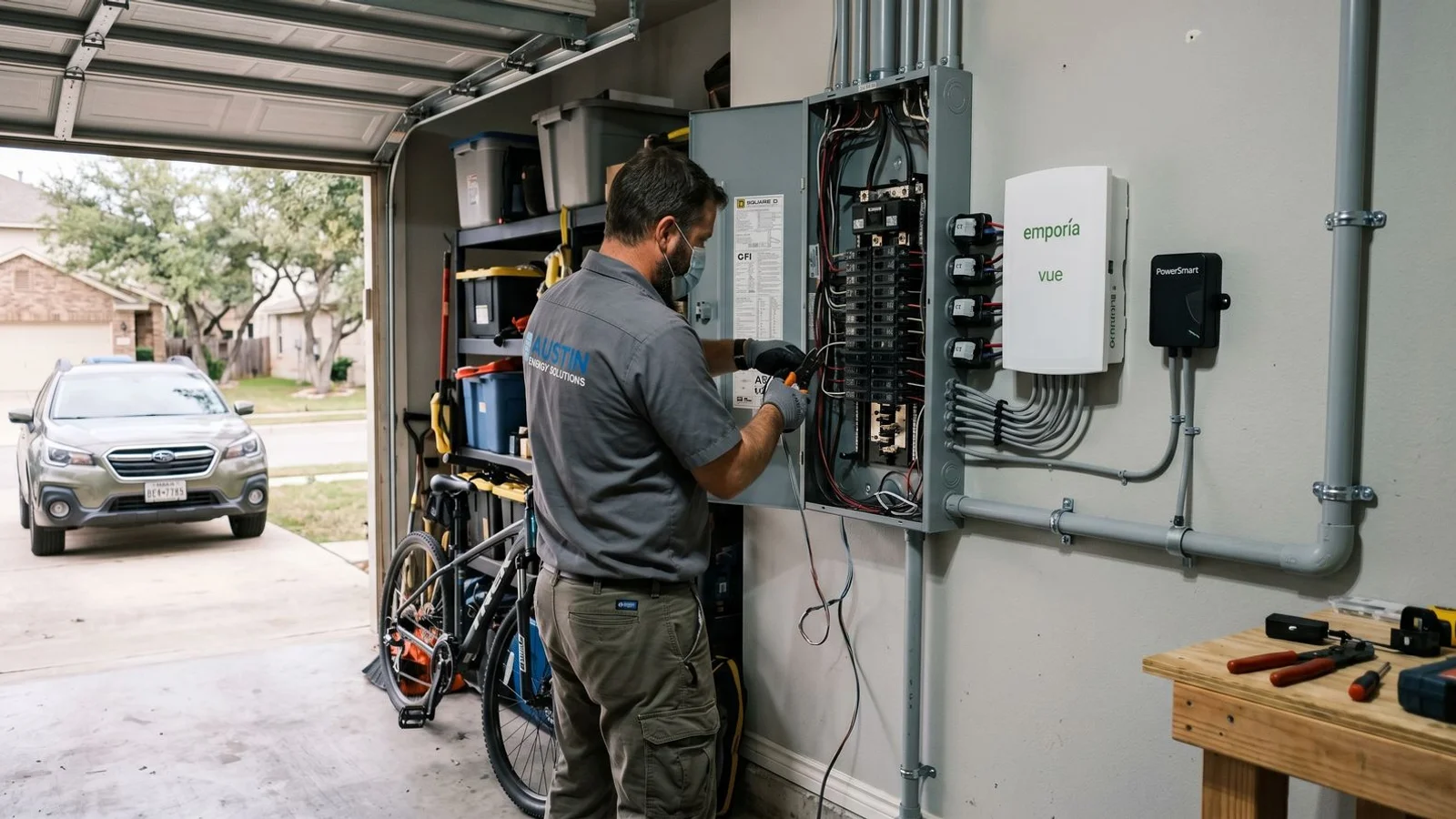
Smart Load Management Cost in Texas
Load management hardware + install cost in Texas vs the $3,000-$8,000 panel upgrade it avoids. What affects price.
definition
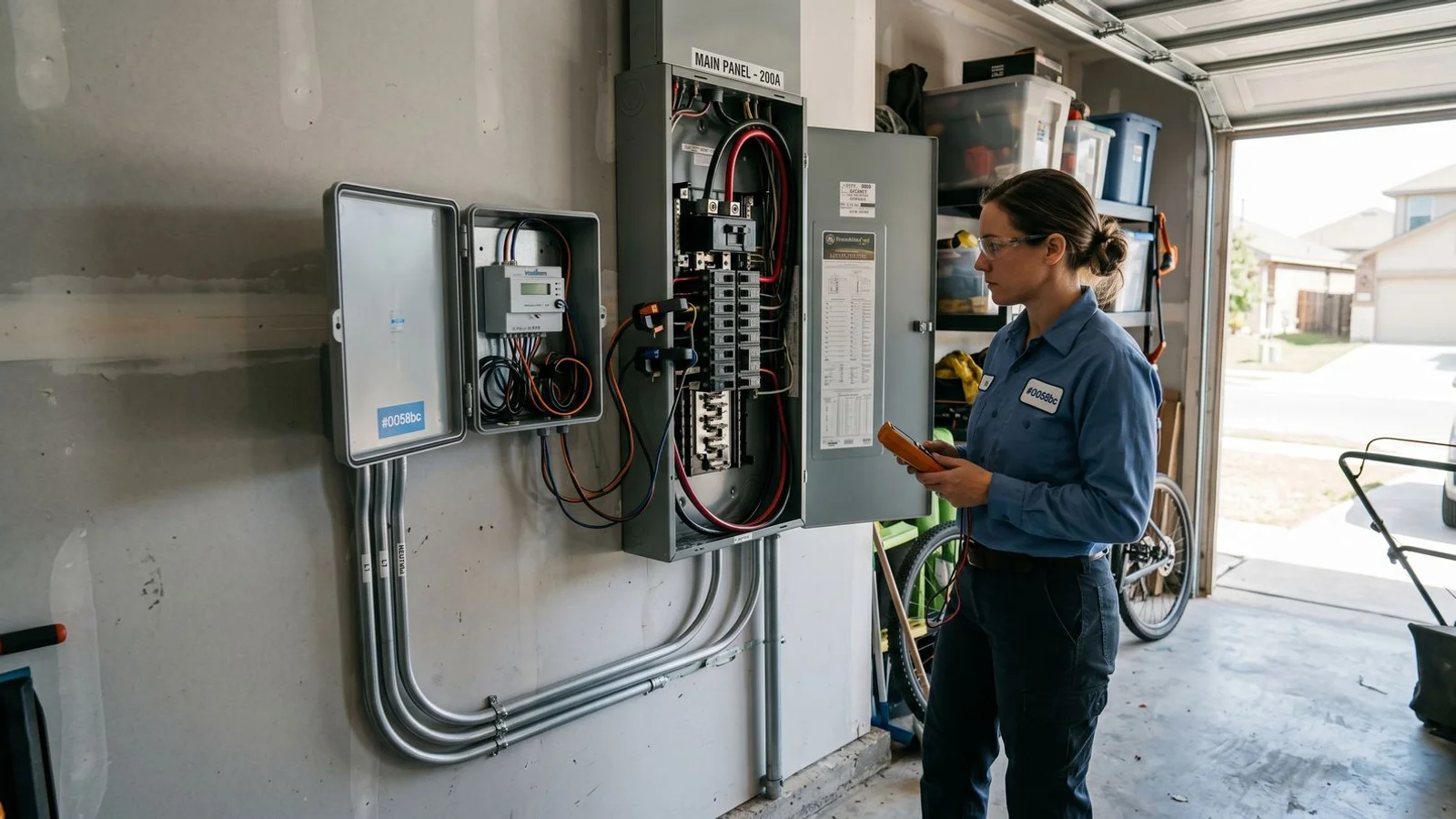
What Is EV Charger Smart Load Management?
Smart load management adds an EV charger to a full panel safely by throttling it in real time. How CT clamps and dynamic load shedding work.
Hardwired Level 2 EV Charger Installation
View hub →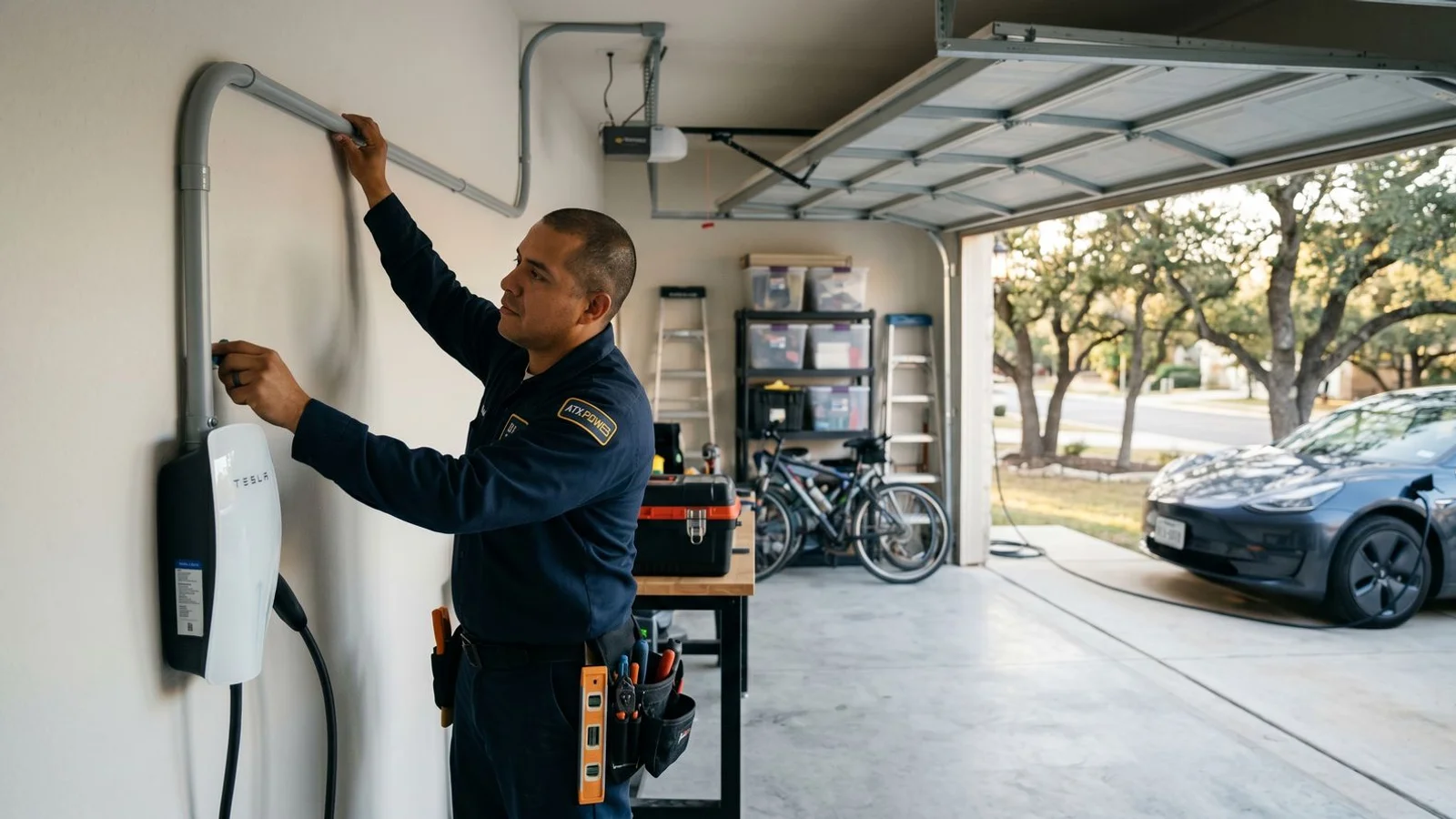
process
Clean Conduit Routing: Avoiding Ugly Surface-Mounted Runs
Sloppy surface runs are a common complaint. How we route conduit cleanly, avoid living-space runs, and leave the job spotless.
comparison
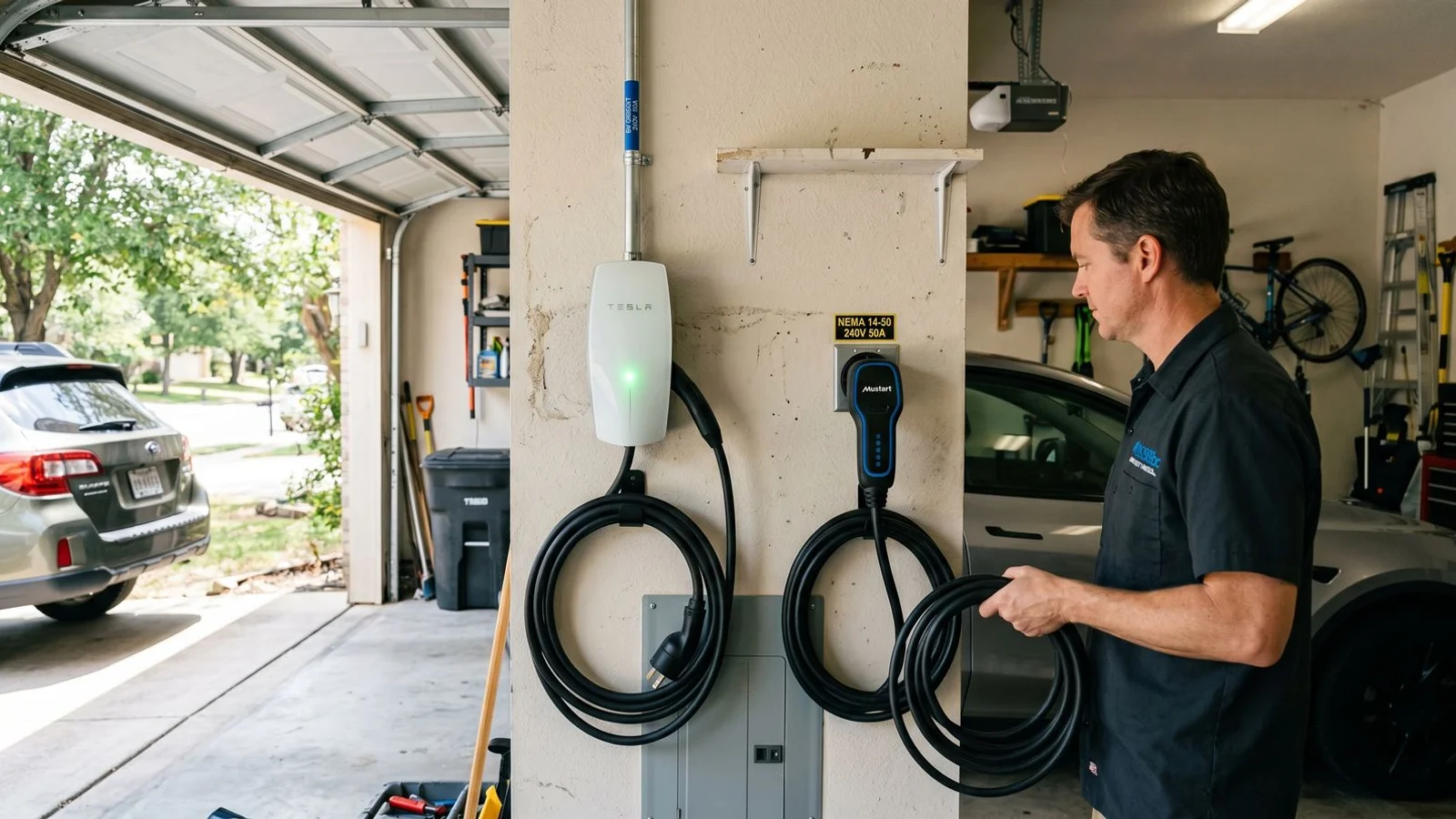
Hardwired vs Plug-In EV Charger: Which Is Right for You?
Compare speed (48A vs 40A), portability, cost, and GFCI rules to choose between a hardwired charger and a plug-in NEMA 14-50 setup.
definition
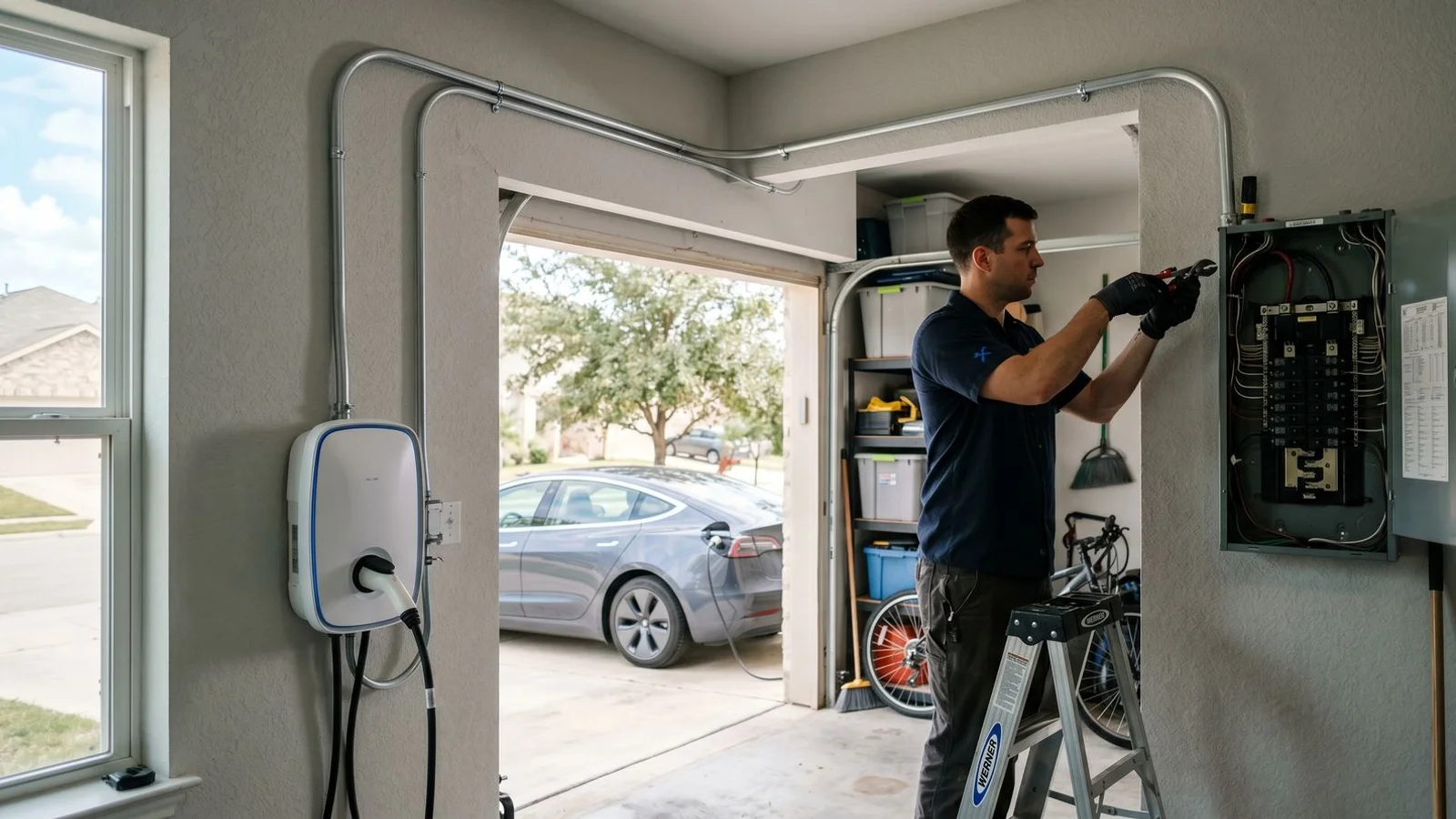
What Does a Hardwired EV Charger Installation Involve?
A hardwired charger connects direct-to-breaker on a dedicated 240V circuit. Components, breaker sizing, and why it's most reliable.
decision-stage
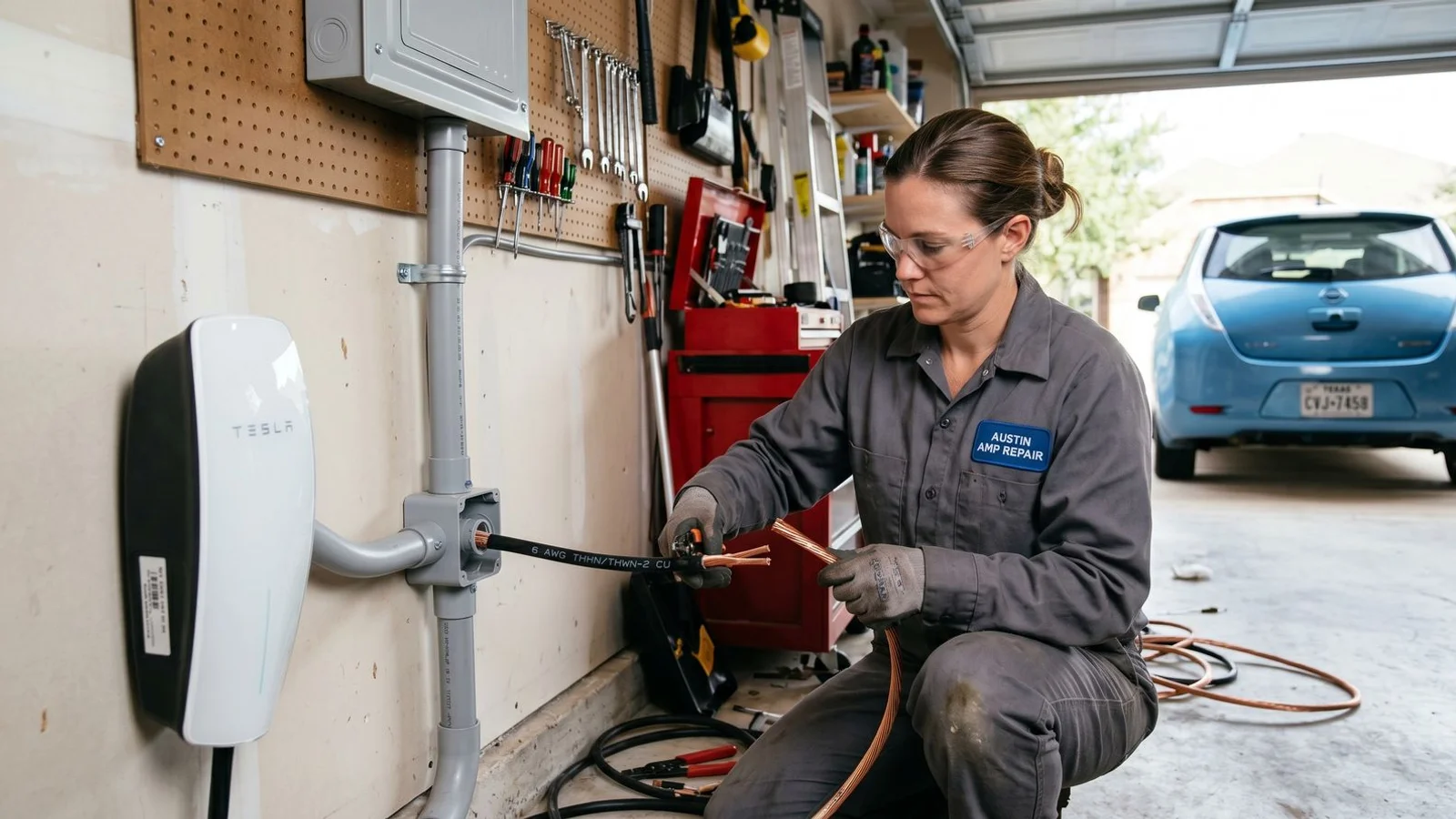
Why 48-Amp Hardwired Charging Needs the Right Wire Gauge
48A continuous charging needs correctly sized copper under the 80% rule. Why wire gauge and voltage drop matter on long runs.
concern
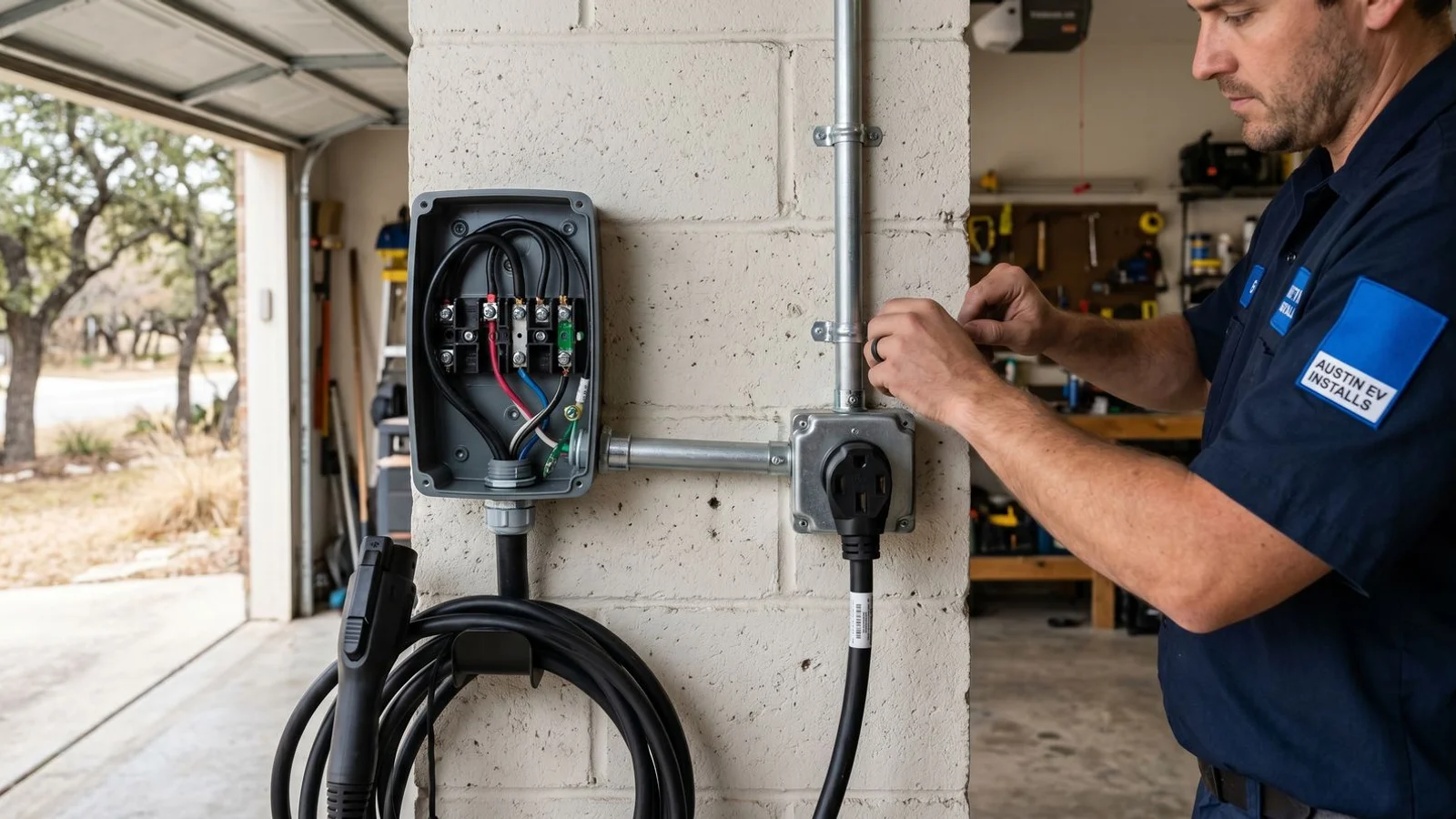
Why Hardwired Chargers Deliver Faster, More Reliable Charging
Hardwired runs 48A continuous vs 40A plug-in, with no receptacle to fail. When the speed difference matters for your vehicle.
Multi-Brand EV Charger Hardware Installation
View hub →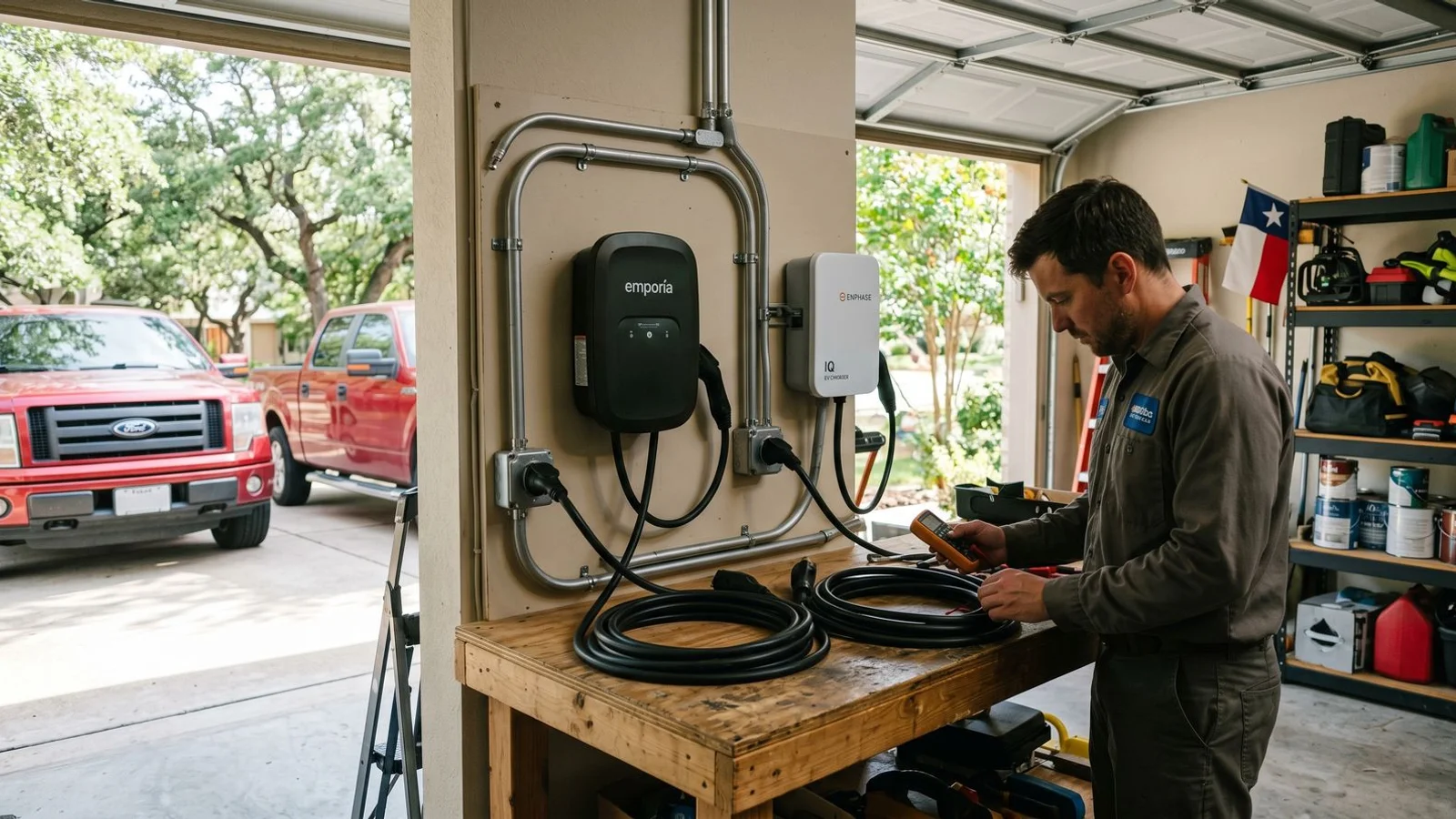
comparison
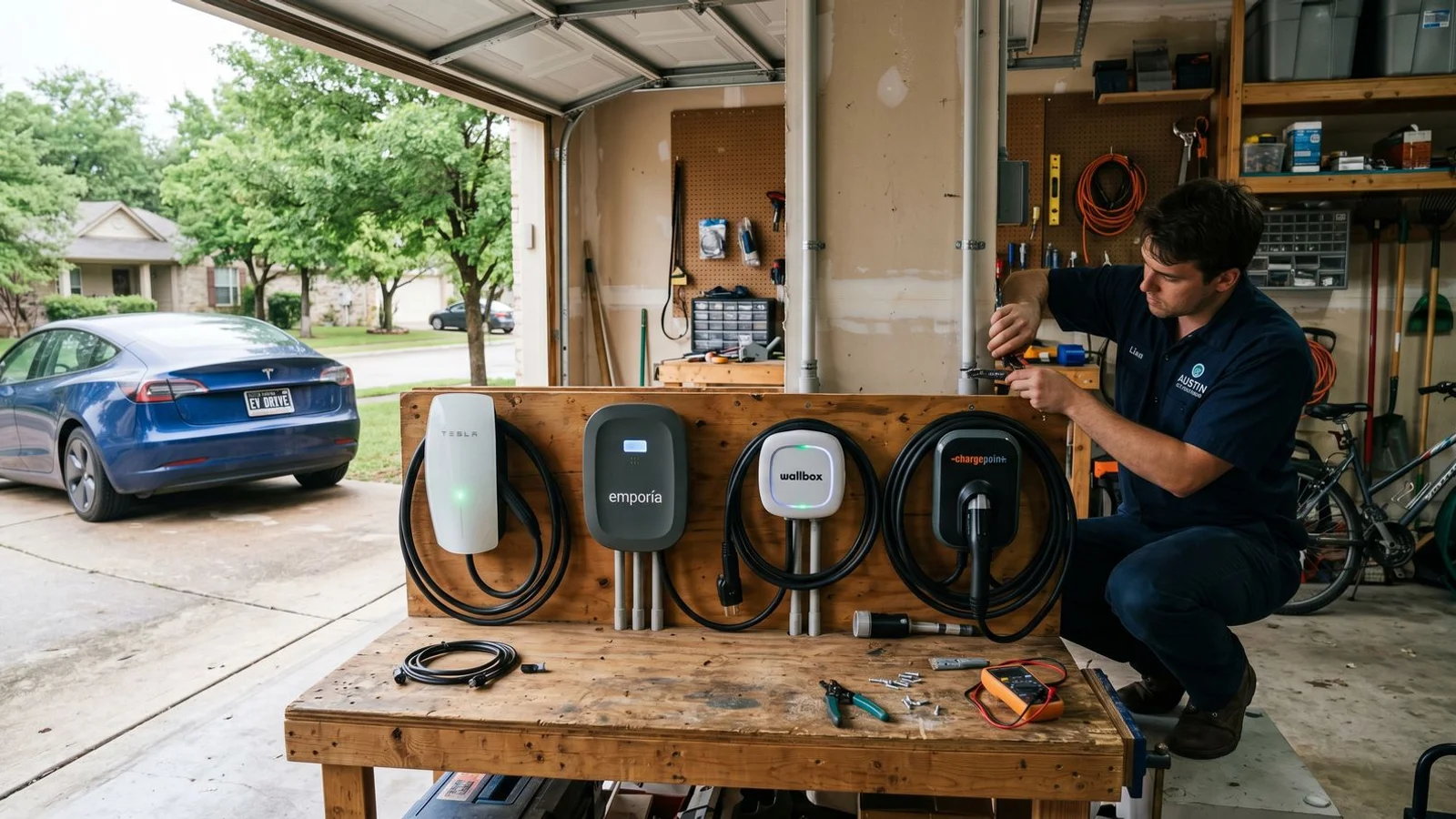
Emporia vs Wallbox vs Enphase Home Chargers
Compare Emporia, Wallbox, and Enphase on features, price, app, load-management compatibility, and rebate eligibility (OCPP).
qualifier
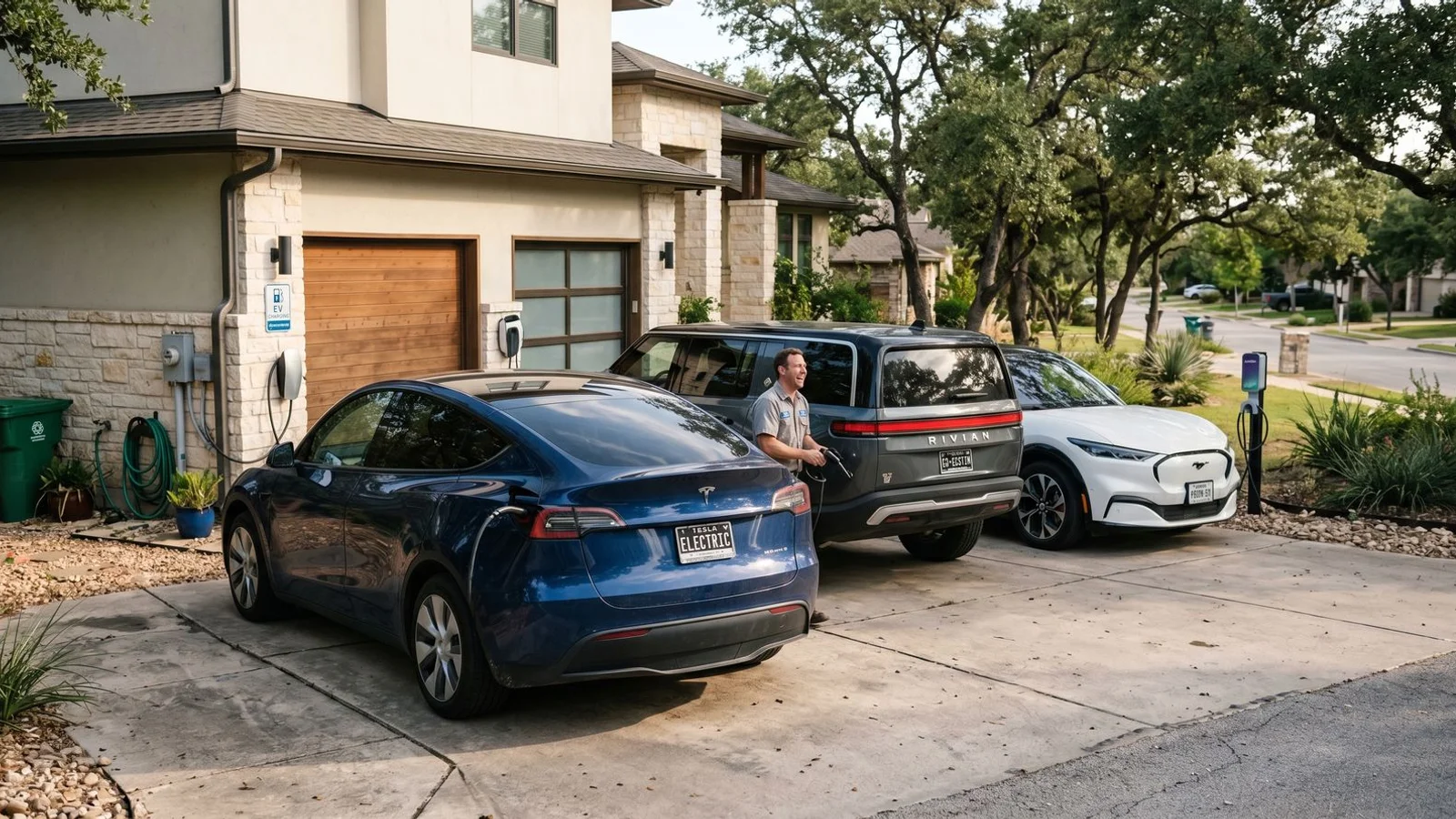
Vehicle-Specific Charging: Matching a Charger to Your EV
Onboard limits and connectors differ by EV. Charger matches for Tesla, Rivian, Mach-E, Bolt, and Ioniq 5, plus J1772 vs NACS.
decision-stage
Which Home EV Charger Brand Should You Buy?
Unbiased help choosing by amperage, smart features, OCPP, warranty, and budget, from an installer that doesn't push one brand.
Plug-In / NEMA 14-50 Outlet Installation
View hub →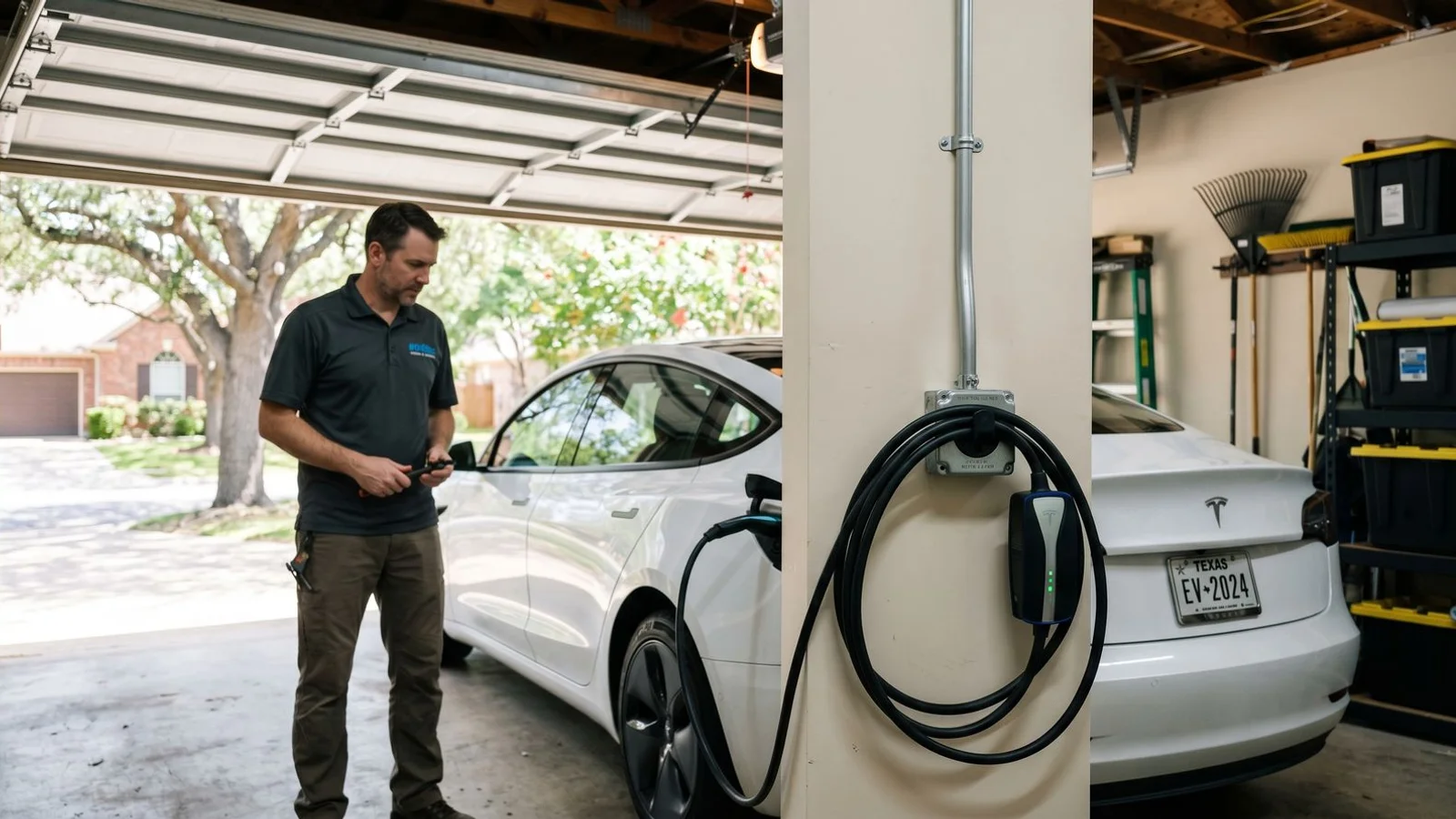
concern
Is a Plug-In EV Charger Safe for Daily Charging?
Plug-in charging is safe with a quality outlet and correct breaker. Heat risks on cheap receptacles, GFCI trips, and when hardwired is safer.
comparison
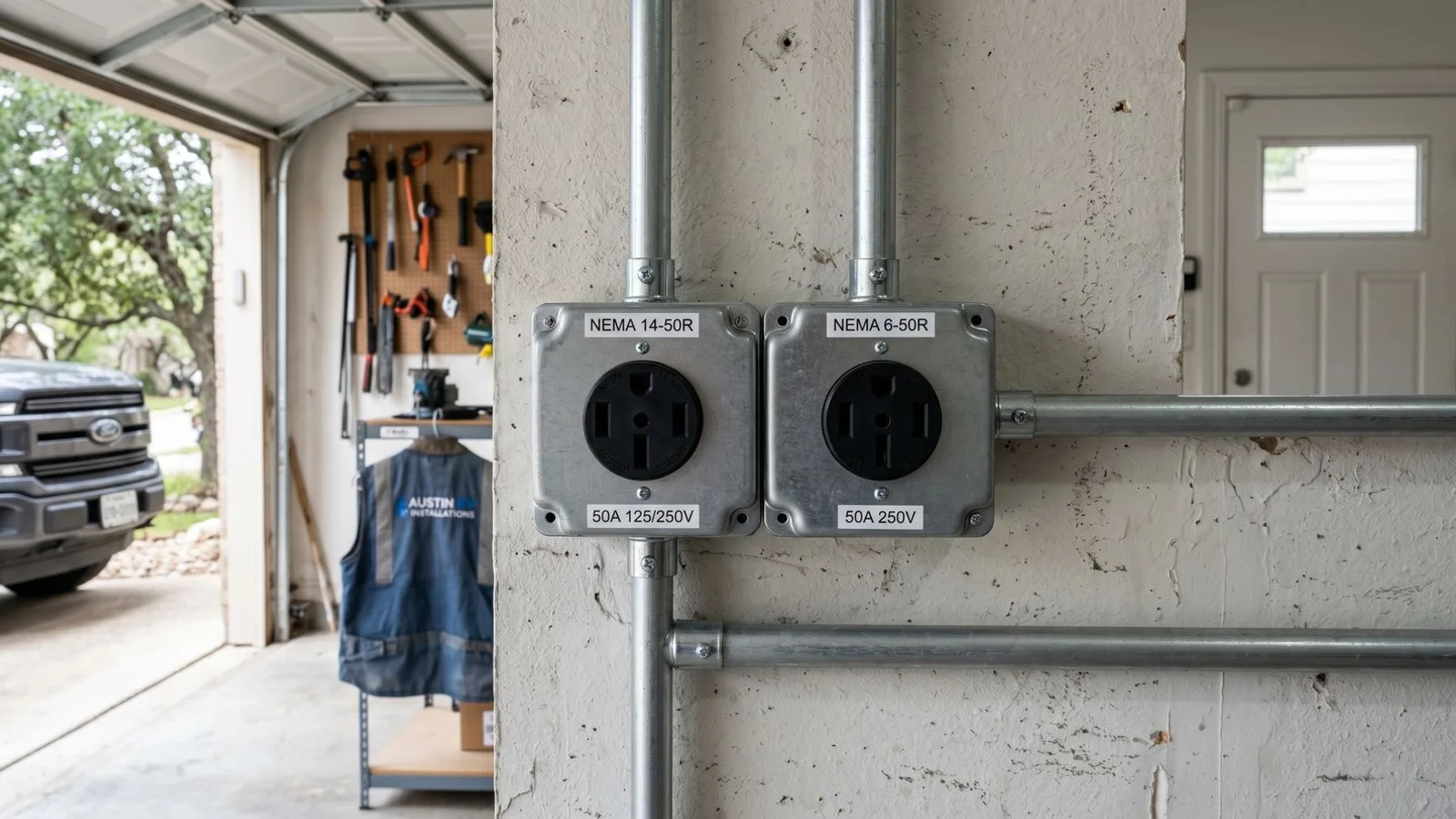
NEMA 14-50 vs NEMA 6-50: Which Outlet Do You Need?
NEMA 14-50 has a neutral; 6-50 doesn't. Which chargers use which, amperage, cost, and our recommendation by setup.
process
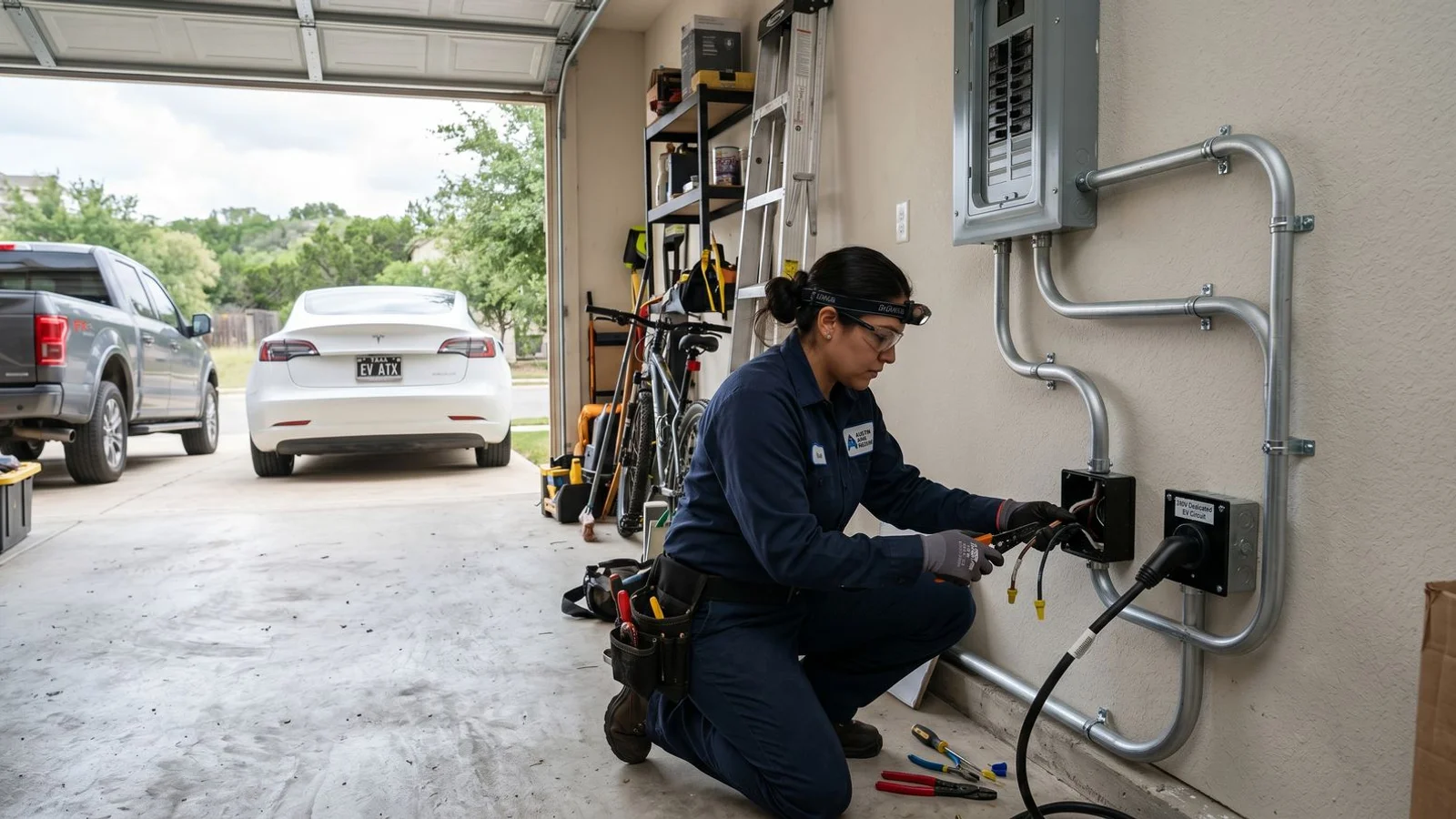
What a Code-Compliant 240V EV Outlet Install Includes
A proper 240V EV outlet means a dedicated circuit, correct breaker and gauge, GFCI, and permit. What a cheap install skips.
Tesla Wall Connector Installation
View hub →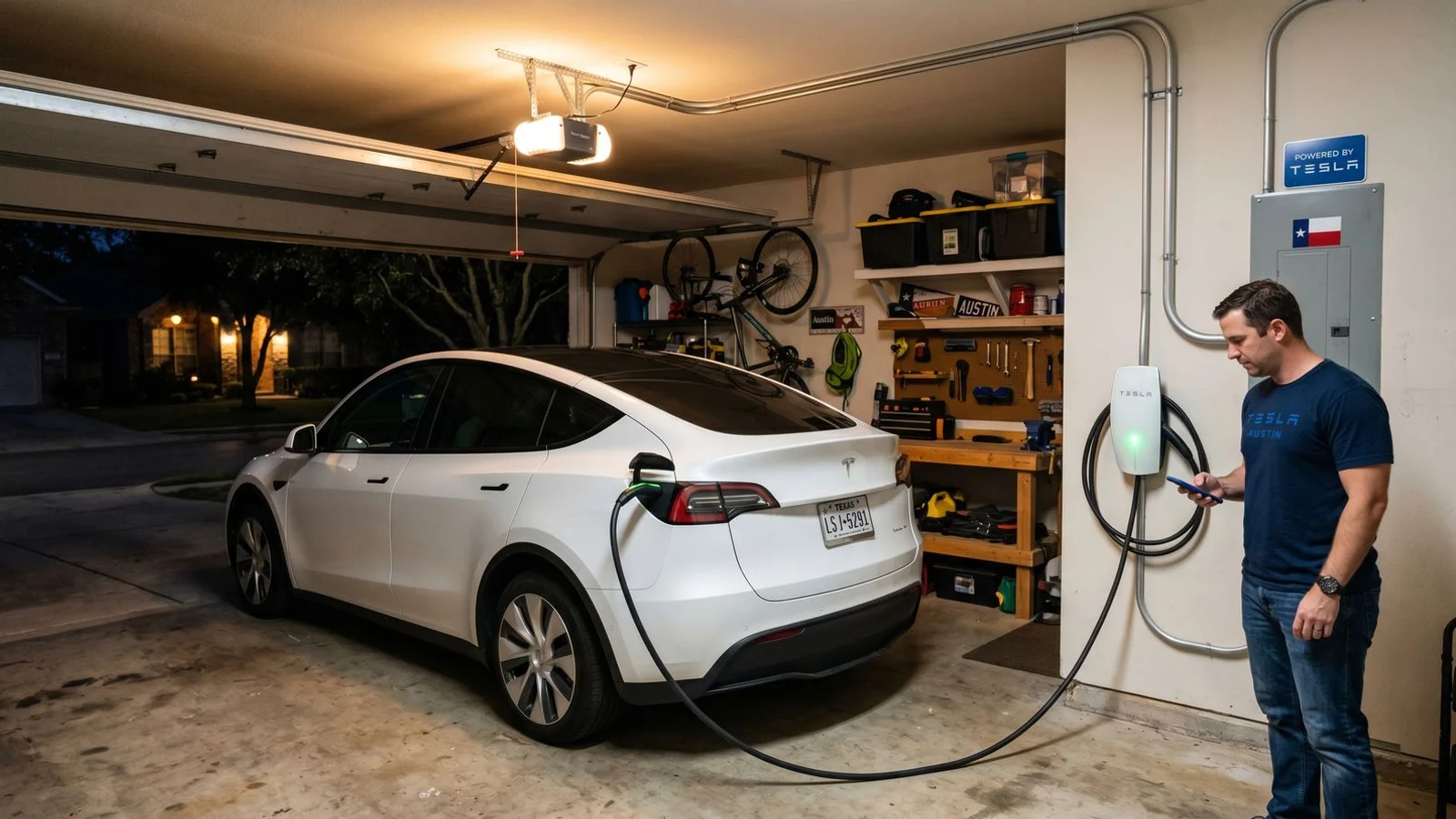
process
How Fast Does a Tesla Wall Connector Charge at Home?
A Tesla Wall Connector delivers up to 48A, about 30-44 miles/hour by model. Onboard limits and the circuit needed for full speed.
scenario
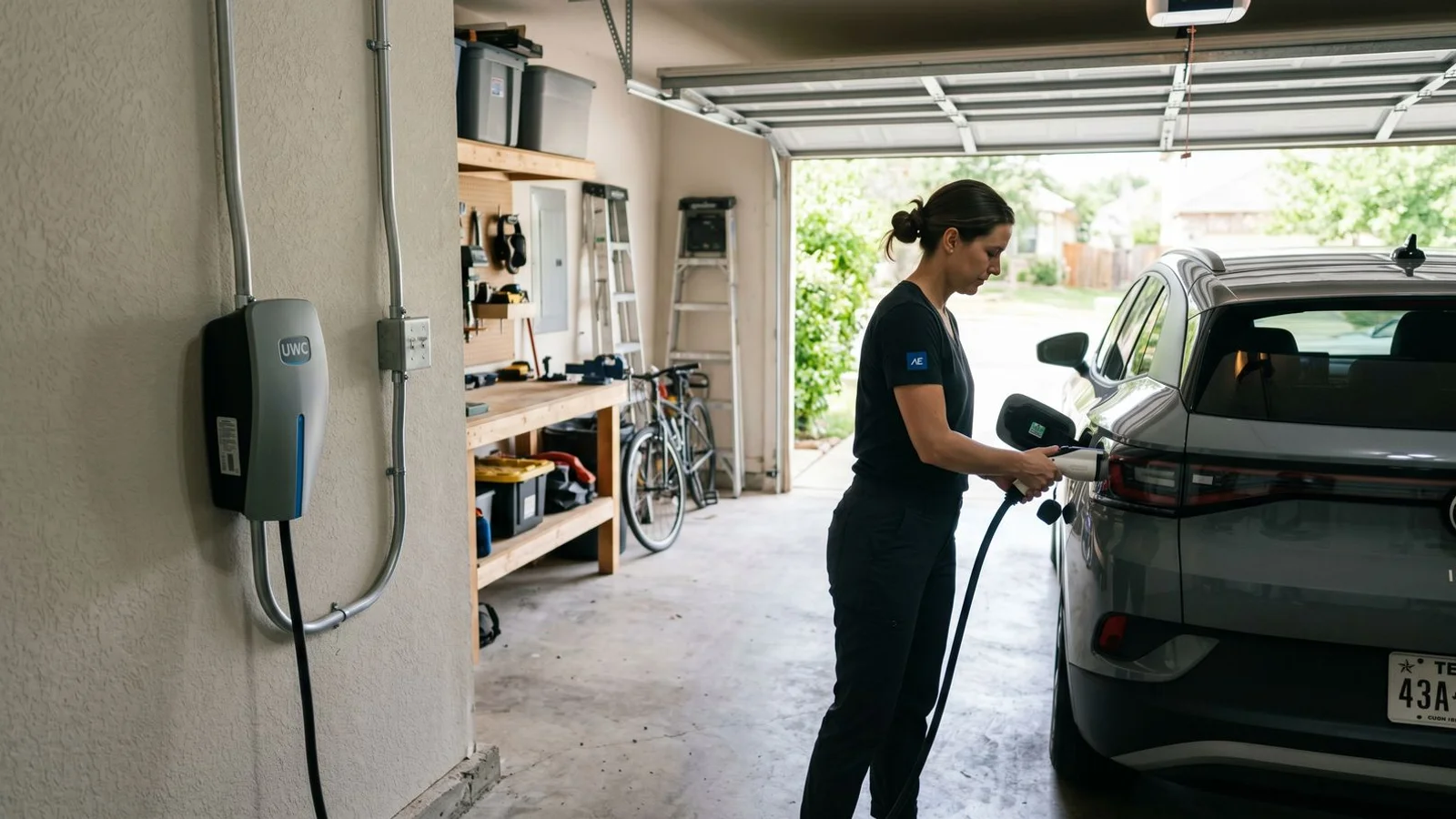
Installing a Tesla Charger for a Non-Tesla EV (NACS)
Want a Tesla charger for a non-Tesla EV? The Universal Wall Connector and NACS make it possible. Which vehicles work and install notes.
comparison
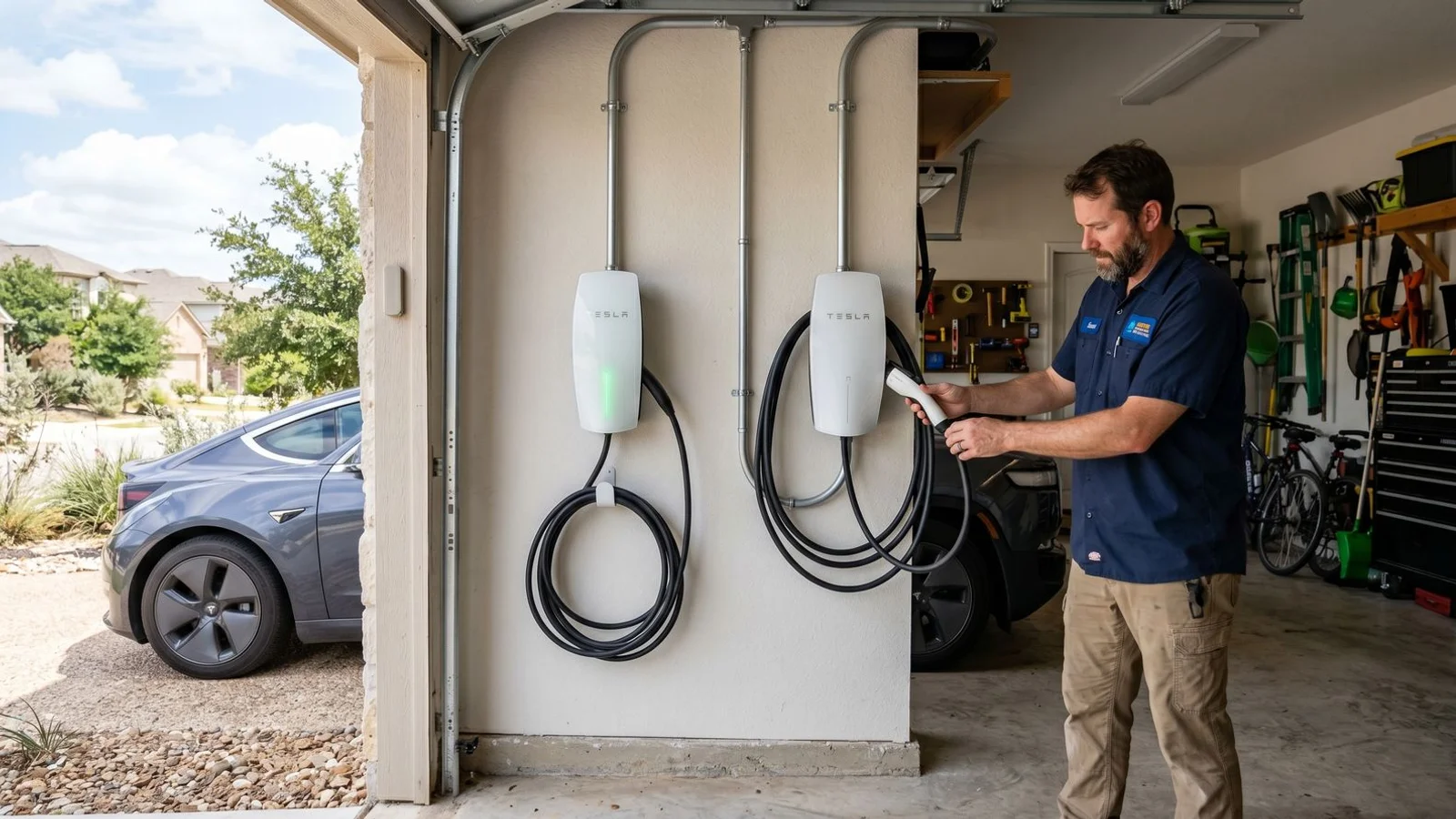
Tesla Wall Connector vs Universal Wall Connector
The Tesla Wall Connector is Tesla-only; the Universal adds J1772/NACS for any EV. Charge speeds, who each suits, and install notes.