Getting a new electric vehicle is exciting. You want to skip the gas station and start waking up to a full battery every morning.
Transitioning from slow Level 1 trickle charging to faster Level 2 overnight charging feels like a big step. Austin EV Charger Installation is a team of certified EV electricians with 87 successful home installs across the greater Austin area. We deliver flat-rate home EV charger installation in Austin with no surprise bills.
This process does not have to be stressful. We handle hardwired installs for homeowners across Austin, from Round Rock and Cedar Park to Pflugerville and Lakeway.
Choosing the right permanent setup is the single best decision you can make for your new car. Let’s walk through exactly what a professional installation looks like.
Why Hardwired EV Charging Beats Plug-In
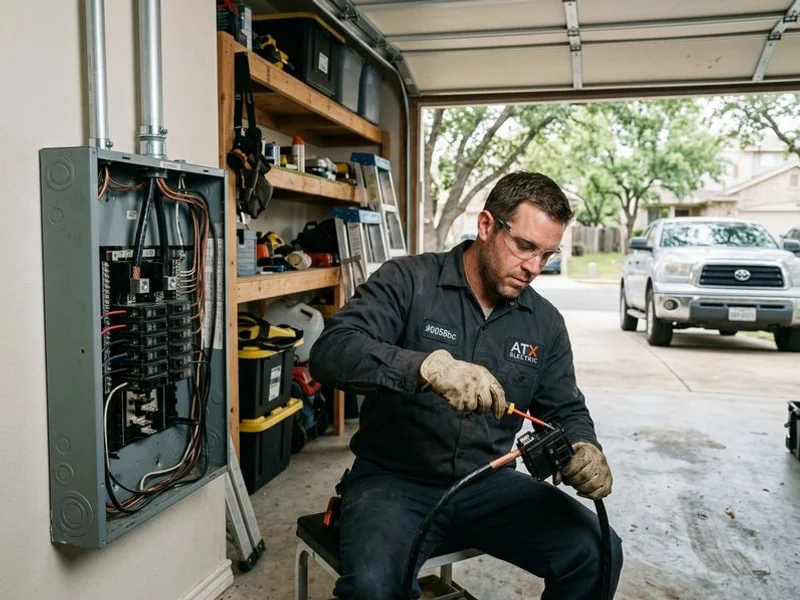
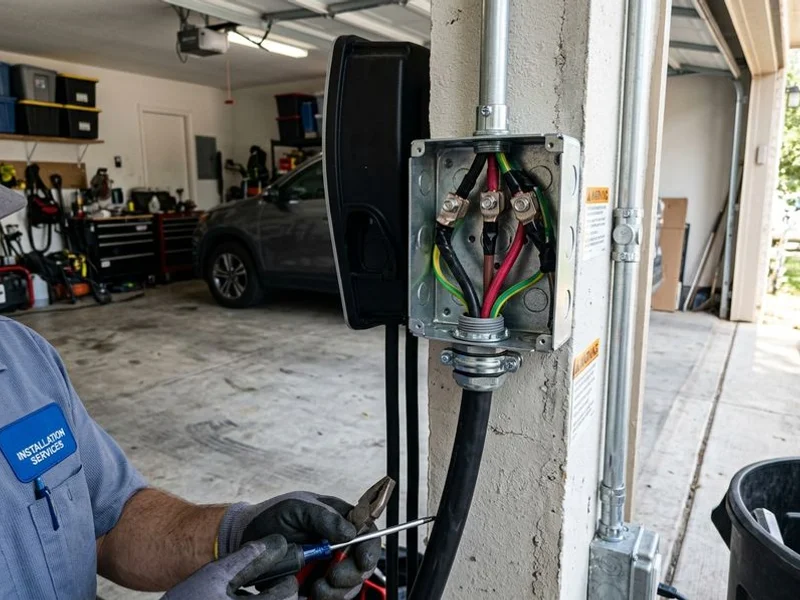
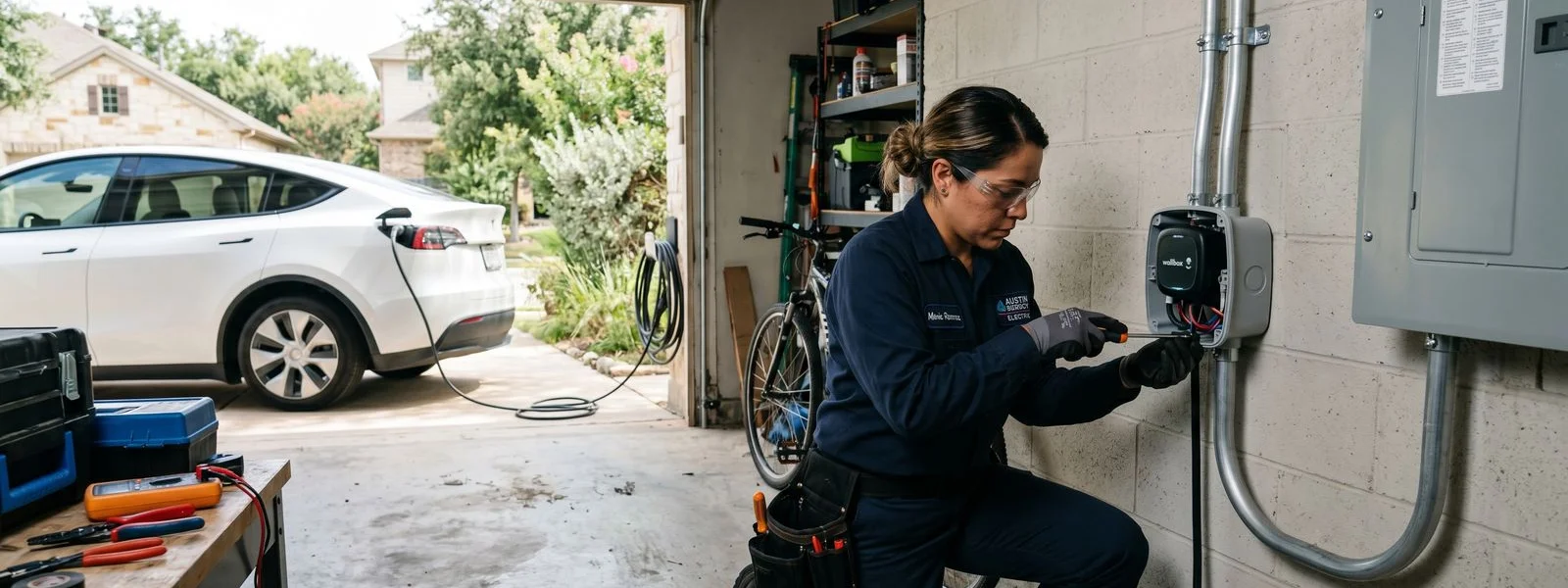
A hardwired EV charger is wired directly to a dedicated breaker in your electrical panel. There is no plug and no receptacle sitting in between the wire and the unit.
Our customers want a home charger they will use every single night for the next decade. That is the difference between a system that works fine for now and one that works perfectly in year ten.
The two biggest reasons most Austin-area homeowners choose this route come down to speed and safety.
The 48-Amp Advantage
Code caps plug-in charging at roughly 40 amps continuous output. Hardwired connections remove that cap.
This change lets compatible chargers and cars run at the full 48 amps. You will appreciate that extra speed on days with heavy driving.
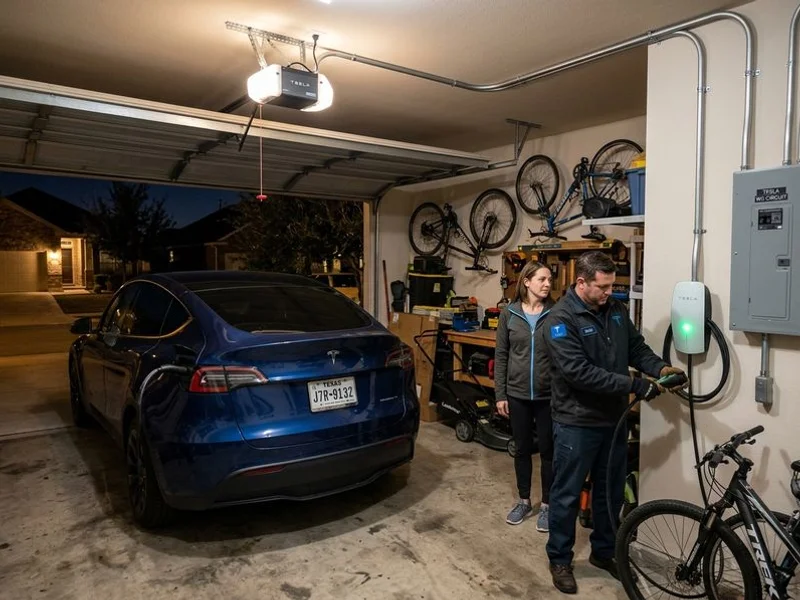
We often see this with the Tesla Wall Connector, a Rivian R1S, or a Ford Mustang Mach-E with a high-amp onboard charger. Chevy Bolt EUV and Hyundai Ioniq 5 owners also benefit from the faster throughput. That jump from 40 amps to 48 amps is the difference between adding 30 miles of range per hour and 44 miles of range per hour.
Long-Term Reliability
A plug-in setup is just one cheap receptacle away from a thermal problem. Hardwired terminations do not loosen or arc the same way.
We constantly replace melted budget outlets, like standard $15 hardware store NEMA 14-50 receptacles, because they simply cannot handle continuous EV loads. Industrial-grade outlets like the Hubbell 9450A are better, but skipping the plug entirely is the safest choice.
If you are weighing the two choices, we’ve written it up in Hardwired vs Plug-In EV Charger.
What a 48-Amp Dedicated Circuit Install Includes
A correct hardwired Level 2 install is not just running a wire to the garage. A code-compliant installation on a dedicated 240V circuit needs several specific components to pass inspection.
Our team follows strict safety standards to protect your home. The updated 2026 National Electrical Code, specifically Section 625.4, requires a qualified person for these permanent installations.
- The right breaker: A high-quality 60-amp double-pole breaker, like a Square D QO or Homeline, safely delivers 48A continuous output. This follows the 80% rule for continuous loads.
- The right wire: Southwire 6 AWG copper THHN is the common specification. We size this up for long runs to limit voltage drop.
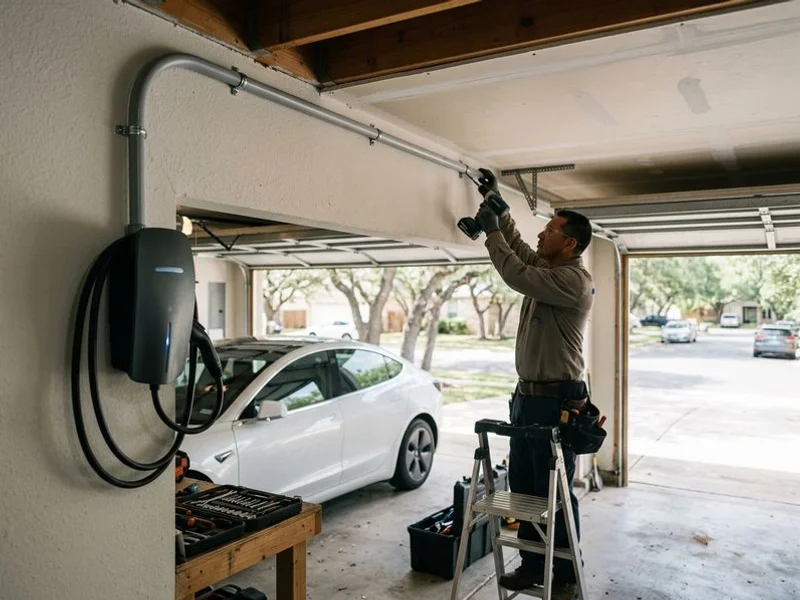
- The right conduit: We route Schedule 40 PVC cleanly across the top of the wall or through an attic where it makes sense. We also install chargers like the Wallbox Pulsar Plus that pair well with hardwired setups. Installers must never sprawl conduit across a finished living space.
- A grounding electrode: This electrode must be properly bonded to prevent electric shock.
- The permit: A City of Austin electrical permit and a post-install inspection verify the safety of the work.
Skipping any of these steps is how installations fail an inspection or fail entirely in three years.
Clean Conduit Routing in Austin Homes
This is the most common complaint heard about other installers. They leave ugly surface-mounted PVC running across the garage ceiling, wrapping around the dryer vent, and finally snaking down the wall.
Our approach is entirely different. Whether the job is a single-family ranch in South Austin or a townhome in Mueller, our installers plan the entire run before anyone cuts anything.
Hiding the Wires
Where possible, we route standard NM-B wire inside the walls or safely through the attic space. This technique lets the conduit drop down behind the drywall or hug the top corner of the wall where you cannot see it.
The garage ends up looking like the charger was always there. You want your home to look clean and professional.
See more examples in Clean Conduit Routing.
What if My Electrical Panel Is Full?
Finding out you have no free breaker spaces or only a 100A or 150A service can feel discouraging. A 100A to 200A panel upgrade runs $2,500 to $4,000 in 2026, but most Austin homeowners do not need one.
Our Group Power Management service often adds a fast hardwired charger to a full panel without requiring a utility upgrade.
Smart Load Management
Intelligent energy monitors make this happen safely. This smart technology satisfies the strict NEC 220.82 load calculation requirements.
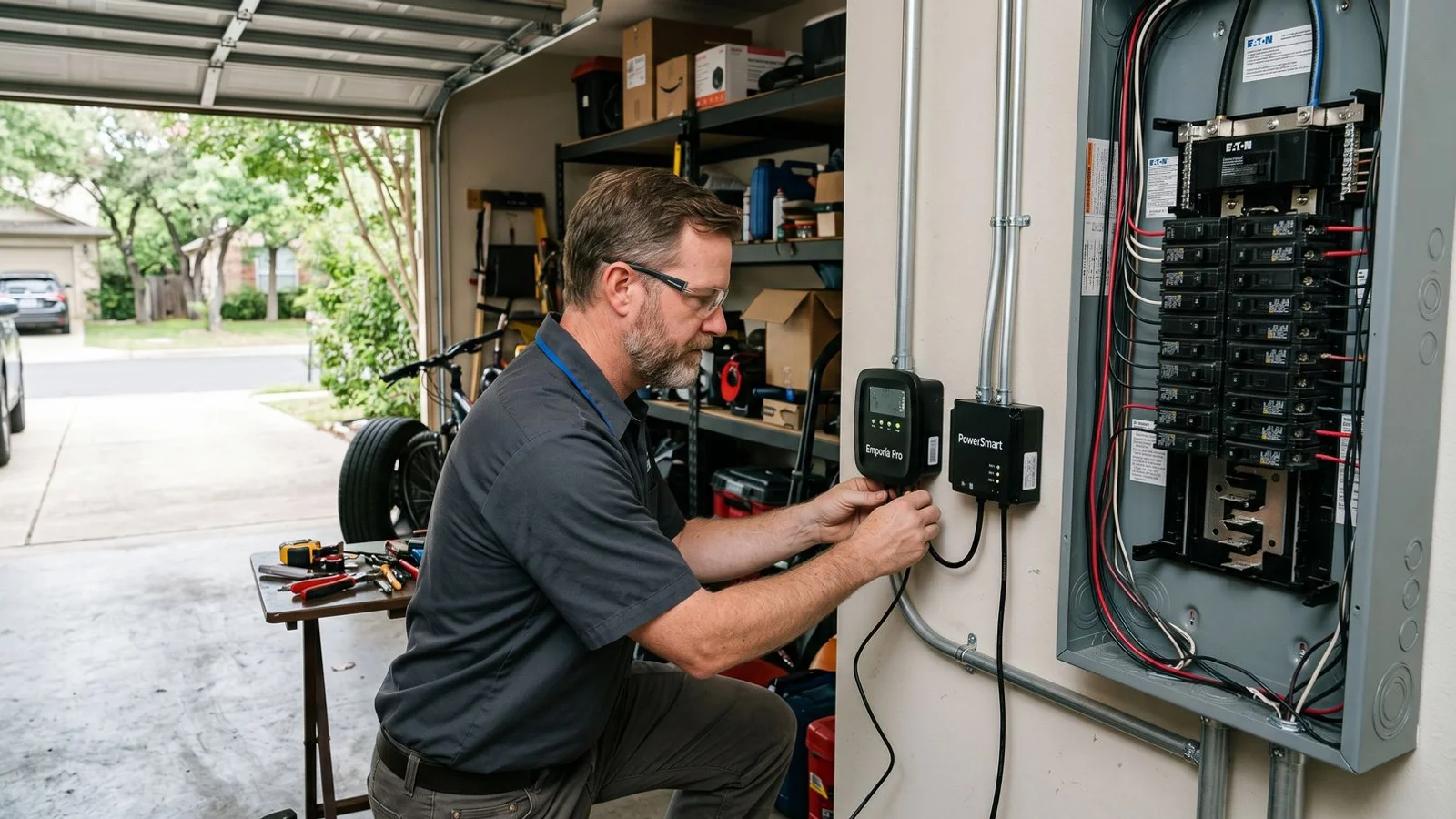
We install devices like the DCC-9 or the Emporia Vue load balancer to constantly read your home’s total power draw. If you turn on the electric oven and the AC unit, the system automatically pauses or slows the car charger.
Austin EV Charger Installation’s load management approach safely saves you that $3,000 to $8,000 replacement cost.
Flat-Rate Pricing and Tax Credits
Transparency is a core part of the business. Complete projects in 2026, which include the charger hardware, labor, and the city permit, run $1,200 to $1,850.
Our labor is a flat $895 for a standard setup.
Longer conduit runs, a large panel-to-garage distance, or adding a load management module will push that total to $2,000 or more.
Rebates and Incentives
There are fantastic financial incentives available right now. The 2026 Federal Tax Credit (30C) covers up to 30% of your hardware and installation costs if you live in an eligible area.
Local utility programs, like the Austin Energy rebate, return up to $1,200 for installing qualified smart units like the ChargePoint Home Flex.
How We Compare
| Feature | Typical Electrician | Austin EV Charger Installation |
|---|---|---|
| Pricing model | Hourly rate with surprise extras | Flat-rate from $895, no hidden fees |
| Conduit work | Surface-mounted, visible runs | Concealed routing through walls and attics |
| Scheduling | 1-2 week wait typical | Same-week installs available |
| EV expertise | General residential electrician | Certified EV specialists, charger-agnostic |
| Full panel solution | $3,000-$8,000 panel upgrade | Smart load management avoids the upgrade |
| Permits | Often extra cost or left to homeowner | Full permitting and city inspection included |
Get your free flat-rate quote today. Same business day response is guaranteed.
Last updated:
Hardwired Install Includes
- ✓ Direct-to-breaker dedicated 240V circuit
- ✓ Up to 48-amp continuous charging
- ✓ Correctly sized AWG copper wire for continuous load
- ✓ Clean, concealed conduit routing
- ✓ Full permitting and inspection handled
How Hardwired Install Works
- 1
Quote & site walk
We confirm panel capacity, breaker availability, and the cleanest conduit path before quoting.
- 2
Flat-rate booking
Hardware, labor, and the City of Austin permit fee in one upfront number.
- 3
About two hours on install day
We pull the dedicated 240V circuit, route Schedule 40 PVC conduit, terminate at the breaker, and mount the charger.
- 4
Inspection + cleanup
We coordinate the city inspection and leave the garage cleaner than we found it.
Why Choose Our Hardwired Install Service
EVITP-style training
Our installers are trained specifically on EV charging continuous-load rules, not general residential rewiring.
Clean conduit, every time
We plan the run before we cut anything. No ugly surface-mounted PVC across living spaces.
Right wire gauge, every time
We size copper conductors for continuous load (80% rule) and run length. No undersized 'works for now' shortcuts.
Recent Hardwired Install Installs in Austin