Plugging your shiny new electric car into a standard wall outlet is a frustrating experience.
We know that feeling all too well. Waking up to just 30 miles of added range makes daily commuting stressful.
Austin EV Charger Installation can fix this problem quickly with same-week availability. A dedicated outlet is one of the most popular options in our flat-rate home EV charger installation in Austin service. Thinking about a Plug-In / NEMA 14-50 Outlet Installation? Upgrading your garage setup changes everything.
Why You Need a Dedicated 240V EV Outlet
Standard 120V outlets only give you about three to five miles of range per hour. We see plenty of new drivers trying to survive on a wall plug before calling for help. Running a heavy cord across the garage floor of your single-family home or townhome is also a serious fire hazard.
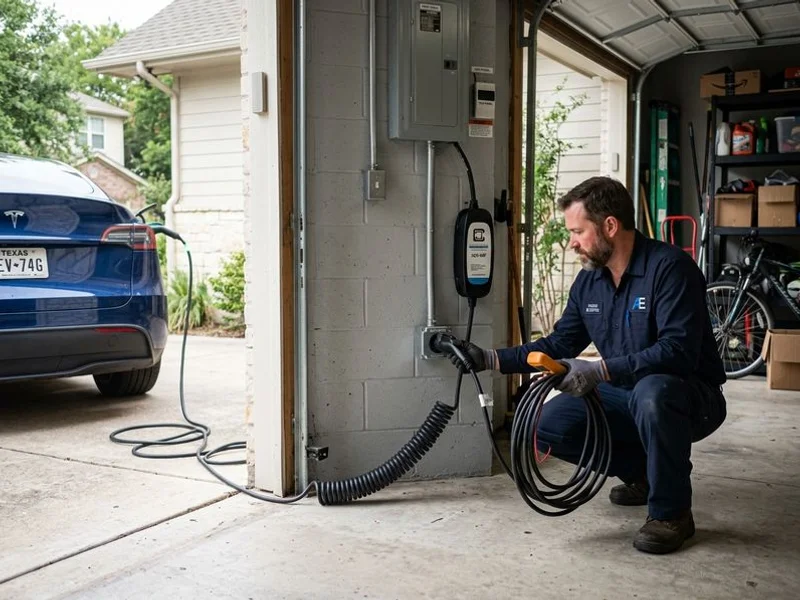
If you bought a portable Level 2 charger with your EV, what you need is a proper dedicated 240V outlet in the garage. This applies perfectly to popular cords like the Tesla Mobile Connector, Ford Mobile Charger, Grizzl-E, or ChargePoint Flex. You cannot just use any old plug you find. Our electricians will never repurpose a 14-50 from an old RV setup because it will not safely handle the continuous load. Reusing your dryer outlet is another common mistake.
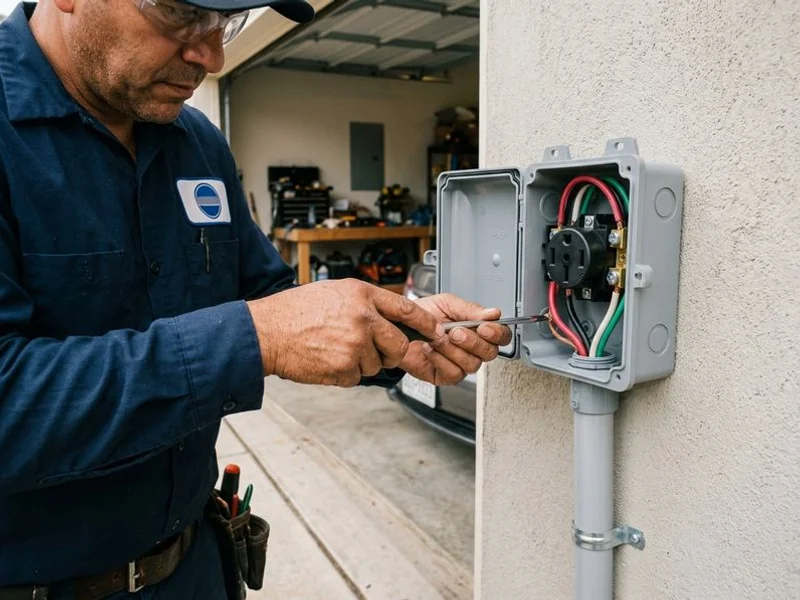
What you actually need is a purpose-built, code-compliant, GFCI-protected dedicated circuit. This specific setup easily handles the massive power draw of an electric vehicle. We install both NEMA 14-50 and NEMA 6-50 outlets depending on which plug your specific charger uses. The NEMA 14-50 is the common one with four prongs and a neutral wire. The NEMA 6-50 uses three prongs with no neutral wire.
What a Code-Compliant NEMA 14-50 Install Includes
A cheap installation skips most of the important safety steps. Austin EV Charger Installation refuses to cut corners because cheap work can lead to melted plastic and dangerous electrical fires. A proper installation includes several non-negotiable components.
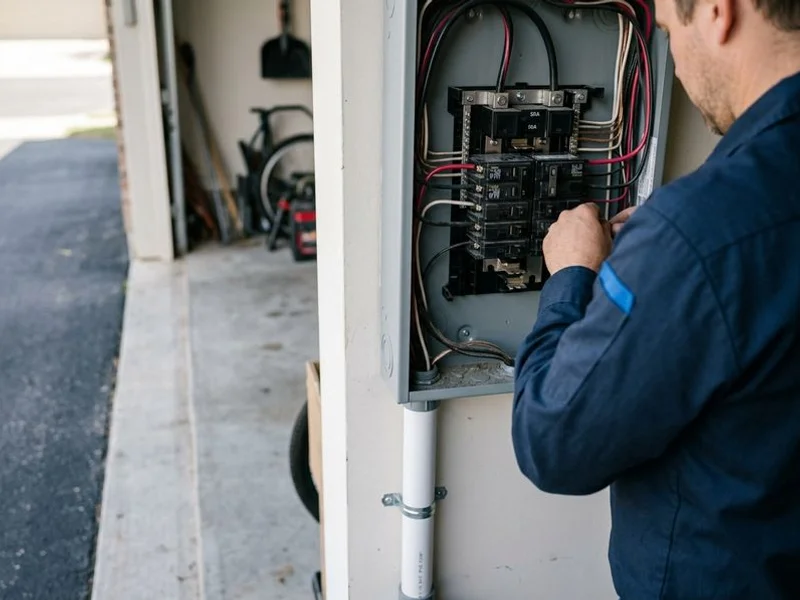
- A dedicated 240V circuit from your main electrical panel that is not shared with anything else.
- A 50-amp double-pole breaker (typically Eaton or Square D) strictly sized for a continuous electrical load. The National Electrical Code requires circuits to handle 125 percent of the charger’s output.
- Thick 6 AWG copper conductors, and we use even heavier wire for long runs across the house.
- A commercial-grade receptacle rated for continuous duty. We specifically use heavy-duty brands like Hubbell or Bryant. Cheap residential outlets from hardware stores are the number one cause of EV charger overheating.
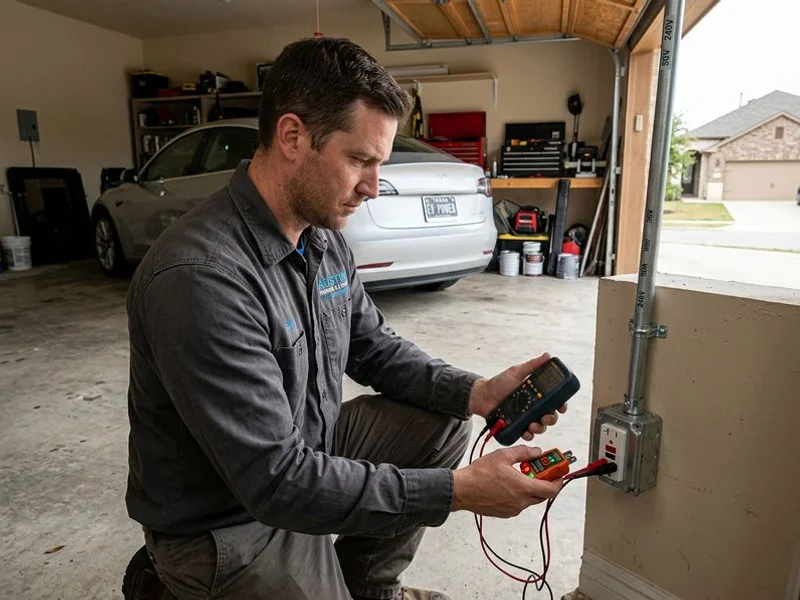
- GFCI protection using a specialized breaker-style GFCI. This prevents the nuisance tripping that is a known issue with older receptacle-style units.
- The required City of Austin permit and a mandatory post-installation inspection.
Every project includes the same code-compliant components listed above. For the full breakdown, see What a Code-Compliant 240V EV Outlet Install Includes.
Plug-In vs Hardwired EV Charging
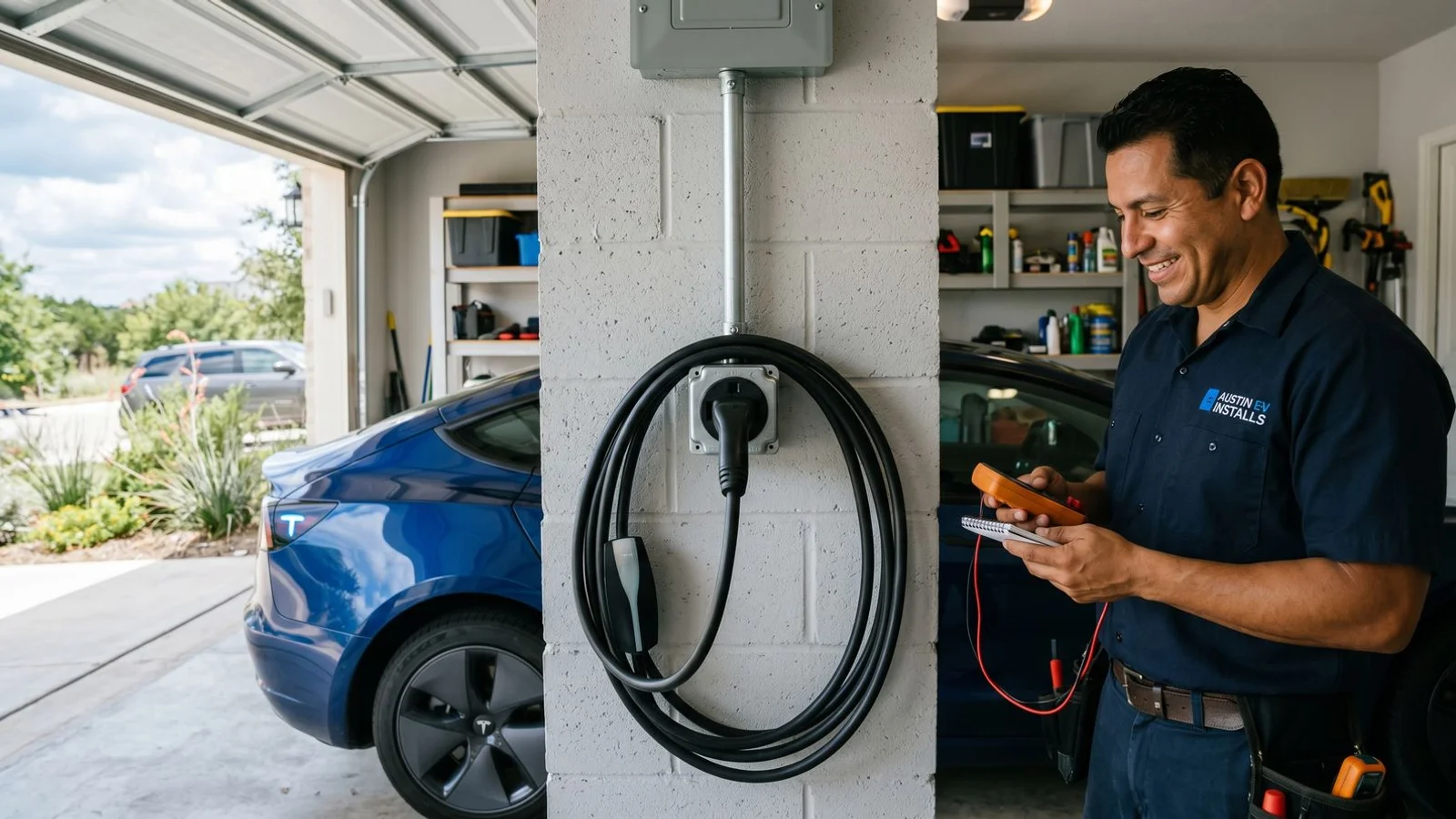
A NEMA 14-50 setup gives you great flexibility for the future. Our Austin EV Charger Installation team recommends this option for people who plan to move eventually. Moving to a new house means you can easily unplug the portable charger and take it with you. Swapping cars is simple because the charger usually comes along with the next vehicle.
There is a distinct trade-off to consider between these options. Plug-in chargers are capped at around 40 amps of continuous power due to the National Electrical Code 80 percent safety rule. A hardwired unit can push a full 48 amps. This translates to a practical difference in charging speed. You will get about 32 miles of range per hour with a plug, compared to 44 miles per hour hardwired.
| Feature | Plug-In (NEMA 14-50) | Hardwired |
|---|---|---|
| Max Charging Speed | 40 Amps (~32 mi/hr) | 48 Amps (~44 mi/hr) |
| Hardware Portability | High (Just unplug it) | Low (Requires electrician) |
| Component Cost | Needs a $150 GFCI breaker | Built-in GFCI saves money |
We recommend checking out our complete comparisons to make the best choice. Read the full Hardwired vs Plug-In EV Charger and NEMA 14-50 vs NEMA 6-50 guides.
Transparent Pricing for Your EV Outlet Project
We keep our pricing transparent and simple. The labor rate is a flat $895 for every standard job (2026 pricing).
As of 2026, the total cost for the receptacle, breaker, permit, and labor typically runs between $1,200 and $1,600. Our team bases the final price entirely on the distance from your electrical panel to the garage, which varies between newer construction and older Austin homes. Most installs across Austin, Round Rock, Cedar Park, and Pflugerville require about 30 to 50 feet of thick copper wiring.
Longer wire runs or necessary load management systems will push the total slightly higher. You will always receive one upfront number before any work begins. We guarantee there will be absolutely no surprise charges on your final bill.
If a Plug-In / NEMA 14-50 Outlet Installation sounds like the right fit for your home, reach out today. Are you ready to wake up to a fully charged battery?
Last updated:
NEMA 14-50 Outlet Includes
- ✓ NEMA 14-50 and NEMA 6-50 outlet options
- ✓ Dedicated circuit with correctly sized breaker
- ✓ Code-required GFCI protection
- ✓ Flexible for portable / plug-in chargers
- ✓ Permit and inspection included
How NEMA 14-50 Outlet Works
- 1
Confirm outlet type
We check your charger plug (14-50 vs 6-50) and panel capacity before quoting.
- 2
Flat-rate quote
Receptacle, breaker, conduit, permit, and labor in one upfront number.
- 3
Two-hour install
Dedicated 240V circuit, commercial-grade receptacle, GFCI protection where required.
- 4
Inspection and walkthrough
We coordinate the city inspection and show you the safe plug/unplug routine.
Why Choose Our NEMA 14-50 Outlet Service
Commercial-grade receptacles
We don't use $15 hardware-store receptacles that overheat under daily EV load. We spec parts rated for continuous duty.
Right breaker, right gauge
A proper 50A breaker, 6 AWG copper, and a dedicated circuit, not a shared circuit with the dryer.
GFCI handled correctly
We use the breaker-style GFCI that prevents nuisance trips with EV chargers.
Recent NEMA 14-50 Outlet Installs in Austin