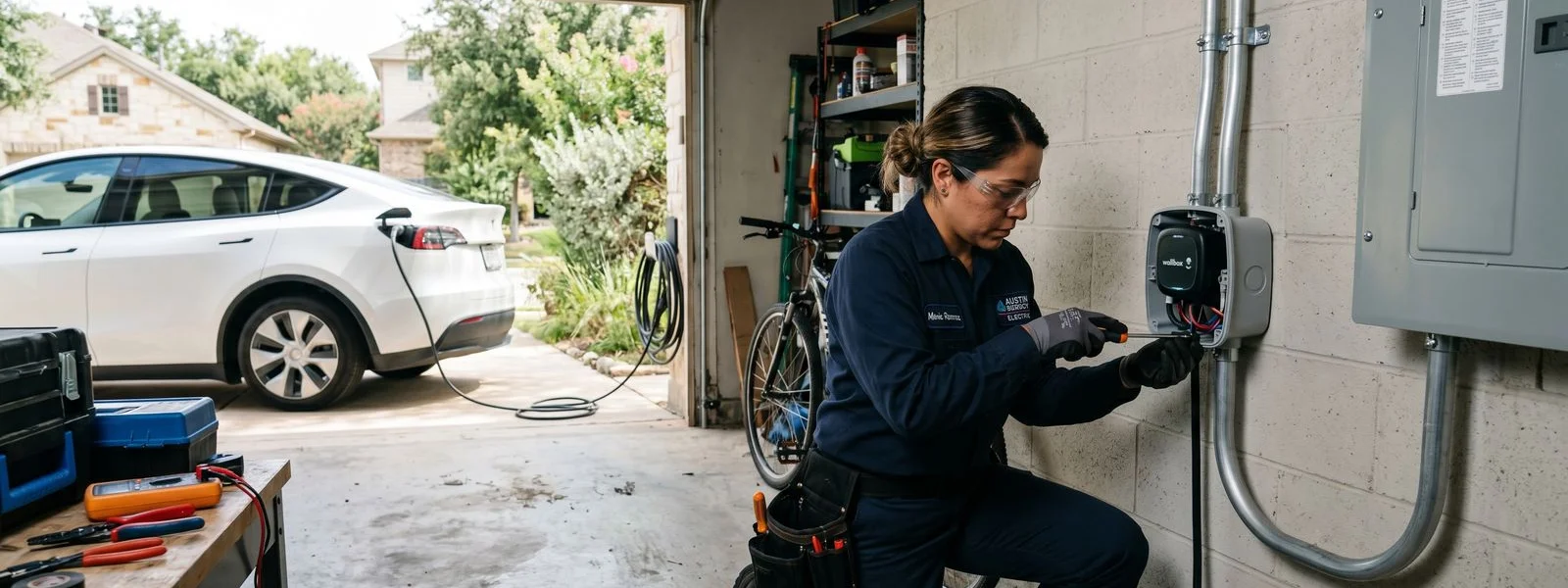
Level 1 vs Level 2 Home Charging: Why Your Charging Is So Slow
Level 1 adds ~4 mi/hr; Level 2 adds 25-44. Why charging is slow, what Level 2 needs, and how to upgrade for overnight full charges.
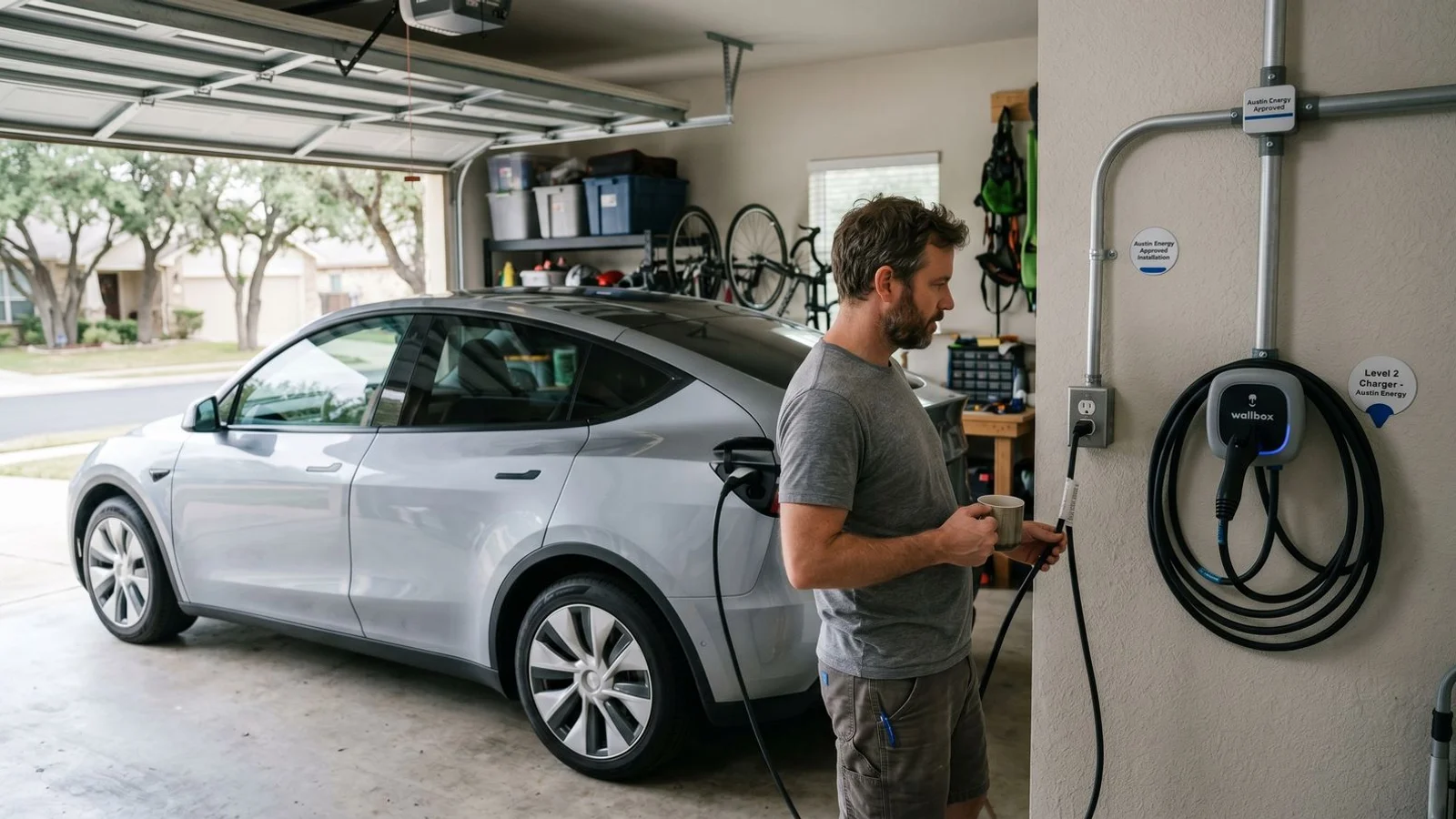
At Austin EV Charger Installation, providing exceptional electrical services is our main mission. Our team hears the same frustration from new electric vehicle owners every day.
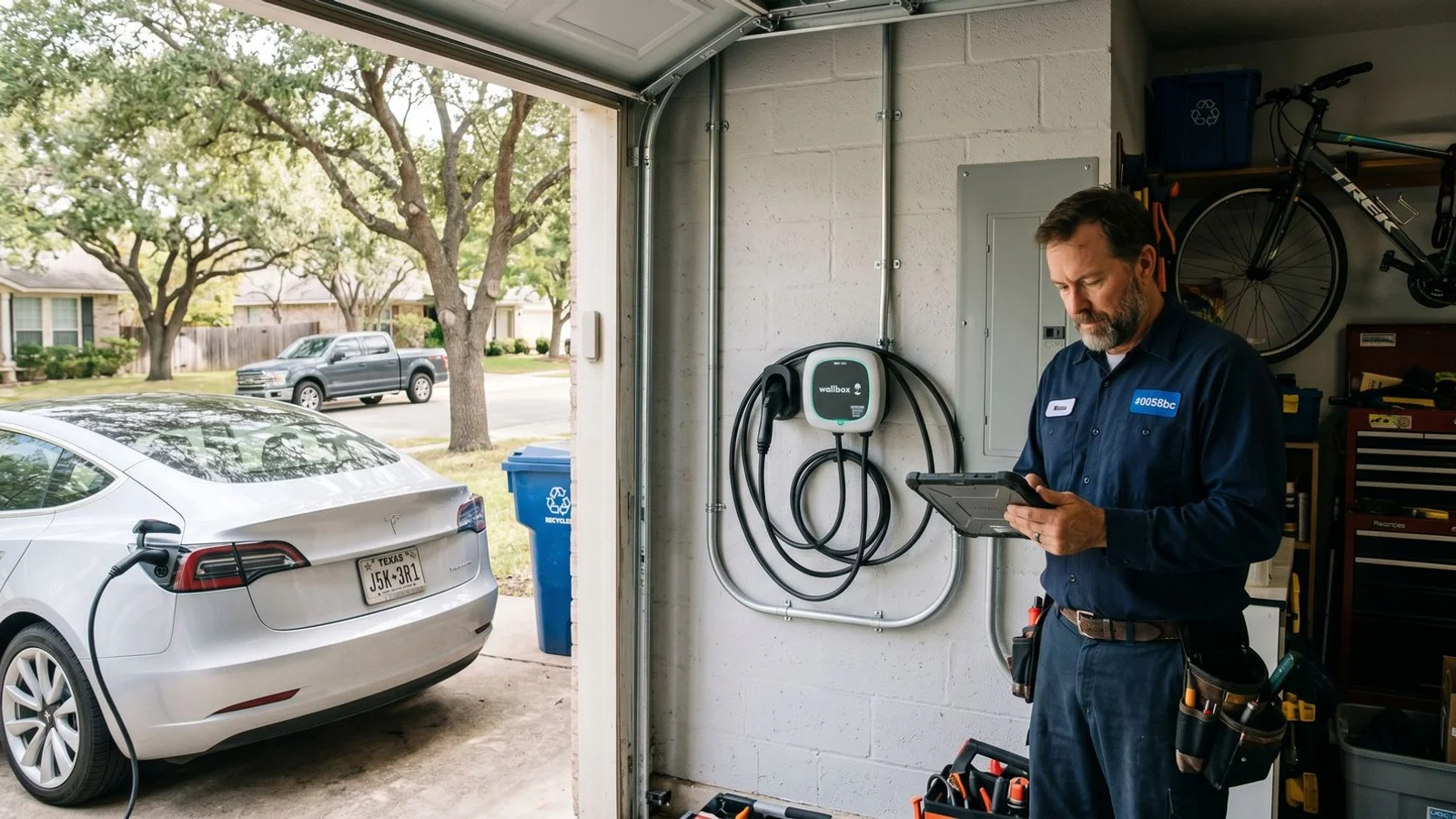
If you find your ev charging too slow at home, you are almost certainly stuck on a basic wall plug.
That standard receptacle simply cannot keep up with a normal daily driving routine.
We have seen how quickly range anxiety disappears once drivers grasp the real difference in level 1 vs level 2 ev charging and move ahead with home EV charger installation in Austin.
Let’s break down the real numbers, look at why your current charger falls behind, and walk through exactly what is involved in moving up.
What level 1 vs level 2 ev charging actually means
The plug connecting to your car looks exactly the same for both charging speeds. The difference lies entirely in the power flowing through the wire.
Our technicians install hundreds of these systems, so let us clarify exactly what each term means.
- Level 1: This uses a standard 120-volt wall outlet. It is the same kind of receptacle you use for a lamp or television. Most new vehicles include a basic portable Level 1 charging cable right in the trunk.
- Level 2: This requires a dedicated 240-volt circuit from your electrical panel. The setup usually delivers 30 to 48 amps of power. You can use a hardwired, wall-mounted unit or plug a portable charger into a high-capacity NEMA 14-50 outlet.
Moving to 240 volts changes the entire charging experience.
We always remind customers that upgrading your voltage is the only way to significantly increase your charging speed.
The miles-per-hour difference
A Level 2 charger adds about 30 miles of range per hour, whereas a Level 1 outlet only adds 3 to 5 miles per hour. We put together this comparison based on real-world charging rates for popular electric vehicles like the Tesla Model Y and Ford Mustang Mach-E.
| Charging type | Miles added per hour | Time to add 200 miles |
|---|---|---|
| Level 1 (120V, 12A) | ~3-5 miles | ~40-65 hours |
| Level 2 @ 30A | ~25-30 miles | ~7-8 hours |
| Level 2 @ 40A (plug-in) | ~32 miles | ~6 hours |
| Level 2 @ 48A (hardwired) | ~38-44 miles | ~5 hours |
The Federal Highway Administration notes that the average driver in the US covers about 37 miles per day. Level 1 technically keeps up with that average commute, but it leaves zero margin for error.
Our customers quickly discover that unplanned errands or weekend trips make a basic wall plug completely inadequate.
A proper 240-volt system fills the battery completely overnight, no matter how far you drove that day.
Why Level 1 falls behind faster than people expect
The math behind a basic outlet is truly unforgiving. A 120-volt circuit running at 12 amps delivers a continuous 1.4 kilowatts of power, which simply cannot refill a modern battery overnight.
We see many drivers buy vehicles with large 60 to 90 kilowatt-hour battery packs, only to realize how slowly they fill up. Consider the most common drains on your battery that make a standard outlet inadequate:
- Large Battery Capacities: Modern vehicles with large 82 kilowatt-hour battery packs require 40 to 65 hours to reach a full charge on a basic outlet.
- Summer AC Usage: A 2026 AAA study found that running the air conditioning in hot summer weather can reduce your driving range by up to 40 percent.
- Busy Weekends: Multiple errands on a Saturday leave you with a deficit that cannot be recovered by Monday morning.
Our electrical teams upgrade these home setups to 40 or 48 amps, which jumps the power delivery to 9.6 or 11.5 kilowatts.
That single change makes the charging process roughly eight times faster.
What’s required to install Level 2
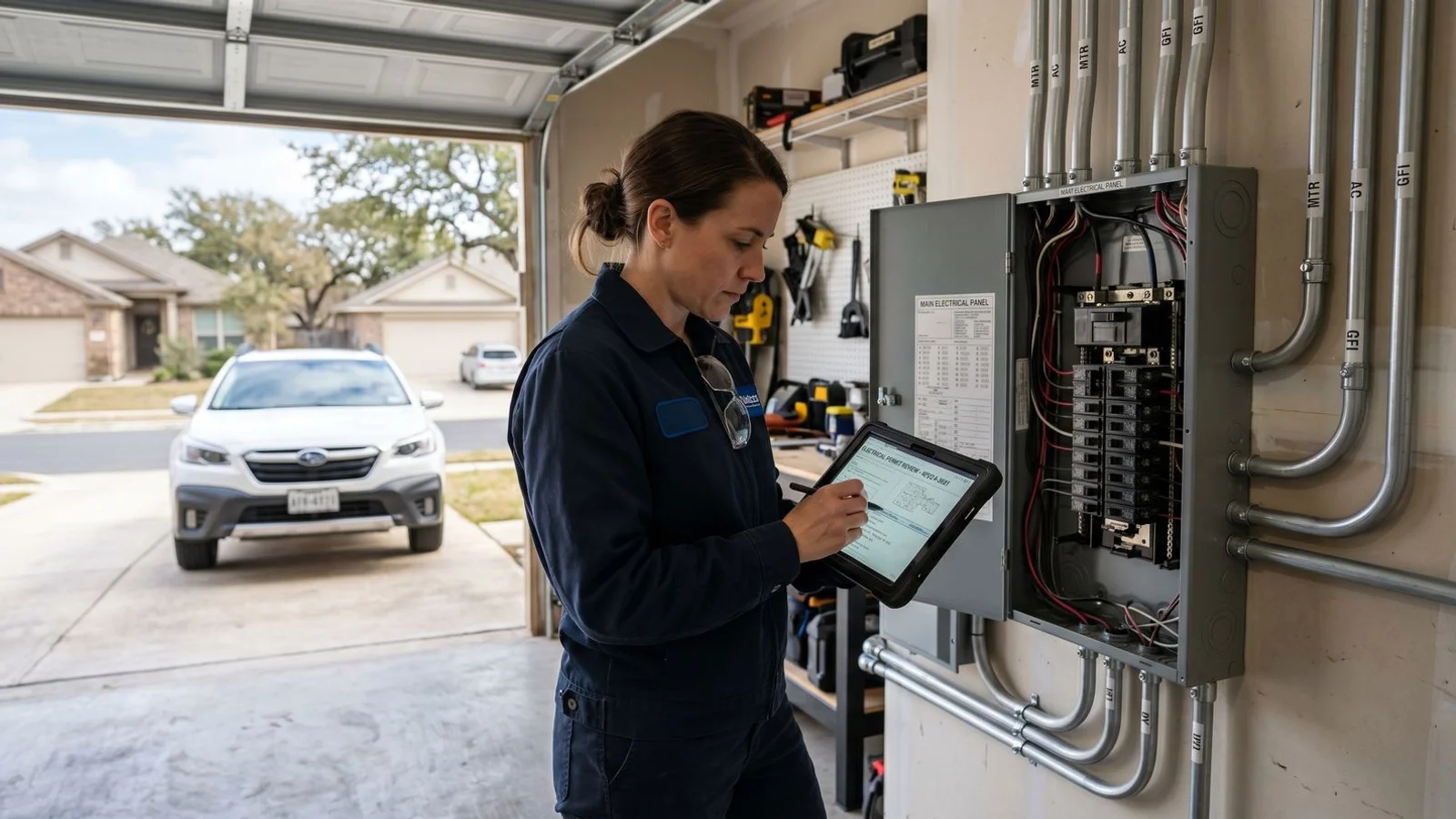
A code-compliant Level 2 installation requires a dedicated 240-volt circuit, the proper breaker, and heavy-duty copper wiring. Every safe setup depends on these specific electrical components.
We follow strict National Electrical Code guidelines to ensure your home handles the continuous power draw without overheating. A standard residential installation involves:
- A dedicated 240V circuit running directly from your electrical panel.
- The correct breaker size, usually ranging from 30 to 60 amps depending on your chosen hardware.
- Properly sized copper conductors rated for continuous electrical loads.
- GFCI protection on any plug-in installations, as mandated by Section 625.54 of the 2023 National Electrical Code.
- A formal permit and final inspection from your local city or suburban jurisdiction.
Most homes in the US can handle this new circuit without requiring a massive overhaul. If you have an older or completely full electrical panel, smart load management provides a great solution.
Our electricians use these load management devices to safely add a high-speed charger without forcing you into an expensive panel upgrade. This technology monitors your total home energy usage and pauses the car charger during peak demand.
Plug-in or hardwired?
A hardwired connection is best for maximum speed and reliability, while a plug-in NEMA 14-50 outlet is ideal for flexibility and temporary living situations. Both options deliver high-speed 240-volt power, but they serve different long-term needs.
We always present both paths so you can choose the setup that fits your property and lifestyle, and our guide on hardwired vs plug-in EV chargers digs deeper into the trade-offs. Here are the two standard routes:
- A NEMA 14-50 outlet install creates a high-voltage receptacle for a portable charger. This option is flexible and portable, but the charging speed is capped at 40 amps.
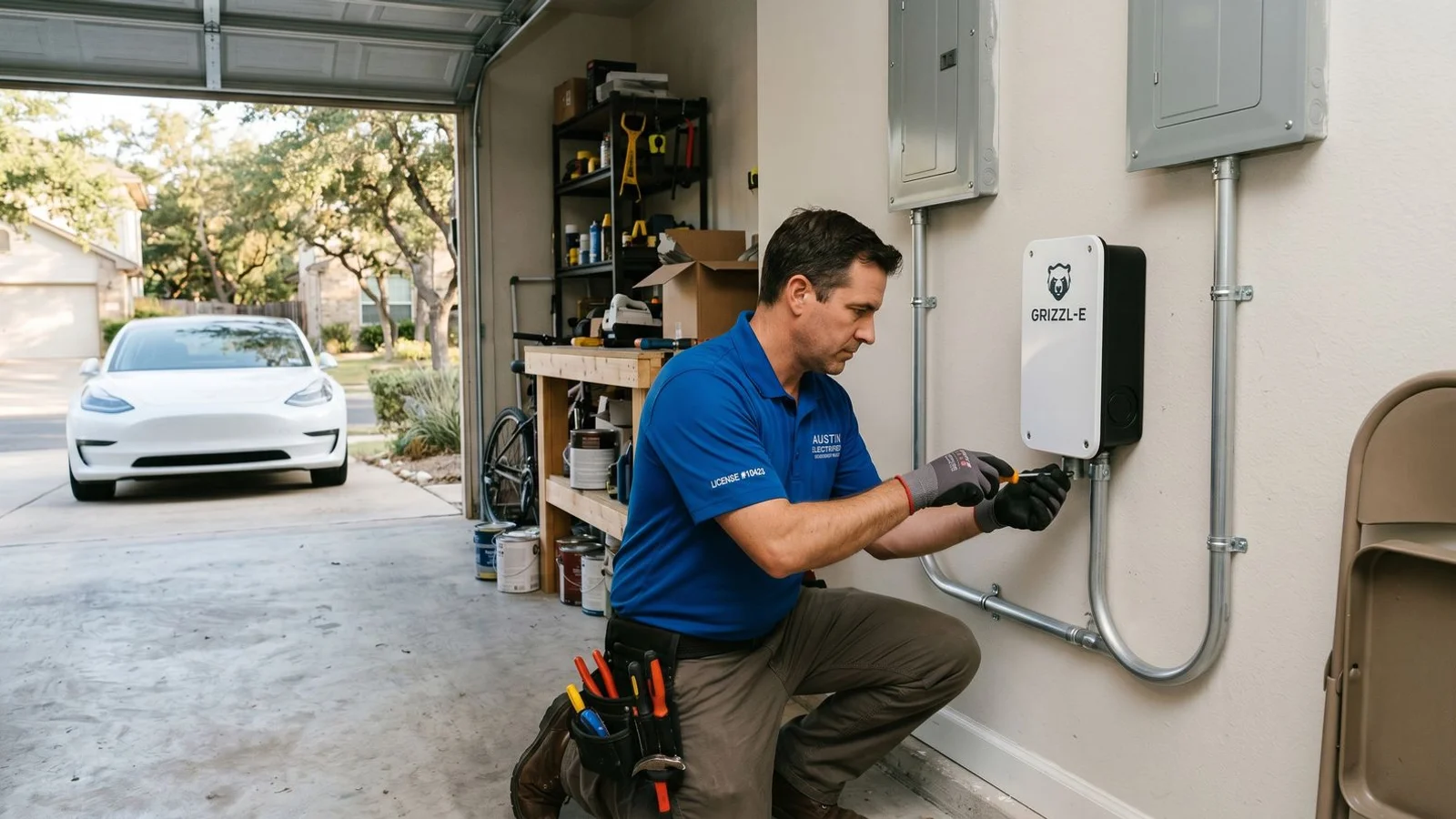
- A hardwired Level 2 install connects the charging station directly to your electrical panel. This delivers the fastest possible speeds up to 48 amps and eliminates the common failure points of a physical plug.
The 2023 National Electrical Code requires GFCI breakers for all new EV receptacles, which frequently causes nuisance tripping with portable chargers. A direct hardwired connection avoids this annoying issue entirely because the charging unit contains its own internal safety sensors.
We install hardwired stations for the vast majority of homeowners because they are highly reliable and qualify for great incentives.
The Federal government currently offers the 30C Alternative Fuel Infrastructure Tax Credit, which can cover up to 30 percent of your installation costs if you live in an eligible census tract.
Bottom line
Relying on a standard wall outlet is a frustrating experience that limits the true convenience of driving an electric vehicle. The clear winner in the level 1 vs level 2 ev charging debate is a dedicated home setup that eliminates range anxiety.
We routinely upgrade level 1 to level 2 charging systems in about two hours using flat-rate pricing. This simple project guarantees you wake up to a full battery every single morning.
Take the next step to improve your home charging experience.