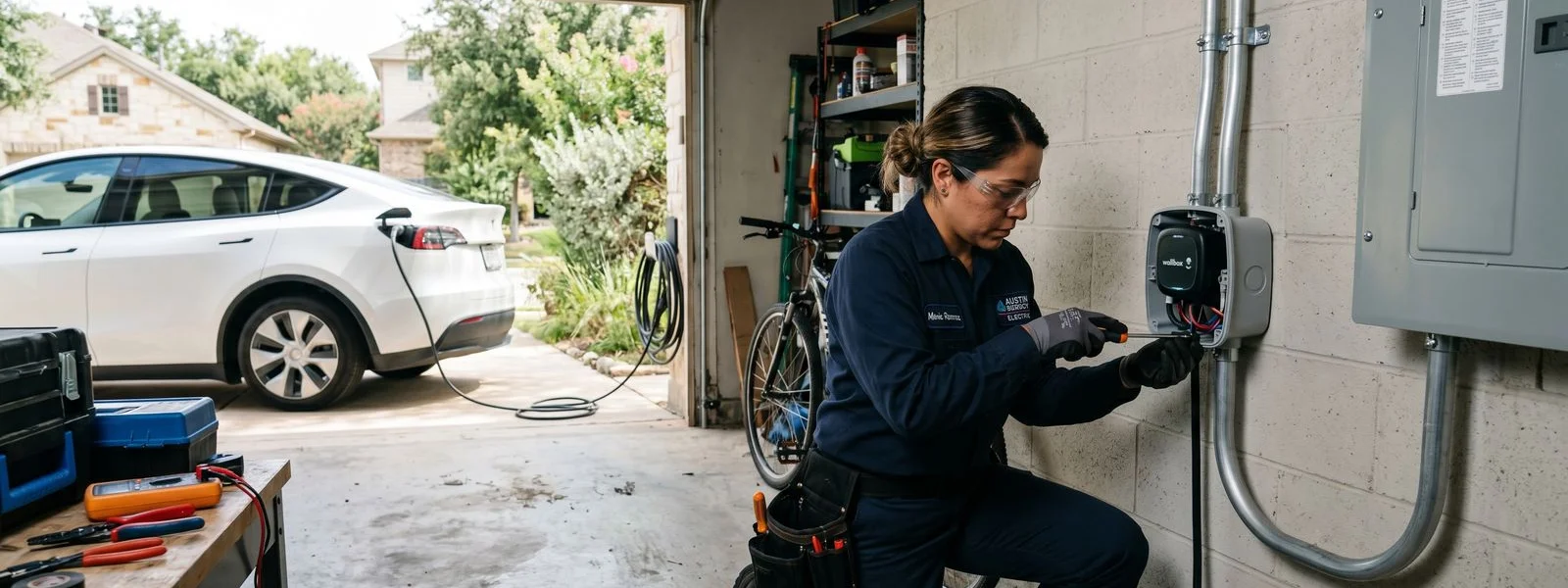
Do I Need a Permit to Install an EV Charger in Austin?
Yes, Austin requires a permit and inspection for hardwired Level 2 chargers. We handle the full City of Austin process for you.
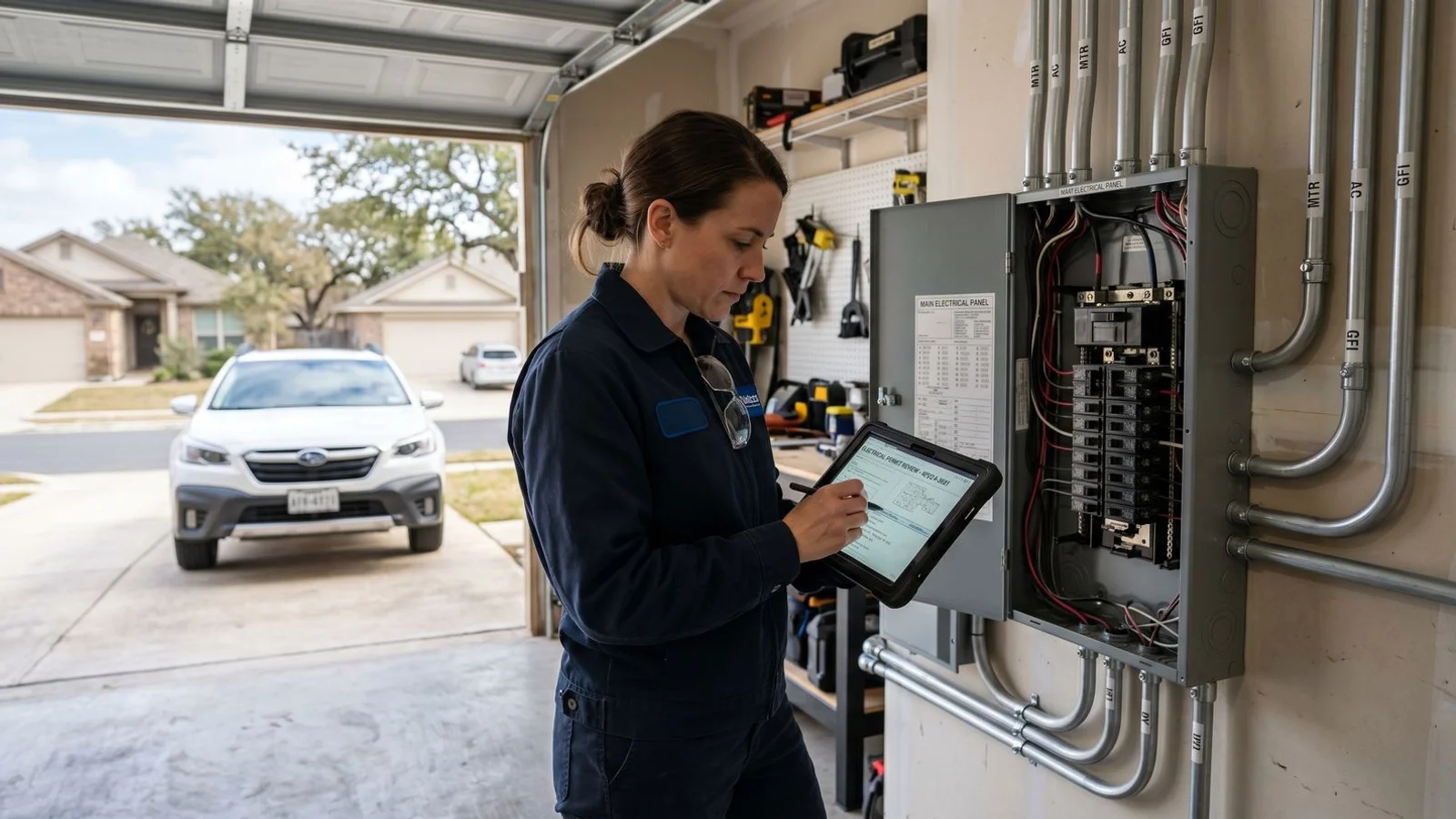
Yes, installing a hardwired Level 2 EV charger in Austin requires an electrical permit and a post-install inspection. This specific rule exists because the code treats vehicle chargers as continuous heavy electrical loads.
Our team frequently replaces unpermitted electrical work that creates major headaches during a home sale. Skipping the inspection process can completely void your property insurance policy.
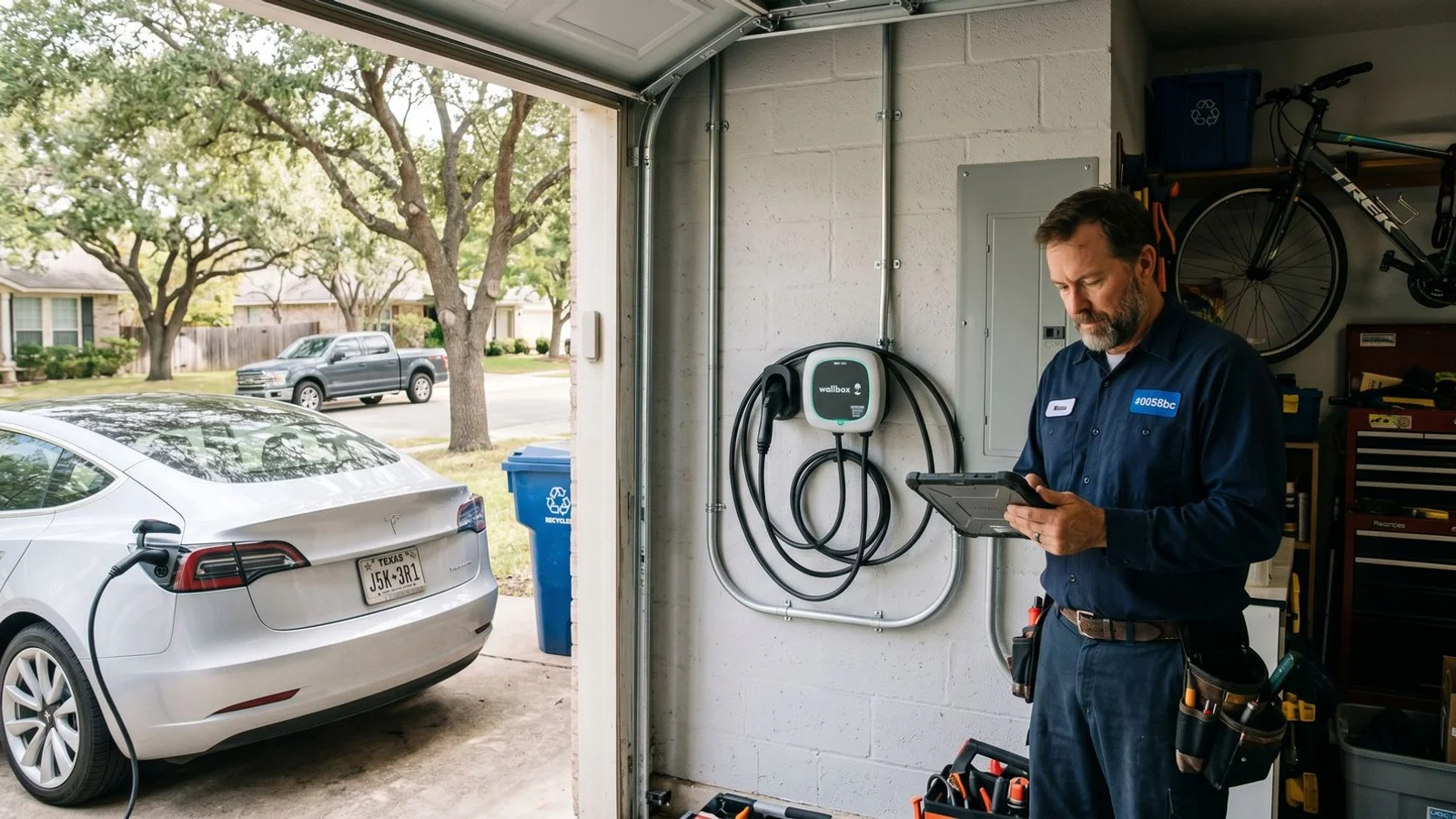
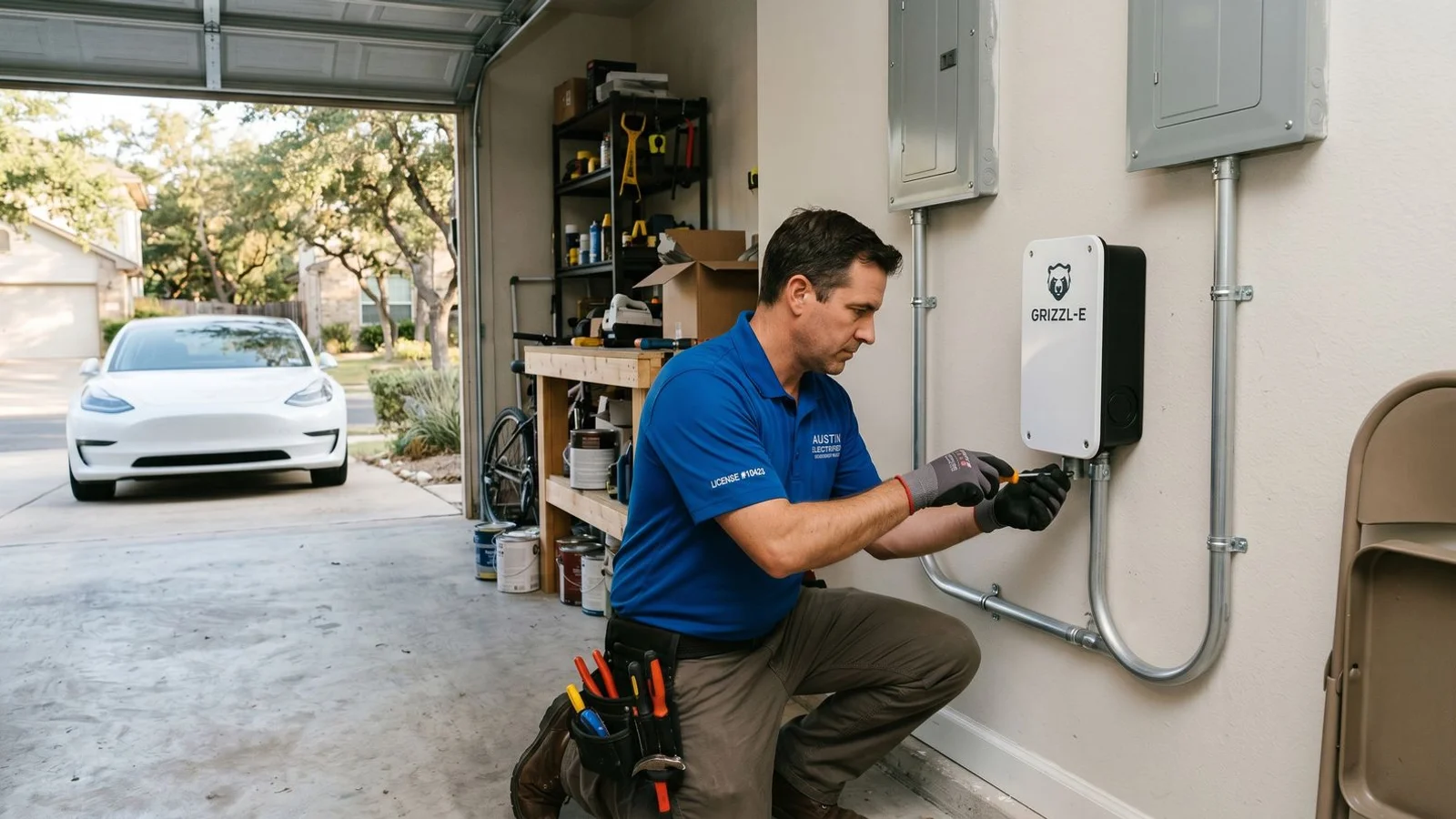
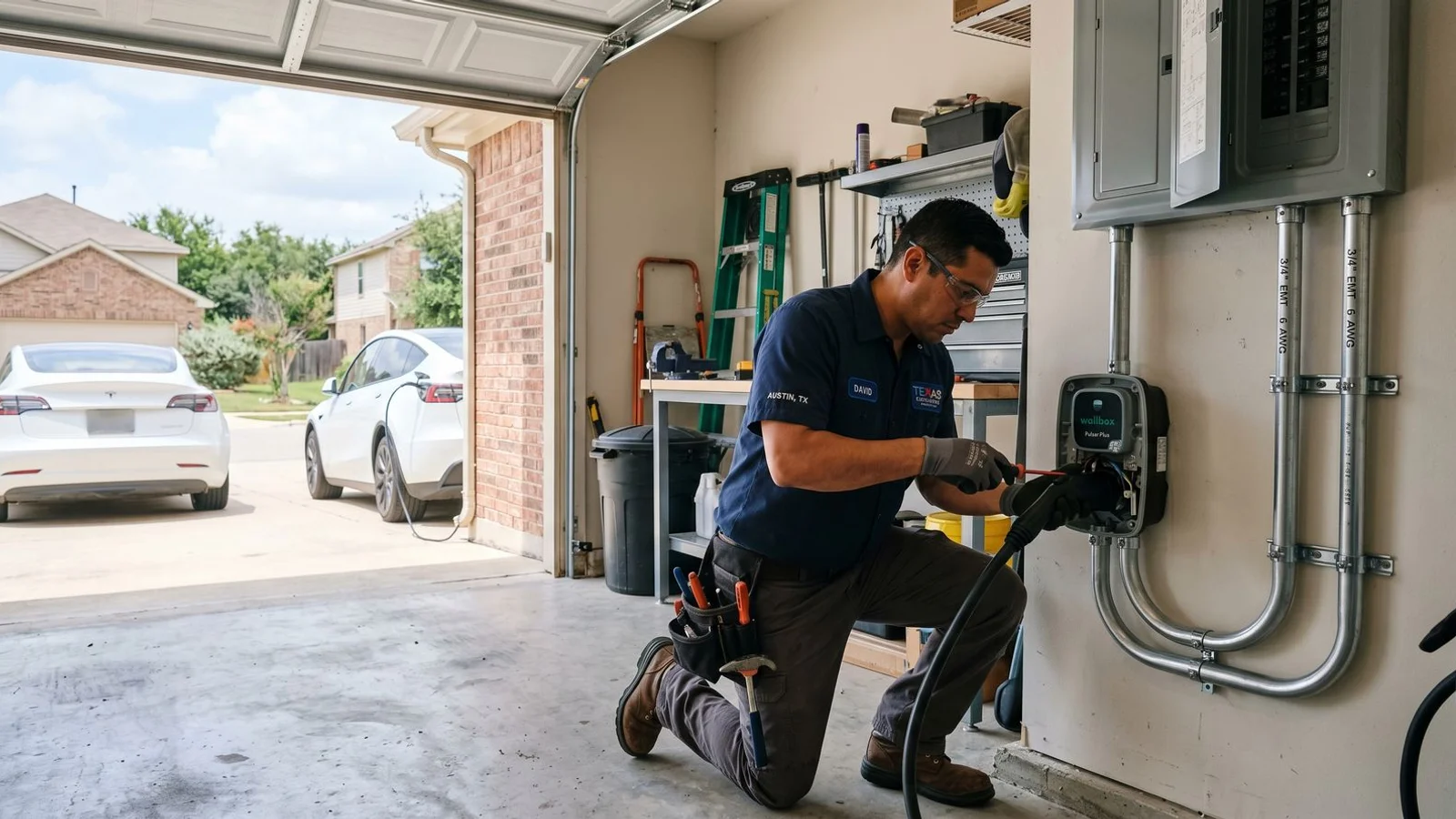
We manage this exact process daily as part of home EV charger installation in Austin for new electric vehicle owners.
To get an ev charger installation permit austin inspectors will approve, let’s examine the specific rules and explore how to skip the paperwork hassle.
The short version
Within the City of Austin, hardwired Level 2 EV chargers absolutely mandate a formal permit and a follow-up inspection. Our licensed technicians handle these requirements before any tools touch your wall. The city charges a baseline residential electrical permit fee of approximately $167 for this specific project in 2026.
We file every application directly through the Austin Build + Connect portal to prevent delays. Within the city limits, your specific project requires three key elements:
- An electrical permit filed with the City of Austin Development Services Department before the install begins.
- An ev charger inspection austin by a city official within a few business days after completion.
- The physical labor performed by a licensed electrical contractor.
This centralized system tracks the progress of your paperwork from start to finish. Our installers follow the strict continuous load rules outlined in National Electrical Code Article 625. This national standard dictates the exact wire sizing and breaker requirements for a safe setup.
We ensure your equipment clears all local safety standards on the first attempt. Suburban properties follow similar rules under different governing bodies.
What we do
For every project, your assigned technician manages the entire administrative workload from start to finish. We pull the permit on your behalf and include the application fee directly in the flat-rate quote. This transparent pricing strategy prevents surprise charges from the local utility office.
Our team files the installation plans with the appropriate jurisdiction for your specific neighborhood. You only need to be home when the city inspector arrives.
We coordinate that final visit and handle any questions the inspector might ask. Permitting and inspection scheduling are part of how long a home EV charger installation takes from start to finish. The table below shows exactly how this division of labor works:
| Service Step | Who Handles It | Why It Matters |
|---|---|---|
| Permit Pulling | Us | Prevents costly delays in the AB+C portal system. |
| Plan Filing | Us | Ensures local code compliance before work begins. |
| Inspection Coordination | Us | Secures your legal closeout and insurance protection. |
| Rebate Paperwork | Us | Secures up to $1,200 from the Austin Energy program. |
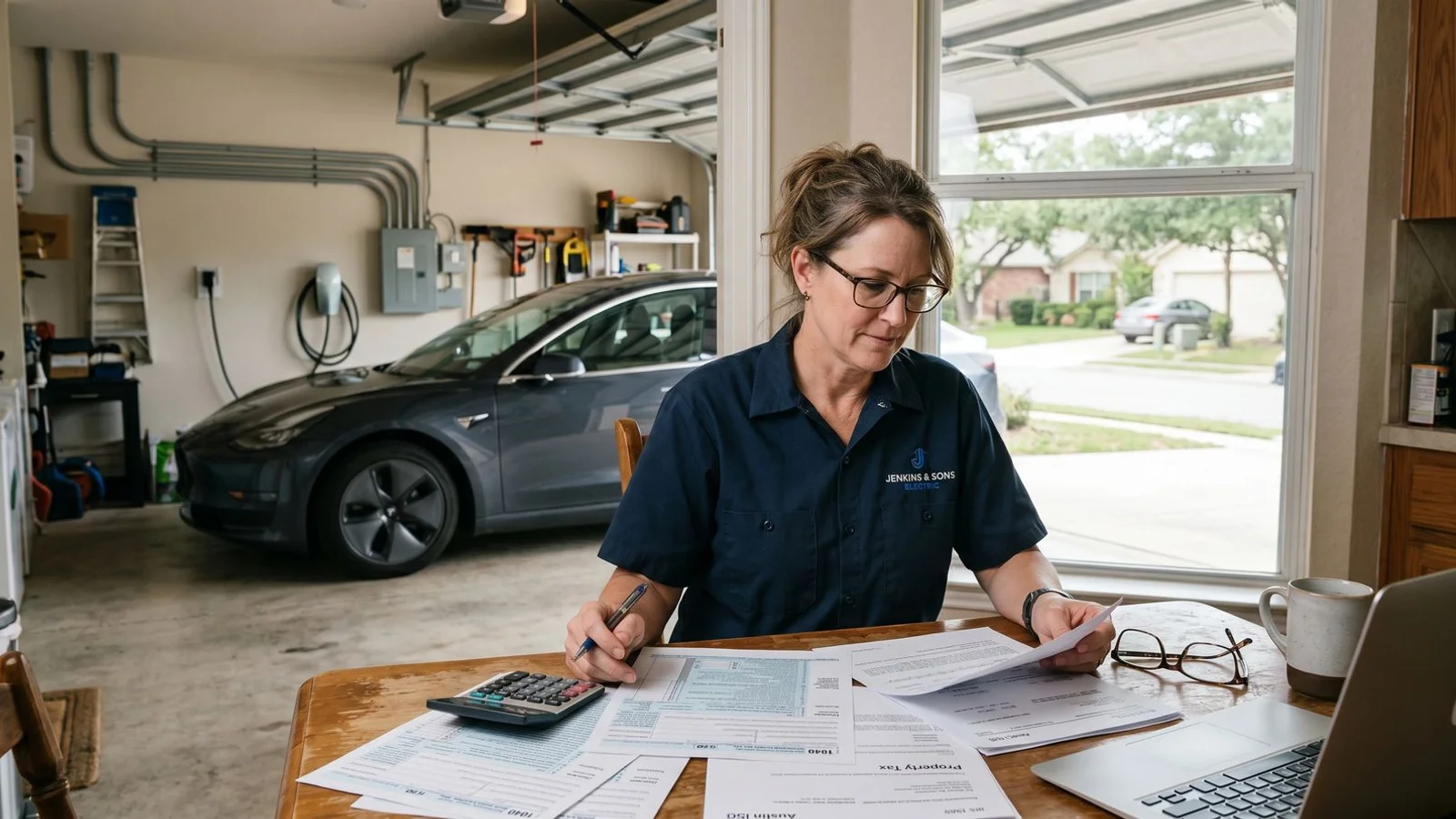
The last step involves handing over the finalized permit closeout documentation. Our customers use these vital documents to claim the federal 30C tax credit and lucrative local incentives.
For example, the 2026 Austin Energy rebate pays back 50% of your project cost up to $1,200 for compatible smart chargers. We deliver a complete package so you never touch the complex paperwork.
Different jurisdictions across Greater Austin
The Greater Austin metro spans several distinct municipalities with unique electrical permit requirements. We manage these varying local rules as a standard part of your flat-rate installation. The governing body changes depending on your exact zip code and utility provider.
Our dispatchers know precisely which local office requires the documentation. A standard austin electrical permit ev charger application goes to the central city office, but suburbs use different channels. We maintain active contractor registrations across the following primary jurisdictions:
- City of Austin: Development Services Department, electrical permit and inspection.
- Round Rock: City of Round Rock building inspection, separate from the Austin process.
- Cedar Park: City of Cedar Park permitting department.
- Pflugerville: City of Pflugerville permitting (distinct from Austin even though it resides in Travis County).
- Lakeway, West Lake Hills, and Bee Cave: City-specific permitting for each distinct municipality.
- Georgetown: City of Georgetown, served by Georgetown Utility Services.
- Williamson and Hays unincorporated: County-level permitting offices.
This localized knowledge prevents frustrating project delays. Our installers adapt the hardware choices to satisfy the specific inspector in your territory. Certain counties charge lower baseline fees but still demand rigorous safety sign-offs.
What happens without a permit
Three serious consequences occur when a cheap installation skips the formal approval process. We witness the costly aftermath of unpermitted electrical work almost every week. A failed DIY project or an unlicensed handyman job introduces immediate safety hazards to your property.
Our licensed electricians strictly follow the current safety codes to protect your family. Permits and inspections serve as a necessary safety check rather than simple bureaucracy. We highlight these three specific risks for homeowners:
- Insurance. A fire originating from unpermitted electrical work can completely void a homeowner’s insurance claim. EV chargers run continuous high loads, making this a documented and costly risk.
- Resale. A title search or home inspection at sale time will flag unpermitted electrical modifications as a condition. You might have to remove drywall to prove the wire sizing meets current standards.
- Code compliance. A non-inspected install often fails to meet National Electrical Code requirements. For example, NEC Article 625 treats chargers as continuous loads, requiring a 48-amp charger to run on a dedicated 60-amp breaker with thick, expensive wiring.
This strict continuous load rule prevents the wiring from melting inside your walls. Our service calls frequently involve replacing undersized wires installed by cut-rate contractors. Proper hardwiring also avoids the nuisance tripping common with the new GFCI receptacle mandates in NEC 625.54.
Bottom line
Permits remain legally required for hardwired Level 2 stations across Austin and the surrounding metro area. We manage every ev charger installation permit austin requires on your behalf. This full-service approach includes pulling the permit, filing the necessary plans, and coordinating the mandatory final inspection.
Our local team delivers the finalized closeout paperwork directly to your inbox at the end. You get a fully compliant, safe charging station ready for daily use.