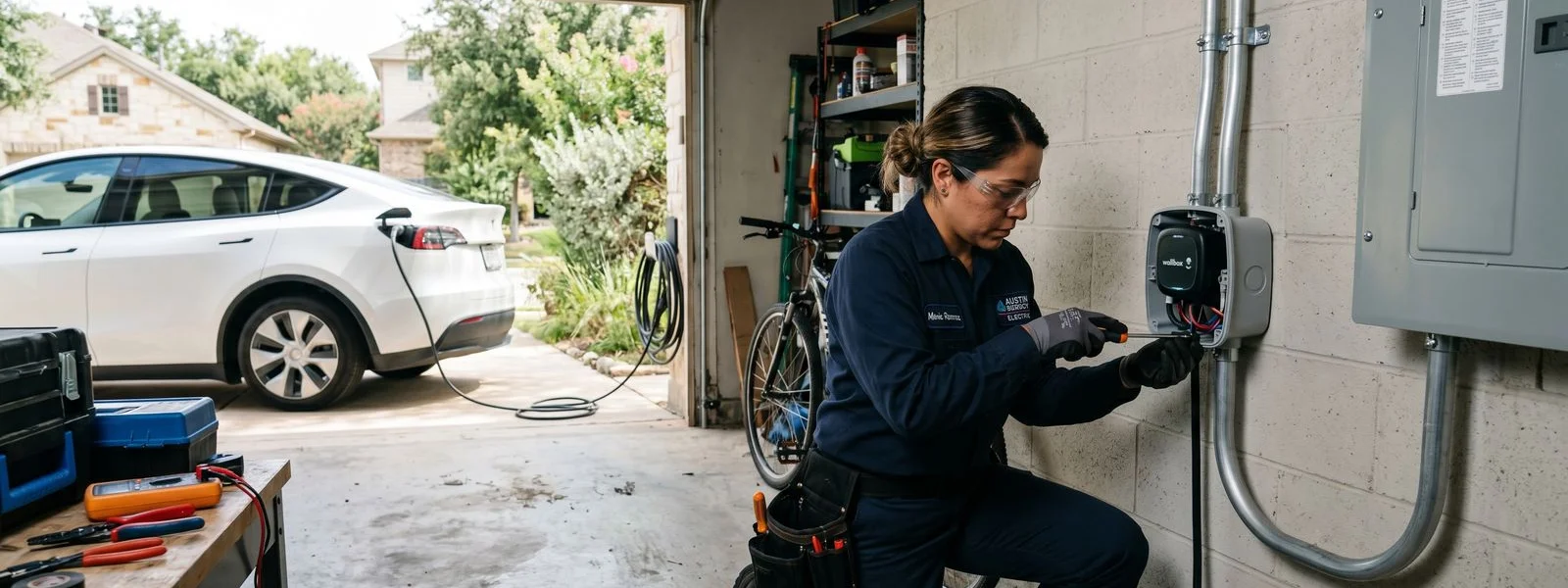
How Dynamic Load Sharing Keeps You NEC-Compliant
NEC Article 220.87 sizes a charger to real peak demand. How real-time monitoring throttles the charger to stay code-compliant.
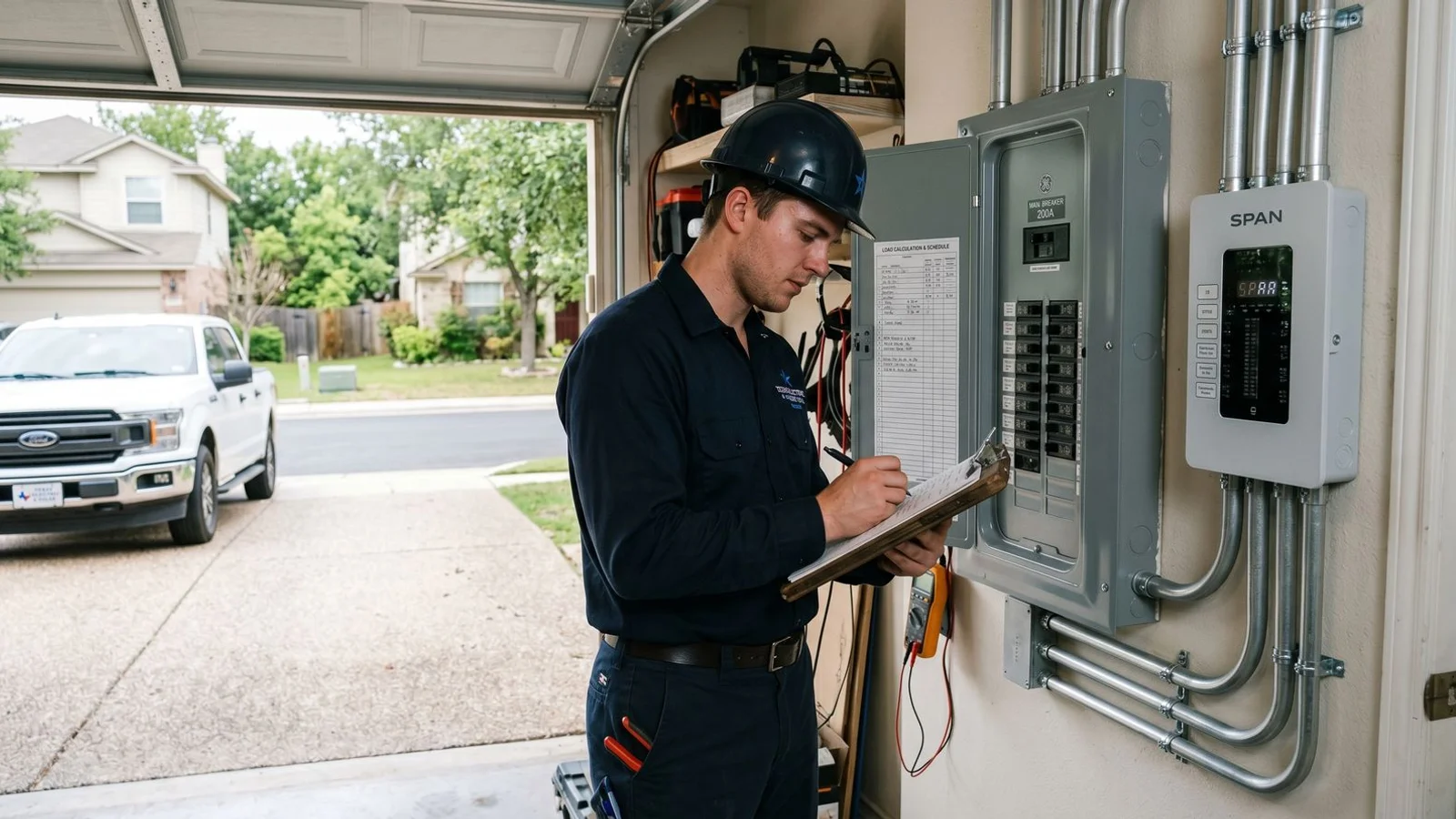
If you’re going to add a high-draw EV charger to a tight panel, the right way to do it isn’t just “trust the load management hardware.” It’s to do the install properly under NEC Article 220.87 and document the load calculation for the inspection.
Here’s the technical version of how dynamic load sharing stays code-compliant.
The two ways to calculate an ev charger nec load calculation
The NEC provides two primary methods to calculate if a new electric vehicle charger fits safely onto your existing electrical panel. Method A relies on summing up theoretical breaker maximums, while Method B uses actual measured electrical demand over a 30-day period.
Here is exactly how the two calculations compare.
Method A: The Conservative Approach (NEC 220.83)
Electricians using NEC 220.83 will simply add up the nameplate rating of every breaker in your box. This is the worst-case scenario calculation. It assumes you will run your air conditioner, electric oven, dryer, and EV charger at the exact same moment.
Our technicians find this method almost always triggers an automatic failure on a standard 150-amp panel. This forces the recommendation for a costly 200-amp service upgrade.
Method B: The Data-Driven Approach (NEC 220.87)
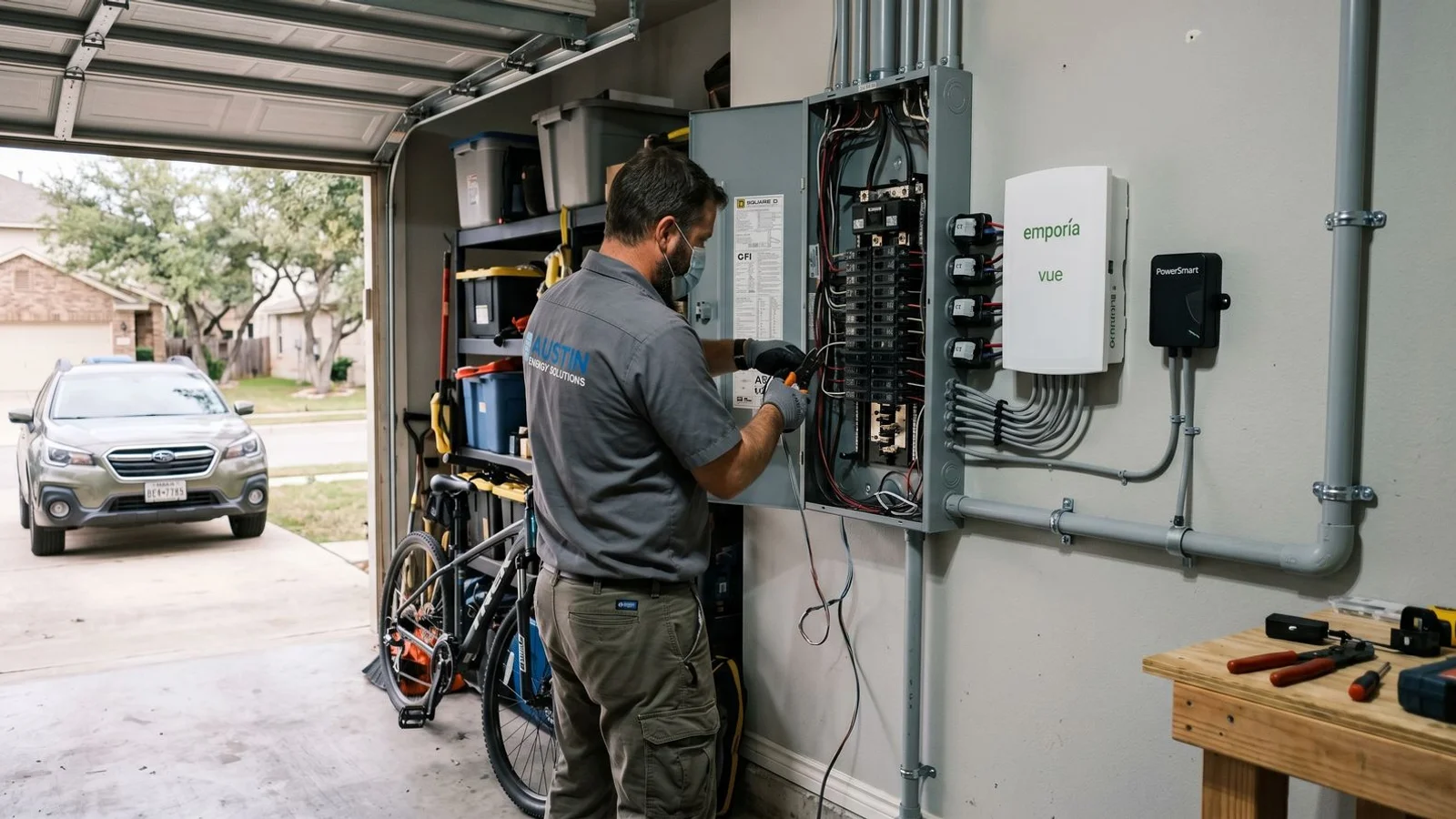
NEC 220.87 allows you to use a recording ammeter on your main service lines to capture your home’s actual peak draw. The code requires measuring this power demand in 15-minute intervals over a minimum 30-day period. You can use professional power loggers like the Fluke 435 Series II or smart home equivalents like the Emporia Vue 3.
The calculation formula then takes your 30-day Peak Demand, multiplies it by 125 percent, and adds the new EV load to properly size your nec 220.87 ev charger installation.
We use this specific data to prove your home actually has plenty of unused capacity. For homes with a recorded peak well below the main breaker rating, Method B confirms there is room for an EV charger.
Where dynamic load sharing fits in
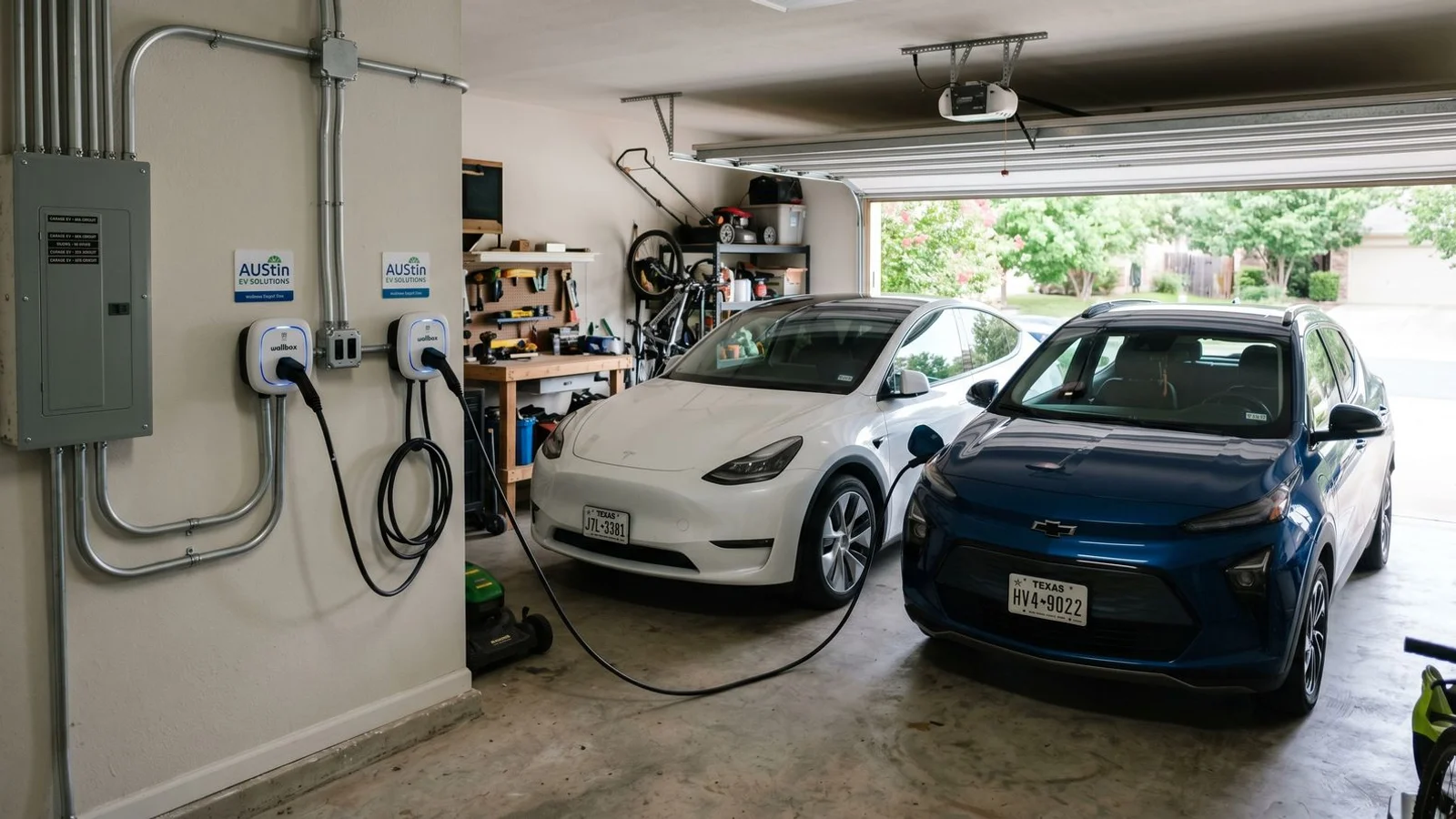
NEC 220.87 provides the approved math for your load calculation, but dynamic load sharing hardware enforces that math in real time. This equipment actively monitors your electrical usage and throttles your charger if your home nears its maximum capacity. If you are new to the concept, our overview of what EV charger smart load management is covers the fundamentals first. Under the updated NEC Article 750 for Energy Management Systems, this active monitoring guarantees your main breaker will never trip.
Here is the exact sequence of how the hardware protects your panel:
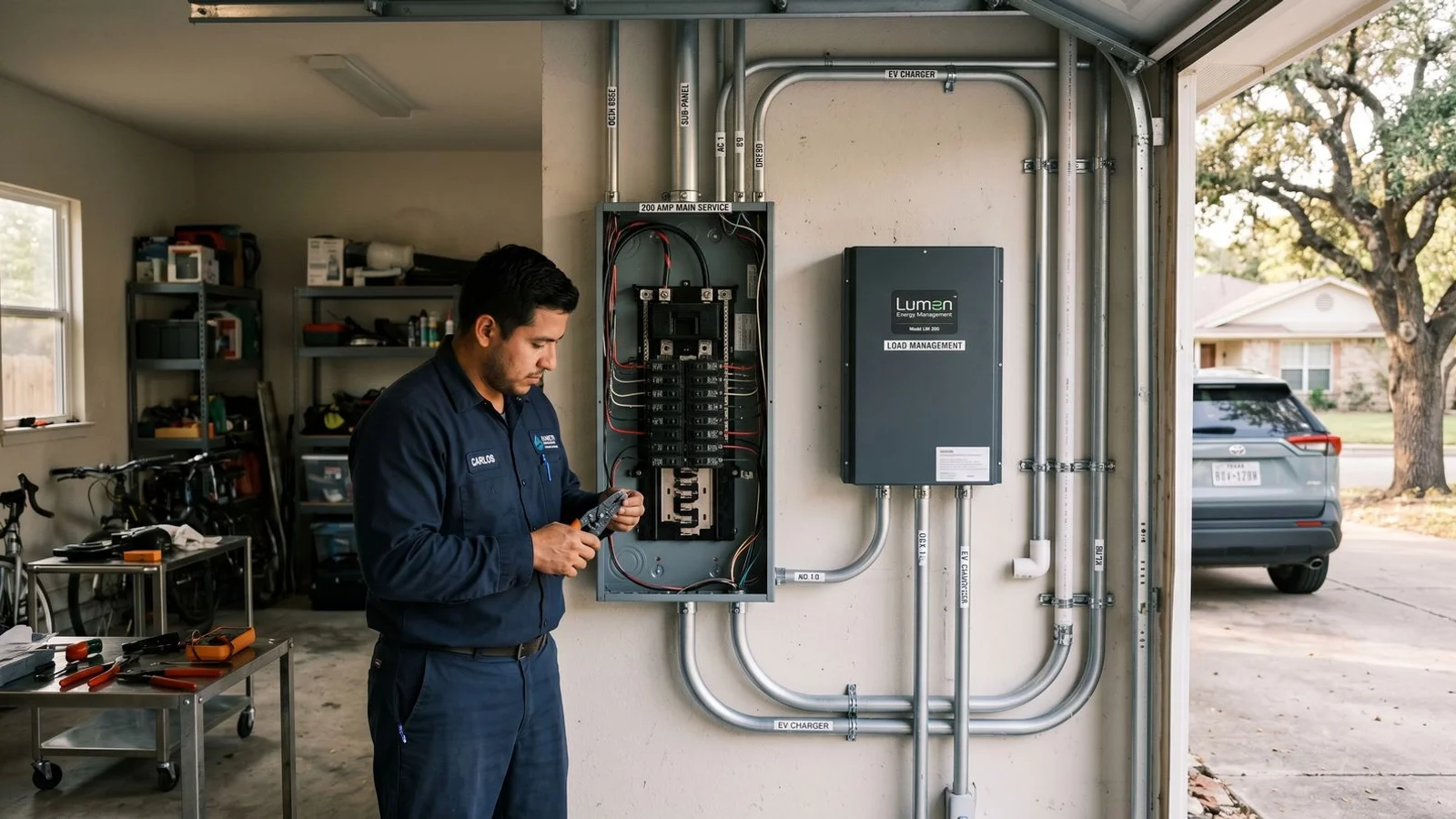
- CT Clamps: Current Transformers snap around your main service conductors to measure live current continuously.
- The Controller: A load management controller reads that data thousands of times per second.
- Active Throttling: When the measured household load plus the EV charger output exceeds a safe limit, the controller automatically reduces the charger’s draw.
- Automatic Recovery: The charger ramps back up to maximum speed the moment your household demand drops.
Our installers rely on this combination of an approved load calculation and active throttling to make the installation fully compliant. The 220.87 calculation proves you have enough average headroom. The active energy management ensures that a rare peak moment never creates a safety hazard.
The hardware that does the work
The two most common pieces of equipment for a UL-compliant installation are the Emporia Pro with PowerSmart and the DCC series of Demand Charge Controllers. Both systems successfully prevent panel overloads, but they handle the power management quite differently.
We install both types depending on the specific layout of your electrical panel.
Emporia Pro with PowerSmart
The Emporia Pro pairs a high-powered Level 2 charger with an Emporia Vue 3 energy monitor. This PowerSmart system reads your electrical panel usage 3,000 times per second. Instead of completely shutting off your charging session, it dynamically lowers the charging speed to keep your total usage under the limit.
Priced around $599, this system is highly cost-effective. It offers a smooth charging experience without abrupt power cuts.
Demand Charge Controllers (DCC)
The DCC-9 and DCC-12 systems take a slightly different approach known as a load shedding contactor. These brand-agnostic controllers cost roughly $950 and work with any EV charger on the market. If your total panel power consumption exceeds 80 percent for more than 15 minutes, the DCC physically de-energizes the charger.
Our field experience shows the DCC-12 is perfect for single-family homes with full panels. The unit automatically re-energizes your charger once the household load drops to a safe level.
| Hardware Option | Estimated Cost | Management Method | Best Use Case |
|---|---|---|---|
| Emporia Pro with PowerSmart | $599 | Dynamic Throttling (Slows down charge) | Homes wanting smooth, continuous charging. |
| DCC-12 Controller | $950+ | Load Shedding (Turns off charge) | Homes needing a brand-agnostic solution. |
Both solutions carry the required UL 3141 listing. Both options consistently pass City of Austin inspections when installed correctly.
What “documented correctly” means at inspection
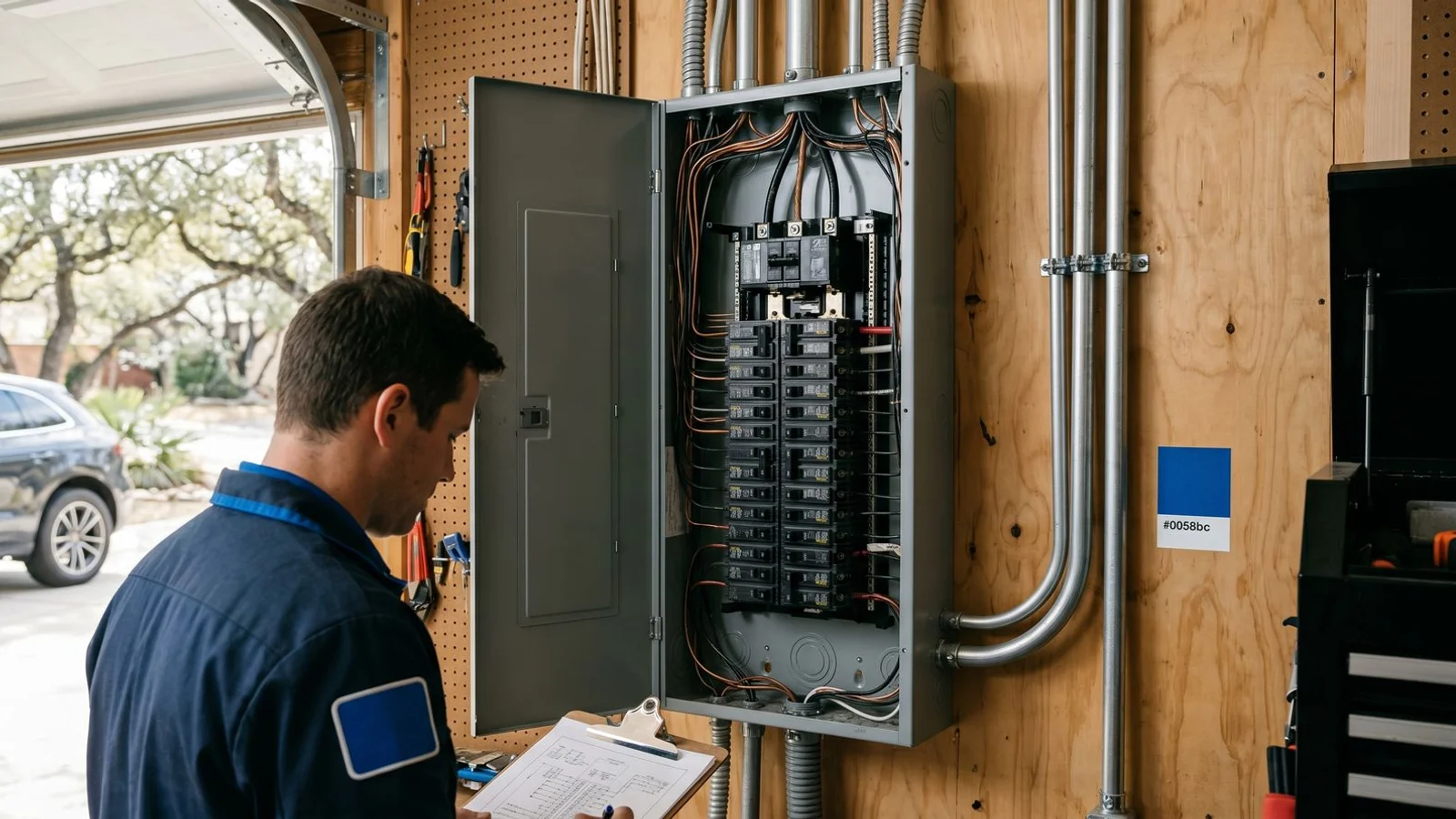
Handing the inspector a complete, organized paperwork packet is the only way to pass your final inspection. You must provide the official load calculation, a detailed installation plan, and the certified manufacturer data sheets. This documentation step frequently catches general electricians by surprise.
For a clean inspection, the Authority Having Jurisdiction (AHJ) requires three specific items:
- The NEC 220.87 load calculation showing your 30-day measured peak data and proving the proposed circuit fits safely.
- The installation plan providing a clear one-line electrical diagram showing the exact placement of your CT clamps, contactor wiring, and the new charger circuit.
- The manufacturer data sheets proving your load management hardware carries the UL 3141 certification for Energy Management Systems.
Our certified technicians carry templates for these exact documents to every job. Under the newer NEC 2026 Section 625.4 guidelines, inspectors are strictly enforcing these paperwork requirements for permanently installed equipment.
A proper UL 3141-certified installation company does this documentation automatically. It is just one more mandatory step on the final paperwork checklist.
Why this matters for you
Without documented dynamic load sharing on a tight panel, your only legal path forward is spending thousands of dollars on a full service upgrade. Installing a smart energy management system delivers the exact same fast charging speeds for a fraction of that cost. Industry data shows that nearly 80 percent of homes do not actually need a larger electrical panel.
By using NEC 220.87 and smart hardware, you gain several distinct advantages:
- Bypass heavy construction delays.
- Avoid the high costs of pulling new main wires from the utility company.
- Secure a clean, passed inspection on your first attempt.
We find that this specialized knowledge separates a properly trained automated load management installer from a standard electrician. The physical hardware exists everywhere. The proper installation, code compliance, and inspection-passing expertise are the true values you are hiring.
Bottom line
Combining the ev charger nec load calculation with UL 3141 active throttling hardware gives you code-compliant fast charging on a tight panel. You get the overnight charging speeds you need without paying for a massive panel upgrade.
Proper documentation is the final piece of the puzzle.
See our Group Power Management service or get your free flat-rate quote.
Frequently Asked Questions
What is NEC Article 220.87? +
Does load management pass inspection? +
Why does a general electrician install often miss this? +
Ready to talk specifics?
See our Load Management service page for pricing and what's included, or get a free flat-rate quote.