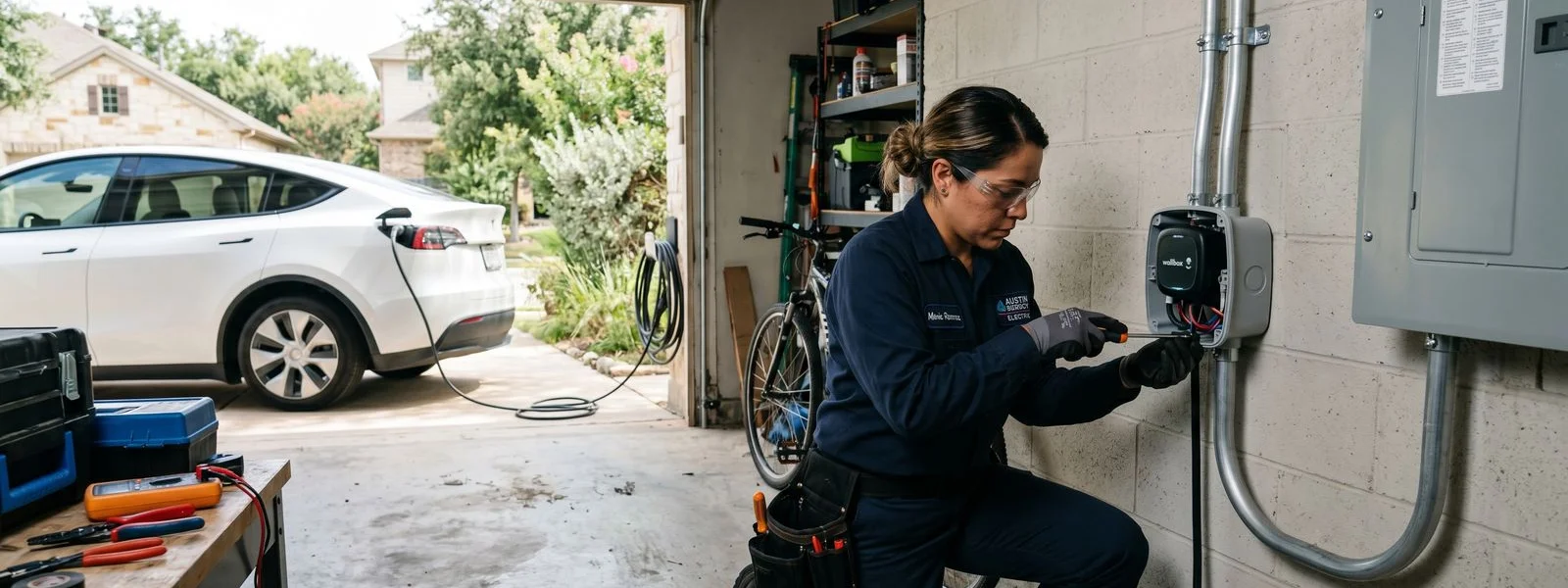
Why 48-Amp Hardwired Charging Needs the Right Wire Gauge
48A continuous charging needs correctly sized copper under the 80% rule. Why wire gauge and voltage drop matter on long runs.
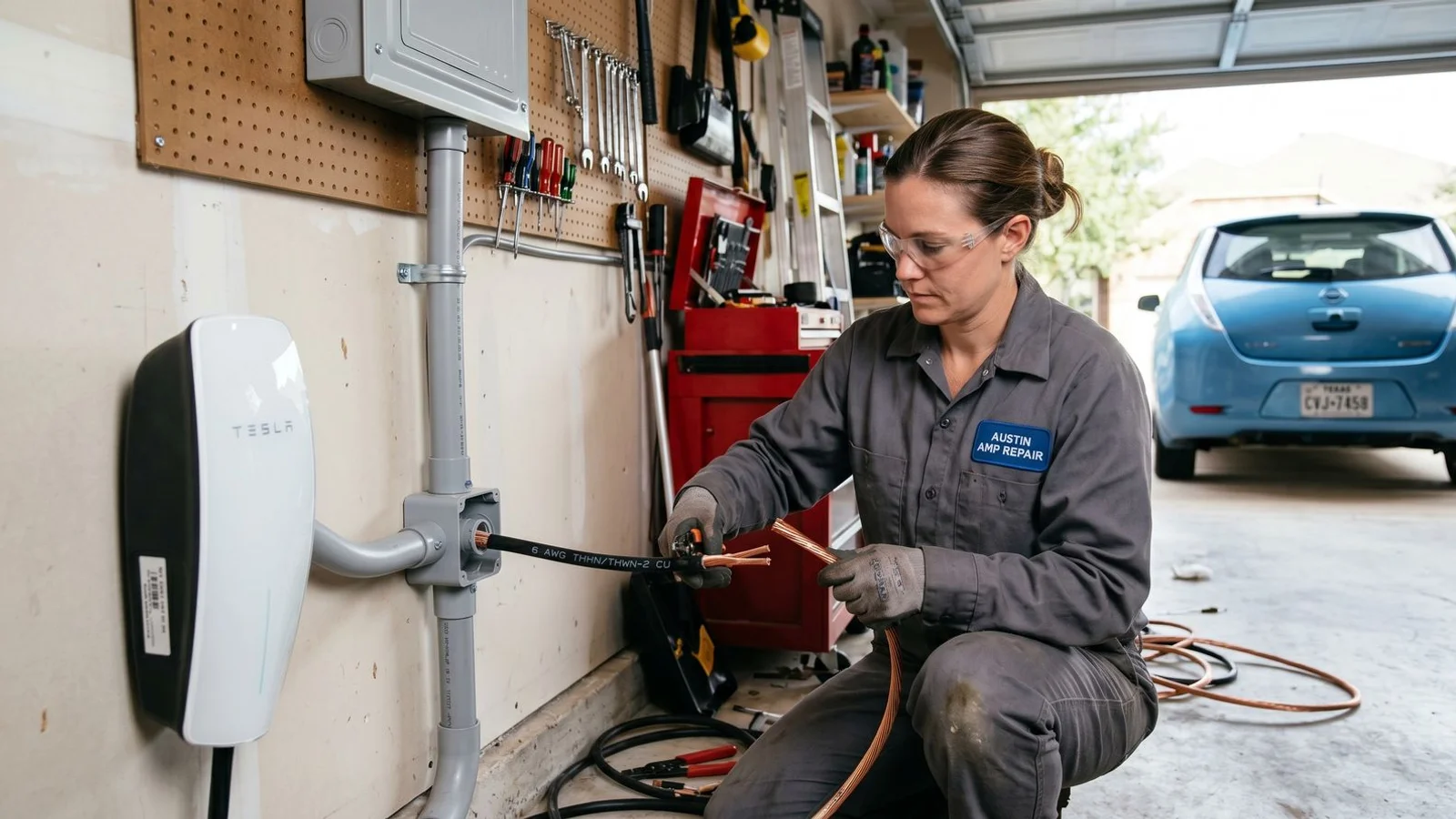
At Austin EV Charger Installation, we see this scenario play out almost every week. A homeowner invests in a premium unit, expecting fast recovery times.
Without the correct wire gauge, 48 amp ev charger setups will often crawl along at 32 amps.
The most common culprit is undersized wire that an installer assumed would be adequate. This missing link separates a system that delivers maximum speeds from one that throttles power to prevent a meltdown.
Let’s look at the hard electrical data, what the 2026 National Electrical Code requires, and outline exactly how to specify a safe installation.
The basic rule
A 48-amp continuous EV charger requires a 60-amp double-pole breaker and a minimum of 6 AWG copper THHN wire inside conduit. This specification follows the National Electrical Code (NEC) 125% rule for continuous loads.
We strictly follow these parameters for any standard run up to 75 feet from the electrical panel to the charging unit. You need to account for three main components during a compliant installation.
- Breaker Size: 60A double-pole. EV charging is a continuous load, meaning the circuit breaker can only be loaded to 80% of its rated capacity.
- Wire Specification: 6 AWG copper THHN or THWN-2. A 6 awg copper ev charger setup handles higher heat than standard indoor cables.
- Conduit Enclosure: Schedule 40 PVC or EMT metal conduit. The conduit must be sized appropriately for the wire bundle, which typically requires a 3/4-inch diameter.
Many DIYers make a critical mistake by using standard 6 AWG NM-B cable, commonly known as Romex. The NEC limits NM-B cable to the 60°C temperature column, which caps its safe capacity at 55 amps.
A 48-amp continuous load on a 60-amp breaker exceeds this rating. This makes 6 AWG Romex a clear code violation and a fire hazard.
Why 6 AWG copper specifically
The NEC ampacity tables rate 6 AWG copper THHN wire at 65 amps under 75°C conditions. This provides enough headroom for a 60-amp breaker.
Our team replaces undersized or incorrect wiring constantly. Smaller gauges lack the physical mass to dissipate the heat generated by a 48-amp load.
Common Wiring Mistakes to Avoid
- Using 8 AWG Copper: This is a frequent, dangerous shortcut. The wire will reach unsafe temperatures, and any local building inspector will immediately fail the installation.
- Substituting Aluminum Wire: Aluminum features a lower electrical conductivity than copper. A 6 AWG aluminum wire safely carries only 50 amps, meaning you must upsize to 4 AWG aluminum to meet code requirements.
- Mixing Wire Grades: Every conductor in the circuit requires the exact same gauge and insulation temperature rating.
Copper remains the gold standard for residential EV charging circuits. It provides superior conductivity and a tighter bend radius, making it much easier to route through tight garage conduit spaces.
Voltage drop on long runs
Long electrical runs cause a drop in voltage, meaning a charger 100 feet away requires thicker 4 AWG wire to deliver full power. As current flows through any conductor, inherent resistance converts some of that electrical energy into heat.
We calculate voltage drop carefully on every single project. A 240V circuit feeding an EV charger must retain adequate pressure to function correctly, keeping the drop below 3% of the source voltage.
Standard 6 AWG copper wire has a resistance of about 0.4 ohms per 1,000 feet. To prevent a massive voltage drop ev charger runs exceeding 50 feet need thicker cables.
| Run Distance | Required Copper Wire Gauge | Voltage Drop Impact |
|---|---|---|
| 0 to 50 feet | 6 AWG THHN | Minimal drop, standard performance. |
| 50 to 100 feet | 4 AWG THHN | 6 AWG becomes borderline, 4 AWG is a safe choice. |
| Over 100 feet | 3 AWG or larger | Significant drop, requires heavy upsizing. |
Thicker wire reduces resistance and keeps the voltage high at the connector end. Measuring the exact path before buying materials saves significant money and frustration.
What undersized wire actually does
Undersized wire forces smart EV chargers to throttle their output down to 32 amps and causes the physical cable insulation to melt over time. Neither outcome provides the fast, safe overnight charging you paid for.
We see the software side of this issue trigger frequent support calls. Modern equipment contains advanced sensors designed to protect your home.
- The Charger Throttles Output: Units like the Tesla Wall Connector monitor input voltage closely. If the system detects a voltage sag caused by thin wires, it triggers an error code like “CC_f008” and drastically reduces the charge rate. You bought a 48-amp charger, but your vehicle only receives 32 amps.
- The Insulation Degrades: Even without smart throttling, the copper itself runs far hotter than its rated capacity. Years of excessive thermal cycling will turn the plastic insulation brittle, creating a severe fire risk inside your walls.
A system that works fine on day one might fail dangerously on day five hundred. Proper sizing ensures the equipment operates well within its thermal limits.
What to ask about your install
You must ask any potential installer about their exact wire gauge specifications, run length calculations, and panel load capacity before signing a contract. A qualified electrician will provide specific, code-compliant answers immediately.
Our installation process always begins with a transparent discussion about the materials. You should demand the same level of detail from anyone working on your home.
Three Vital Questions for Your Electrician
- ”What gauge and type of wire are you running?” The answer for a 48-amp install must be 6 AWG copper THHN in conduit, or 4 AWG if they plan to use NM-B cable.
- ”Have you performed an NEC Article 220 Load Calculation?” Your existing 100-amp or 200-amp electrical panel might not have enough spare capacity to handle a new 60-amp continuous load safely.
- ”How are you accounting for voltage drop?” If your parking spot is far from the breaker box, the installer needs to specify a heavier gauge wire.
A reputable contractor answers these technical questions with hard numbers. A cheap installer will mumble about using whatever they have on the truck.
Future-proofing during pre-wiring
When executing new construction pre-wiring, you should pull at least 6 AWG copper wire through an oversized conduit even if you plan to install a smaller charger initially. Pulling slightly heavier wire while the walls are open costs almost nothing in the grand scheme of a build.
We highly recommend taking a few simple steps before the drywall goes up.
- Run a 1-inch conduit pipe: This leaves plenty of physical space if you ever decide to upgrade to an 80-amp charger that requires massive 3 AWG wires.
- Install a deep junction box: A larger box makes it much easier to fold heavy copper wires into place safely.
Battery capacities in modern electric vehicles continue to grow every year. Spending an extra fifty dollars on larger conduit today prevents a massive drywall repair bill five years down the road.
Bottom line
A hardwired 48-amp charger demands a minimum of 6 AWG copper wire on short runs, 4 AWG on long runs, and a dedicated 60-amp breaker. Anything less results in a slower charge, dangerously hot wires, and an immediate code violation.
When verifying the wire gauge 48 amp ev charger systems need precise checks to remain safe. Do not compromise on the foundation of your charging setup.
If you want the job done right the first time, See our hardwired install service.
Frequently Asked Questions
What gauge does a 48A charger need? +
Why does run length matter? +
Can I use aluminum instead of copper? +
Ready to talk specifics?
See our Hardwired Install service page for pricing and what's included, or get a free flat-rate quote.