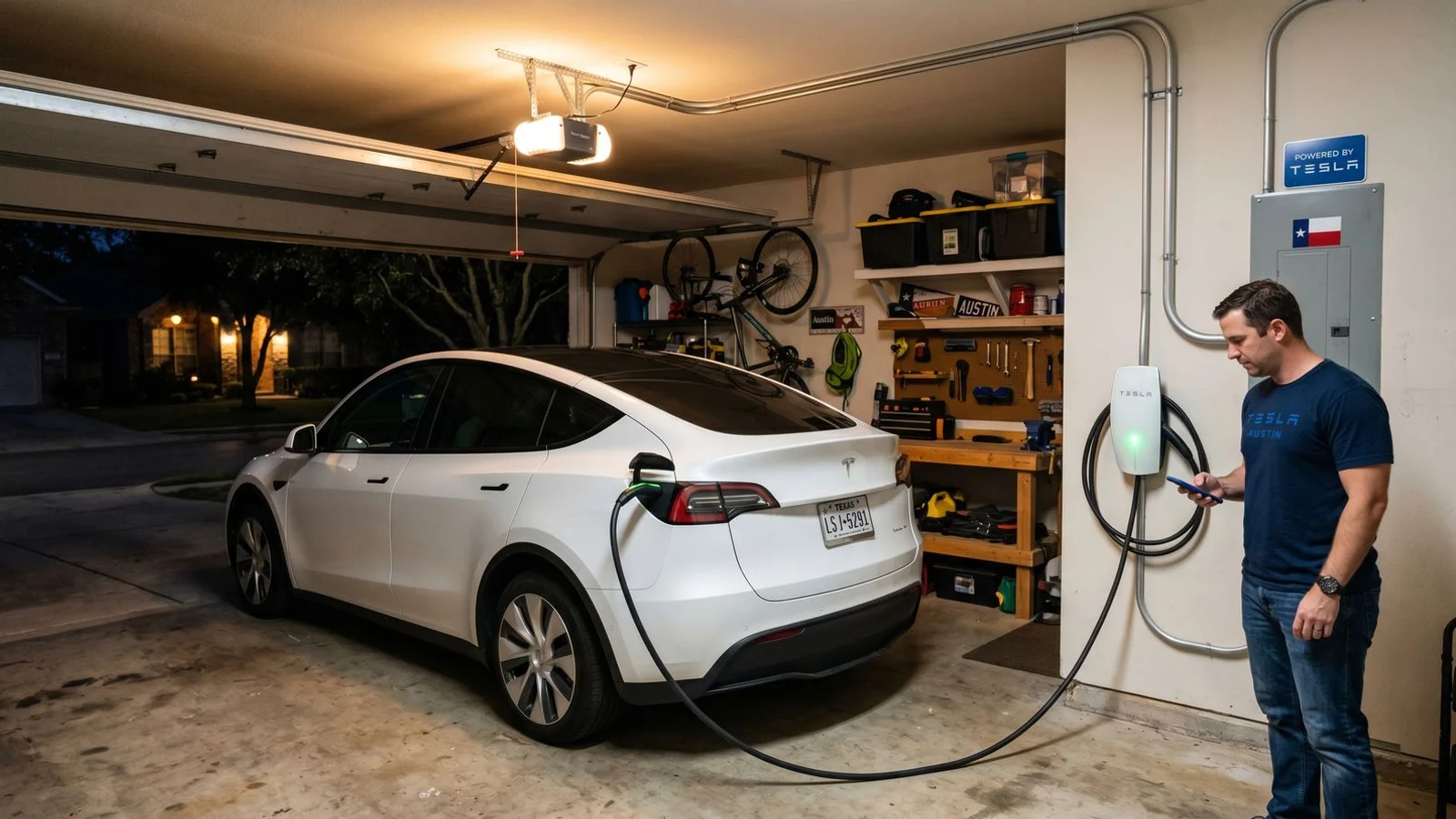
Installing a Tesla Charger for a Non-Tesla EV (NACS)
Want a Tesla charger for a non-Tesla EV? The Universal Wall Connector and NACS make it possible. Which vehicles work and install notes.
We see the same realization happen every week with new electric vehicle owners. Relying on a standard 120-volt Level 1 wall outlet quickly becomes frustrating, trickling in just 4 or 5 miles of range per hour.
Upgrading to a Level 2 station changes everything by fully recharging most batteries overnight.
We built Austin EV Charger Installation to solve exact problems like this, and customers often ask if a tesla charger for non tesla ev setup actually works. The short answer is yes, and you actually have two great ways to set it up.
Let’s look at the data, what it actually means for your daily driving, and the specific installation paths.
Option 1: The Universal Wall Connector (best)
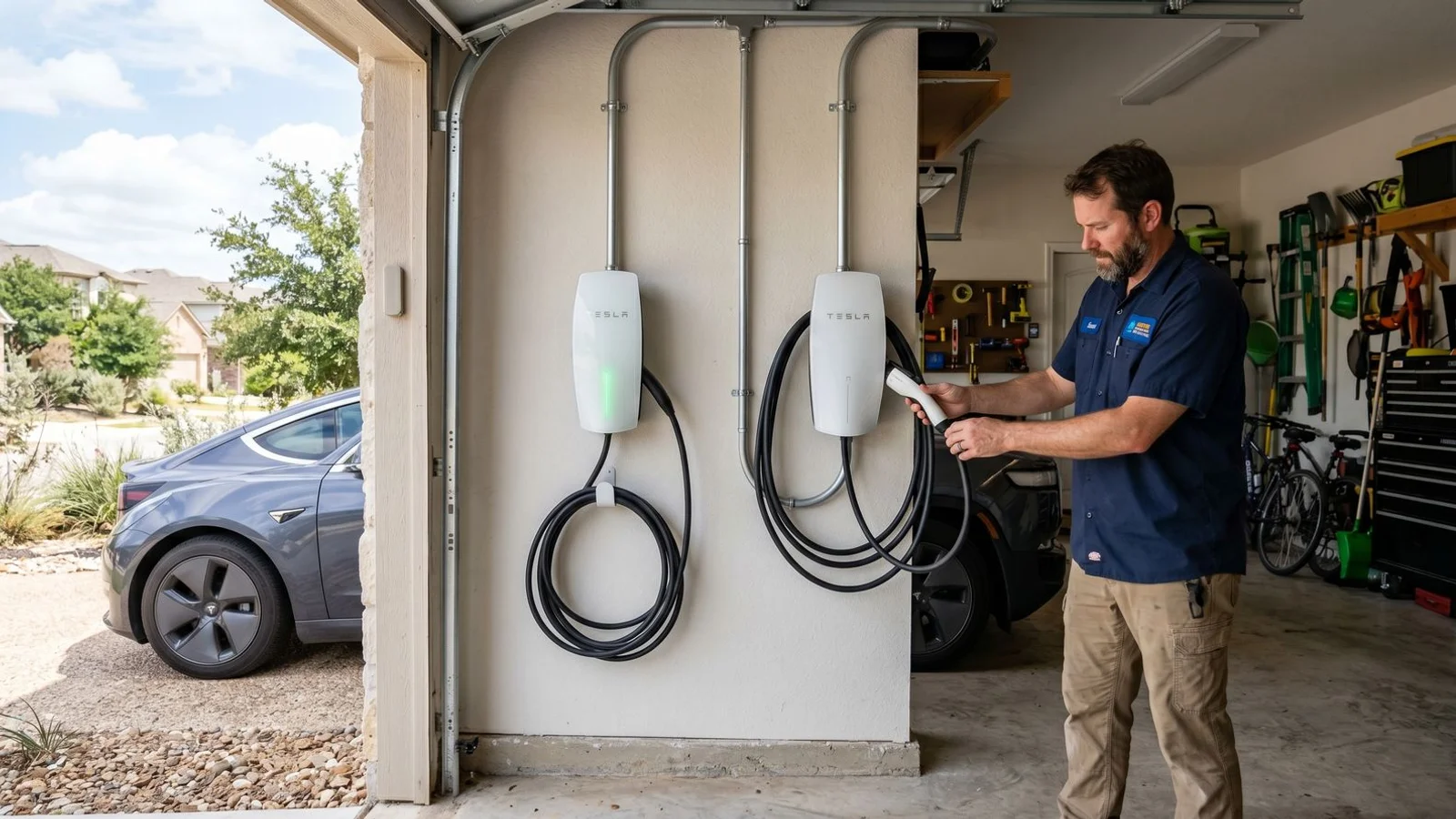
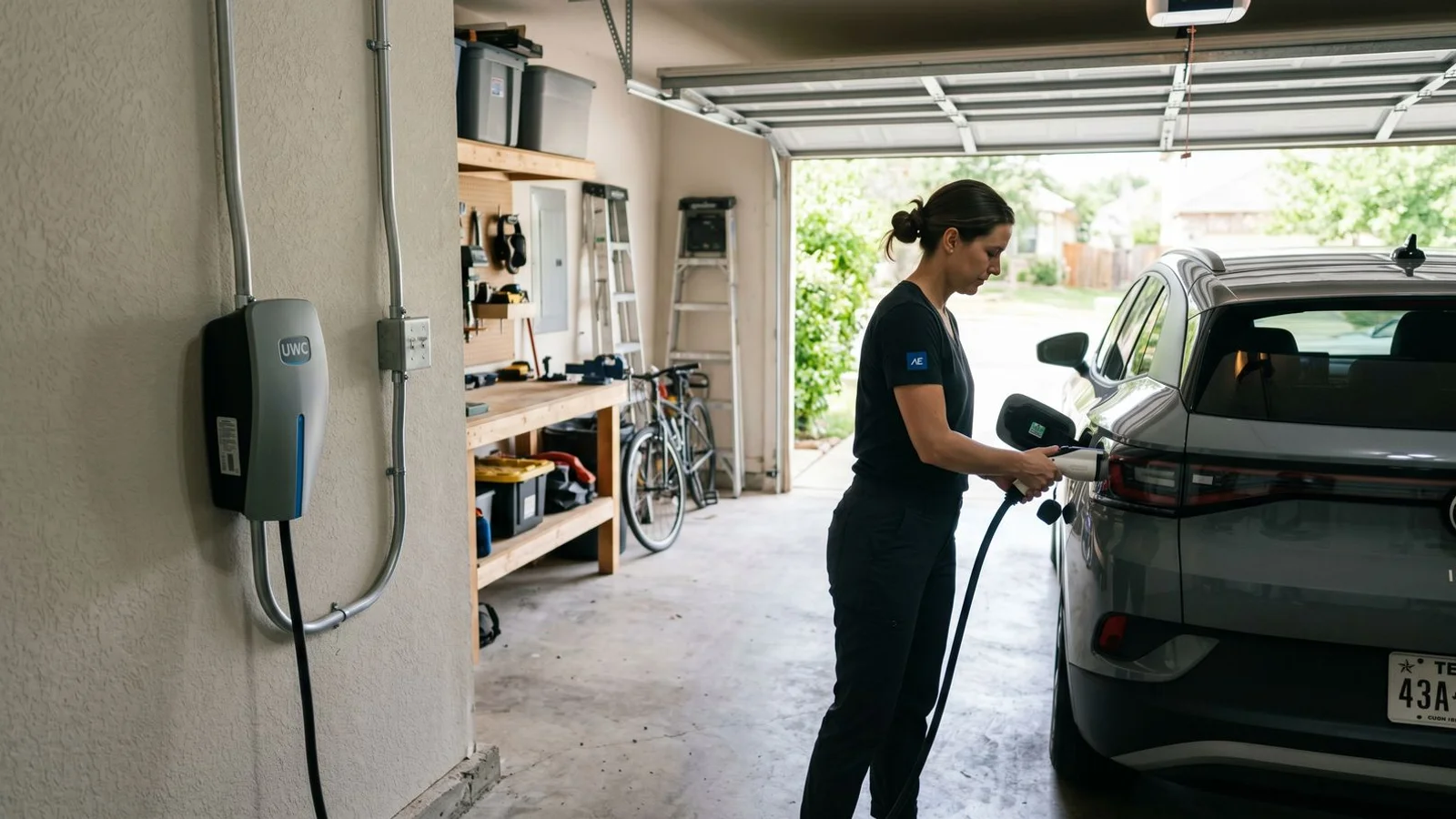
Our top recommendation for mixed-vehicle households is the Tesla Universal Wall Connector. This unit combines a built-in J1772 connector and the standard Tesla plug into one sleek station. The universal wall connector non tesla compatibility solves the daily plug hassle immediately.
Priced around $600 in 2026, it eliminates the need to buy and store separate accessories. You simply pull the 24-foot cable from the dock, and it automatically selects the correct plug for your car.
We love installing this model because it delivers the maximum 48-amp continuous charge rate. This speed adds up to 44 miles of range per hour to your battery. For a deeper look at the specs, check out our comparison of the Tesla Wall Connector vs Universal Wall Connector.
Key Advantages of the Universal Unit
- Zero loose parts: The integrated adapter locks securely into the base, preventing drops or loss.
- Native J1772 support: It charges any older non-Tesla electric vehicle without extra equipment.
- Future-proof design: You are completely covered if you add a Tesla to the household later.
Option 2: Tesla Wall Connector + NACS-to-J1772 adapter
Our alternative method involves pairing a standard Tesla Wall Connector with a dedicated adapter. You purchase the standard $450 base unit and attach an accessory to make it fit your non-Tesla vehicle port.
A reliable 48-amp adapter from recognized brands like Lectron or A2Z typically costs between $120 and $160. Adding this to the base charger price brings your total close to the cost of the Universal model.
We strongly advise against buying uncertified, budget adapters found on discount websites. Low-quality plastic components can overheat under continuous high-amperage loads and damage your vehicle’s charging port. Managing a separate nacs adapter ev charging connection every single day also gets tedious.
Comparing Your Setup Options
| Feature | Universal Wall Connector | Standard Tesla Unit + Adapter |
|---|---|---|
| Average 2026 Hardware Cost | ~$600 | ~$580 to $610 |
| Adapter Management | Built-in and locking | Separate, manual attachment |
| Max Charging Speed | 48 Amps (11.5 kW) | 48 Amps (Requires high-rated adapter) |
| Best Use Case | Mixed EV households | Homes that already own a Tesla unit |
Native NACS adoption is changing this
We are currently seeing a massive shift across the automotive industry to the North American Charging Standard. This protocol is officially designated as SAE J3400. New 2025 and 2026 models from major brands are arriving with this Tesla-style port built directly into the car.
Automakers including Ford, General Motors, Rivian, and Volvo have fully committed to this transition. If you buy a new vehicle from these manufacturers today, it will likely plug straight into a standard Tesla connector without any modifications.
Our installation schedule reflects this change, as more buyers realize the Tesla form factor is becoming the universal default. The industry-wide adoption is exactly why investing in this specific hardware makes long-term financial sense for your garage.
Which non-Tesla vehicles work today
Our installation crews verify compatibility across dozens of different vehicle models every month. A Tesla-style home station can successfully charge almost any electric car on the road today.
Large vehicles like the Ford F-150 Lightning, which features a massive 131 kWh extended battery, specifically require a powerful Level 2 setup to fully recharge overnight. The connection type your specific vehicle uses depends entirely on its manufacturing year.
We mapped out the standard port types for the most popular electric models below. For detailed charging speeds per vehicle, review our guide on Vehicle-Specific Charging.
- Ford Mach-E, F-150 Lightning (J1772 on older models, NACS on newer ones)
- General Motors Chevy Bolt, Equinox EV, Silverado EV (J1772 on older, NACS on newer)
- Hyundai Ioniq 5, Kona EV (J1772 standard)
- Kia EV6, Niro EV (J1772 standard)
- Rivian R1S, R1T (J1772 on older, NACS on newer)
- Volkswagen ID.4 (J1772 standard)
- Mercedes EQ Series (J1772 on older, NACS on newer)
- Volvo and Polestar (J1772 on older, NACS on newer)
The install is the same
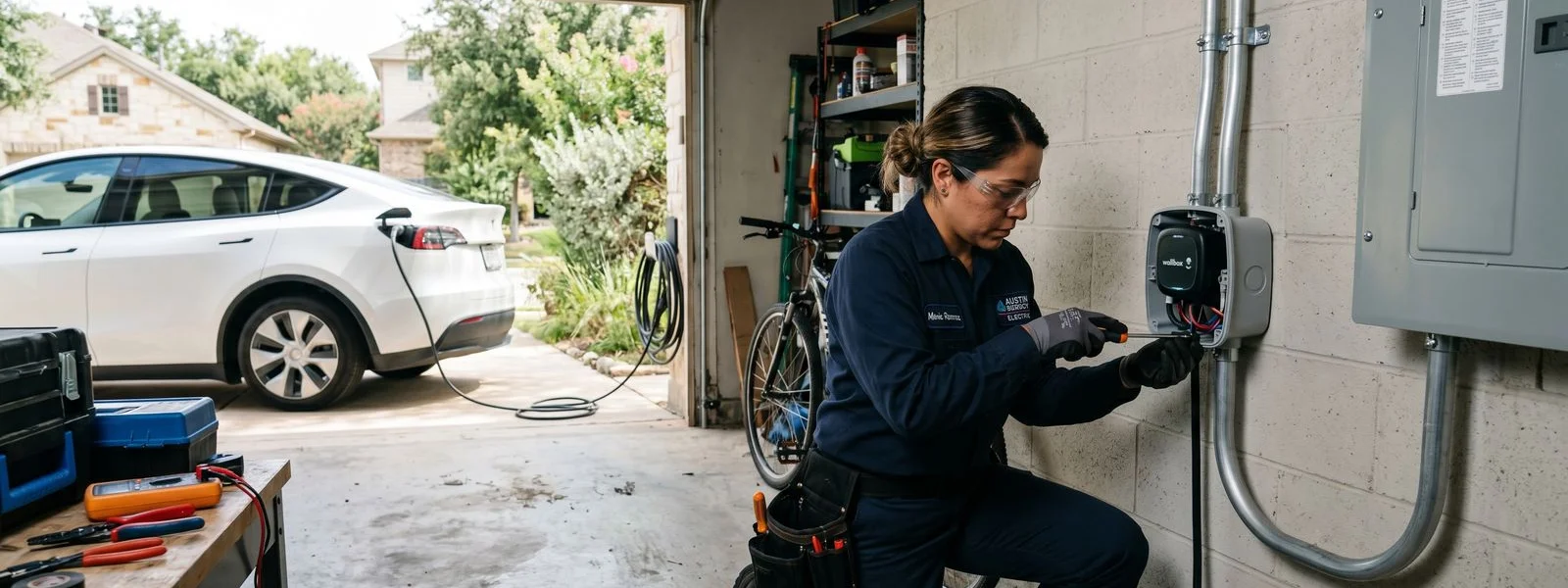
Our electricians follow the exact same wiring procedures for both the Universal and standard Tesla models. Both units require a hardwired 60-amp electrical circuit to achieve their maximum 48-amp charging speed.
The 2023 National Electrical Code, specifically Article 625.54, mandates expensive GFCI breakers for plug-in EV receptacles. Hardwiring your station directly into the panel bypasses this rule and prevents annoying nuisance tripping.
We always use high-quality 6 AWG copper wire and clean conduit routing to ensure peak performance. A professional, certified installation typically takes about two hours from start to finish.
Bottom line
We know that transitioning to electric driving comes with a learning curve. A tesla charger for non tesla ev provides a highly reliable daily charging routine.
The Universal model offers the cleanest and most practical setup for today’s market. As the J3400 standard takes over, having this hardware ensures your garage is ready for whatever you drive next.
Our team is ready to help you upgrade your charging experience. You can easily see our Tesla install service or get your free flat-rate quote.
Frequently Asked Questions
Can a non-Tesla use a Tesla charger? +
What's NACS vs J1772? +
Will charging speed be the same? +
Ready to talk specifics?
See our Tesla Wall Connector service page for pricing and what's included, or get a free flat-rate quote.