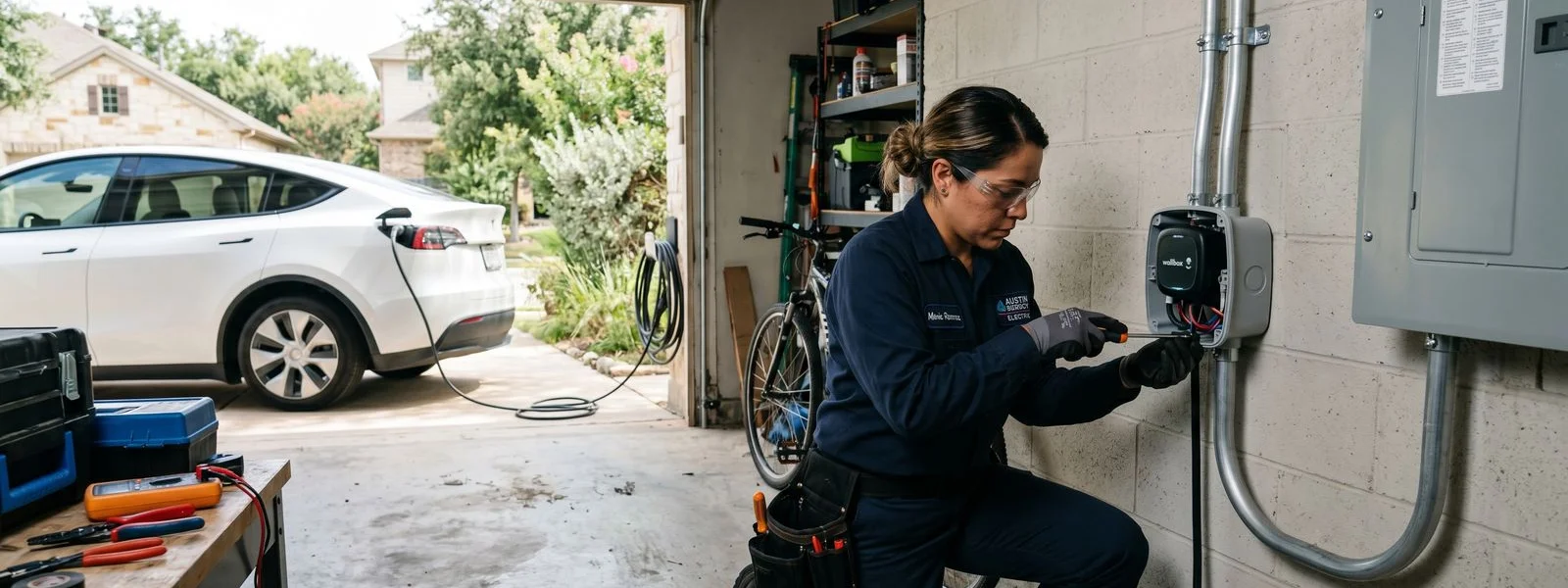
Hardwired vs Plug-In EV Charger: Which Is Right for You?
Compare speed (48A vs 40A), portability, cost, and GFCI rules to choose between a hardwired charger and a plug-in NEMA 14-50 setup.
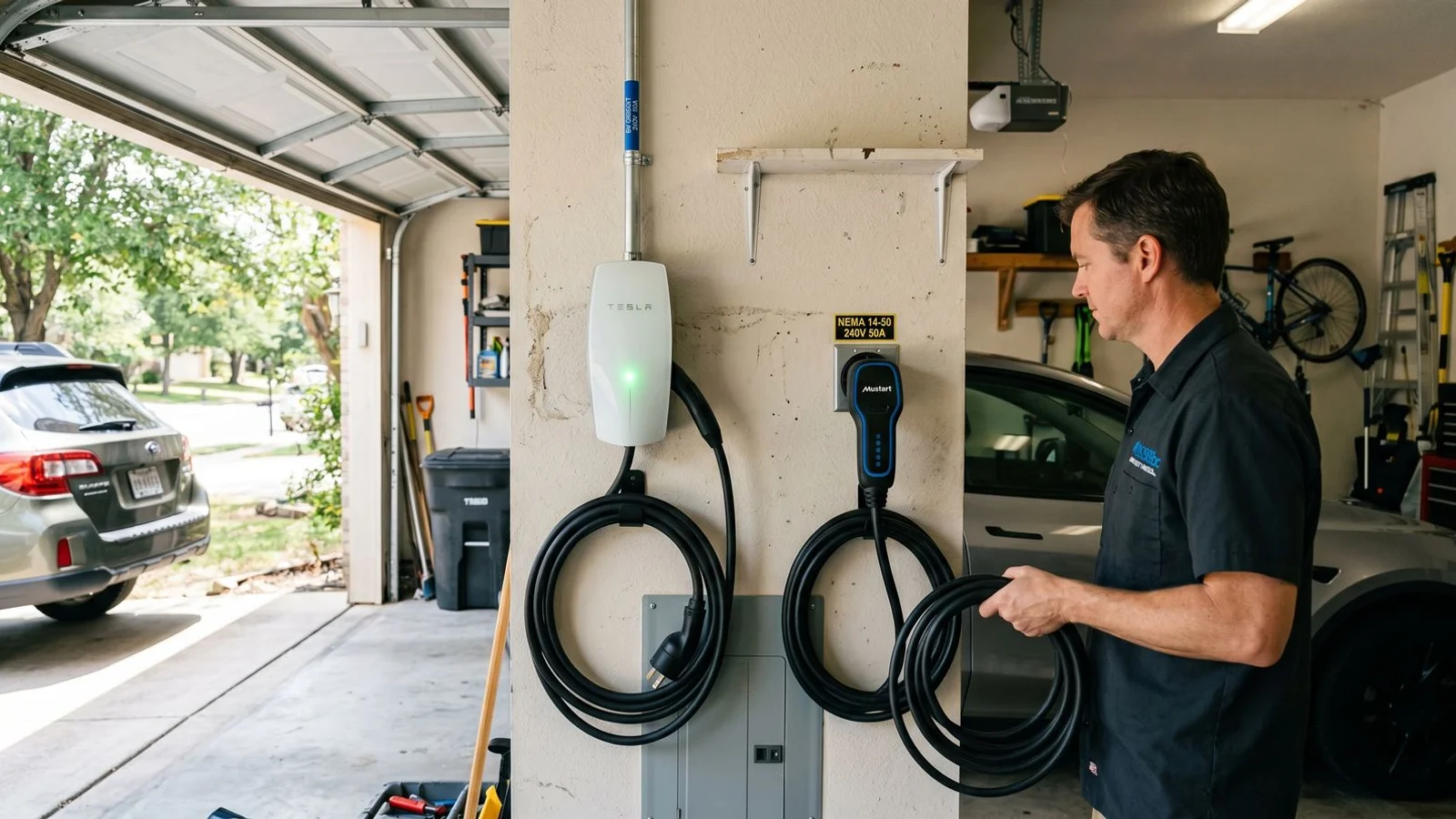
We hear one specific question more than almost any other when talking with new EV owners about their residential setups. That recurring question is whether it makes more sense to choose a hardwired vs plug in ev charger.
Our team at Austin EV Charger Installation explains that both a permanent hardwired install and a flexible NEMA 14-50 plug-in setup comply with US electrical codes. The 40-amp versus 48-amp speed difference is exactly what separates a standard setup from a highly optimized one.
Let’s look at the data, what it is actually telling us, and then explore a few practical ways to respond.
The head-to-head: Hardwired vs Plug In EV Charger
| Feature | Hardwired | Plug-in (NEMA 14-50) |
|---|---|---|
| Max continuous current | 48A | 40A (NEC cap on plug) |
| Power Output | 11.5 kW | 9.6 kW |
| Required Breaker Size | 60A | 50A |
| Real-world speed | ~44 mi/hr | ~32 mi/hr |
| Install cost | $1,200 to $1,800 | $1,100 to $1,650 |
| Hardware | Built-in to the wall unit | Outlet + portable charger |
| Portable | No | Yes, comes with you |
| Failure points | Fewer | Receptacle terminations |
| GFCI required | Built into charger | Yes (breaker-style GFCI) |
| Code permit | Same | Same |
We use this data to help customers visualize the exact performance differences. This quick comparison shows why hardwiring holds an edge for speed, while plugs offer distinct flexibility. Our crews find that seeing the numbers side-by-side simplifies the decision process.
When hardwired wins
Maximizing Your Vehicle’s Speed
Your car dictates the maximum power it can accept. We see many new owners surprised to learn that a standard NEMA 14-50 plug caps out at 40 amps of continuous current. That cap limits you to about 9.6 kW of power.
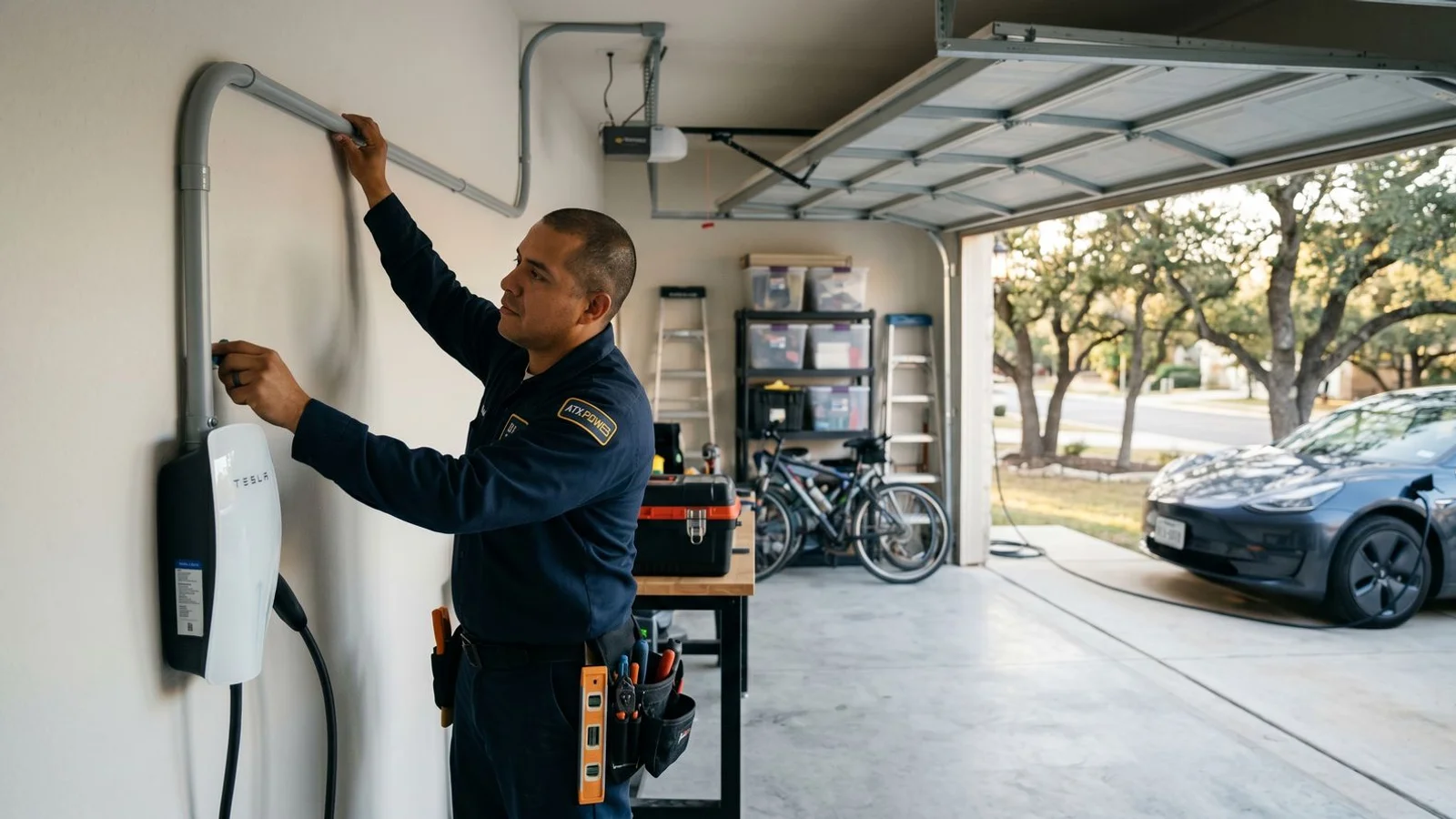
Our installers prefer a hardwired setup because it supports a 60-amp breaker, which delivers 48 amps and 11.5 kW of power. Vehicles like the Tesla Model Y, Ford Mach-E extended range, and the 2026 Chevy Equinox EV all accept this 48-amp maximum.
Check our Vehicle-Specific Charging guide for the full list of compatible models. Our daily installations prove that grabbing an extra 12 miles of range per hour makes a huge difference on busy weekends. You will appreciate the faster recovery time after a long commute.
Bypassing GFCI Commissioning Issues
The US National Electrical Code (NEC) 2023 update introduced stricter safety rules for residential garages. We closely follow Section 625.54, which mandates GFCI protection for all plug-in electric vehicle receptacles. This creates a frustrating technical conflict.
Our crews often see nuisance tripping because most modern smart chargers already feature internal GFCI protection. Two ground fault sensors on the same circuit will frequently shut down the system in the middle of the night.
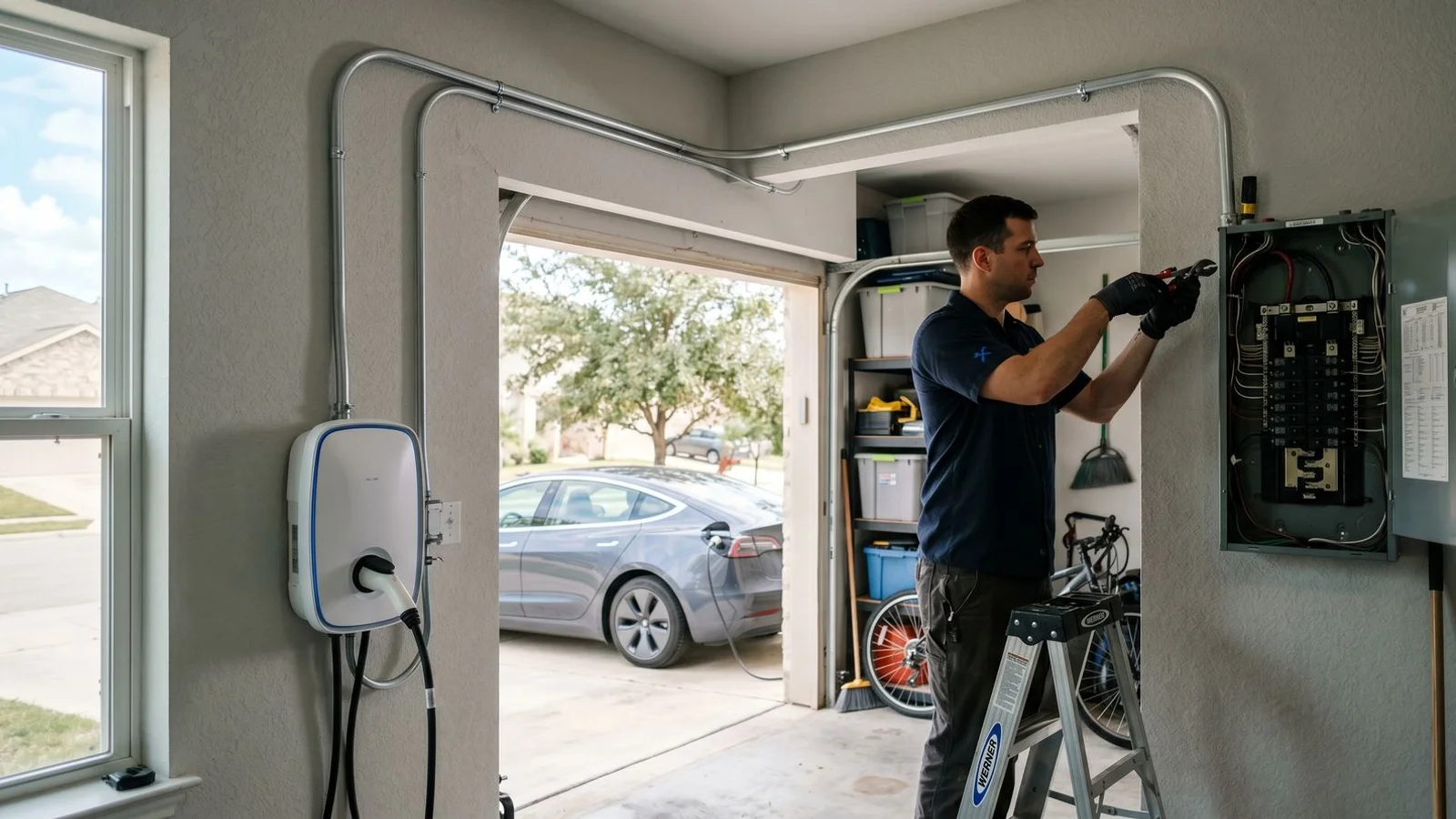
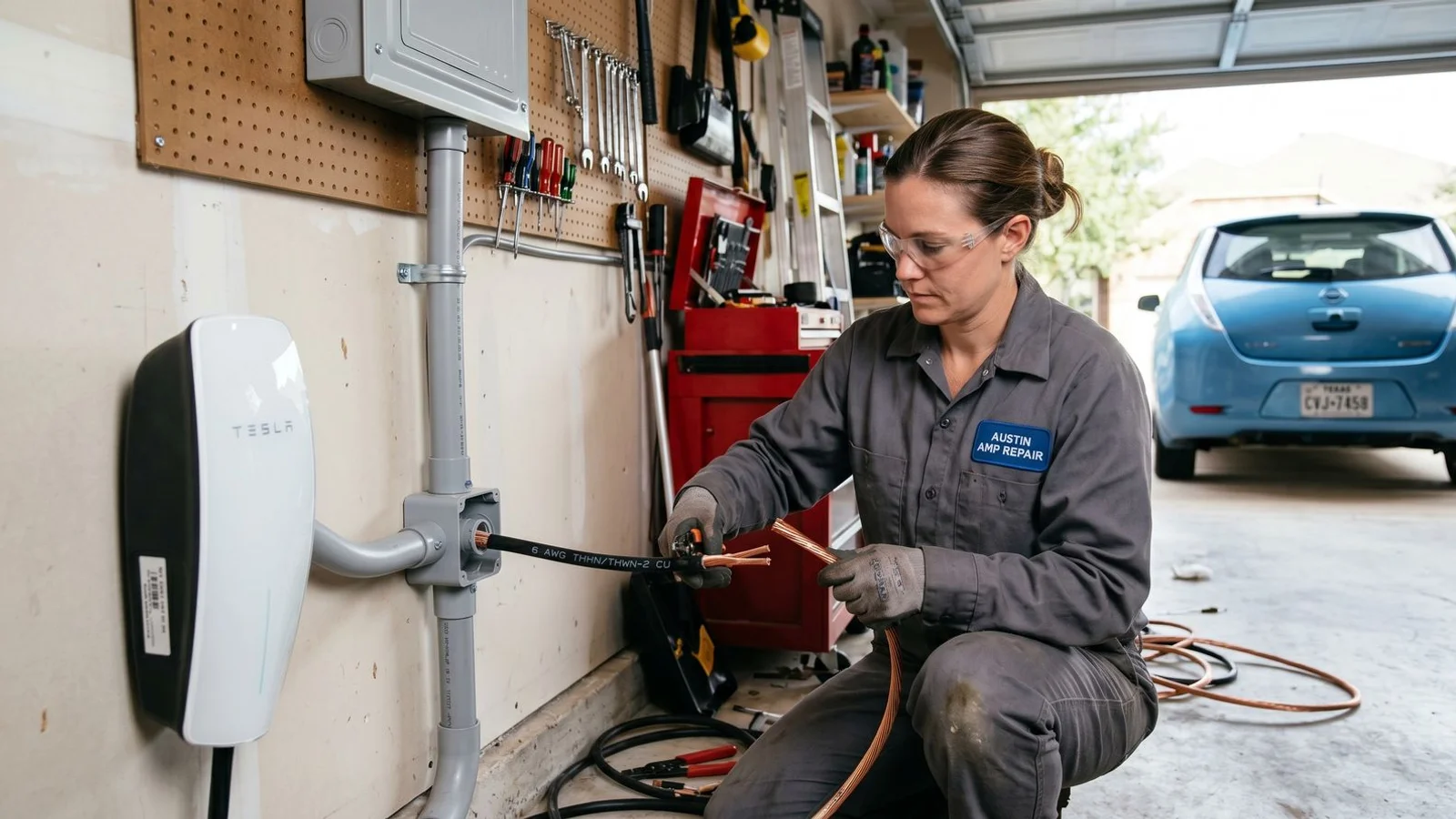
We eliminate this headache entirely by hardwiring the unit directly to the electrical panel. Hardwired connections legally bypass the receptacle GFCI requirement in most jurisdictions.
Long-Term Reliability and Aesthetics
Homeowners who plan to stay in their current house benefit greatly from hardwiring. We prefer this permanent method because it completely removes the wall receptacle. The plug contact is the most common failure point after a few years of continuous use.
Our clients also appreciate the clean visual result of a direct connection. Hardwired units lack a bulky visible cord and look like sleek, professional fixtures on your garage wall.
When plug-in wins
Renting or Planning a Move
A portable Level 2 unit on a NEMA 14-50 outlet easily unplugs and comes right along when you relocate. We recommend this flexible path for anyone renting a property or planning a move within two years.
Leaving a hardwired unit behind means sacrificing your equipment investment. Our advice for renters is simply to take the hardware with them. You retain the full value of the charger for your next house.
Matching Lower Charge Rates
Many popular electric vehicles will never pull a full 48 amps from the grid. We remind drivers that older Hyundai Ioniq 5 models or the standard Chevy Bolt max out at 32 to 40 amps. A hardwired speed advantage simply disappears in these specific cases.
Our recommendation shifts to a plug-in setup here because it provides identical charging speeds while keeping your options open. Swapping out a portable unit is much easier if you upgrade to a faster car later.
Maintaining Backup Flexibility
A secondary benefit of portable cords is their travel readiness. We know that many drivers take their Level 2 charger on road trips to use with Level 1 standard outlets at family homes. The plug-in model provides an excellent safety net for unexpected travel situations.
Our team always asks about your typical driving and travel habits before writing a final quote. Having a backup charging method brings peace of mind on long trips.
Where plug-in has real downsides
The Quality Gap in NEMA 14-50 Receptacles
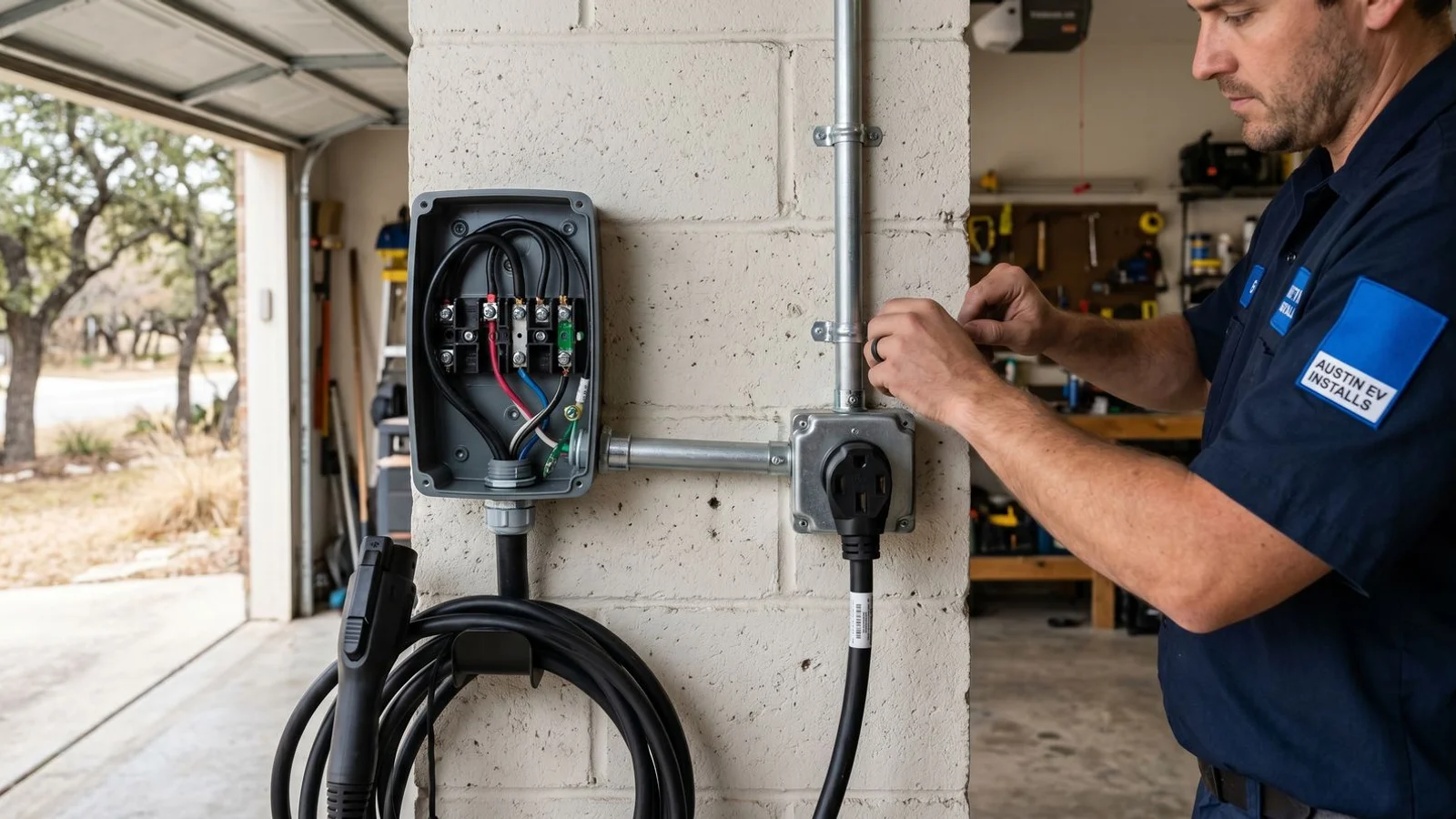
Standard big box store outlets fail quickly under continuous high-power loads. We explicitly warn customers to avoid cheap $15 hardware store receptacles because they simply melt over time. The weak link in any plug-in system is almost always the contact point inside that cheap plastic housing.
Our standard procedure is to upgrade this component immediately to prevent electrical fires. Three specific features define a high-quality outlet:
- Solid brass internal contacts
- Heavy-duty tension clips to grip the plug tightly
- High heat tolerance rated for constant EV duty
We exclusively install industrial grade receptacles like the Hubbell 9450R or Bryant 9450FR. These premium outlets typically cost between $50 and $100, but the investment protects your home.
Our commitment to local electrical safety codes dictates this choice. For more detail on a code-compliant plug-in install, see What a Code-Compliant 240V EV Outlet Install Includes.
The NEC 2023 GFCI Dilemma
The dual safety sensor situation causes major headaches for new owners. We receive frequent service calls from locals whose cars unexpectedly stopped charging at 2 AM due to a nuisance trip. This happens when an older receptacle style outlet clashes with the charger’s internal safety switch.
Our solution for plug-in systems requires a high quality breaker style switch at the main panel. This specific breaker configuration significantly reduces random power drops and keeps your battery full.
The honest recommendation
The decision process boils down to four main scenarios for most US homeowners in our local service area. We base these specific rules on years of local field experience.
- Own the home + 48A-capable car: Go hardwired.
- Own the home + 32-40A car: Choose either. Hardwired offers simplicity, while a plug provides flexibility.
- Rent / planning to move within a few years: Stick with the ev charger nema 14 50 vs hardwired option.
- Two EVs in the household: Install a hardwired setup with power load sharing capabilities.
You might still feel unsure after reading through the options. We invite you to reach out directly and tell us what you drive. Just provide your location and vehicle model.
Our estimators will give you the straight recommendation during your initial quote.
Bottom line
Hardwired stands out as the durable, faster default for homeowners staying put for the long haul. We confidently recommend it for maximizing 48-amp vehicle speeds.
A plug-in setup remains the right call for renters and anyone who values portability over those last 8 amps of charging power. Our goal is to help you feel completely confident in your final choice between a hardwired vs plug in ev charger.
Get your free flat-rate quote. Let us help you power up faster.
Frequently Asked Questions
Which is faster? +
Is plug-in better if I might move? +
Does plug-in really need GFCI? +
Ready to talk specifics?
See our Hardwired Install service page for pricing and what's included, or get a free flat-rate quote.