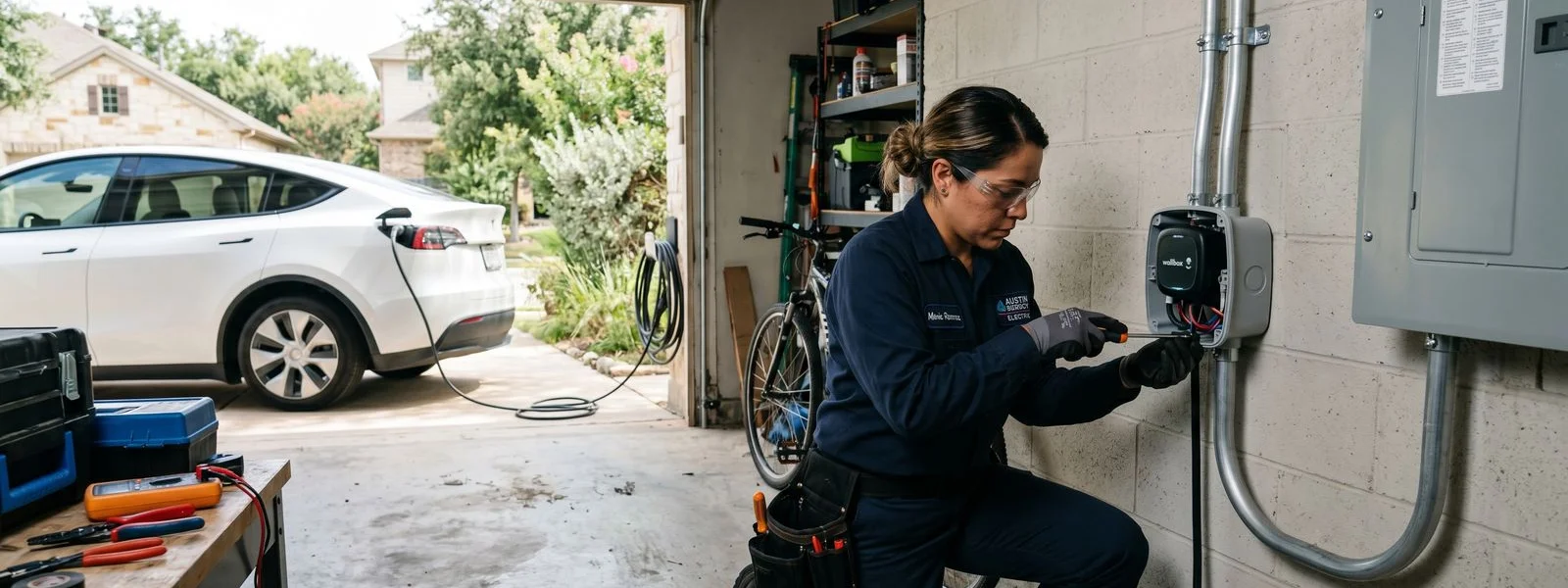
Load Management vs a 200-Amp Panel Upgrade: Which Do You Need?
A panel upgrade runs $3,000-$8,000; load management often avoids it. Compare cost, timeline, and when each is the right call.
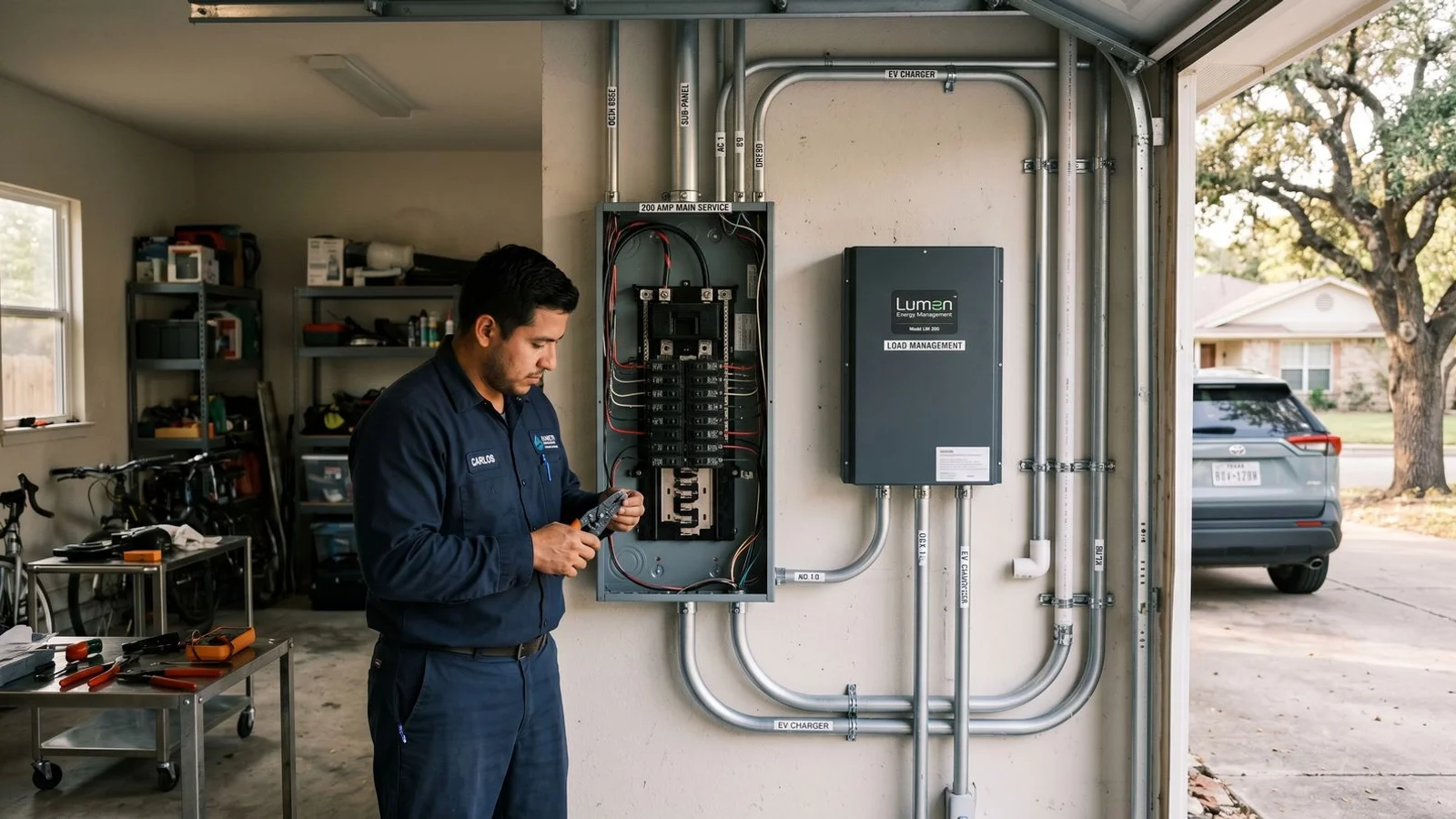
We see this exact situation almost every day. A new electric vehicle owner wants the convenience of fast overnight charging, but a contractor hands them a massive quote for a full service upgrade.
This unexpected expense is often the biggest hurdle to getting a Level 2 setup at home.
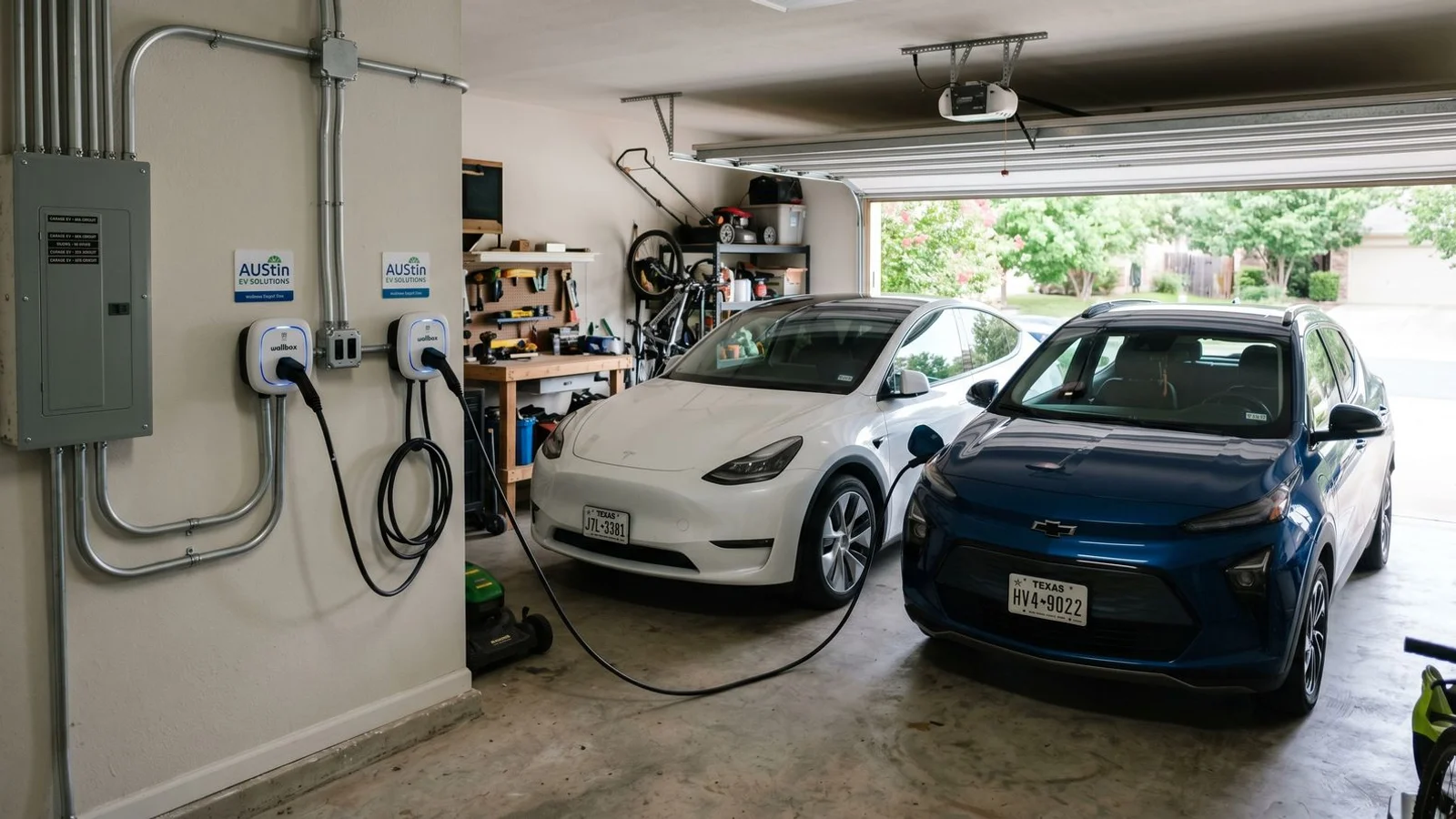
The reality is that a complete replacement is rarely the only solution. The National Electrical Code allows for smart power controllers, providing a perfect ev charger panel upgrade alternative. This is exactly what our Group Power Management service is built to deliver.
Let us break down exactly how load management vs panel upgrade compares in cost, timeline, and daily disruption for Austin homes.
The cost comparison
| 200A panel upgrade | Smart load management | |
|---|---|---|
| Equipment cost | $1,500-$3,000 (new panel, breakers) | $400-$900 (ALMS module like DCC-9 or Emporia) |
| Labor cost | $1,500-$5,000 (rewire, meter base, utility coordination) | $400-$900 (install module, run charger circuit) |
| Utility coordination | Yes (Austin Energy must disconnect/reconnect) | No |
| Permit fee | Higher (service upgrade) | Standard EV circuit permit |
| All-in total | $3,000-$8,000+ | Fraction of upgrade cost |
The upgrade numbers vary wildly depending on the condition of your exterior equipment. For example, replacing an outdated meter base to meet current Austin Energy standards adds roughly $300 to $600 to the project. Your final price also spikes if the city requires adjustments to the overhead service drop.
We typically see a standard 200 amp panel upgrade cost in Austin fall between $1,500 and $3,000. Upgrading to a 400-amp service pushes that bill to $3,500 or well past $6,000.
Load management is much more predictable. You simply add the cost of a device, such as a DCC-9 module or an Emporia Pro charger, directly to a standard installation. This hardware usually lands in the $400 to $1,500 range. You still get the exact same Level 2 charging speeds every morning.
The timeline comparison
Panel upgrade:
- Permit (1-2 days)
- Schedule utility disconnect with Austin Energy (1-2 weeks lead time)
- Install day: 6-8 hours, house power off for most of it
- Reconnect, inspection (next day or two)
- EV charger install on top (separate trip)
Total elapsed time: 2-4 weeks, with an inconvenient power-off day in the middle.
Load management:
- Permit (1-2 days)
- Install day: ~3 hours total (load management module + EV charger circuit)
- Inspection coordinated separately
Total elapsed time: typically within one week.
You are entirely at the mercy of the utility schedule for a panel replacement. Austin Energy currently requires a one to two-week lead time just to schedule the necessary power disconnect. Delays happen frequently during busy seasons or after severe weather.
We prefer the speed of smart modules because they bypass the utility company completely. The National Electrical Code officially recognizes these devices as Automatic Load Management Systems under Article 625. This designation means city inspectors approve them on a standard electrical permit.
The disruption comparison
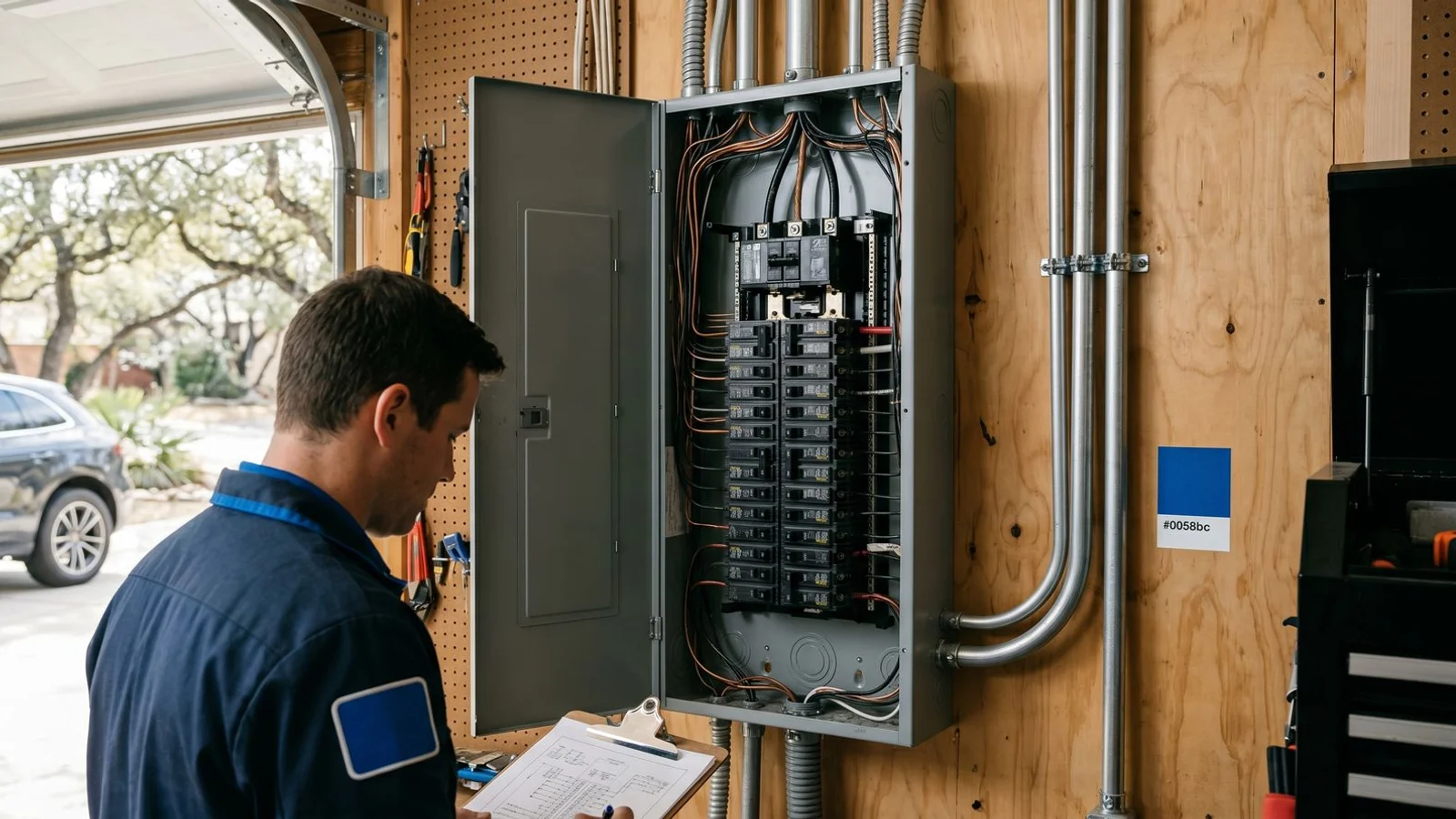
A panel upgrade is a major construction project in your home. The main power will be shut off for most of the installation day. Your electrician will likely need to cut into the drywall around the indoor panel to route new, thicker wires.
Exterior work is often required as well. The meter base location might need to change, which means patching exterior stucco or siding. Austin Energy sometimes has to trench your yard to replace underground service lines.
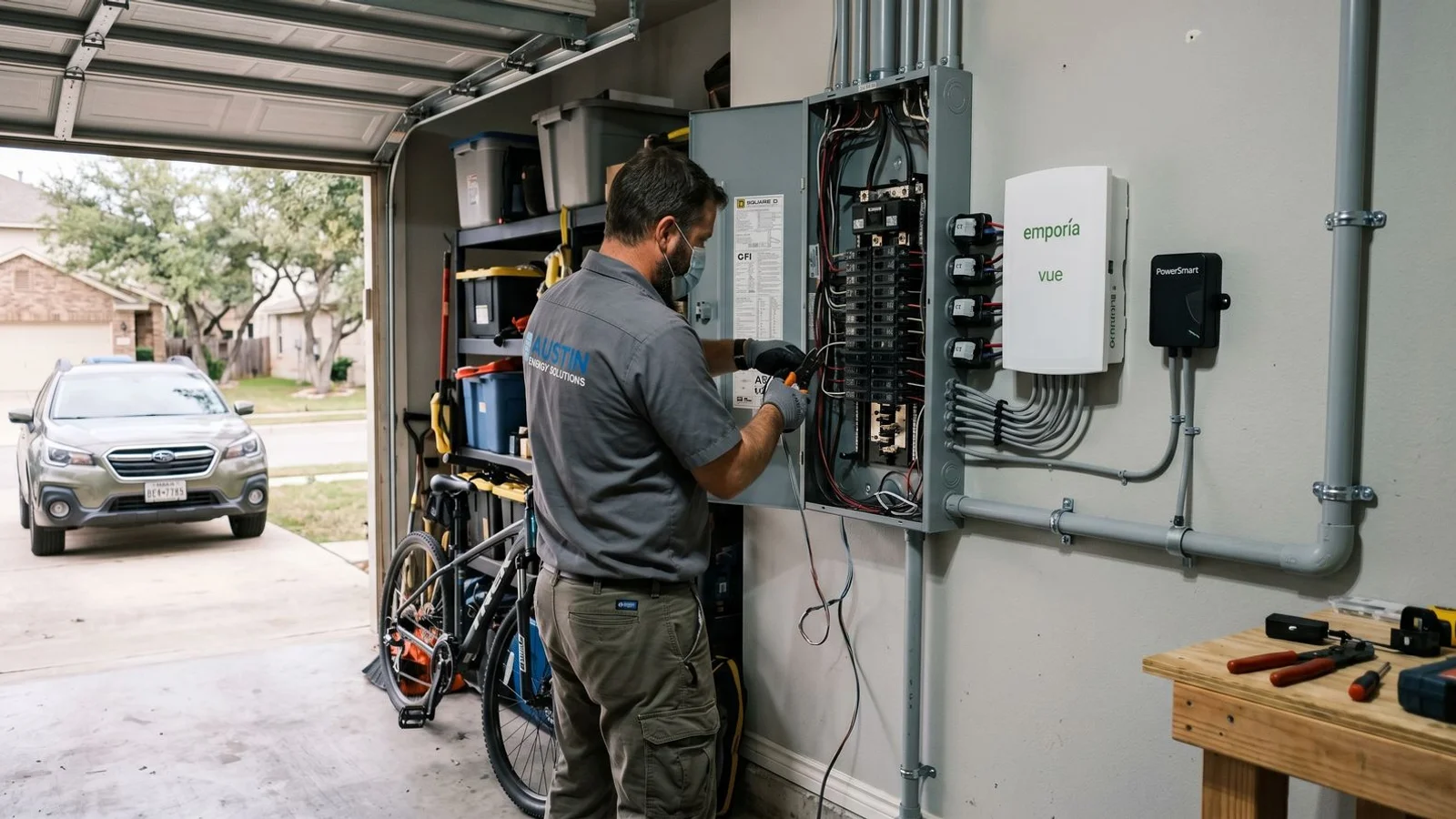
Smart controllers eliminate all of this physical damage. A standard module, like the DCC-9, is just an 11-inch by 11-inch box mounted neatly next to your existing electrical panel. Your house power stays on while the electrician works, and you do not need to coordinate with the utility or patch any walls.
When the upgrade is the right call
We genuinely recommend a panel upgrade rather than a smart controller in a few specific situations:
- Panel is aged out. Federal Pacific Stab-Lok and certain Zinsco panels have known, documented fire safety issues. Replace these immediately instead of managing their load.
- You are going all-electric. Whole-home electrification requires significant capacity. If you plan to install a heat pump HVAC system, an induction range, and a second EV charger soon, the service upgrade pays off.
- Calculated peak is truly over capacity. A busy family home running multiple high-draw appliances on a genuine 100-amp service will struggle. This is a rare scenario, but it makes an upgrade necessary.
- The panel is in a bad location. Sometimes a panel is installed in a bathroom or closet that violates current building codes. Moving the panel gives you a clean slate and justifies the cost of a full replacement.
Most quotes recommending an upgrade do not fall into these four categories. A simple smart controller is usually the perfect fit for standard residential needs.
How to know which applies to your home
Three specific questions will protect you before you sign any electrical contract:
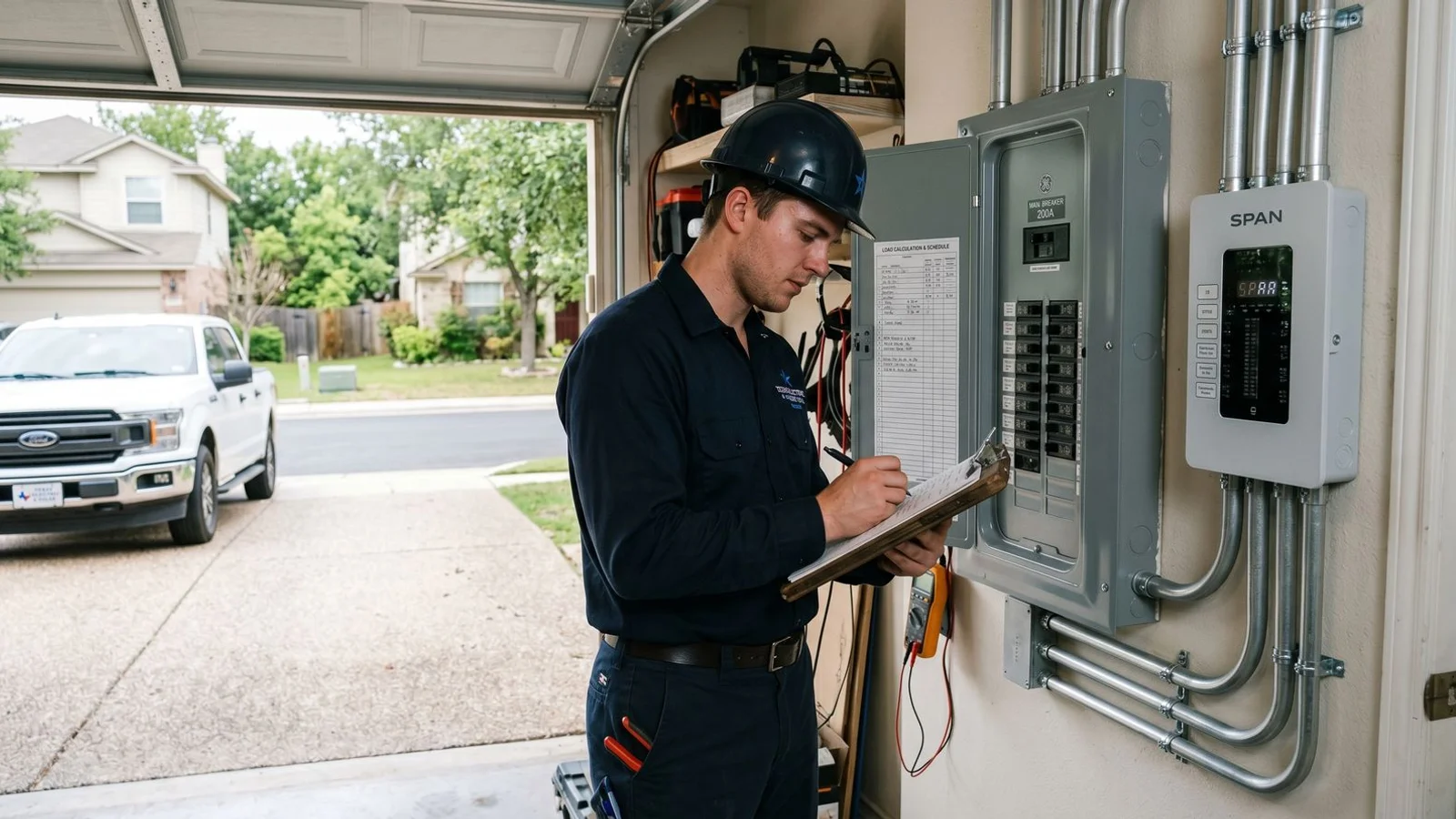
- What is the calculated peak demand? Demand a real number based on a formal National Electrical Code Article 220 load calculation. Do not accept a vague guess about your appliances.
- Why exactly do I need a new panel instead of a smart controller? The contractor should provide a specific reason related to your physical equipment. Be wary of generic statements about electric vehicles drawing too much power.
- What does the smart controller alternative cost? A competent electrician should be able to quote both options. Get a second opinion if they refuse to discuss load management.
If you are not sure your panel is even near its limit, our guide on the signs your panel is too full for an EV charger walks through how to self-diagnose before you book anything.
We strongly advise asking whether the quoted device uses dynamic power sharing or simple load shedding.
A dynamic system gently adjusts your charging speed based on what your house is using. A basic shedder aggressively cuts the power completely when the air conditioning kicks on, which can disrupt your morning commute.
Our team answers all of these questions during every free consultation. You will receive clear data without any high-pressure sales tactics.
Bottom line
The math heavily favors the smarter approach. A controller system easily saves Austin homeowners between $2,500 and $7,000 compared to a full service replacement.
You still wake up to a fully charged battery every morning.
While complete replacements are sometimes necessary for safety or major home renovations, they are definitely the minority of cases.
Get a free comparison quote and we will show you both options alongside the true cost of each.
Frequently Asked Questions
Is load management always cheaper? +
When do I actually need a panel upgrade? +
Does load management make my home worth less at sale? +
Ready to talk specifics?
See our Load Management service page for pricing and what's included, or get a free flat-rate quote.