What Does a Hardwired EV Charger Installation Involve?
A hardwired charger connects direct-to-breaker on a dedicated 240V circuit. Components, breaker sizing, and why it's most reliable.
We know the frustration of relying on a slow Level 1 cord and waking up to a battery that is only half full.
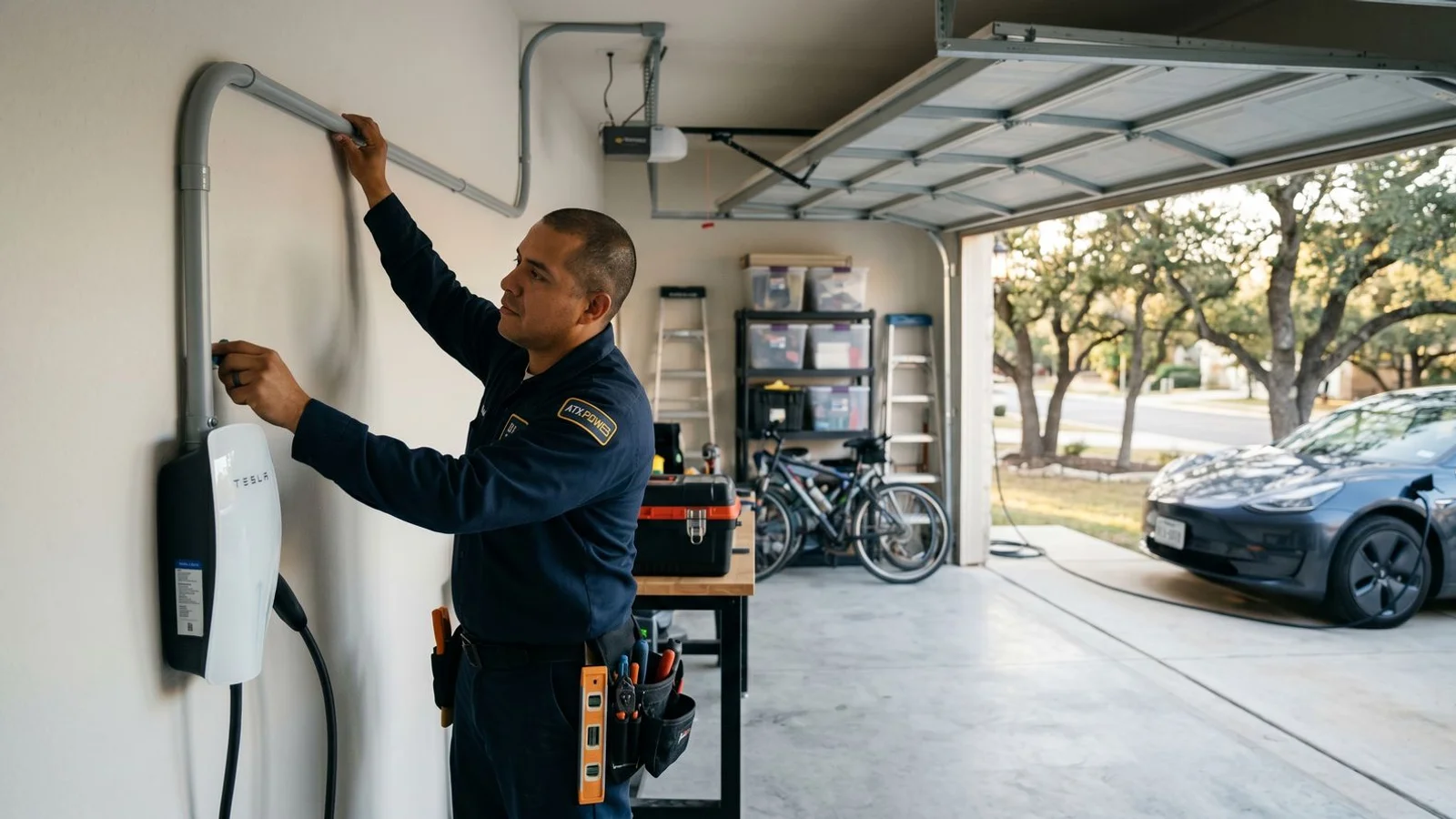
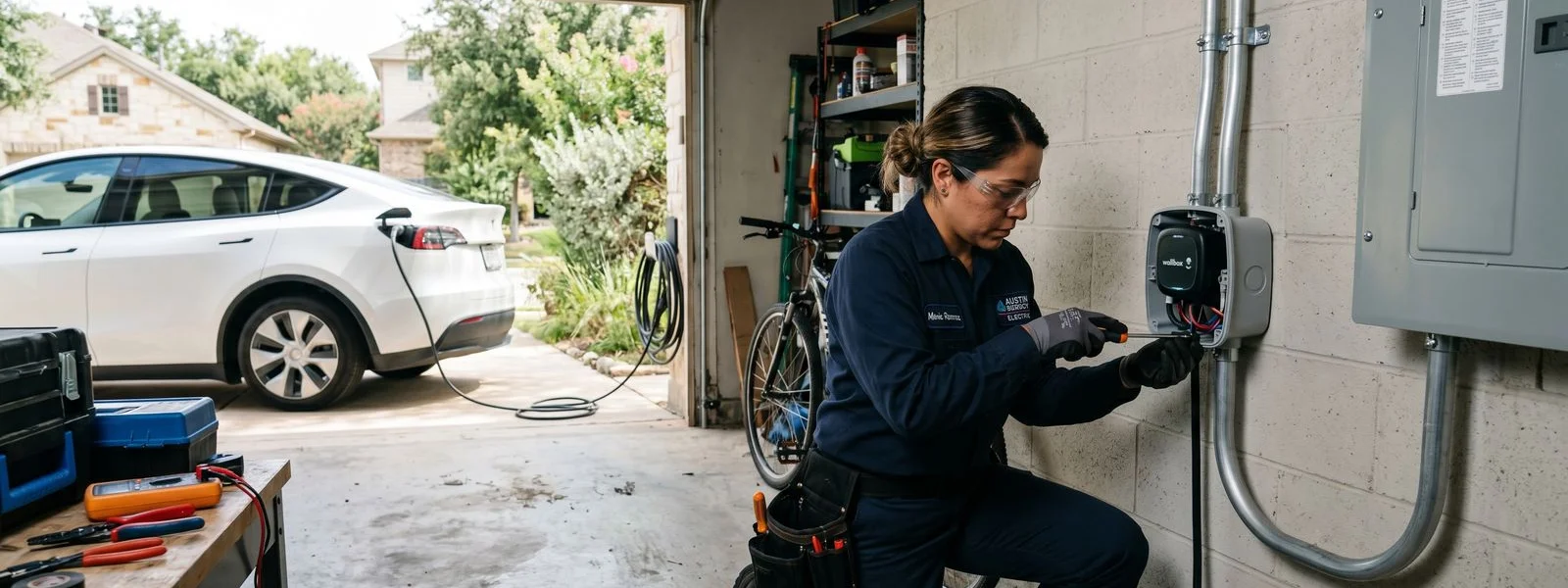
Transitioning to a faster overnight setup is the smartest upgrade a new electric vehicle owner can make. Our team at Austin EV Charger Installation operates with a simple mission to provide exceptional electrical services, and we frequently field questions about what is a hardwired ev charger. The hardwired ev charger meaning is simple: the unit connects directly to a dedicated breaker in your electrical panel without using any standard wall plug.
We run a continuous wire from the breaker straight into the charging hardware to maximize safety and speed. This direct connection is the dividing line between standard home setups and truly premium charging experiences.
Our guide will break down the essential components, review the latest safety codes, and explain exactly what to expect on installation day. You will discover why skipping the standard outlet is the best move you can make for your garage.
The components of a hardwired install
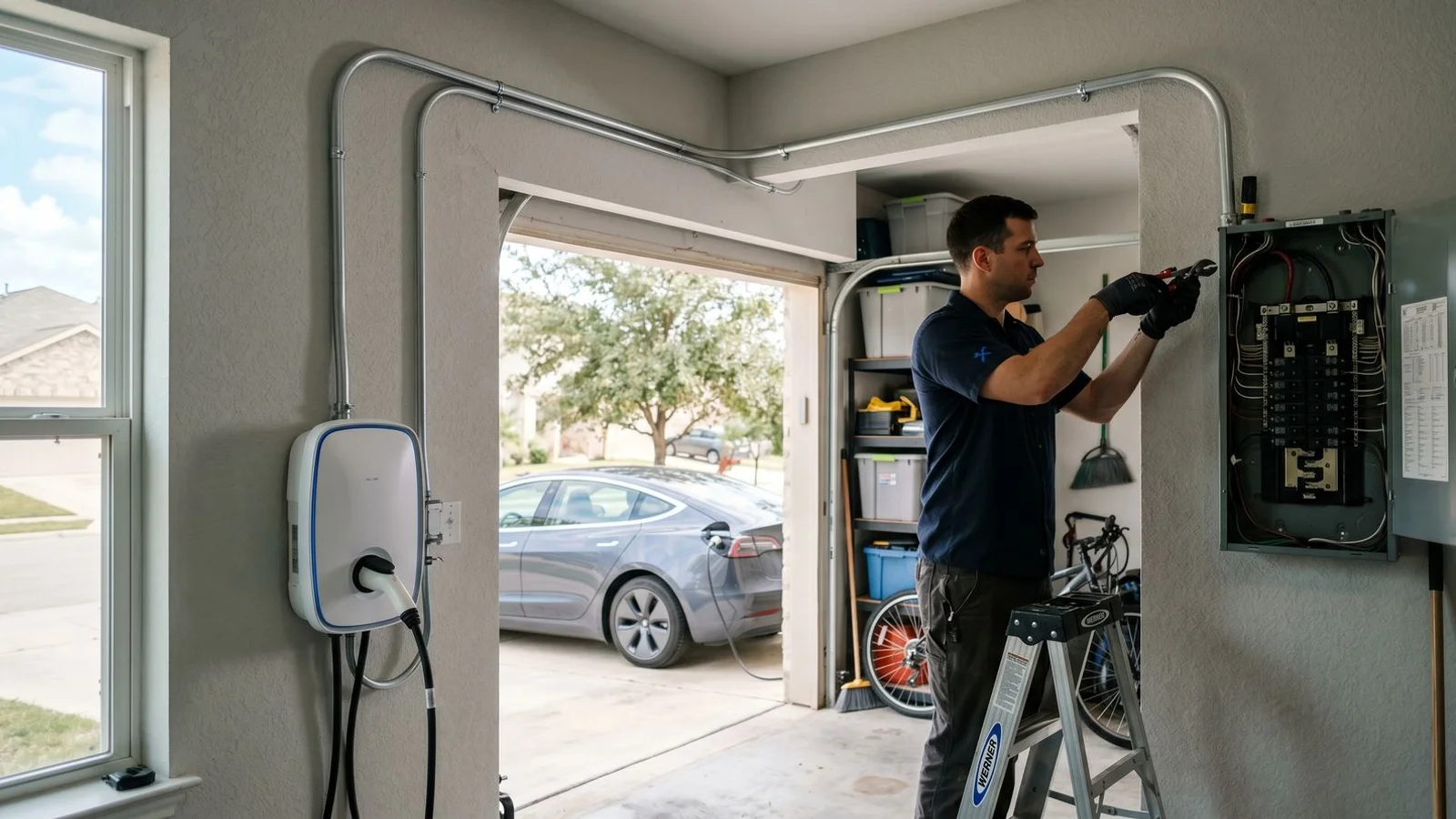
We define a complete hardwired install as a system requiring a dedicated 240-volt circuit, correctly sized breakers, copper conductors, and proper conduit routed directly into the charger. Skipping any of these specific pieces creates a safety hazard and violates the National Electrical Code.
Our installations rely on premium materials to ensure your system works reliably for the next decade. The 2023 National Electrical Code update added strict new rules for EV charging, making the right components more important than ever. We consistently use the following correctly sized elements for a successful project:
- A dedicated 240-volt circuit. Just for the EV. Not shared with the dryer, range, or anything else.
- The right double-pole breaker. Typically a 60A breaker for 48A continuous chargers, or smaller depending on the unit.
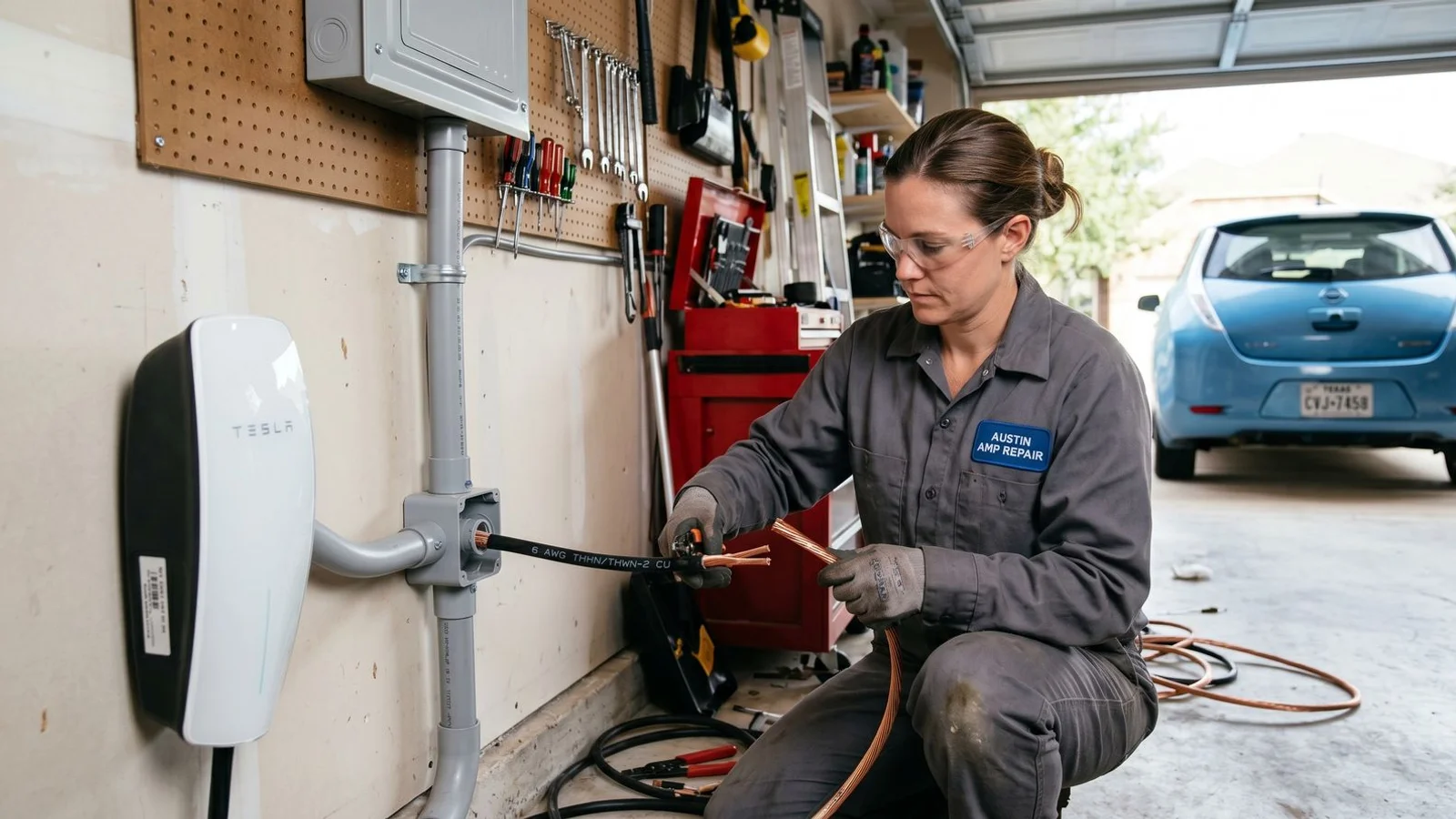
- Correctly sized copper conductors. Usually 6 AWG copper THHN wire for a 48A setup, with heavier gauges required on long runs to limit voltage drop.
- Schedule 40 PVC conduit. This protective tubing is routed cleanly from the panel directly to the charger location.
- Properly bonded grounding electrode. Essential for safety and stable power delivery.
- The charger itself. Top units like the Tesla Universal Wall Connector or ChargePoint Home Flex are mounted directly to wall studs and terminated inside the hardware.
- City permit and inspection. A post-install inspection verifies that all work meets local building standards.
This exact parts list guarantees your setup passes inspection and avoids common long-term failures. Our technicians never cut corners on these required materials.
A major benefit of this hardwired component list is avoiding the expensive GFCI breakers now mandated for plug-in chargers under NEC Article 625.54. We save clients money and prevent annoying nuisance-tripping by hardwiring the system straight to a standard breaker.
Why direct-to-breaker matters
Our main reason for recommending a direct-to-breaker connection is the ability to access maximum continuous current while eliminating the failure risk of a melting wall outlet. This approach safely delivers the highest possible charging speeds directly to your battery.
We see two major practical advantages when evaluating hardwired vs plug in configurations. The first advantage is higher continuous current capabilities. Our setups bypass the National Electrical Code limits that cap a continuous plug-in load at 40 amps.
Removing that cap allows the full 48-amp continuous output of premium chargers. We regularly see 48-amp hardwired stations deliver about 11.5 kW of power, translating to 36 to 42 miles of range added per hour. A standard 40-amp plug-in setup maxes out at 9.6 kW, offering only 30 to 34 miles of range per hour.
Eliminating the Receptacle Failure Mode
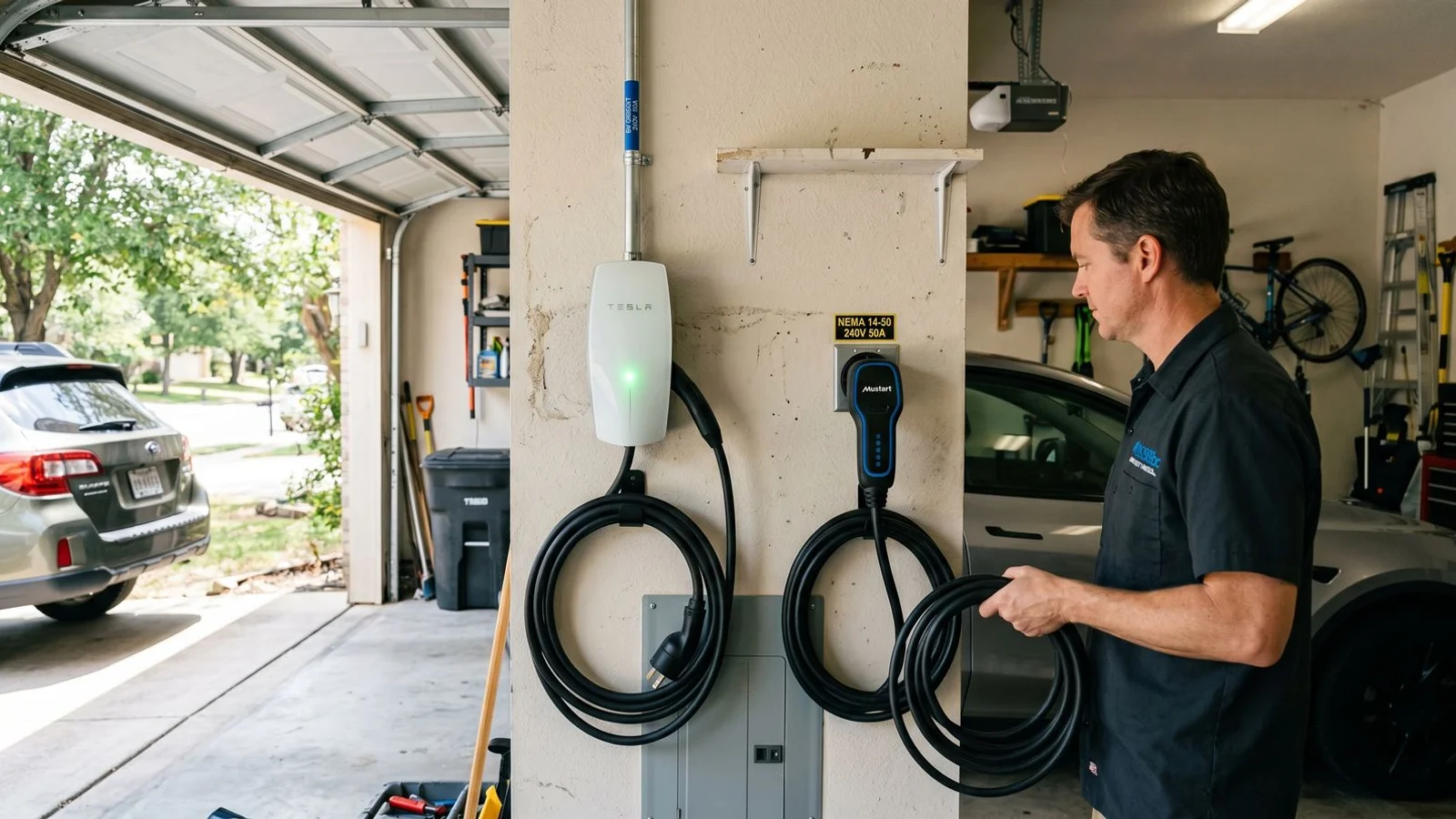
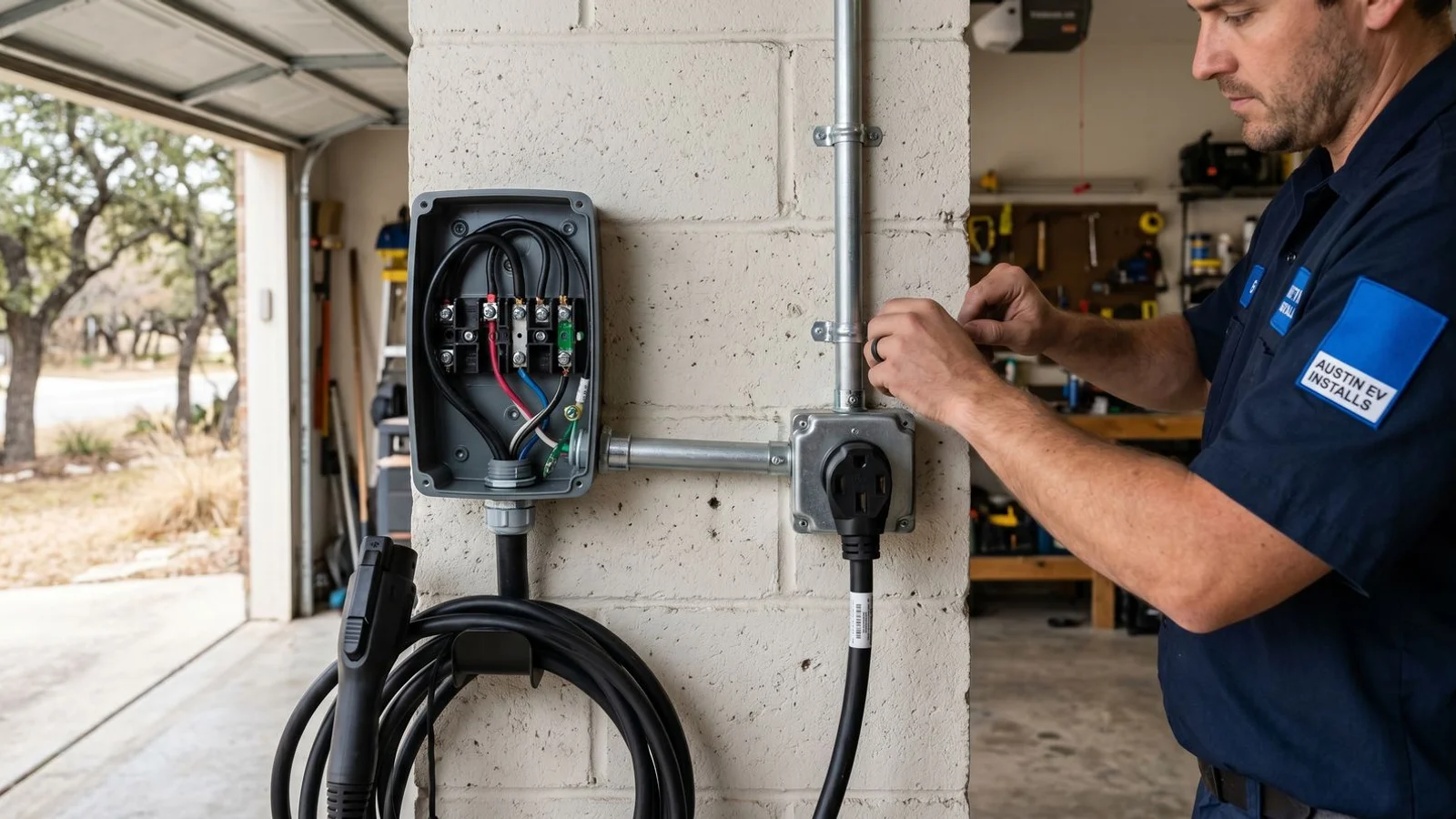
Our field experience reveals a dangerous flaw with continuous EV loads on standard NEMA 14-50 receptacles. Every plug-in outlet has terminations inside the receptacle that can loosen under continuous stress. We frequently replace cheap, builder-grade RV outlets that have literally melted due to the intense, continuous heat generated by an electric vehicle.
Hardwired terminations are torqued once directly inside the charger hardware and do not experience the same destructive thermal cycling. Our detailed breakdown explores these differences thoroughly, which you can read in our comparison of Hardwired vs Plug-In EV Charger.
A quick look at the numbers shows why the direct connection wins out.
| Feature | Hardwired (Direct-to-Breaker) | Plug-in (NEMA 14-50) |
|---|---|---|
| Maximum Continuous Power | 48 Amps (11.5 kW) | 40 Amps (9.6 kW) |
| Average Charging Speed | 36 - 42 miles per hour | 30 - 34 miles per hour |
| GFCI Breaker Required | No (Reduces nuisance trips) | Yes (NEC 2023 requirement) |
| Overheating Risk | Very Low | High (with budget receptacles) |
We strongly advise checking those numbers before making your final equipment choice.
Breaker sizing and the 80% rule
Our installations strictly follow the 80% rule, which states that an EV charger can only use 80% of the circuit breaker’s total rating because it is a continuous load. The National Electrical Code requires the circuit to be sized at 125% of the continuous current to prevent overheating.
We implement specific hardware pairings to maintain compliance and ensure safety. Common pairings include:
- 48A continuous charger: Requires a 60A breaker and 6 AWG copper wire.
- 40A continuous charger: Requires a 50A breaker and 8 AWG copper wire.
- 32A continuous charger: Requires a 40A breaker and 8 AWG copper wire.
Our electricians regularly fix cheap installations where an unqualified handyman placed a 48A charger on a 50A breaker. That critical error directly violates the 80% rule and guarantees future problems. We know the breaker will hold for a few months before it begins nuisance-tripping in the severe summer heat or burning out entirely.
Proper sizing is a non-negotiable step for long-term reliability. Our team explains the specific science behind conductor sizing in the article covering Why 48-Amp Hardwired Charging Needs the Right Wire Gauge.
What the install looks like
We typically complete a standard hardwired installation in about two to four hours on site, depending on the conduit route. The process moves efficiently from planning the dedicated breaker to the final power-up and commissioning.
Our step-by-step installation process looks like this:
- Confirm the planned charger location and optimal conduit route.
- Pull and seat the new dedicated double-pole breaker.
- Run Schedule 40 PVC conduit cleanly along the walls or through the attic.
- Pull the 6 AWG copper conductors securely through the conduit.
- Terminate the connections safely at both the main panel and the charger.
- Mount the charging hardware flush to the wall studs.
- Power up the system and run the initial commissioning tests.
- Walk through the smart controls with you and clean up the workspace.
The official city inspection happens as a separate step that does not delay your ability to charge. We coordinate this inspection directly with the local building department. An official permit is a legal requirement that protects your property value and insurance coverage.
Our team always secures the local permit, which in the City of Austin costs a base fee of roughly $166.99 for residential electrical work in 2026. Securing this permit and using a licensed professional are mandatory steps if you want to claim the generous $1,200 Austin Energy rebate. We handle this paperwork so you never miss out on available local incentives.
Bottom line
We hope this guide clarifies exactly what is a hardwired ev charger and why it beats a plug-in alternative every time.
A direct-to-breaker connection guarantees full charging speed and the most reliable long-term performance.
Our electricians ensure everything is sized perfectly for your specific vehicle and local building codes.
You can See our hardwired install service or get your free flat-rate quote to begin your upgrade.
Frequently Asked Questions
What does hardwired mean? +
What breaker size is needed? +
Why is hardwired more reliable? +
Ready to talk specifics?
See our Hardwired Install service page for pricing and what's included, or get a free flat-rate quote.