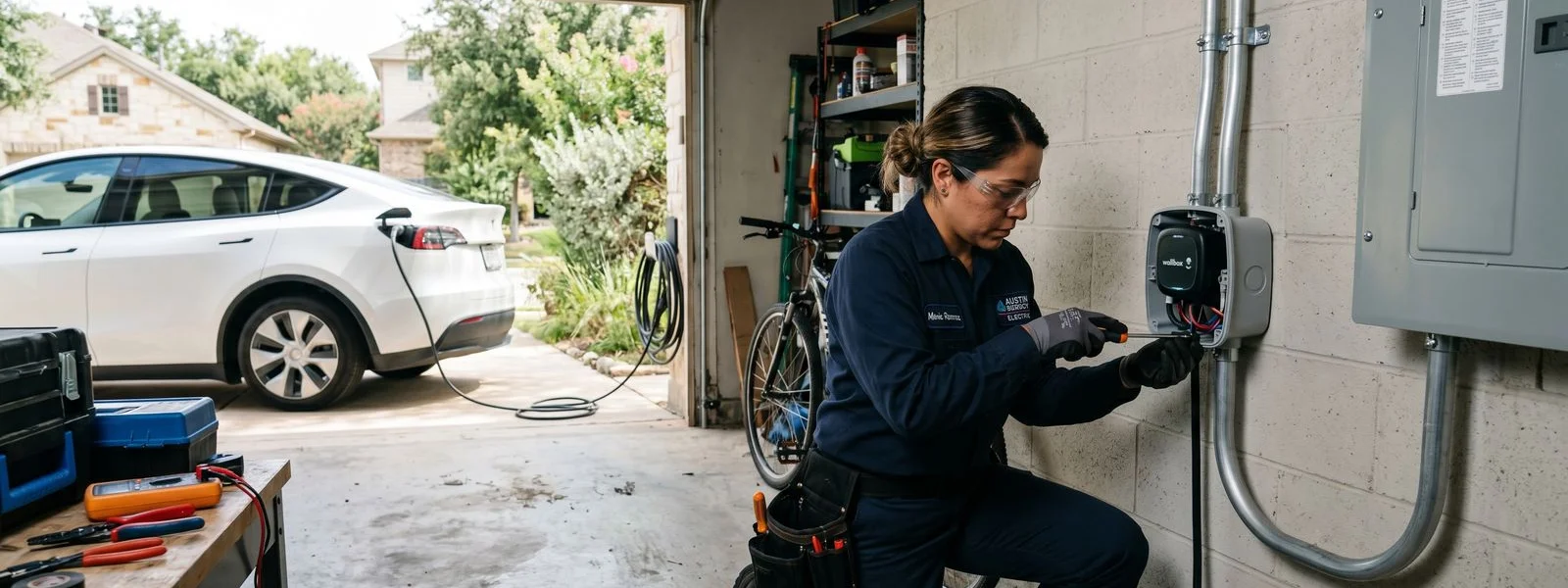
Signs Your Electrical Panel Is Too Full for an EV Charger
No breaker spaces, 100A/150A service, or tripping breakers? Self-diagnose a full panel and learn when load management solves it.
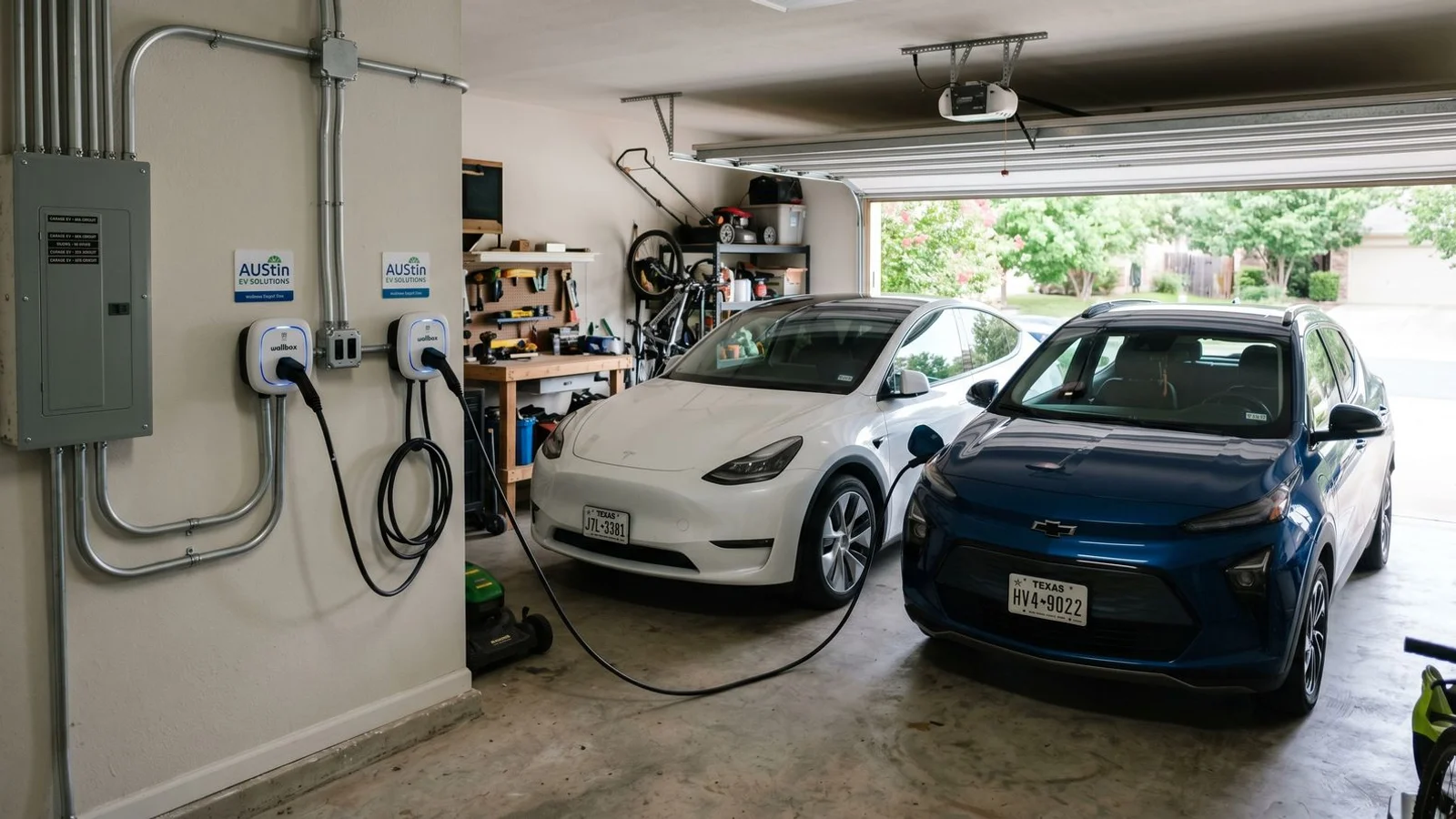
We see a lot of excitement from new drivers ready to ditch the slow Level 1 trickle charge for a proper overnight setup. The first step always involves figuring out if you have an ev charger full electrical panel.
You can easily self-diagnose whether your setup is too tight before scheduling an installation.
Let’s look at the three most common signs of a maxed-out box and explore exactly how to solve each one.
Sign 1: No free breaker slots
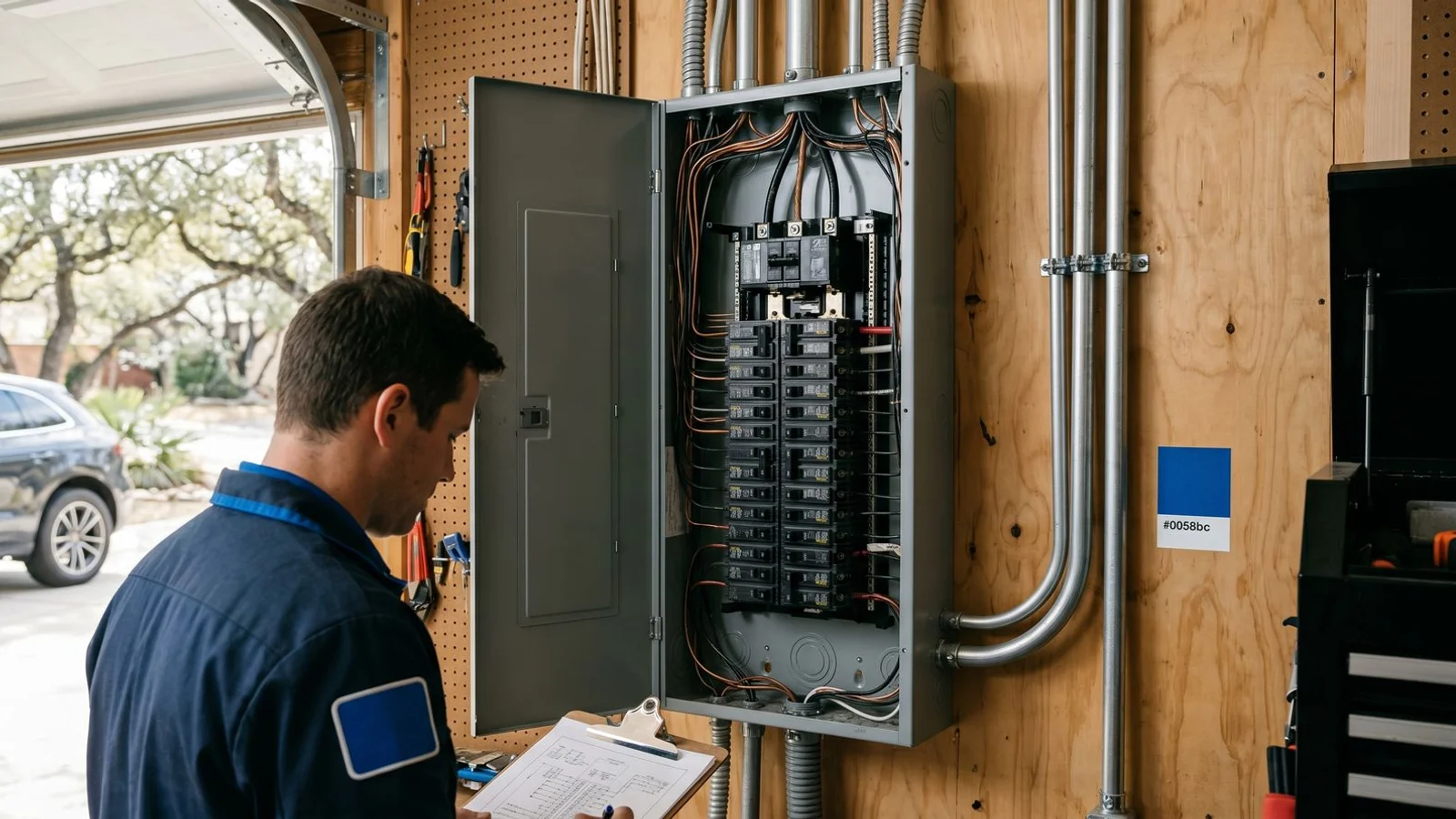
A physically full panel means you have zero empty spaces for the double-pole breaker required for a Level 2 charger. Pop the cover off your main electrical box and count the blank spaces where a new breaker could fit.
Look closely for blank slots or removable plastic covers.
- Two or more adjacent empty slots: You have plenty of physical room for a standard 50-amp or 60-amp EV circuit.
- One empty slot: Space is tight, but a tandem breaker or circuit consolidation often fixes this easily.
- Zero empty slots: Your panel is completely full.
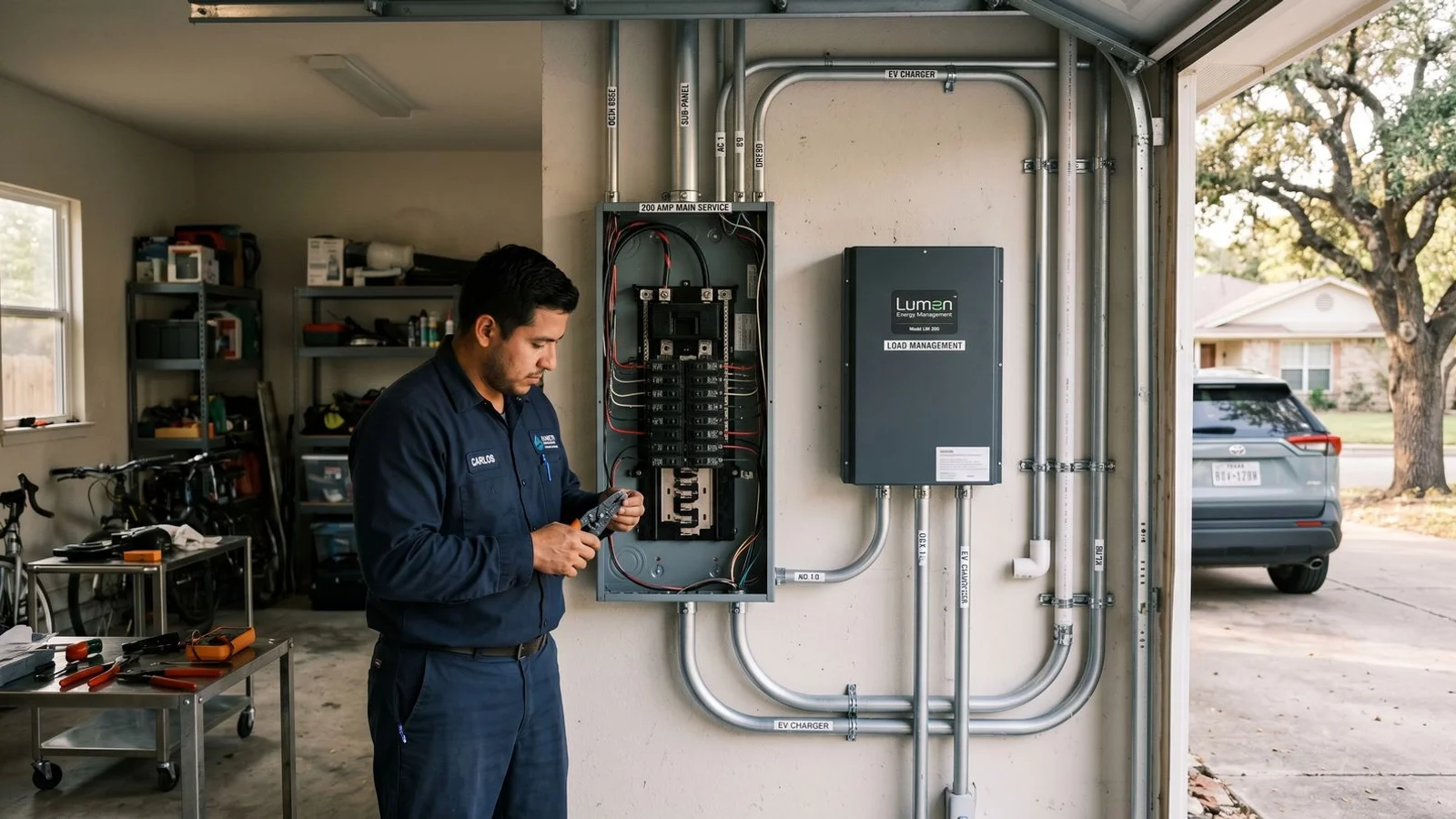
Our team handles restricted spaces regularly without requiring massive overhauls. A lack of physical space does not automatically trigger an expensive panel replacement. Devices like the DCC-9 or Black Box load-shedding contactors bypass the need for extra slot space entirely by temporarily pausing the vehicle charge during peak home energy use.
Sign 2: Service is 100A or 150A
Your main breaker rating determines your home’s total power limit, and services rated at 100A or 150A are often too tight for a standard 48-amp charger. Look at the large main switch at the top of your panel to find a number like 100, 150, or 200 printed on the handle.
- 200A main: This is the standard for most US homes built after 1998. It generally handles a high-speed Level 2 charger without breaking a sweat.
- 150A main: These are incredibly common in homes built during the 1980s and 1990s around Austin. Hardware load management is usually required to safely push maximum charging speeds.
- 100A main: Older neighborhoods frequently feature 100A service. You will absolutely need a smart load manager or a complete service upgrade to avoid a panel full ev charger overload.
Having a 200-amp service provides a great starting point, but it guarantees nothing on its own. The National Electrical Code strictly dictates how much power you can add based on a complex calculation. A home pulling heavy continuous loads from an electric furnace or heat pump can quickly fail that strict load calculation.
Sign 3: Breakers tripping under heavy load
A panel that regularly trips breakers when multiple appliances run simultaneously is already operating at its maximum limit. Adding an electric vehicle into the mix will simply cause the main switch to shut off power to your entire house.
This symptom is the most obvious warning sign of an overloaded system. Consider the massive power pull from everyday items:
- Central AC units demand 30 to 50 amps on startup.
- Electric ranges require an immediate 40 amps of dedicated power.
- Electric clothes dryers pull around 30 amps.
Our technicians know that a stable system is a mandatory prerequisite for adding a new dedicated circuit. A setup that already struggles to balance the HVAC and the dryer cannot safely support a car charging for eight hours straight. Intervening with smart technology or hardware modifications is strictly required in this scenario.
What we do during the assessment
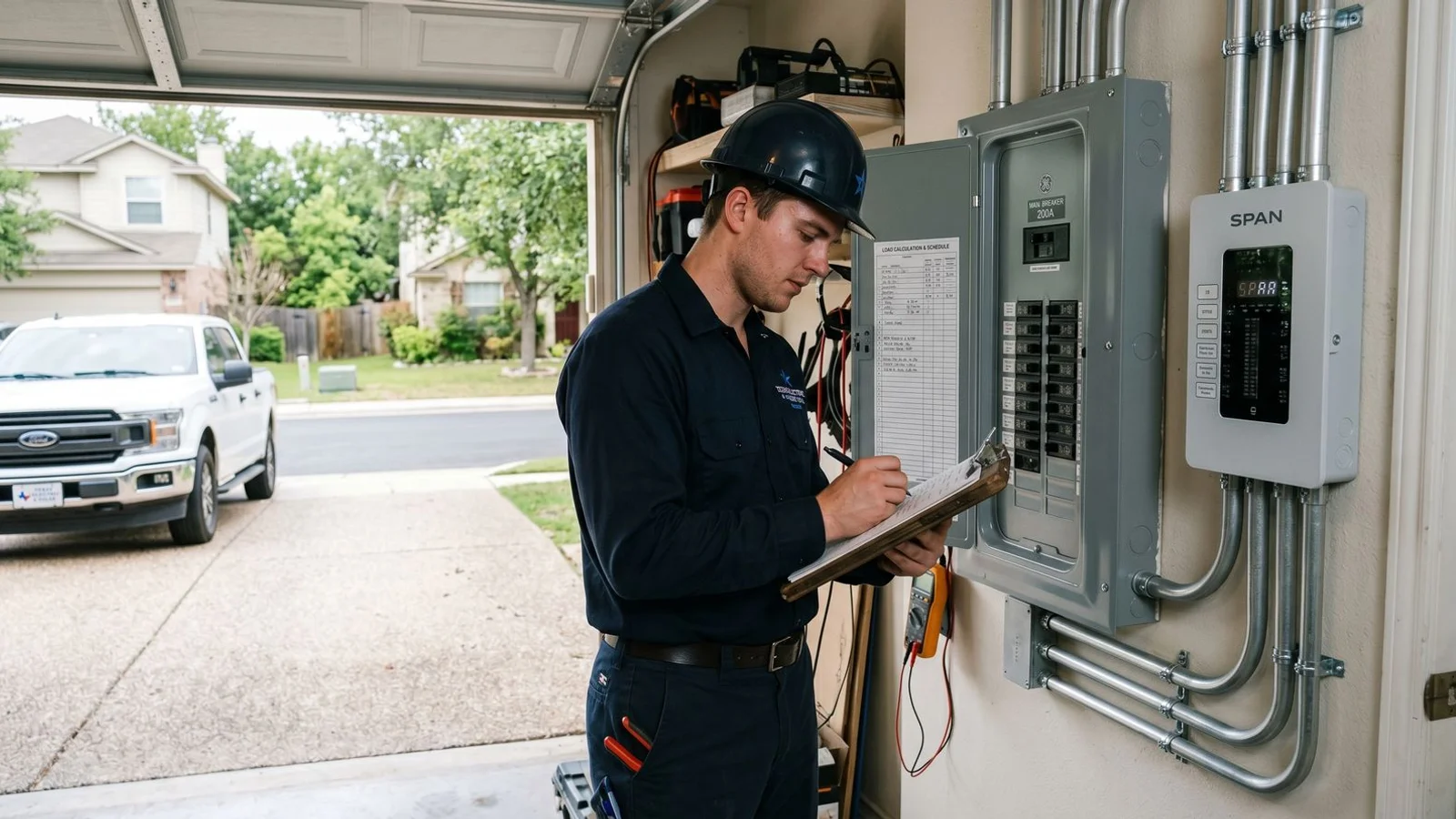
Our inspection process focuses on calculating your precise available capacity using strict National Electrical Code guidelines. We carefully evaluate your current hardware to ensure your new Level 2 setup operates flawlessly.
- Physical slot availability for new double-pole breakers.
- Main service size rating found at the top of the box.
- Existing continuous loads like HVAC systems, water heaters, and pool pumps.
- Dangerous warning signs including scorch marks, double-tapped breakers, or extreme age.
- Whether a NEC 220.87 peak-demand load calc allows for the new vehicle circuit.
Calculations are performed using either 30 days of 15-minute utility interval data or standard NEC formulas. Finding a tight fit simply means the design needs a smart workaround. We usually present three straightforward solutions, which include a 200A panel upgrade, smart load management, or adding a smaller sub-panel.
When an upgrade really is the right call
Replacing the entire electrical box is sometimes the only safe and logical path forward for your home. We recommend a full replacement when your existing equipment poses an active safety hazard or restricts your future plans.
- The hardware is obsolete and carries documented fire risks, specifically Federal Pacific Stab-Lok or Zinsco brand panels.
- Total service capacity is entirely maxed out by existing electric heating and cooling systems.
- You plan to add a pool, a second electric vehicle, or transition to an all-electric home.
Modernizing an obsolete Federal Pacific panel often lowers your home insurance premiums since carriers view them as major liabilities. Upgrading gives you a clean slate with 200 amps of total breathing room. Most homeowners dealing with a standard 100A or 150A limit find that a smart load manager provides a much faster and cheaper path to daily charging.
Bottom line
Identifying full slots, low main amperage ratings, or frequent power trips will tell you immediately if your panel is crowded. A tight panel does not mean you are stuck relying on slow public charging networks forever.
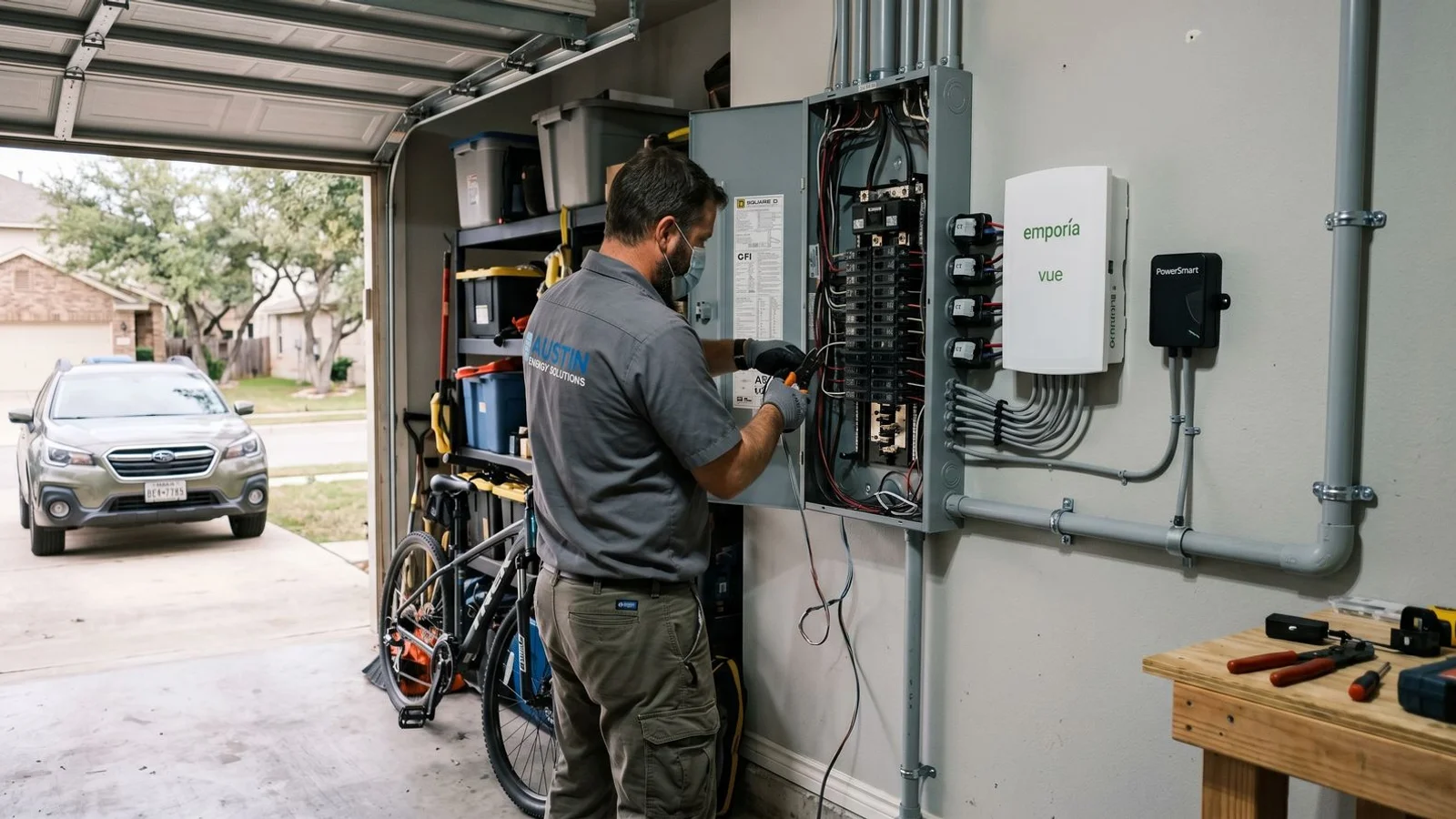
We routinely bypass these limitations for Austin homeowners by using intelligent hardware solutions.
Handling a no breaker space ev installation is something our crews manage every single week. You have excellent, code-compliant options available to get that vehicle charged safely overnight.
Frequently Asked Questions
How do I know my panel is full? +
Does a full panel mean I need an upgrade? +
What does my service amperage have to do with it? +
Ready to talk specifics?
See our Load Management service page for pricing and what's included, or get a free flat-rate quote.