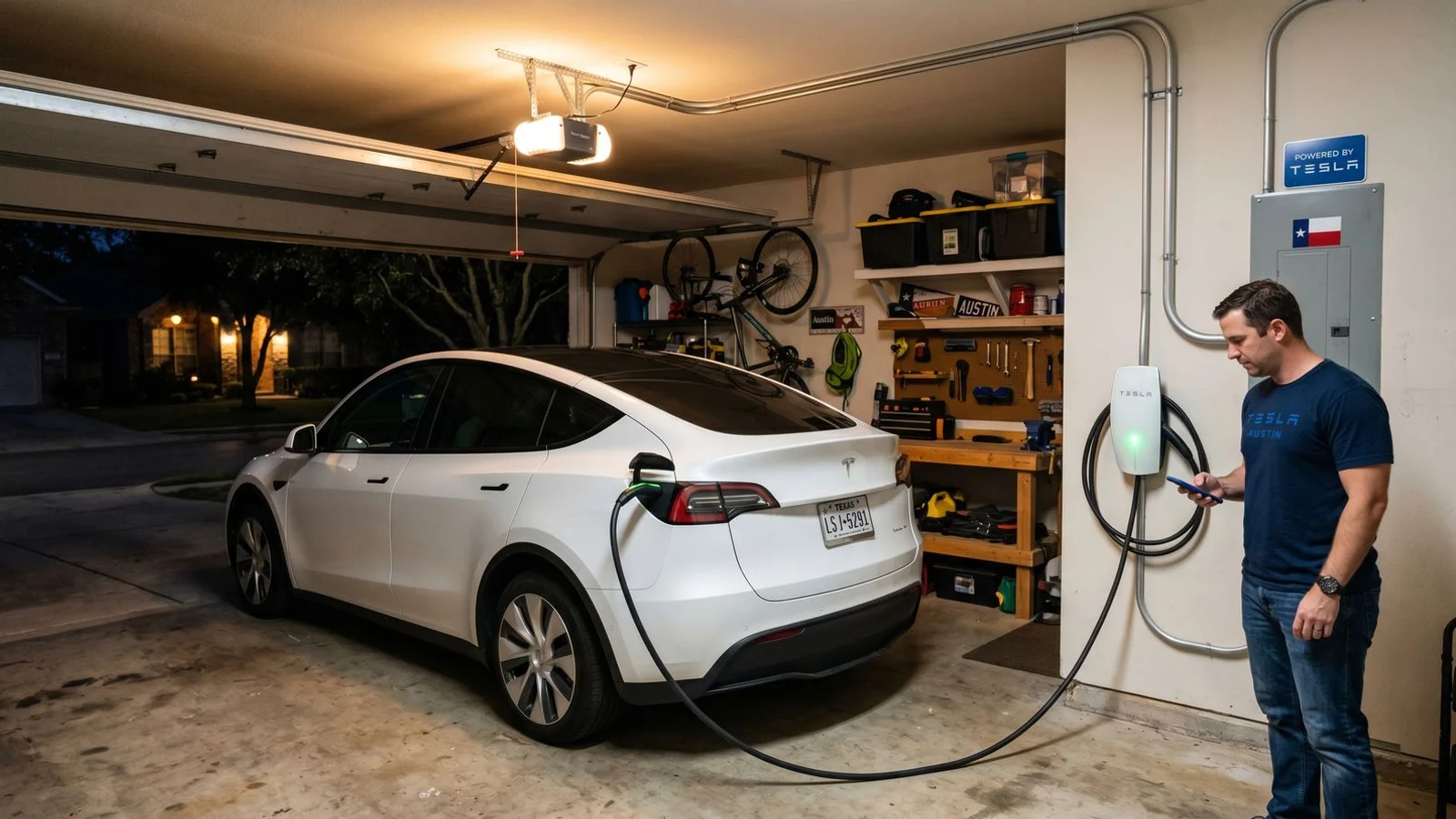
Tesla Wall Connector vs Universal Wall Connector: Which to Get
The Tesla Wall Connector is Tesla-only; the Universal adds J1772/NACS for any EV. Charge speeds, who each suits, and install notes.
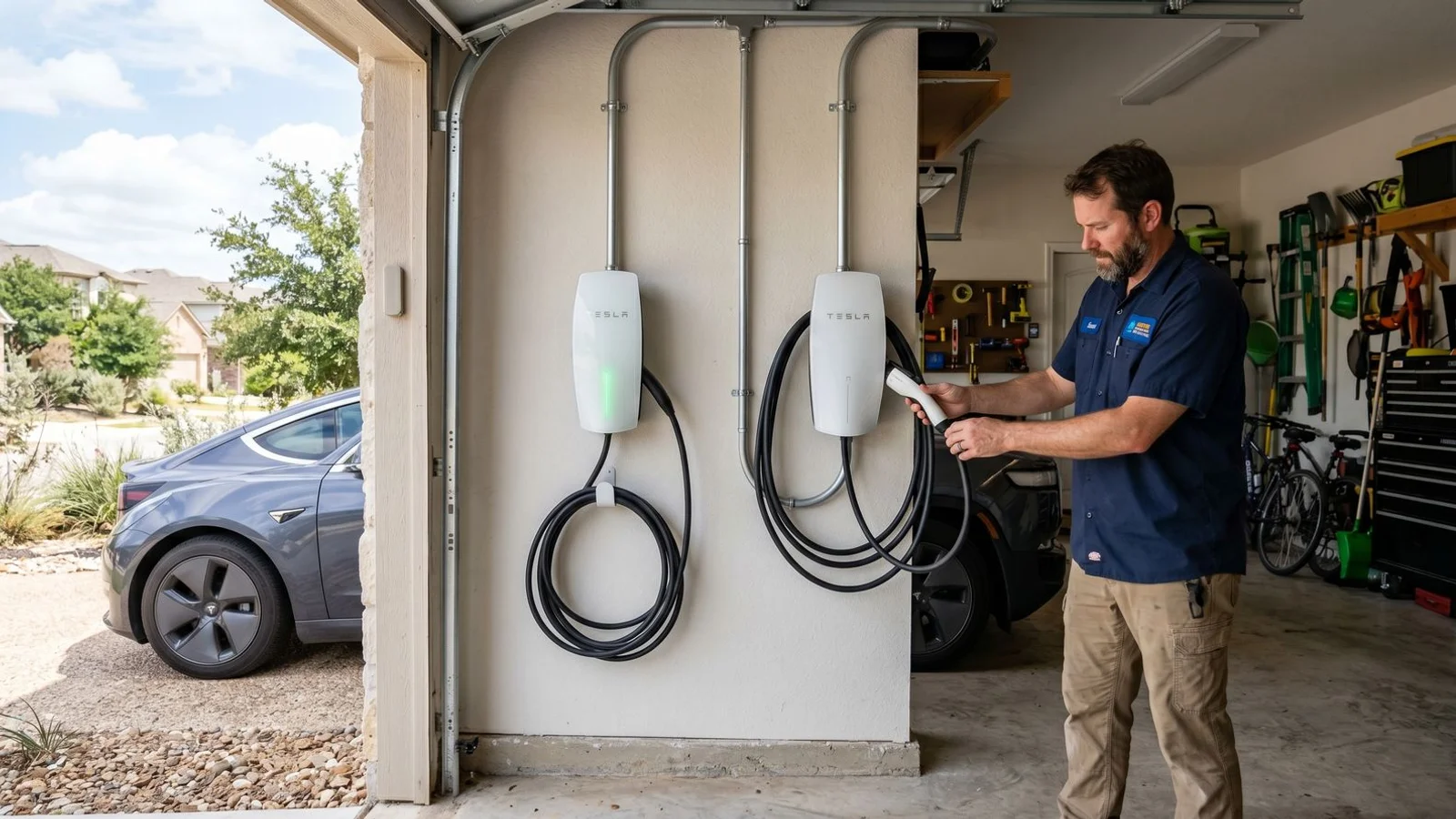
Our team helps new electric vehicle owners upgrade from slow Level 1 plugs to faster Level 2 overnight charging every single day. This transition often sparks a debate between the tesla wall connector vs universal wall connector.
The choice dictates your long-term charging flexibility.
We founded Austin EV Charger Installation to simplify exactly these kinds of electrical decisions for local drivers. A quick look at the data reveals what this actually means for your daily routine and provides a few practical ways to respond.
The basic difference
| Tesla Wall Connector | Universal Wall Connector | |
|---|---|---|
| Connector Type | SAE J3400 (NACS) only | NACS + Integrated J1772 |
| Compatible EVs | Tesla natively | Ford, GM, Rivian, Hyundai, Kia, all EVs |
| Max Power Output | 48A (11.5 kW) | 48A (11.5 kW) |
| Current 2026 Price | about $475 | about $595 |
| App Capabilities | Wi-Fi scheduling, energy tracking | Identical |
| Installation Specs | 60A circuit required | 60A circuit required |
We frequently install both of these units continuously across the US. The core distinction lies in the physical plug at the end of the 24-foot cable. Both chargers deliver up to 48 amps of power.
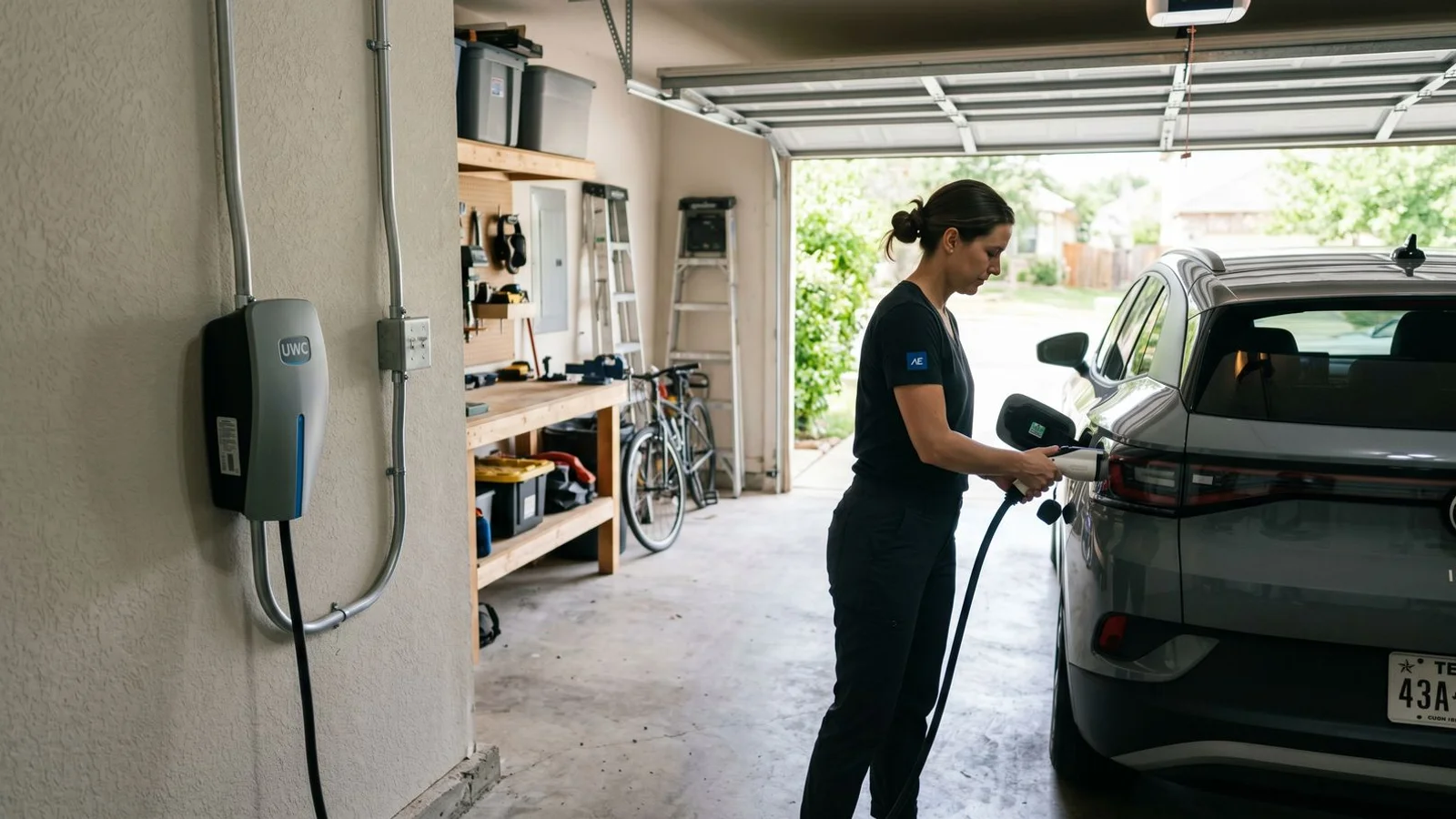
Our clients often ask how the dual-plug model works in practice. It features a built-in J1772 adapter that physically locks onto the NACS plug when needed. You simply press a button to release the J1772 sleeve for a different vehicle brand.
Why the Universal usually wins
We strongly favor the flexible option for the vast majority of residential projects. Three specific scenarios highlight why this adaptability matters so much.
- Unpredictable Vehicle Changes. The automotive market moves fast. The upgraded unit charges your current Model Y today, and the older J1772 Ford Mustang Mach-E you might buy used next year.
- Mixed-Brand Households. Many families own one Tesla and one electric vehicle from another brand. The dual-plug design handles a Rivian R1T and a Model 3 without requiring loose, third-party adapters.
- Guest Charging Access. Friends visiting with an older Chevy Bolt can plug right in. This eliminates the need for them to carry their own clunky adapters.
Our installation logs show a massive spike in mixed-EV garages over the last two years. The industry is currently transitioning, with many 2026 models finally adopting NACS natively. That being said, millions of vehicles on US roads still require the older J1772 standard.
We understand that absolute brand loyalists might prefer the standard model. A household committing to only ever buying one brand will find the basic Wall Connector slightly cheaper and completely adequate. Every other driver benefits from the built-in adapter.
Cost trade-off
We always advise clients to look at the total lifetime cost of their hardware. The standard unit hovers around $475 in 2026, while the universal model retails for $595. This creates a $120 premium upfront.
”Our perspective is that $120 serves as cheap insurance against future electrical work. Swapping a charger out later requires buying a new unit and paying an electrician another $500 to $1,000 for the labor.”
The tesla universal charger completely removes that future expense. We actively help local clients apply for the Austin Energy home EV charger rebate.
This program covers 50 percent of your total project costs, up to $1,200, which dramatically softens the blow of that price difference. The math strongly favors upgrading your garage now.
Speed and connector mechanics
We field countless questions about whether the dual-plug design slows down the actual electricity flow. The short answer is no. Both charging stations push a maximum 48 amps of continuous power on a dedicated 60-amp circuit.
Our tests confirm this 11.5 kW output adds roughly 44 miles of range per hour to most modern batteries. The true bottleneck is always your vehicle’s internal hardware. You can review How Fast Does a Tesla Wall Connector Charge at Home? for the exact per-model breakdown.
We find the physical design of the universal cable to be brilliantly simple. The J1772 adapter does not dangle loosely on a tether. It stays electronically locked inside the base unit until you push a specific latch button.
App and smart features
We configure both models using the exact same mobile platform. The hardware connects to your home’s 2.4 GHz Wi-Fi network for remote monitoring and over-the-air firmware updates. The digital experience remains identical regardless of which box you mount on the wall.
Our favorite feature is the advanced power management capability. You can physically link multiple chargers to share a single electrical circuit. This load-sharing trick is a massive benefit if your home only has a 100-amp electrical panel, potentially saving you from a $2,500 panel upgrade.
We also urge drivers to utilize the automated scheduling tools. Programming your system to run exclusively during off-peak utility hours drastically lowers your monthly electricity bill. The software tracks every kilowatt-hour consumed, giving you total visibility into your charging costs.
Tesla Certified install is the same
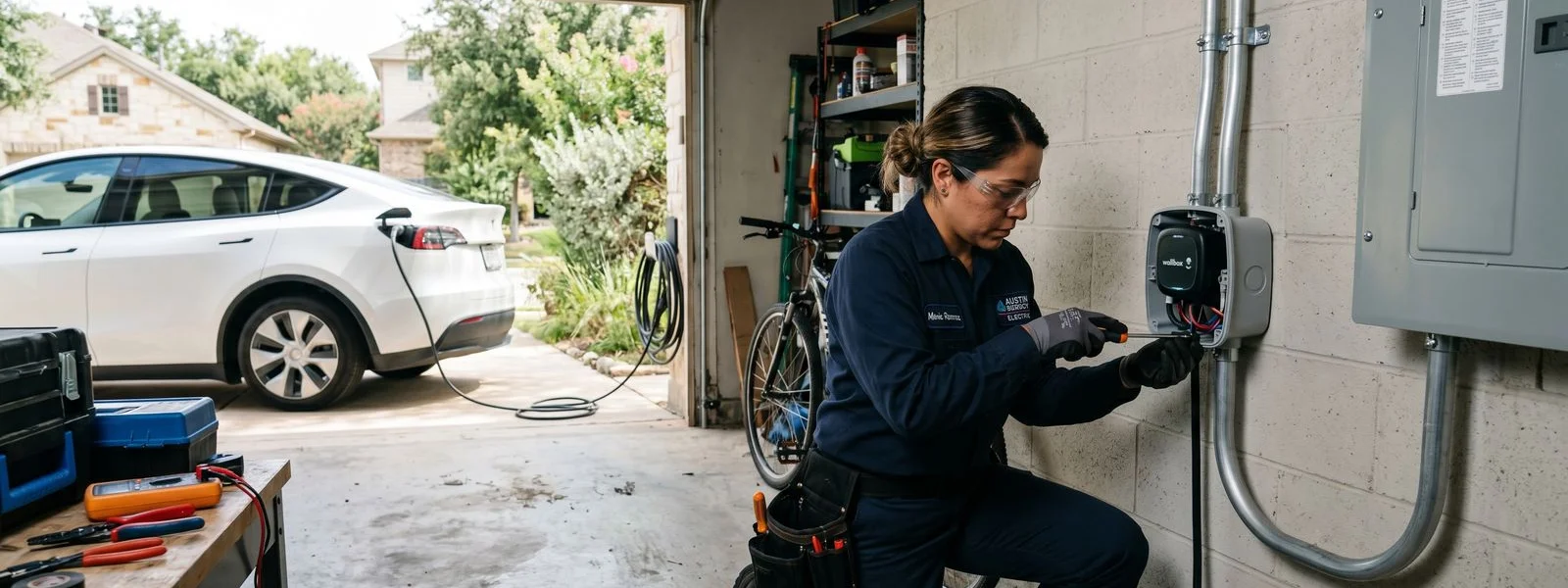
We approach the physical wiring process exactly the same way for either product. As a Tesla Certified Installer, the local municipal permits and published manufacturer specifications guide the entire project. The timeline on the ground is totally identical.
Our licensed electricians run heavy-duty 6 AWG copper wiring for both units. The National Electrical Code mandates this specific wire gauge to safely handle a continuous 48-amp load without overheating. Proper heat management is vital for hardware running at maximum capacity for six hours straight.
We secure the unit, configure the internal breakers, and wrap up most standard projects in about two hours. This standardized approach keeps labor costs predictable. Your garage will look clean, and your new equipment will pass the required city electrical inspection effortlessly.
The recommendation
We always prefer to give straightforward advice based on what actually happens in the field. When clients request a universal wall connector austin installation, they are actively protecting their investment against a rapidly shifting car market. Here is exactly how to choose your hardware.
- Dedicated Brand Loyalists: Choose the basic unit if you exclusively drive Teslas and refuse to ever purchase a different brand.
- Future Market Explorers: Pick the universal model if you own a Model 3 now but might consider a Rivian or Ford for your next vehicle.
- Split-Brand Driveways: The dual-plug version is mandatory if you actively juggle a NACS port and a J1772 port on a daily basis.
- Current Non-Tesla Owners: Buy the upgraded model to charge your older Chevy Bolt today, ensuring readiness for when you eventually buy a newer NACS vehicle.
Our overarching rule is to default to the upgraded hardware if you feel any uncertainty. The $120 future-proofing premium is a small price to pay for total peace of mind.
Bottom line
We believe the numbers speak for themselves. The standard box costs $475 and limits you to one brand, while the $595 alternative supports every electric vehicle on the road. The integrated adapter is the smartest choice for almost every residential application in the US today.
Our team is ready to get your garage upgraded safely and efficiently. See our Tesla install service to learn about the process, or get your free flat-rate quote to secure your spot on the schedule.
Frequently Asked Questions
Can the Universal charge a non-Tesla? +
Do they charge at the same speed? +
Is the Universal more expensive? +
Ready to talk specifics?
See our Tesla Wall Connector service page for pricing and what's included, or get a free flat-rate quote.