How Much Does Smart Load Management Cost in Texas?
Load management hardware + install cost in Texas vs the $3,000-$8,000 panel upgrade it avoids. What affects price.
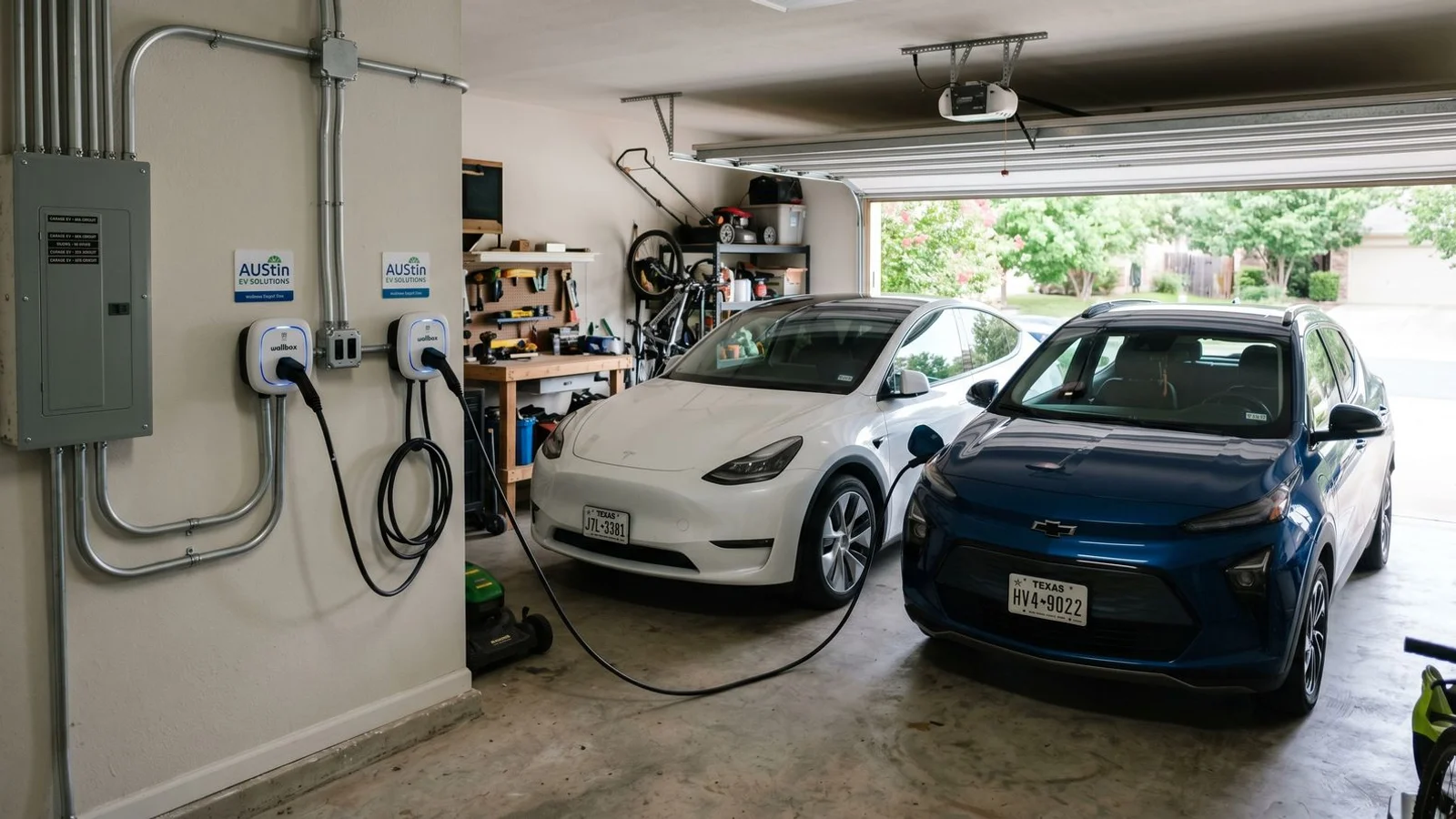
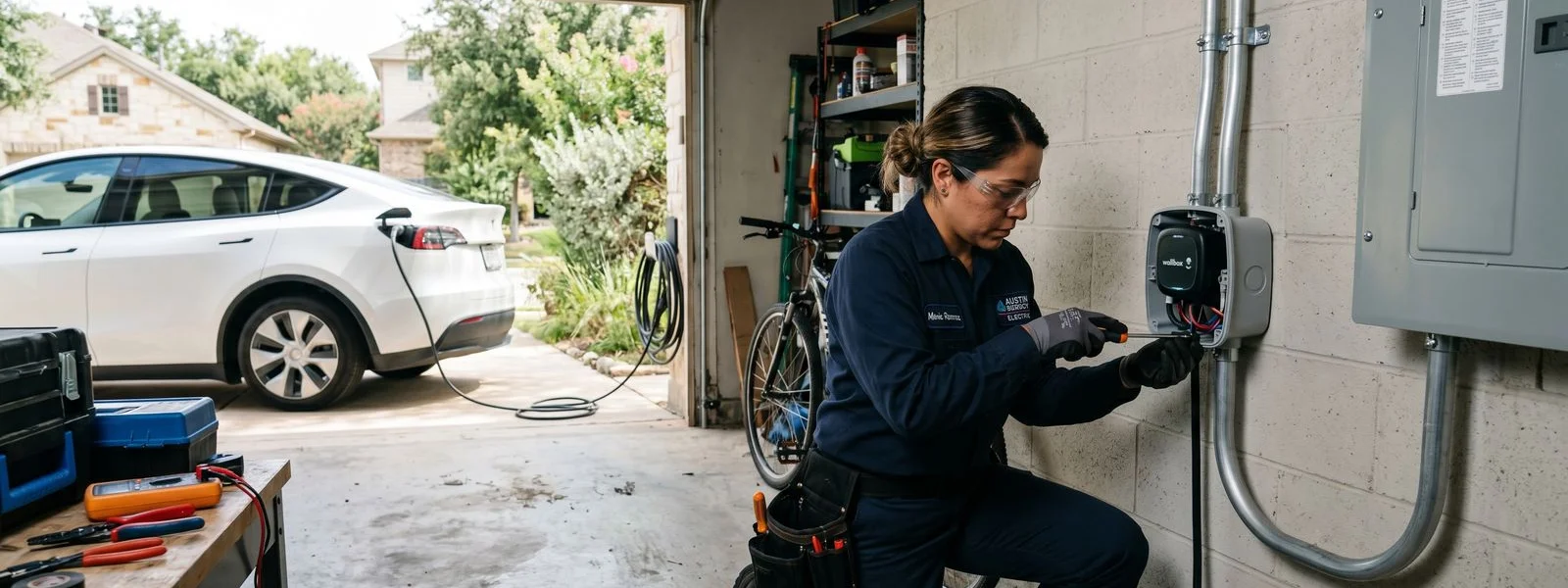
We see this exact scenario every week across Austin when drivers want to upgrade from slow Level 1 charging. Many new electric vehicle owners find themselves staring at a full electrical panel, worrying about a massive upgrade bill.
The simple truth is that you probably do not need an expensive 200-amp service upgrade to get fast Level 2 overnight charging.
Our team relies on this technology as the preferred workaround to safely install high-speed chargers on tight residential systems. Understanding the smart load management cost Texas residents face reveals a much more affordable path forward. Let us look at the data, what the hardware actually costs, and how you can avoid paying for a full panel rebuild.
Typical smart load management cost in Texas
We generally quote the additional load management components between $450 and $1,200 depending on the specific system. Load management adds a distinct set of hardware and labor costs on top of a standard EV charger setup. Here is how those expenses typically break down.
| Expense Category | Estimated Cost Range | What It Includes |
|---|---|---|
| Hardware | $500 - $800 | Emporia Pro module, DCC controller, CT clamps |
| Labor | $200 - $500 | Mounting, wiring contactors, attaching CT clamps |
| Total Added Cost | $700 - $1,300 | The complete premium over a standard installation |
Our most requested unit in 2026 is the Emporia Pro, which retails for about $599 and includes built-in PowerSmart balancing. The total emporia pro install cost usually runs between $1,400 and $1,800 once you factor in the hardware and the extra labor. Other options like a standalone DCC-9 contactor run closer to $700 but offer a reliable hardwired solution.
We see the labor portion cover the physical mounting, attaching Current Transformer clamps to your main conductors, and commissioning the software. This complete load-managed installation lands between $1,600 and $2,400 all-in for Austin metro residents. The financial advantage over a $4,000 panel replacement is clear for almost every local homeowner.
What drives load management cost up
Our field technicians find that three main variables dictate the final alms cost Texas homeowners pay. Hardware choice is the most obvious factor, as premium units cost more upfront. A smart charger like the Emporia Pro requires a strong Wi-Fi signal to communicate with the home energy monitor.
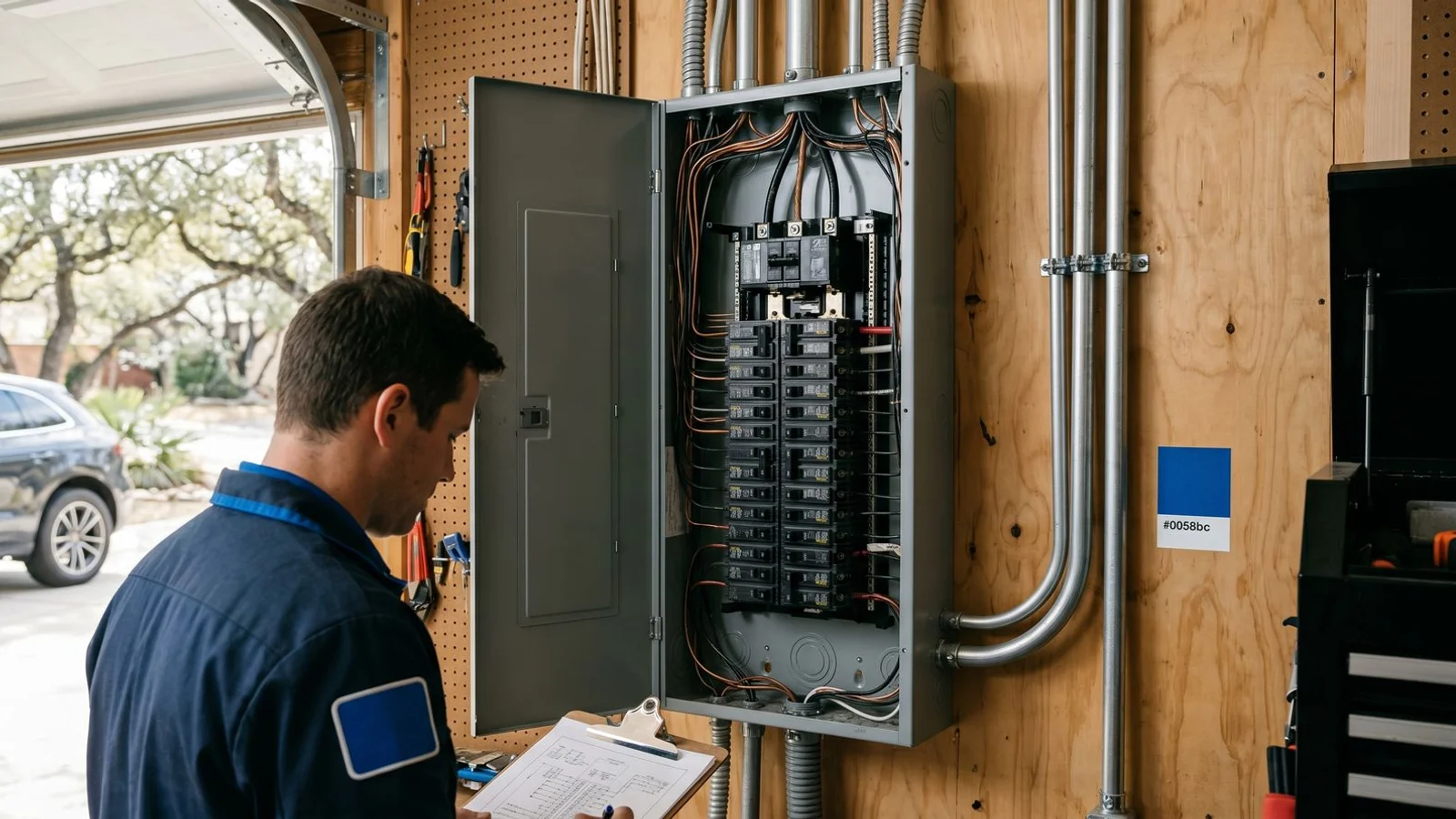
The physical space around your breaker panel determines how easily the electrician can wire the contactor into the EV circuit, directly impacting your labor costs.
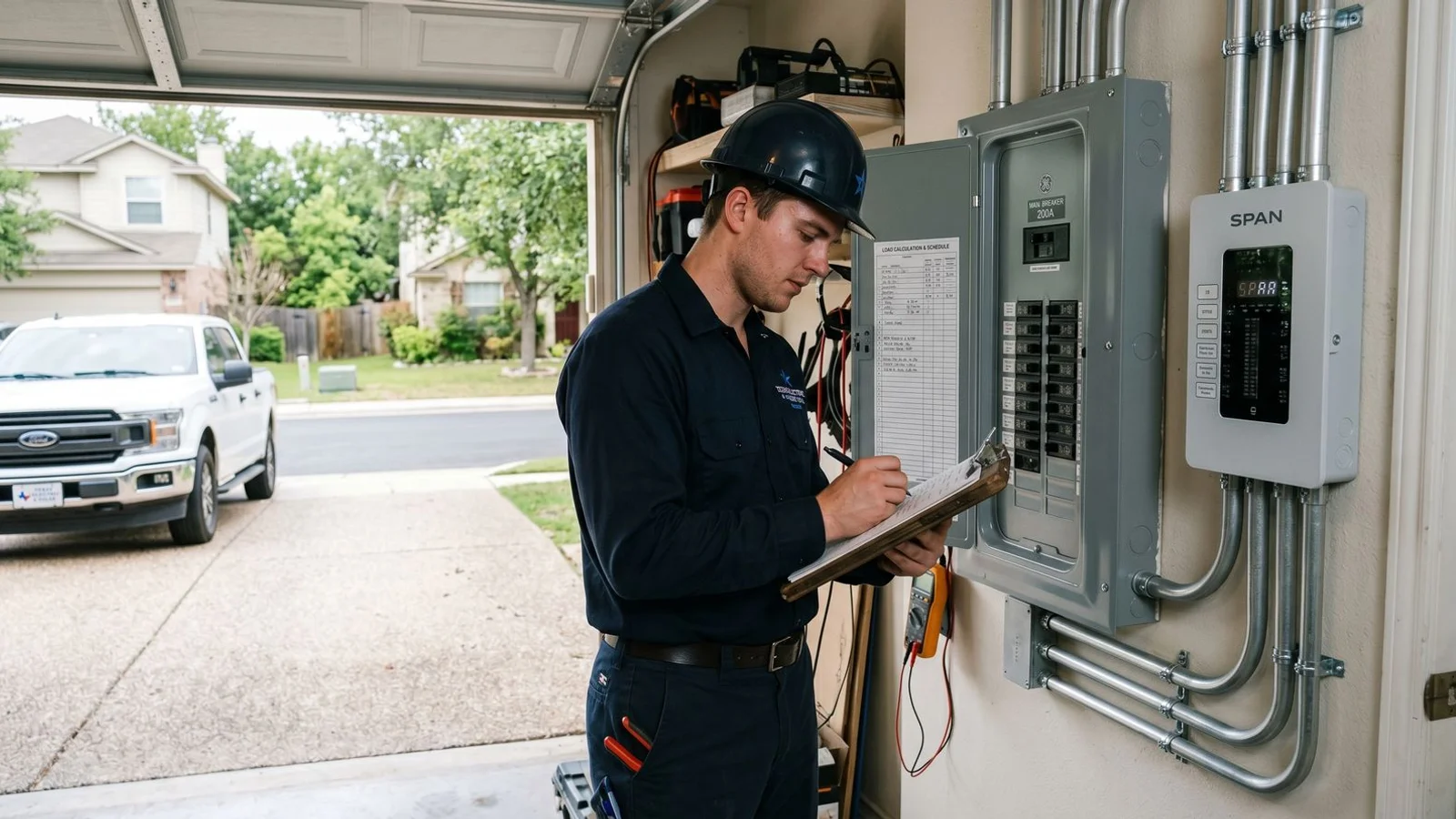
We also have to account for panel location during the planning phase. Installing a secondary module beside a panel in a tight closet or behind garage shelves requires extra time. Tricky attic work or trenching through a yard adds significant hours to the project.
We see that long conduit runs from the main panel to the garage consistently increase material and labor expenses. These physical obstacles matter just as much as the electronic components. The condition of your existing drywall can also dictate the speed of the installation.
What you actually pay for
We break down the invoice into two main categories: the physical load management hardware and the extra electrician labor. The hardware itself is a one-time purchase that protects your electrical grid from overloading.
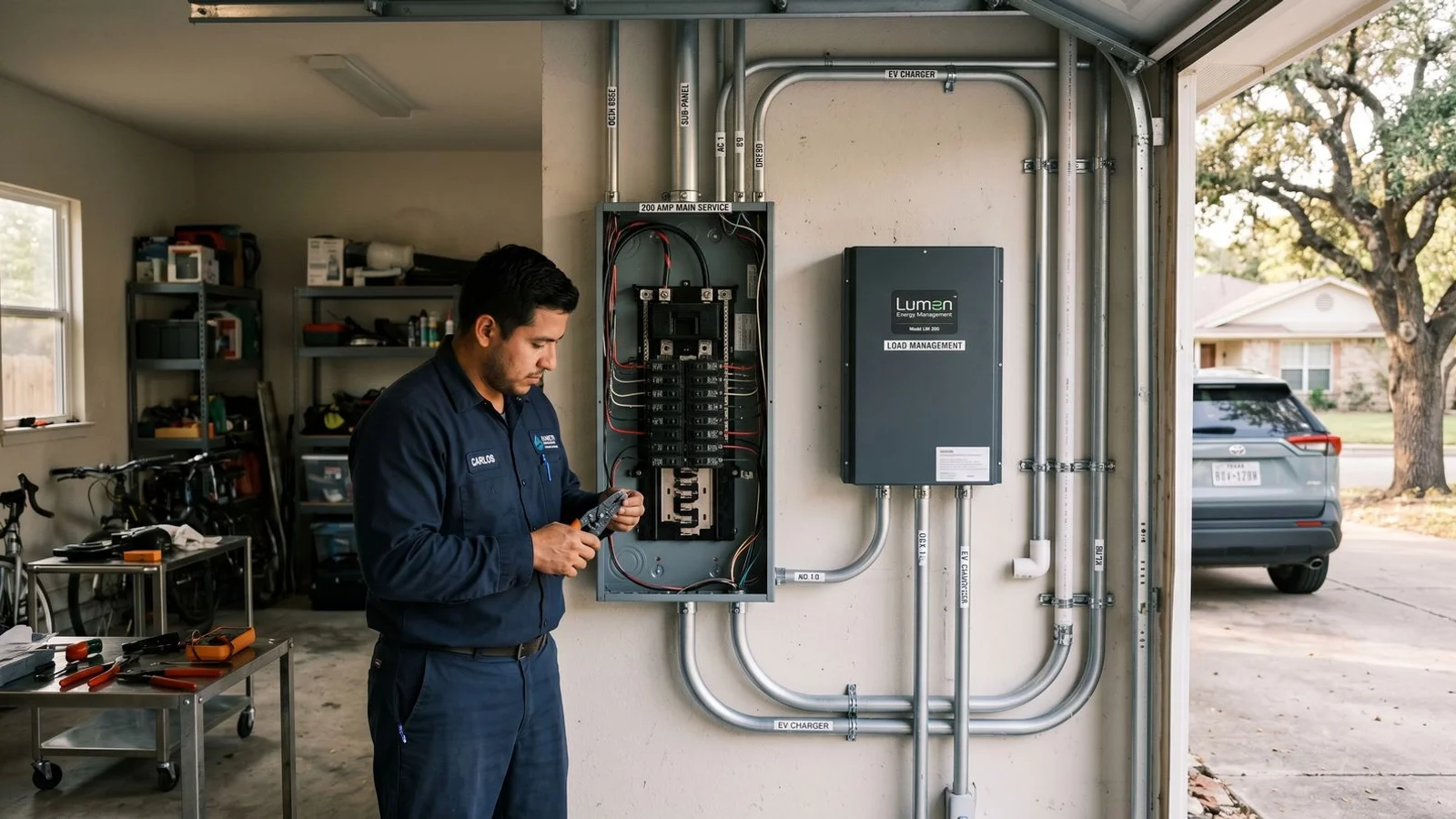
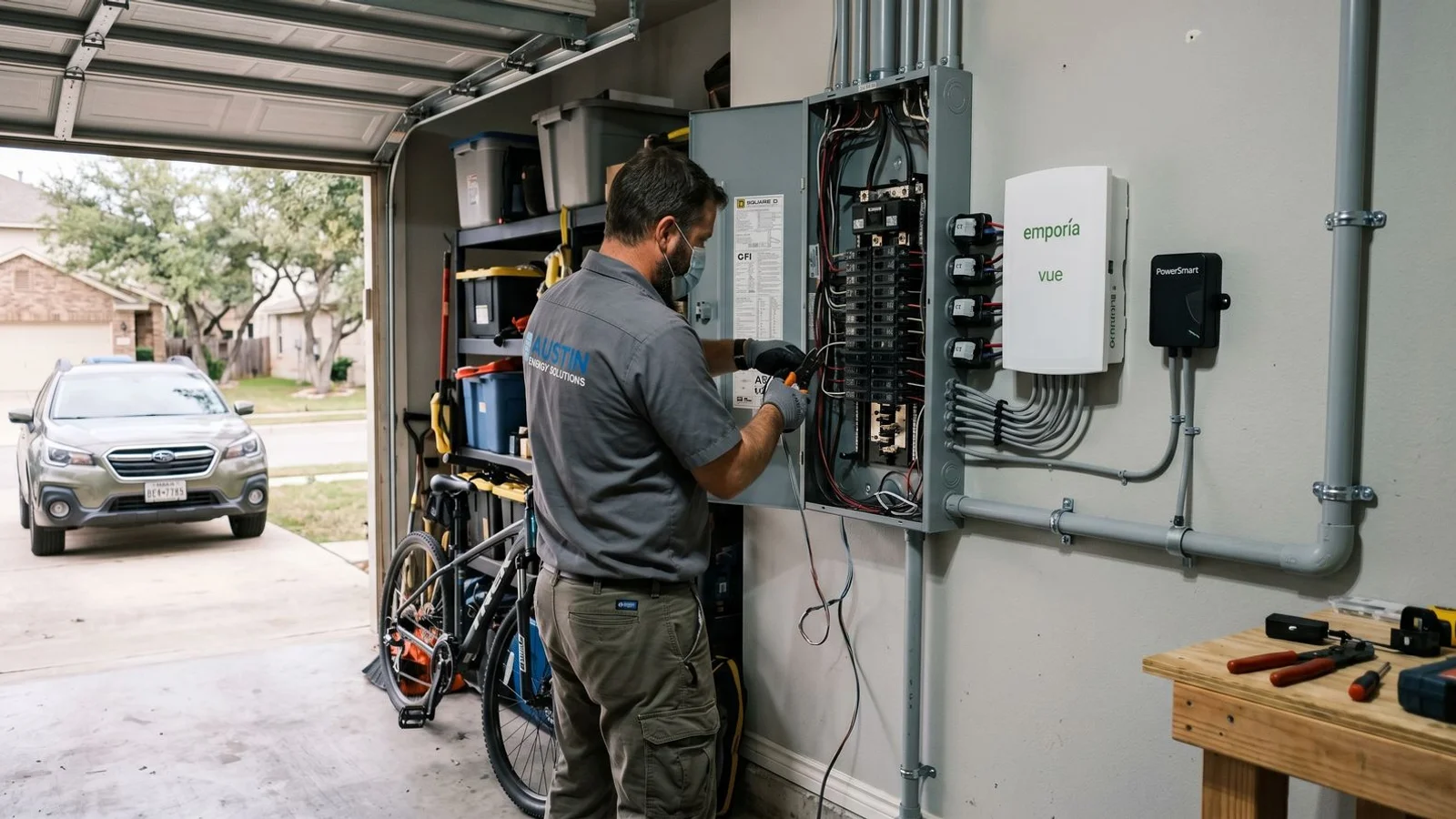
These components work together to measure power draw and automatically shed the EV load when the house needs more juice.
- CT Clamps: Sensors that snap around your main service conductors to read real-time energy usage.
- The Controller: The brain of the system, mounted right beside your breaker panel.
- The Contactor: A heavy-duty switch placed in line with the EV circuit to physically cut power if needed.
- Control Wiring: The low-voltage cables connecting the controller, contactor, and EV charger circuit.
Our installation labor covers the extra time required on top of a standard EV charger job. Setting up the clamps and wiring the load-shedding contactor usually takes an additional 1 to 1.5 hours. This small labor premium prevents the need for a multi-day panel replacement project.
The decision-cost framing
We encourage customers to look at this upgrade as a comparative choice rather than an isolated expense, and our breakdown of load management versus a 200-amp panel upgrade weighs the two paths in detail. The math strongly favors smart technology over traditional infrastructure upgrades, saving you thousands. Comparing the two routes side-by-side reveals a massive difference in your final out-of-pocket spending.
| Installation Route | EV Charger Install | Panel Upgrade Cost | Estimated Total |
|---|---|---|---|
| Standard Setup (Requires Upgrade) | $1,200 - $1,800 | $3,000 - $8,000 | $4,200 - $9,800 |
| Smart Load Management | $1,600 - $2,400 | $0 | $1,600 - $2,400 |
We have verified that in nearly every Austin home where load management is technically possible, it saves $2,500 to $7,000. Avoiding a full panel replacement also saves you from a lengthy City of Austin permitting headache.
You get the exact same Level 2 charging speed without the bloated construction bill.
What rebates and credits apply
Our team actively helps homeowners secure local and federal incentives to lower the final price tag. The two best options are the $1,200 Austin Energy rebate and the $1,000 federal 30C tax credit. Understanding these programs in 2026 is critical to maximizing your savings.
- Federal 30C Tax Credit: Covers 30% of the hardware and installation costs, up to $1,000. It expires on June 30, 2026, and requires living in an eligible non-urban or low-income census tract.
- Austin Energy Rebate: Pays 50% of the cost to buy and install a Level 2 home EV charger, capped at $1,200. The charger must be an OCPP-compliant Power Partner model to get the full amount.
We remind every client that Austin Energy strictly requires a licensed Texas electrician and a finalized city permit to approve the rebate. A DIY installation or unlicensed handyman work will automatically disqualify your application. After applying the 30C federal credit and local utility rebate, the net cost of a load-managed installation can drop well under $1,000 for qualifying households.
Why the cost varies vs flat rate
We always quote a transparent flat rate for the installation labor itself. The total price fluctuates primarily based on the specific load management hardware module you choose to buy. Homeowners can buy the module directly from the manufacturer, or they can have the installer source it at cost.
We do not mark up hardware, ensuring you pay the exact retail price for the smart charger and sensors. Sourcing the equipment yourself might save a few dollars if you find a sale, but having the electrician provide it guarantees compatibility. Either way, the total project cost is consistent and quoted upfront before any work begins.
Bottom line
We find that the average smart load management cost Texas drivers pay adds a highly reasonable $400 to $1,500 to a typical EV installation. Compared to a $3,000 to $8,000 panel upgrade, the financial logic is undeniable. Factoring in the upcoming June 30, 2026 expiration of the federal 30C credit, acting quickly yields an even better return on investment.
Our licensed electricians are ready to evaluate your panel and find the most cost-effective path to fast charging. You can See our Group Power Management service to learn exactly how the hardware operates. If you are ready to move forward, get your free flat-rate quote to secure your installation date.
Frequently Asked Questions
What does load management cost? +
What affects price? +
Does the 30C tax credit cover it? +
Ready to talk specifics?
See our Load Management service page for pricing and what's included, or get a free flat-rate quote.