Is a Plug-In EV Charger Safe for Daily Charging?
Plug-in charging is safe with a quality outlet and correct breaker. Heat risks on cheap receptacles, GFCI trips, and when hardwired is safer.
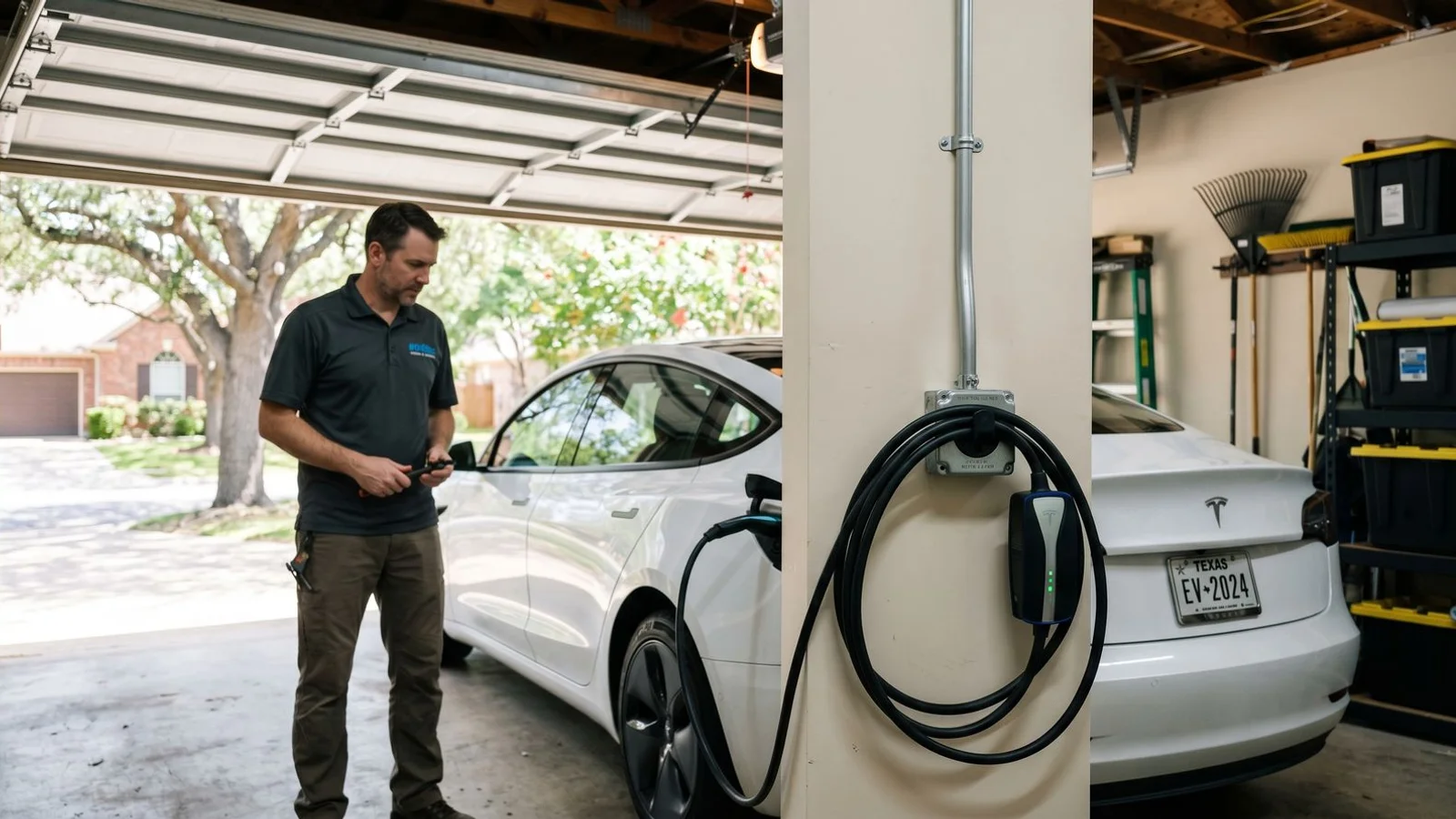
You know how almost every EV forum in the US eventually surfaces a terrifying photo of a melted garage outlet.
Customers constantly ask us: is a plug in ev charger safe for daily use? The truth is, charging on a NEMA 14-50 outlet is completely safe when the installation is handled correctly. Those charred receptacles almost always trace back to cheap residential-grade hardware and undersized circuits.
We understand exactly why this makes new electric vehicle owners anxious about transitioning from slow Level 1 cords to faster Level 2 overnight charging. From our experience at Austin EV Charger Installation, the dividing line between a safe setup and a fire hazard is the quality of the components.
Let’s break down the exact specifications for a bulletproof plug-in installation, explain why budget outlets fail, and outline a clear checklist to evaluate your own home charging setup.
Is a plug in EV charger safe? What makes the install secure
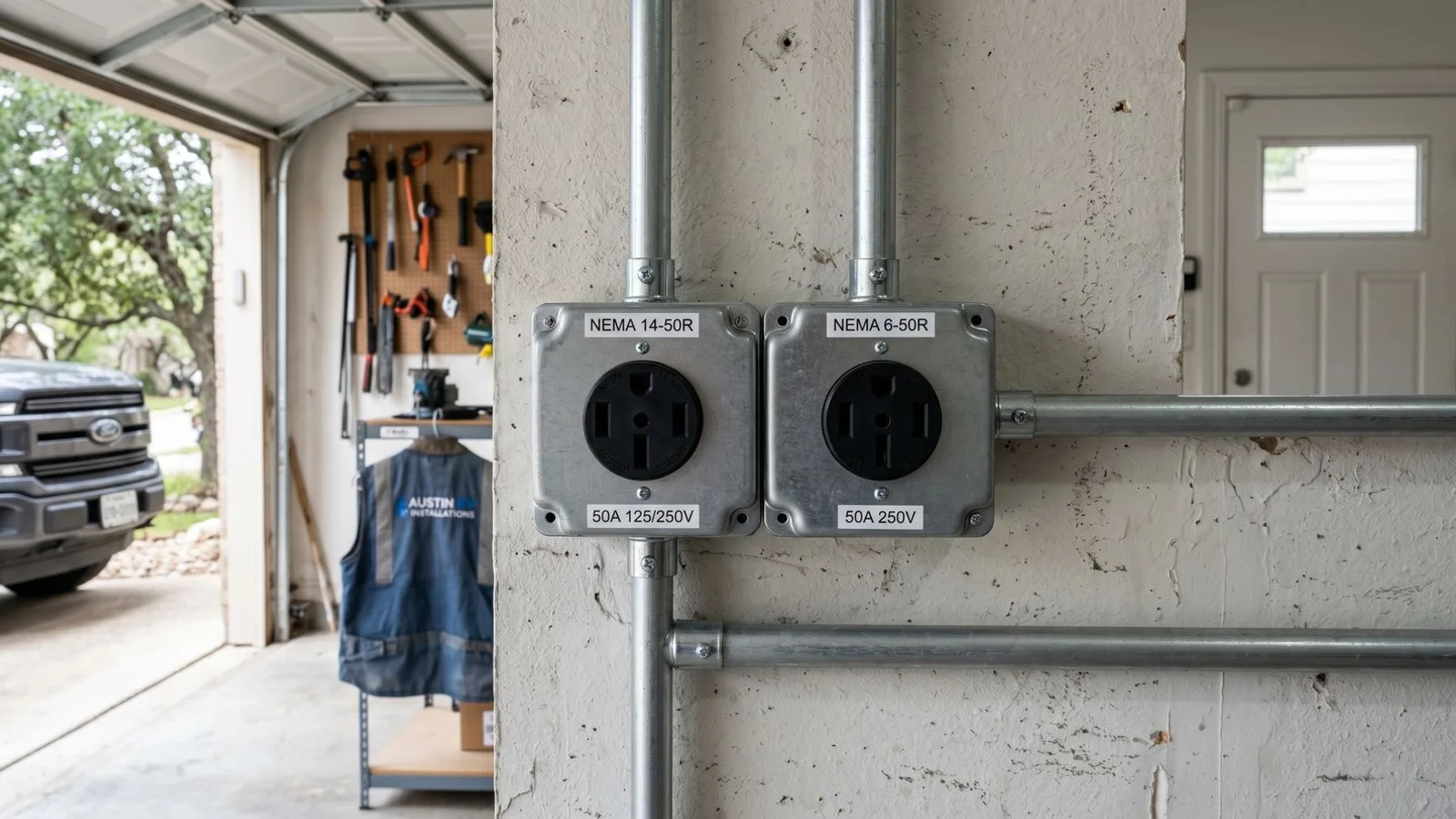
A code-compliant, daily-use-ready 14-50 EV outlet installation requires industrial-grade components and strict adherence to electrical codes. We consider a NEMA 14-50 setup safe only when it is built specifically to handle continuous, high-amperage loads. The National Electrical Code has specific rules for these US installations to ensure NEMA 14-50 safety and prevent thermal risks.
Here is a checklist of the seven non-negotiable elements for a safe plug-in charging station:
- Commercial-grade receptacle. Standard $15 hardware store versions are not acceptable. You must use industrial-grade options like the Hubbell HBL9450A or Bryant 9450FR, which cost between $50 and $180 but feature heavier brass contacts for better heat dissipation.
- Dedicated circuit. The charger cannot share a line with a dryer, electric range, or any other appliance.
- Properly sized breaker. A 50A double-pole breaker is required to support a 40A charging limit. This follows the NEC 125% rule, which states the breaker must be rated for 125% of the charger’s continuous output.
- Correctly sized conductors. You need 6 AWG copper wire (like THHN/THWN-2) for a 50A circuit. Using 8 AWG is undersized and highly dangerous for continuous EV loads.
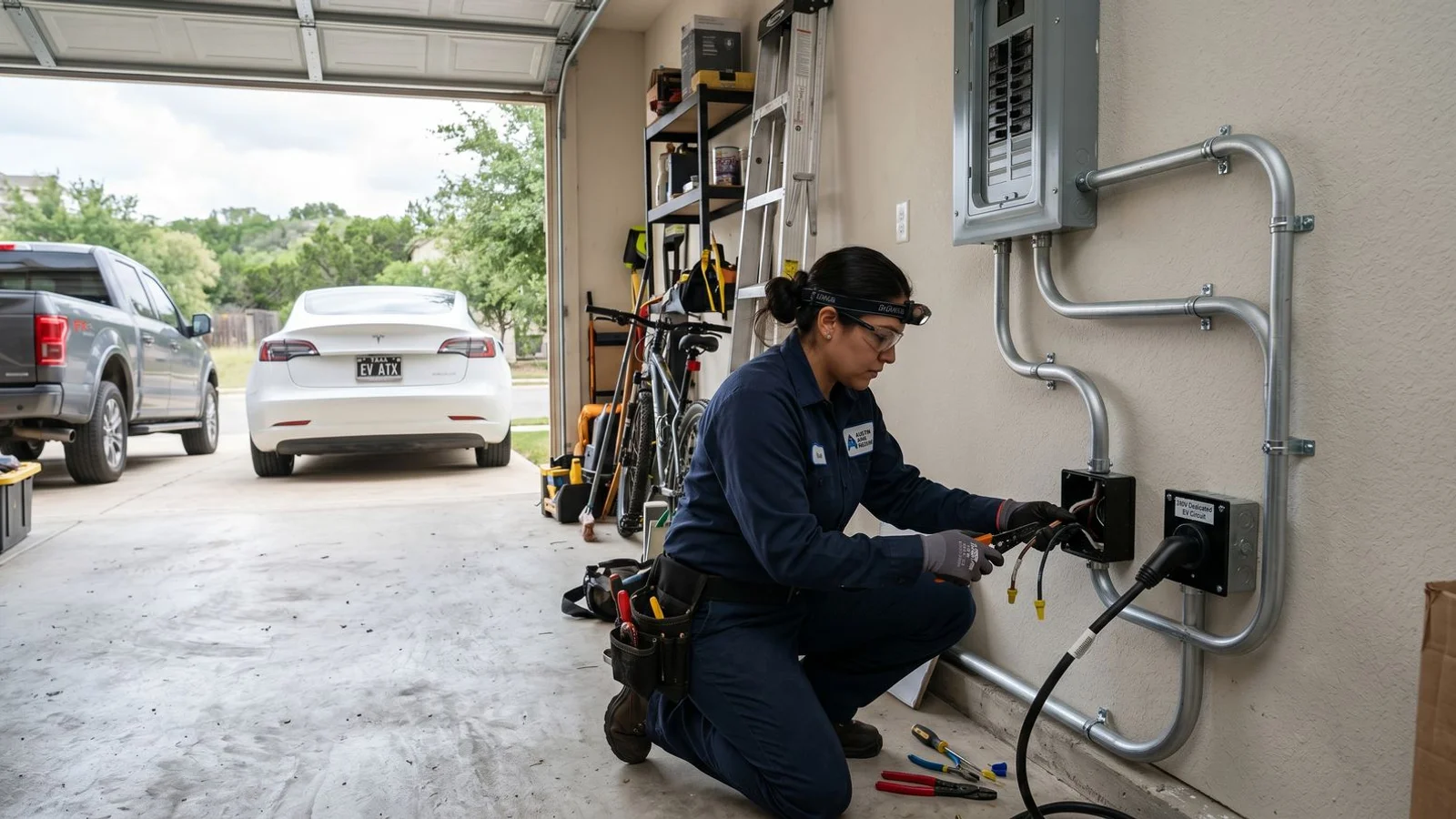
- Accurate terminal torque. Wires must be tightened to the manufacturer’s exact specifications, typically around 75 inch-pounds. Our team uses a specialized torque screwdriver, because loose connections cause arcing and melting.
- GFCI protection. A breaker-style Ground Fault Circuit Interrupter rated for EV charging is mandatory under NEC 2023 for all garage receptacles.
- Permit and inspection. A professional inspection catches hidden installation mistakes before they turn into expensive property damage.
Install a system with all seven checked, and your setup will be completely safe for years of daily use.
Why cheap outlets overheat
The primary cause of EV outlet overheating is using a budget, residential-grade receptacle designed for intermittent loads. We see this “range outlet” trap constantly, where homeowners buy a standard $15 outlet meant for an electric stove or an RV. These appliances only pull peak power for short bursts, while an electric vehicle pulls a continuous 40-amp load for six to ten hours straight.
When you subject a standard outlet to the extreme demands of daily EV charging, a predictable chain reaction occurs. The high continuous current generates heat, which degrades the internal materials over time.
Here is the exact process of how a budget outlet fails:
- Contact pressure relaxes. The metal contacts gripping the plug prongs lose their tension due to repeated heating and cooling cycles.
- Electrical resistance increases. Loose connections create higher resistance at the contact point.
- Heat build-up accelerates. More resistance paired with high current generates excessive temperatures.
- Catastrophic failure. The heat eventually melts the wire insulation, scorches the plastic faceplate, and sparks a potential wall fire.
Our team highly recommends upgrading to a commercial-grade receptacle. An industrial unit has significantly stiffer internal contacts and much better thermal mass to stay completely cool under continuous stress. This upgrade costs roughly $80, but it is an essential investment for your family’s safety.
GFCI nuisance trips, an older problem mostly solved
The combination of EV chargers and GFCI protection often causes frustrating nuisance trips, but modern electrical components offer a reliable fix. The National Electrical Code (specifically NEC 2020 and 2023, Article 625.54) mandates that all 240-volt NEMA 14-50 receptacles in a garage or outdoors must have GFCI protection. This safety rule prevents shock hazards, but it introduces a technical conflict with the charging equipment.
Most modern Level 2 chargers already feature a built-in ground-fault detection system. We often explain to customers that putting a highly sensitive GFCI breaker on the same circuit as an EV charger creates a dual-safety conflict. The breaker misinterprets the charger’s internal safety tests as a real electrical fault and shuts off the power.
How to Resolve False Tripping
Older receptacle-style GFCIs integrated directly into the wall outlet are especially prone to this issue. The industry has shifted toward better solutions to keep your vehicle charging consistently.
- Install a breaker-style GFCI. Moving the protection to the main electrical panel handles the charging logic much more cleanly.
- Update the breaker. If you still experience false trips on an existing installation, swapping the breaker for a newer, EV-compatible model usually solves the problem.
- Consider hardwiring. Hardwiring the charger completely bypasses the GFCI breaker requirement under current US electrical codes.
We strongly advise checking your local code requirements, as a GFCI breaker can add $100 to $150 to your total installation cost. A licensed electrician will ensure you meet safety standards without sacrificing reliability.
When hardwired is actually safer
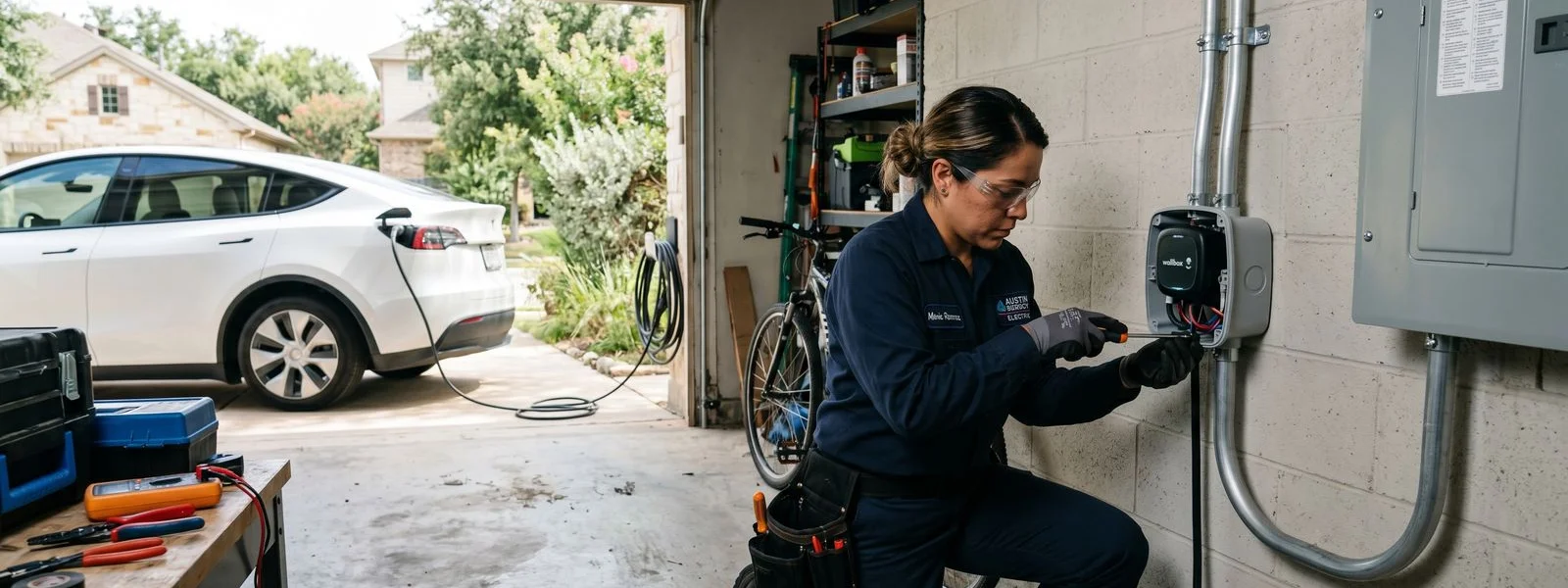
Hardwiring your electric vehicle charger is the definitively safer and faster option for high-demand residential setups. While a properly installed NEMA 14-50 outlet works well, a hardwired connection removes the physical plug and receptacle entirely, terminating the copper wires directly inside the unit.
We recommend a direct connection for several specific scenarios where a plug-in setup reaches its physical limits. Removing the wall outlet eliminates the most common failure point in the entire charging system.
Key Advantages of a Direct Connection
A hardwired installation bypasses the typical constraints of a 40-amp receptacle and offers superior long-term stability.
| Setup Type | Max Continuous Output | GFCI Breaker Required? | Connection Safety |
|---|---|---|---|
| NEMA 14-50 Plug-In | 40 Amps (9.6 kW) | Yes (Adds $100 to $150) | Plug-to-receptacle friction |
| Hardwired | 48 to 80 Amps (11.5+ kW) | No | Permanent terminal torque |
There are three main situations where skipping the outlet makes the most sense:
- Extended charging sessions. Vehicles with massive battery packs require prolonged high-current delivery, which is much harder on a plug’s friction contacts than on a torqued hardwired terminal.
- Older homes with marginal panels. Bypassing the outlet eliminates a major thermal failure mode you do not need to worry about in an aging electrical system.
- Accessing 48A charging speeds. High-end chargers can pull 48 amps, which requires a 60A circuit. A hardwired setup safely handles this power, removing the strict 40-amp plug-in cap.
For most standard overnight applications, a high-quality plug-in installation performs flawlessly. See Hardwired vs Plug-In EV Charger for the broader comparison.
What to watch for on an existing install
Routine visual and auditory inspections are the best ways to confirm an existing plug-in setup remains safe. The physical demands of pushing massive amounts of electricity into a battery will quickly reveal any weak links in your garage’s wiring.
Our technicians always advise homeowners to treat their EV charging station like heavy machinery, checking it periodically for signs of stress. A small issue caught early prevents a total hardware failure.
Here are the critical warning signs to monitor:
- Feel the receptacle face. Touch the plastic cover after a long charge session. A slightly warm surface is perfectly fine, but hot plastic is an immediate red flag.
- Inspect the plug for damage. Look closely for discoloration, scorching, or melted plastic around the prongs, which indicates excessive heat.
- Listen for electrical buzzing. A faint humming is normal for the charger unit, but an audible crackle or buzz right at the wall outlet signals poor metal contact.
- Examine the circuit breaker. Verify the panel uses a true 50A double-pole breaker on a completely dedicated circuit.
- Scan with a thermal camera. If you have access to a basic infrared thermometer or FLIR camera, use it to check the outlet temperature during peak charging.
If you notice any of these warning signs, pause your daily charging routine immediately. You must get a licensed professional to perform a detailed electrical inspection.
Bottom line
If you are still wondering, is a plug in EV charger safe? The answer is a definitive yes, when supported by commercial-grade parts and a strictly executed installation. The real danger lies in budget receptacles, undersized wire, and careless shortcuts, rather than the technology itself.
We rely exclusively on industrial-grade hardware and proper breaker-style GFCI protection on every project. Treating your charging station with the respect a 240-volt continuous load demands guarantees peace of mind.
If you need a professional upgrade or an inspection, See our outlet install service to ensure your home is ready for reliable overnight power.
Frequently Asked Questions
Is daily plug-in charging safe? +
Why do cheap outlets overheat? +
Should I worry about GFCI nuisance trips? +
Ready to talk specifics?
See our NEMA 14-50 Outlet service page for pricing and what's included, or get a free flat-rate quote.