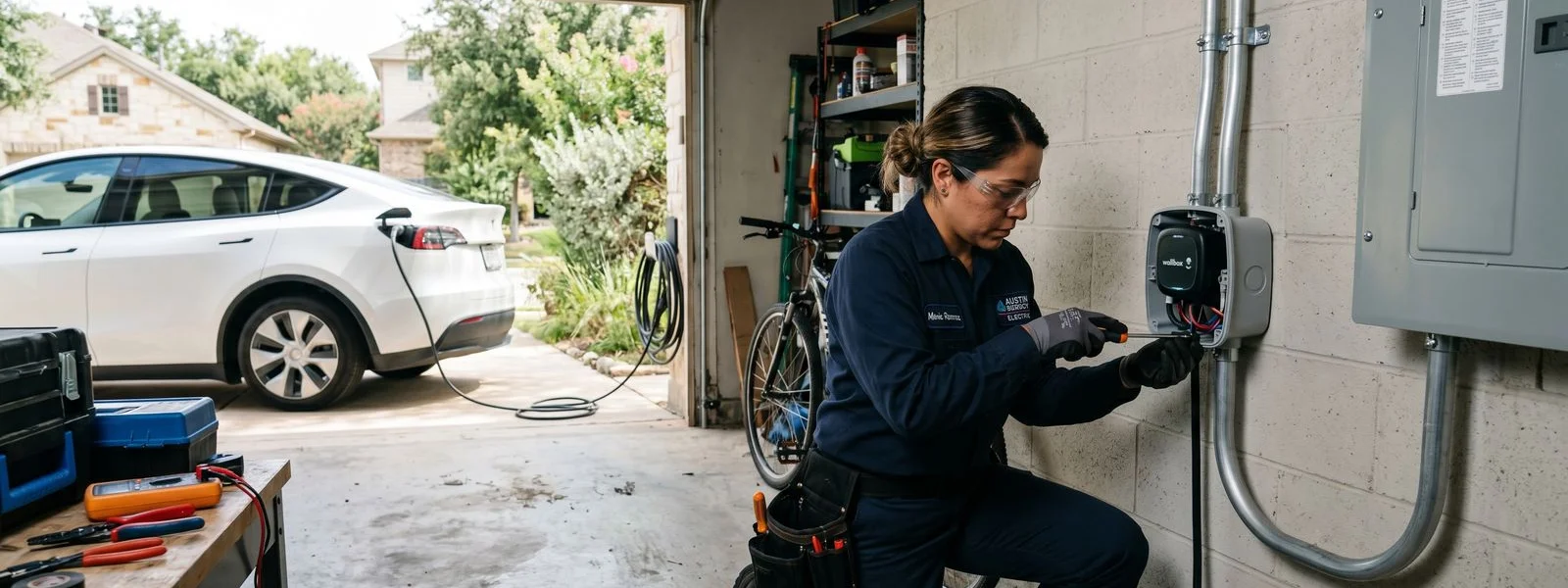
Charging Two EVs on One Circuit: Load Sharing Explained
How two chargers share one circuit, charge speeds when sharing, supporting hardware, and when a dedicated circuit is better.
We frequently see homeowners staring down a massive bill for a panel upgrade just to accommodate a second car. That cost often ranges between $1,500 and $3,500 across the US in 2026. For charging two EVs, load sharing on a single dedicated circuit is a much smarter alternative.
Our installers at Austin EV Charger Installation rely on this specific configuration, part of our Group Power Management service, to distribute power safely without triggering expensive utility work.
It works beautifully.
This guide will explain the hardware requirements and your actual real-world charging speeds. We will help you decide if running two separate circuits is necessary for your daily commute.
How charging two EVs load sharing works
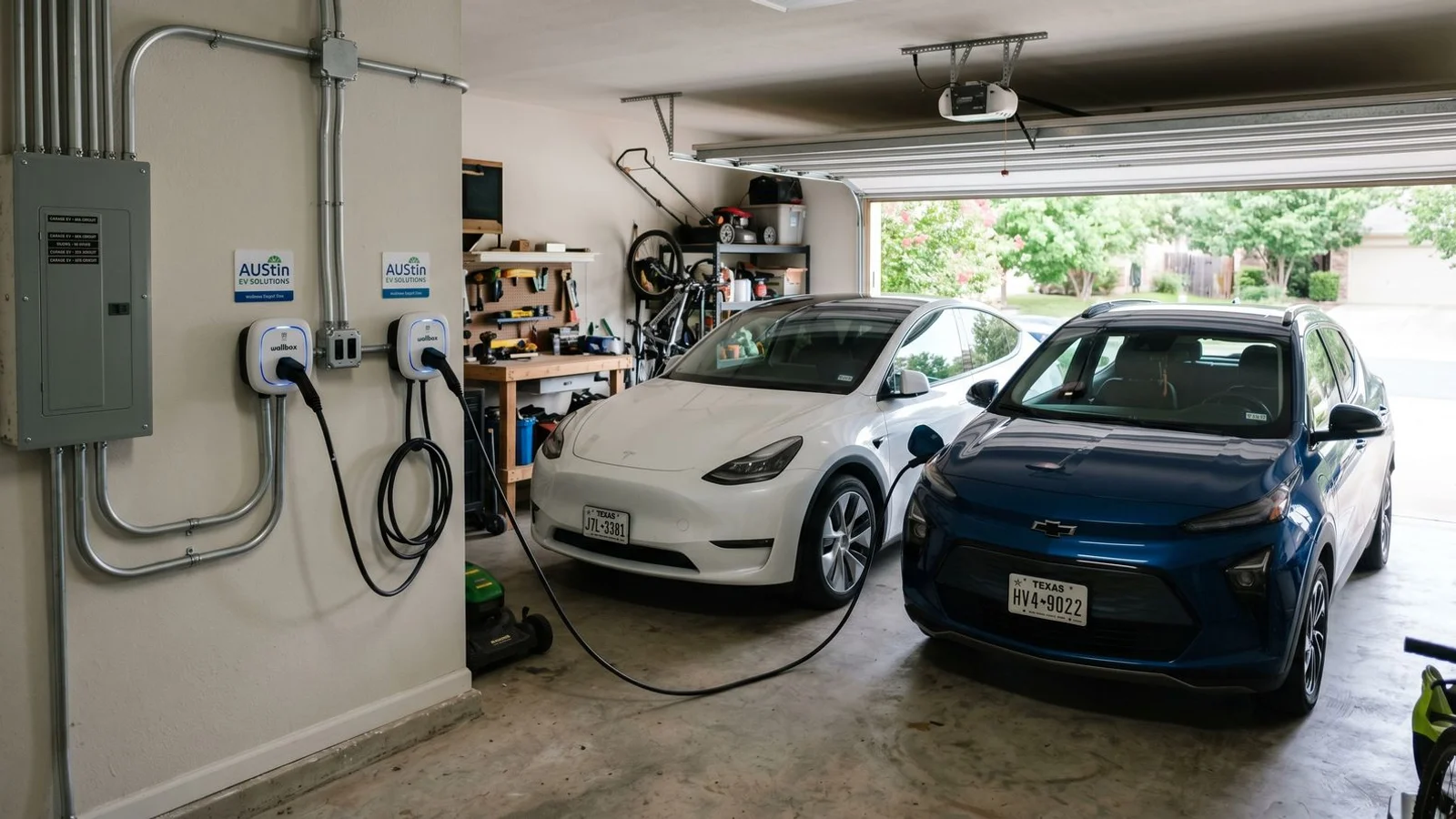
A single dedicated 240-volt circuit feeds two wall-mounted EV chargers wired together. The National Electrical Code permits this setup as long as a controller automatically manages the demand.
We typically install a standard 60-amp breaker for this configuration. That breaker size safely provides a continuous 48-amp load to the vehicles based on the 80 percent safety rule. The software dynamically splits this available electricity based on how many cars demand a charge.
Our clients love how automatically this operates in the background.
- A single plugged-in car receives the full 48-amp continuous circuit.
- Two plugged-in vehicles will split the circuit to draw 24 amps each.
- We see the still-charging car receive full speed back the moment the other battery finishes.
The vehicles do not need to communicate with each other. The internal hardware controller manages everything.
Real-world charge speeds
We often hear new electric vehicle owners worry that splitting power means painfully slow charging. That concern is rarely an issue for a typical two-car household. A 24-amp split charge still adds approximately 15 to 20 miles of range per hour to each battery.
Our data shows this speed easily covers daily driving habits.
- The average US commuter only drives about 40 miles a day.
- A ten-hour overnight session at the split 24-amp rate delivers up to 200 miles of range per vehicle.
- We find that only one car usually requires a significant recharge on any given day.
- Separate circuits are only necessary if you run a commercial fleet and need maximum speed simultaneously.
Splitting a single circuit is the exact right answer for a standard commuter household. Our customers wake up to full batteries every single morning.
Hardware that supports it
A short list of excellent charging ecosystems offers native sharing capabilities. Specific firmware versions and network connections dictate how these units communicate. Our top recommendations include a few standout models.
This table breaks down the current options for 2026. Every model requires a reliable local internet connection to coordinate the energy flow.
| Charger Model | Sharing Technology | Maximum Shared Units |
|---|---|---|
| Tesla Gen 3 Wall Connector | Group Power Management | Up to 6 units |
| Emporia Pro & Classic | Intelligent Load Sharing | Variable via Wi-Fi |
| Wallbox Pulsar Plus | Power Sharing | Up to 25 units |
| ChargePoint Home Flex | Site or Transformer Sharing | Variable |
We highly suggest confirming these specifications before buying your equipment. You can read our detailed guide on picking a brand to compare other features. The Tesla Gen 3 Wall Connector is a standout because its Group Power Management software links up to six units together.
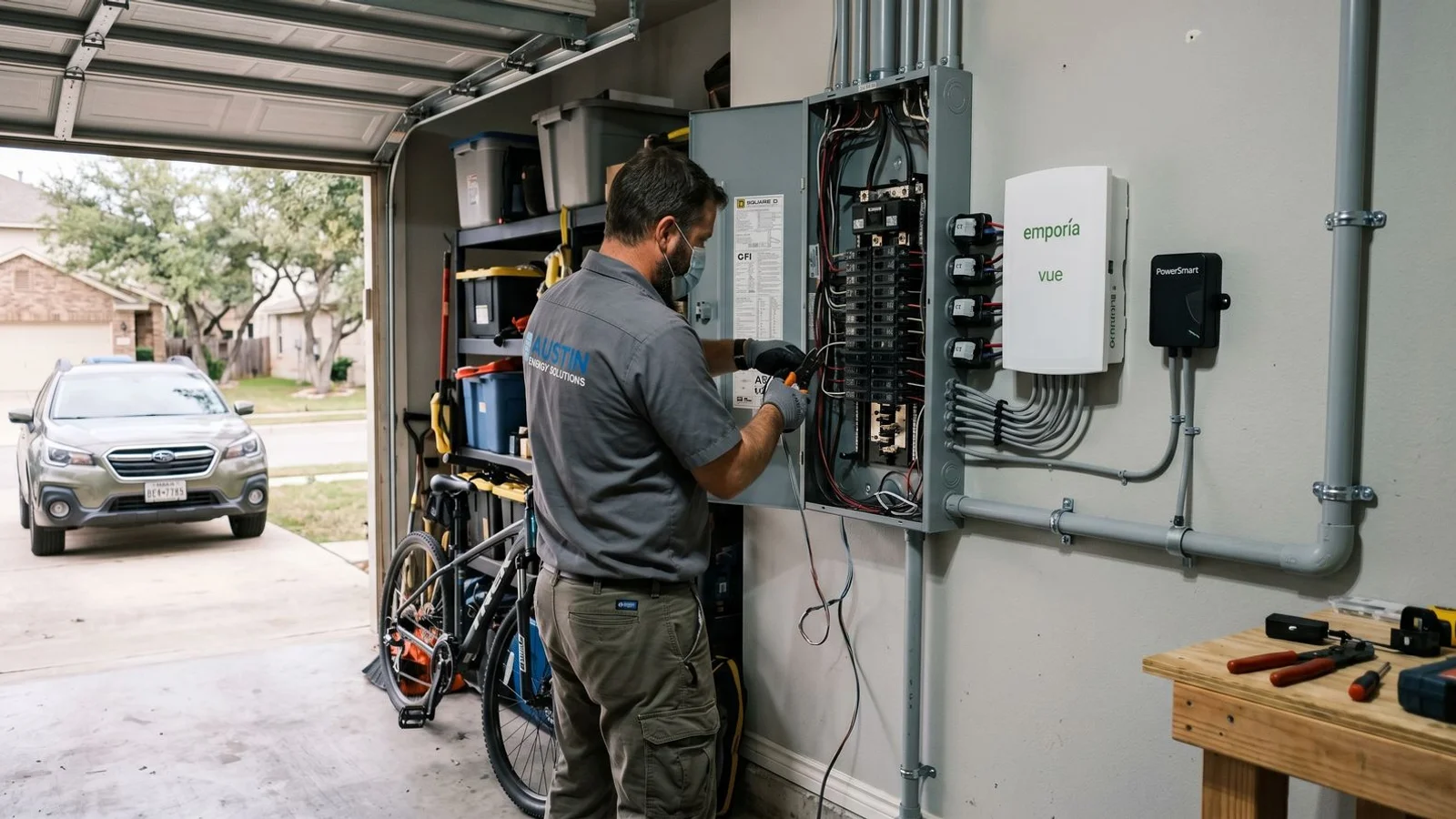
Our team installs Emporia Pro models because they now support Intelligent Load Sharing directly over a wireless connection. You no longer need to purchase their separate energy monitor just to split a standard breaker. The Wallbox Pulsar Plus provides another excellent choice with its built-in Power Sharing technology.
When two dedicated circuits make more sense
We recognize that splitting power is not the perfect solution for every single property. Two dedicated circuits make sense in a few very specific situations. The math changes when you introduce commercial-sized batteries or major renovations.
Our technicians suggest separate breakers if you meet these specific criteria:
- A split 24-amp connection takes over 12 hours to fill a 131-kilowatt-hour truck battery from empty.
- It makes financial sense to run two lines if you are already paying $3,000 for a heavy service upgrade.
We still recommend a shared configuration for standard commuter vehicles. A single wire run keeps your installation costs low. It safely protects your existing electrical infrastructure.
Sharing + load management together
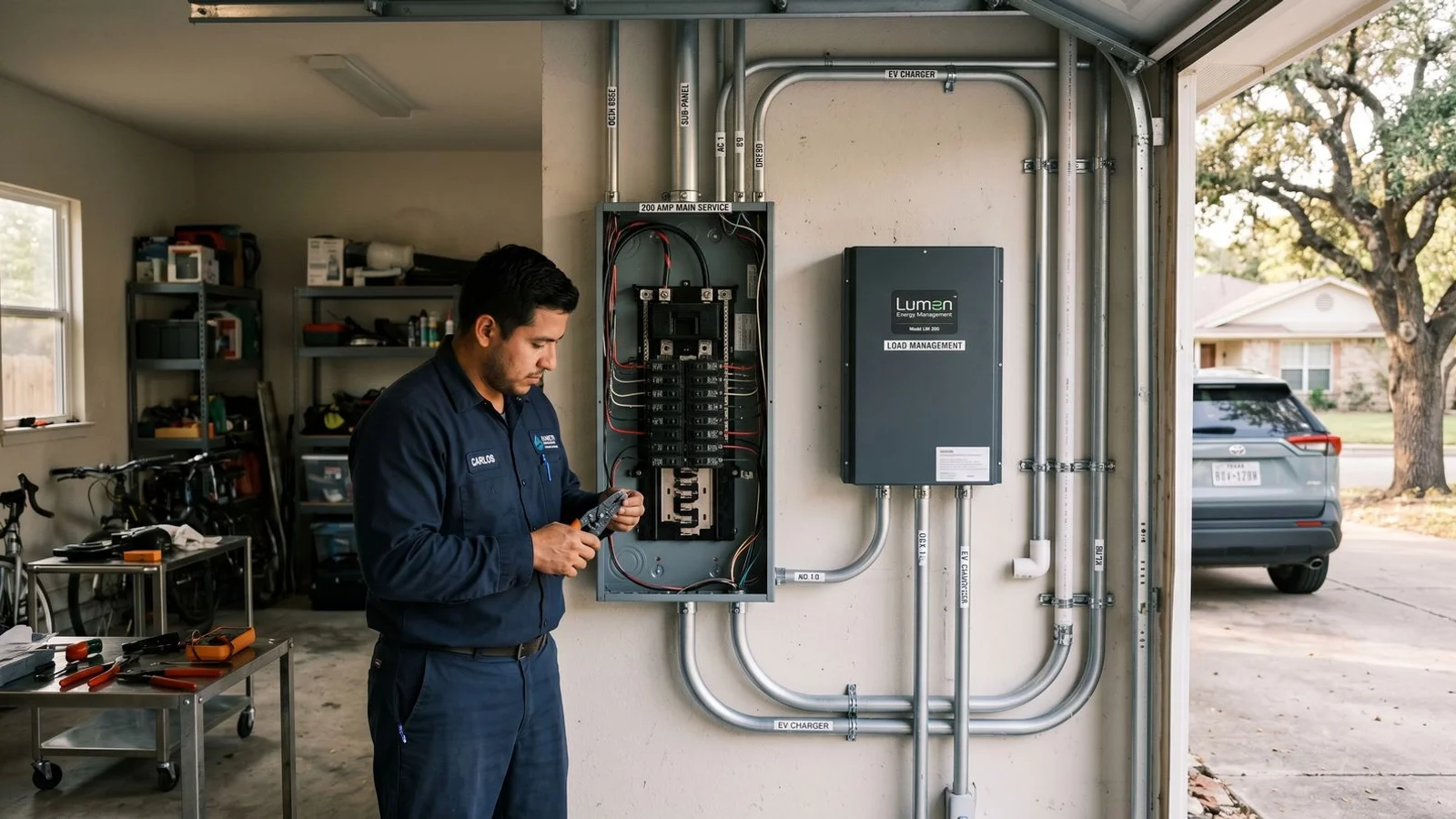
We install a combination of shared wiring and whole-house energy management to solve the toughest electrical challenges. This configuration throttles the total output when your house demands extra electricity. A smart meter clamps onto your main service lines to monitor the total draw.
Our favorite smart systems take energy measurements up to 3,000 times a second to prevent your main breaker from ever tripping.
The chargers will automatically slow down if your air conditioner and electric dryer kick on simultaneously. This dynamic adjustment complies perfectly with National Electrical Code Section 625.42.
We use this method to legally avoid expensive utility service upgrades entirely. You can read more about these strategies in our article on Planning a Home Charger for a Two-EV Household. The integrated software handles all the complicated math for you.
Bottom line
Our final recommendation is simple.
For charging two EVs, load sharing hardware is the most efficient choice for a standard US home. It keeps your installation costs low while ensuring both batteries are full by morning.
We encourage you to reach out for personalized advice.
Get your free flat-rate quote and tell us about your second vehicle when you ask.
Frequently Asked Questions
How fast do two cars charge when sharing? +
Is sharing better than two dedicated circuits? +
What hardware supports it? +
Ready to talk specifics?
See our Load Management service page for pricing and what's included, or get a free flat-rate quote.