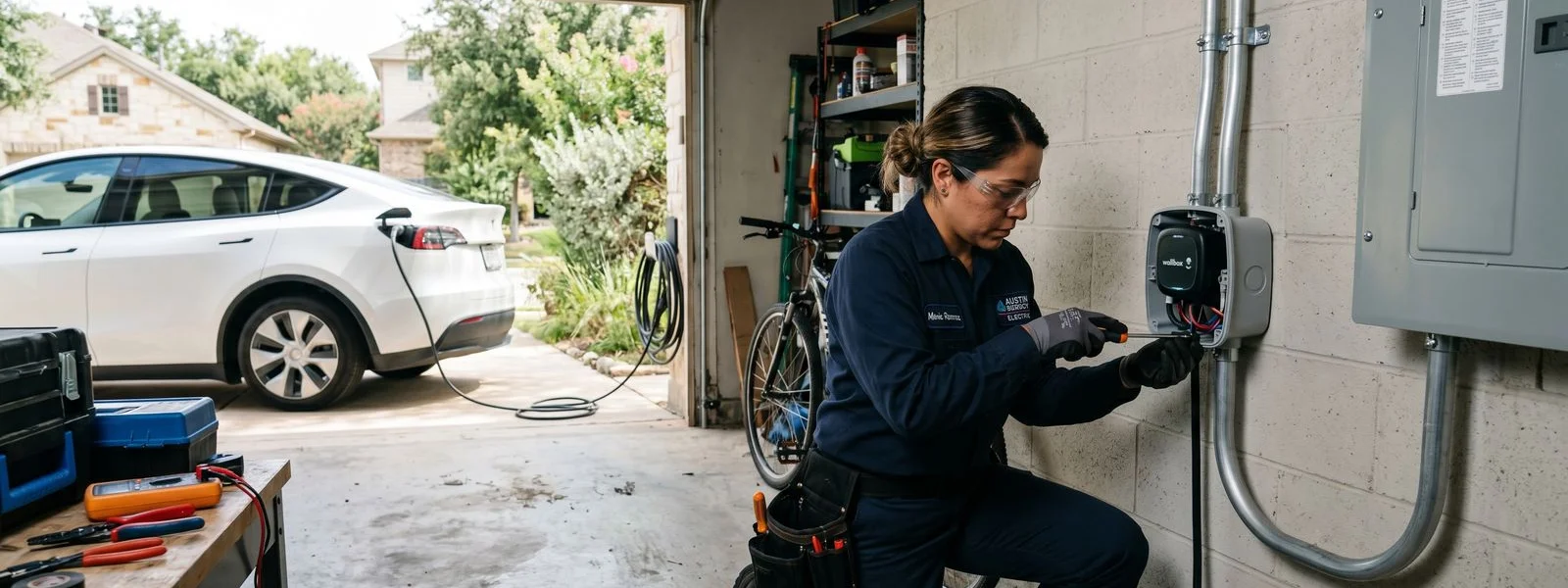
What Is EV Charger Smart Load Management?
Smart load management adds an EV charger to a full panel safely by throttling it in real time. How CT clamps and dynamic load shedding work.
Austin EV Charger Installation was founded with a simple mission to provide exceptional electrical services. We often see new EV owners panic when they find out their electrical panel is full.
From what we have seen, the fear of an overloaded breaker stops many people from upgrading to fast Level 2 charging.
Our team relies on a smart hardware solution to bypass this exact problem.
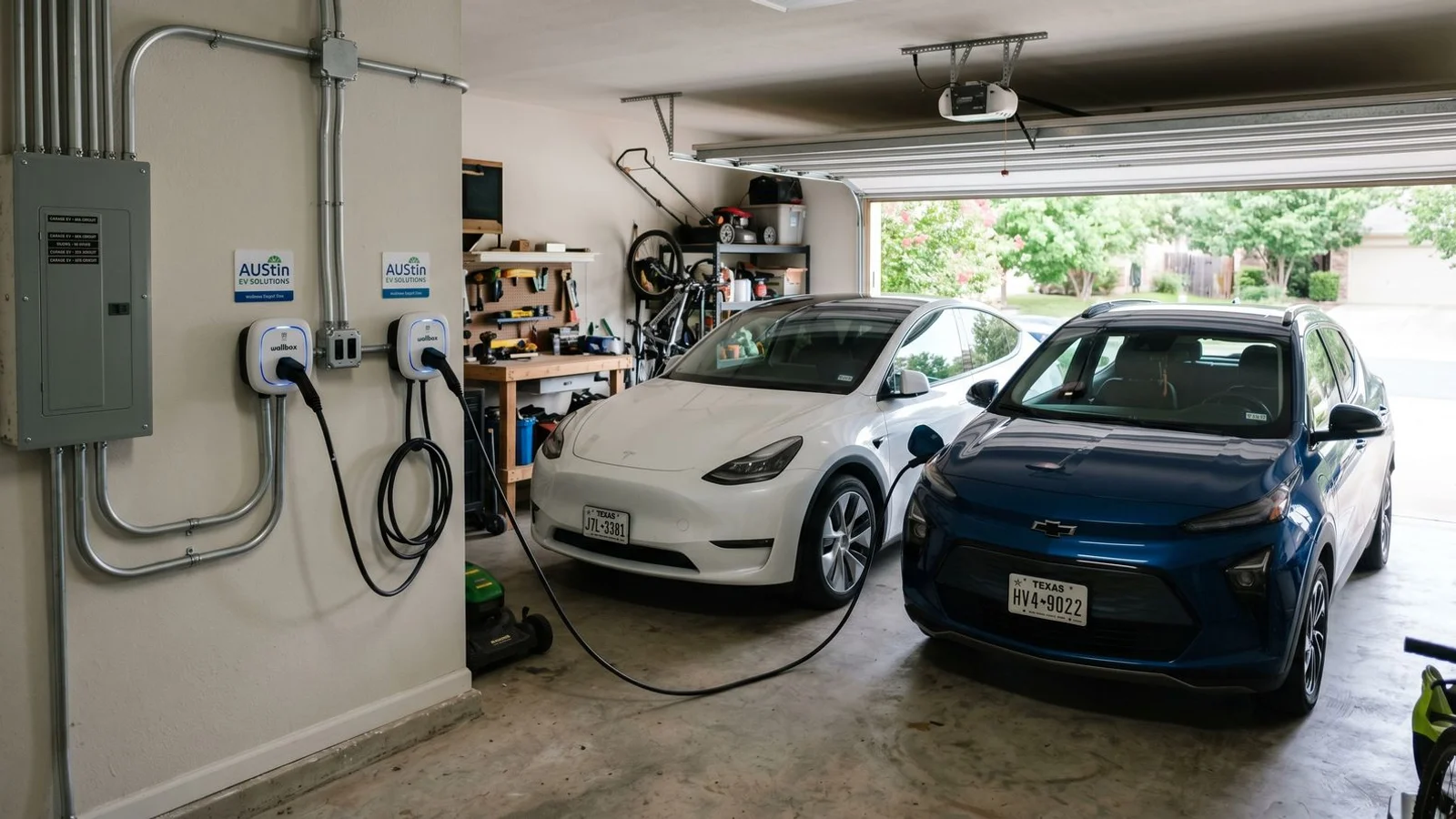
So, what is ev charger load management? We define EV charger smart load management as a device that monitors your total electricity use and automatically throttles the car charger during peak demand.
This technology keeps your main breaker from tripping and allows you to keep your existing 100A or 150A panel. Our clients love that the car still finishes charging by morning without requiring a massive upgrade.
Let’s look at the hardware involved, what the 2026 data actually tells us, and how you can get around strict electrical limits.
How it actually works
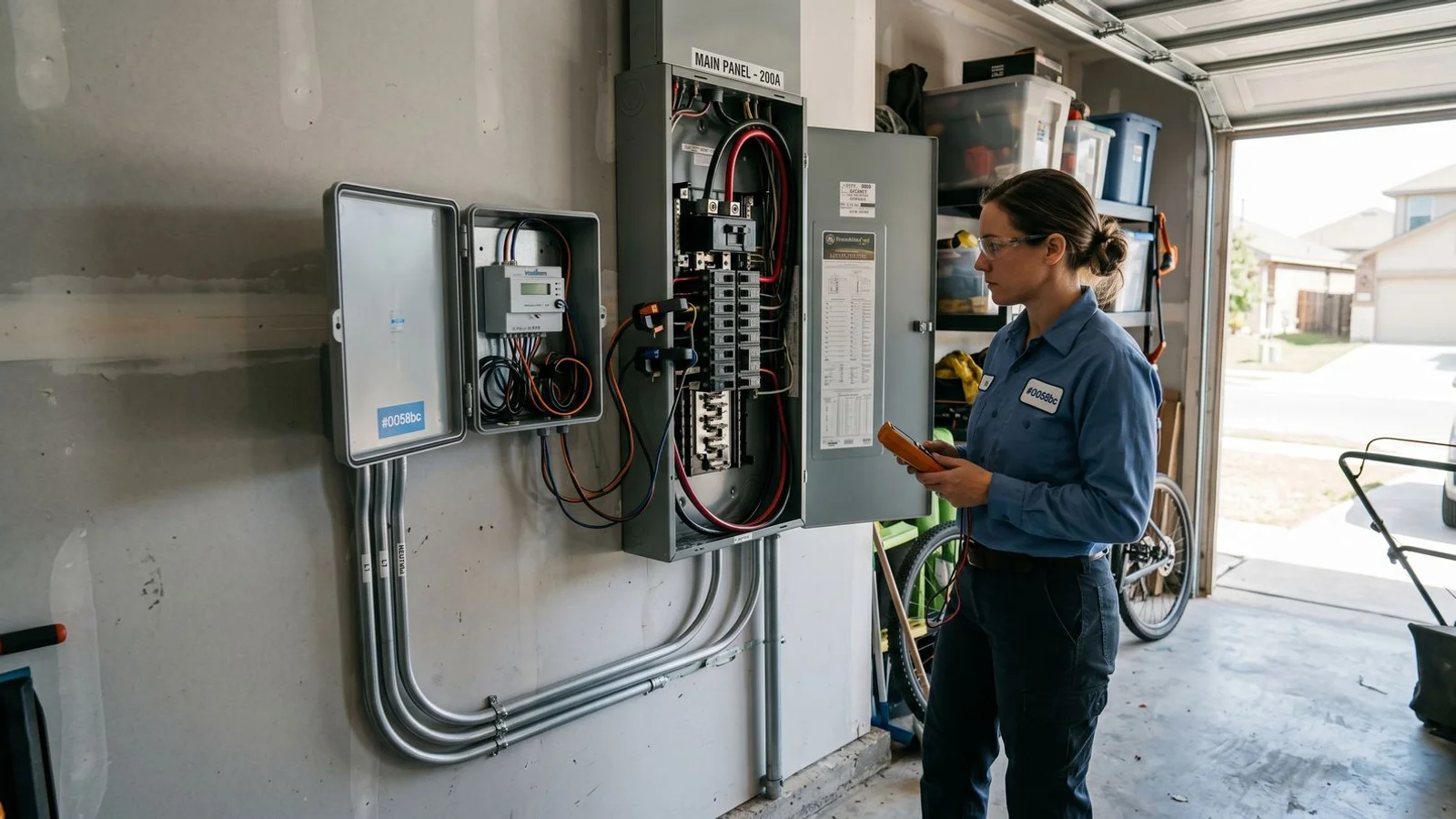
This system works by reading your home’s power consumption in real time and adjusting your charger’s output to match the available capacity. Three main pieces of hardware make this dynamic adjustment possible.
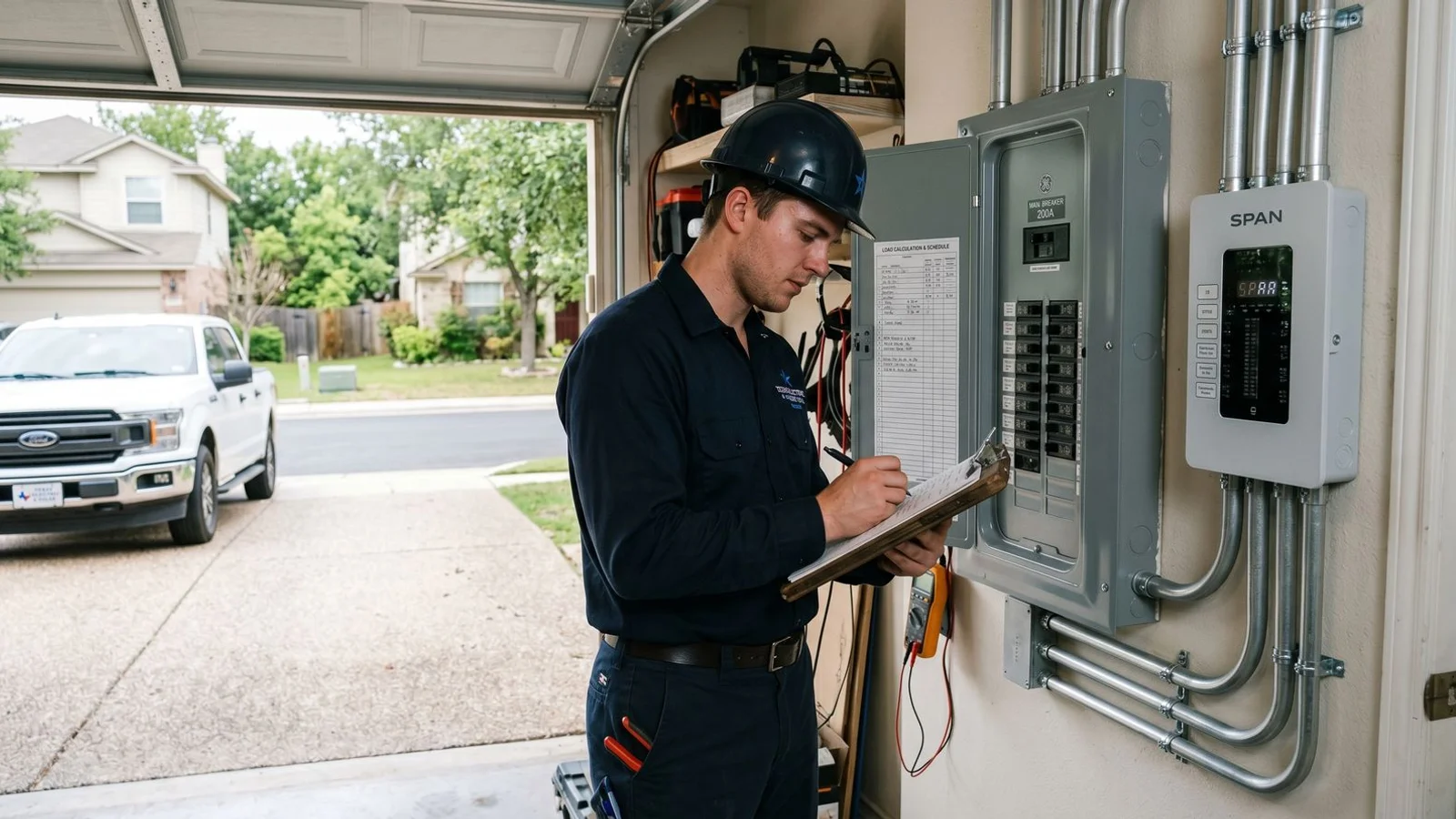
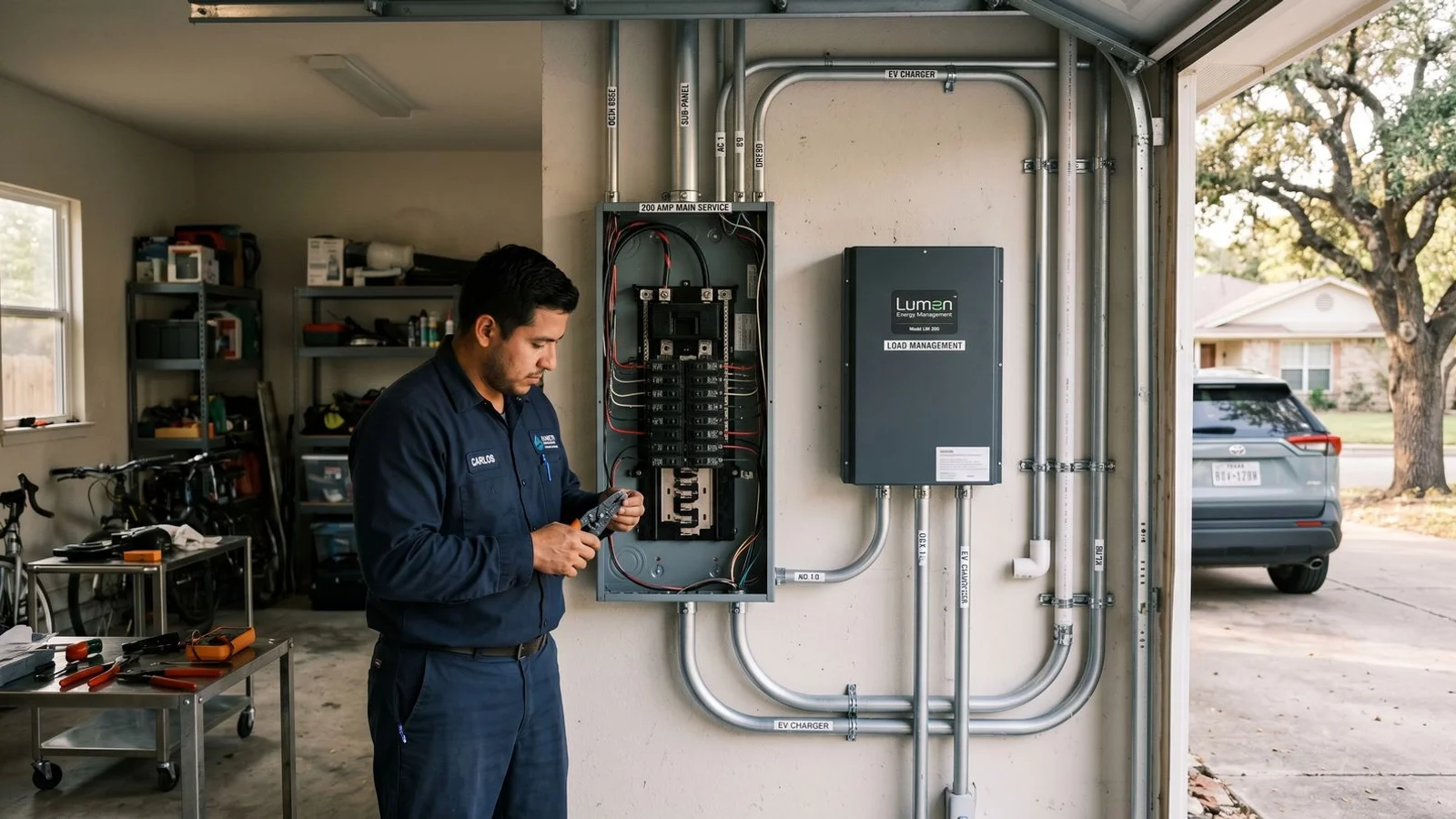
- CT clamps: Current transformer clamps snap around your main service conductors inside the panel. They measure the home’s total electrical draw constantly.
- A load-management controller: This is the brain of the operation. Devices like the 2026 Emporia Pro use the Vue 3 Home Energy Monitor to track usage, while DCC-style load-shedding contactors cut power entirely when needed.
- The EV charger: The charger itself communicates directly with the controller to know how much power it can safely push to the car.
We often see these systems adjust power up to 3,000 times per second. During normal hours, your home pulls a moderate load, and the smart load management EV charger runs at a full 48 amps.
Our technicians watch the magic happen when a big appliance like an air conditioner kicks on. The controller reads the demand spike and instantly drops the charger down to a safe level, such as 24 amps.
We know the demand drops again once the appliance cycles off, allowing the charger to ramp back up. The car still finishes charging by morning, and you never see anything except a fully charged battery.
Our preferred approach is to match the right system type to your specific home. Let’s break down the two main types of controllers you will encounter.
| System Type | How It Handles Overloads | Best Used For |
|---|---|---|
| Active Load Management | Throttles charging speed down and up based on real-time capacity. | Homes wanting continuous charging at variable speeds. |
| Contactor Load Shedding | Cuts power to the charger completely until the home’s total demand drops. | Strict electrical constraints where active throttling is unsupported. |
Why this matters in Austin
We explain to every customer that load management matters because it saves them from an expensive panel replacement. Most general electrician quotes for older Austin homes default to demanding a 200-amp upgrade.
Our team tracks local pricing closely, and a standard 200-amp upgrade in Texas during 2026 averages between $2,800 and $3,800. A more complex service boost can easily exceed $4,500.
We help clients avoid these unnecessary costs by installing smart ALMS ev charging hardware. You should consider skipping the upgrade if your home fits any of these criteria:
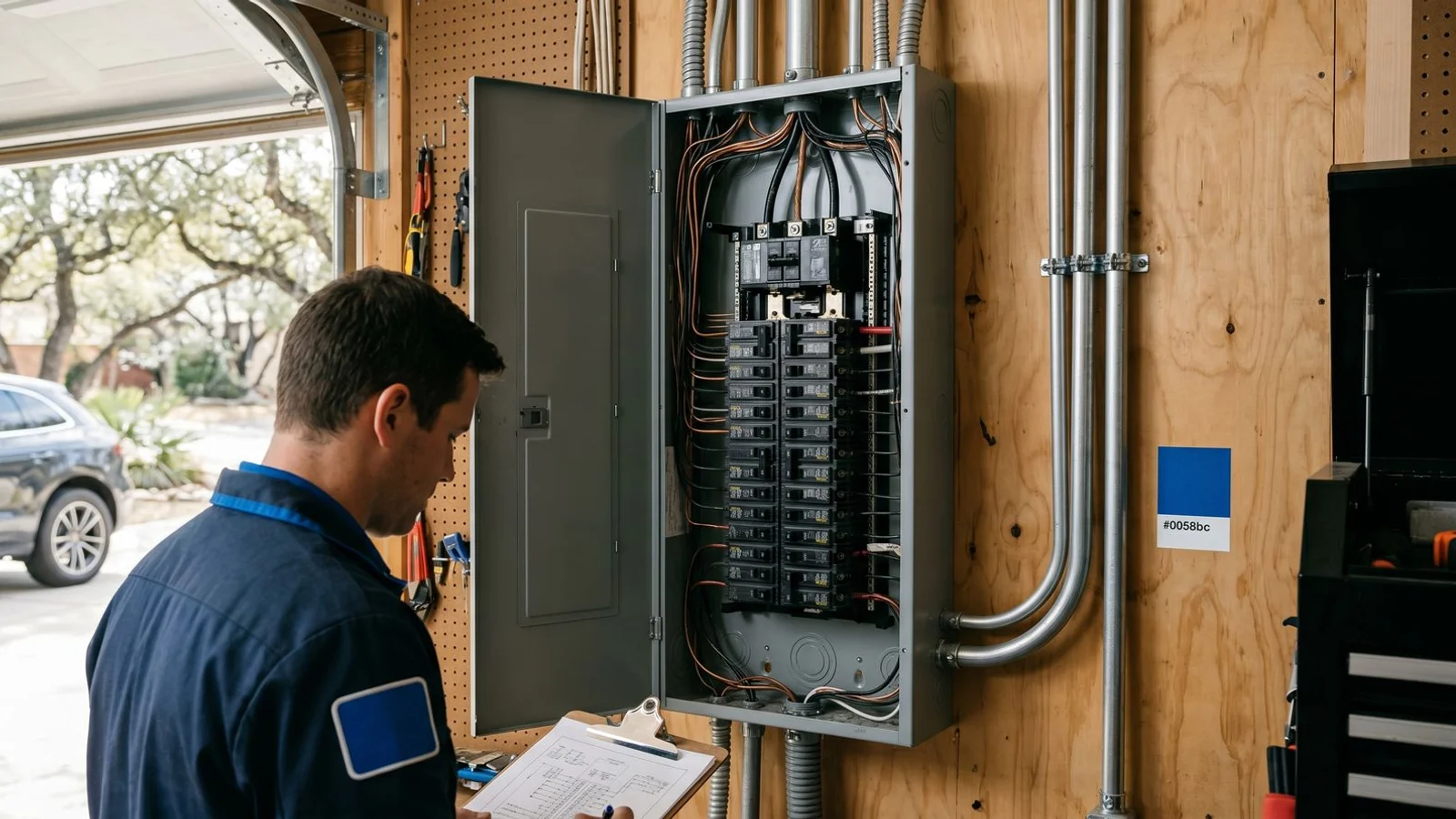
- Limited Breaker Space: The physical panel box is full, but the total energy draw is manageable.
- 100A or 150A Service: Your incoming utility line is smaller than the modern 200A standard.
- Tight Calculated Load: Your home uses just enough power to fail a standard load calculation on paper.
We highly recommend this setup because actual overnight power usage is usually quite low. A common mistake is paying thousands of dollars for capacity you will only need for ten minutes a year.
Our complete cost breakdown provides all the data you need to make an informed choice. For the cost comparison, see Load Management vs a 200-Amp Panel Upgrade.
ALMS, the technical name
The technical term for this technology is an Automatic Load Management System, or ALMS. This specific hardware designation proves to inspectors that your charger safely monitors and restricts energy usage.
We always explain that the main safety standard for these devices is UL3141. The relevant electrical code section is NEC Article 220.87, which is a peak-demand calculation method.
Our installers use this exact code to size the new circuit based on your measured real-world peak rather than a worst-case theoretical sum. As the 2026 National Electrical Code updates roll out, these load calculation rules are transitioning into the new Article 120.
“Using an ALMS lets you legally base your electrical permit on how much power your house actually uses, instead of the maximum power it could theoretically use.”
We want you to know that modern codes also require a highly sensitive 5-milliamp GFCI trip threshold for EV circuits. This stringent rule prevents electric shock and ensures complete safety for your garage.
Our complete guide breaks down exactly how these systems satisfy local inspectors. For the code-compliance detail, check out How Dynamic Load Sharing Keeps You NEC-Compliant.
Common questions about the tradeoffs
Homeowners often ask if these management systems create any negative tradeoffs for their daily routine. The reality is that the benefits heavily outweigh the brief moments of reduced charging speed.
- Will it slow charging? We confidently tell customers that it only slows down briefly when home demand peaks. Your car still finishes overnight because an average EV easily replenishes its 72-kWh battery during off-peak hours.
- Does it work with any EV charger? Our team successfully pairs this technology with most major brands. Emporia chargers integrate the tightest with the Emporia Pro system, while the Tesla Wall Connector utilizes its own proprietary load-sharing software.
- Will it pass inspection? We guarantee it will pass when installed by a UL3141-certified installer. The city inspector just needs to see the proper NEC 220.87 or Article 120 documentation.
Bottom line
Load management is the definitive way Austin homes with older panels get a fast EV charger without an expensive upgrade. It is safe, highly efficient, and completely code-compliant.
We love seeing homeowners save thousands of dollars on unnecessary electrical work.
This hardware solves the biggest hurdle in residential charging, and our team is ready to evaluate your panel to find the perfect fit. Your transition to electric driving should be easy.
We encourage you to See our Group Power Management service for more details. You can also get your free flat-rate quote today to start the process.
Frequently Asked Questions
Is load management safe? +
What hardware does it use? +
Will I notice the throttling? +
Ready to talk specifics?
See our Load Management service page for pricing and what's included, or get a free flat-rate quote.