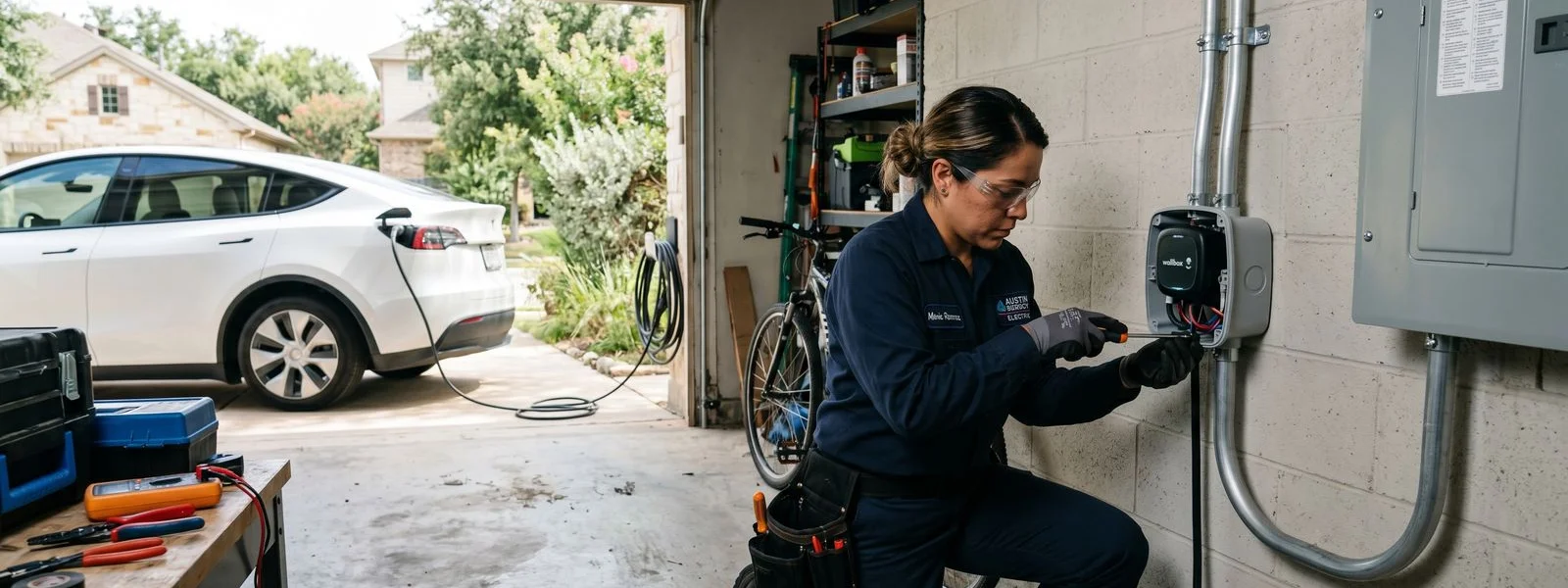
Clean Conduit Routing: How We Avoid Ugly Surface-Mounted Runs
Sloppy surface runs are a common complaint. How we route conduit cleanly, avoid living-space runs, and leave the job spotless.
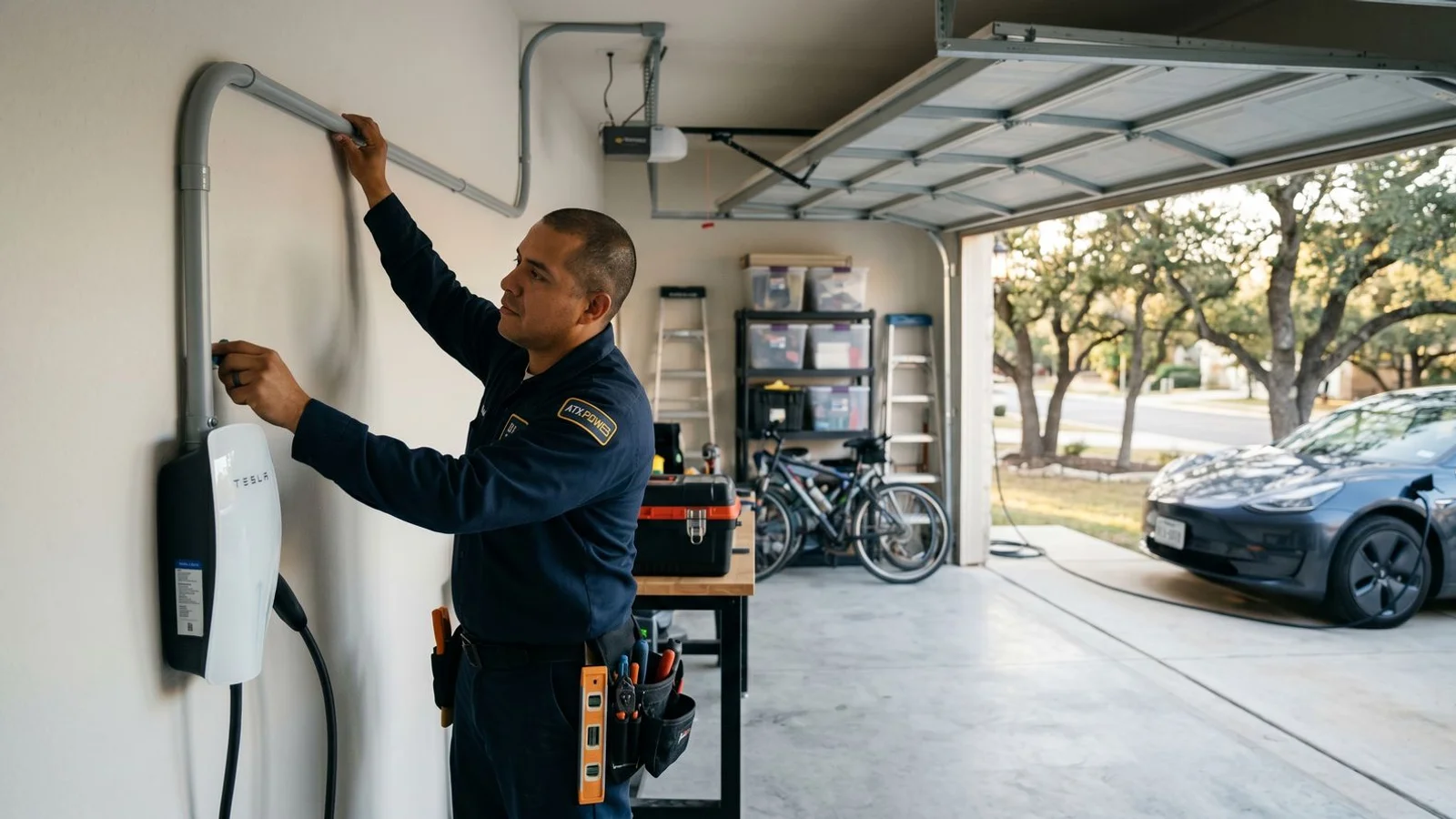
We hear the exact same complaint every week about other electricians leaving behind an ugly maze of PVC pipes.
Upgrading to a Level 2 overnight charger should feel like a premium home improvement. A messy web of plastic snaking around dryer vents completely ruins the look of your garage.
Our team refuses to treat your expensive new charging equipment like an afterthought. The difference between a rushed job and clean EV charger conduit routing comes down to upfront planning.
Here is exactly why bad routing happens and the exact steps to ensure a flawless finish.
Why bad conduit runs happen
Our technicians notice these sloppy shortcuts across the entire US electric vehicle market. Bad routing happens because local contractors prioritize speed over aesthetics. Rushing through the initial site assessment creates immediate problems for homeowners.
We rely on recent 2026 Qmerit industry data showing that exposed surface wiring remains the absolute cheapest installation method. Contractors choose this lazy route to maximize their daily job count. Three specific reasons explain why these sloppy installs are so incredibly common.
- We constantly see installers cut corners on labor due to severe time pressure. Routing conduit through a finished attic and dropping down a stud bay takes hours longer than slapping it across the ceiling. The fastest visible path becomes the default choice.
- Our industry suffers from a massive skill gap regarding proper load calculations and aesthetic routing. Planning a clean path requires evaluating the home and the National Electrical Code Article 625 requirements before cutting any drywall. Less experienced technicians simply cannot execute a complex, hidden wire run.
- We also know that a complete lack of portfolio pressure encourages lazy workmanship. If a company never shows before and after photos, they have zero incentive to hide the wiring. A premium installation actually boosts your property value by up to 3% in competitive real estate markets.
Our entire business model was built to do the exact opposite of these three shortcuts.
The Hidden Costs of Poor Planning
Failing to plan a proper route leads to more than just an ugly wall. Exposed pipes are highly vulnerable to physical damage from car doors or moving heavy boxes.
We regularly repair broken conduit that was carelessly placed right in the middle of a busy walkway. A damaged pipe exposes live high-voltage wires and creates a severe fire hazard. Taking the time to conceal the electrical infrastructure is the only way to ensure lasting safety.
How we plan the run
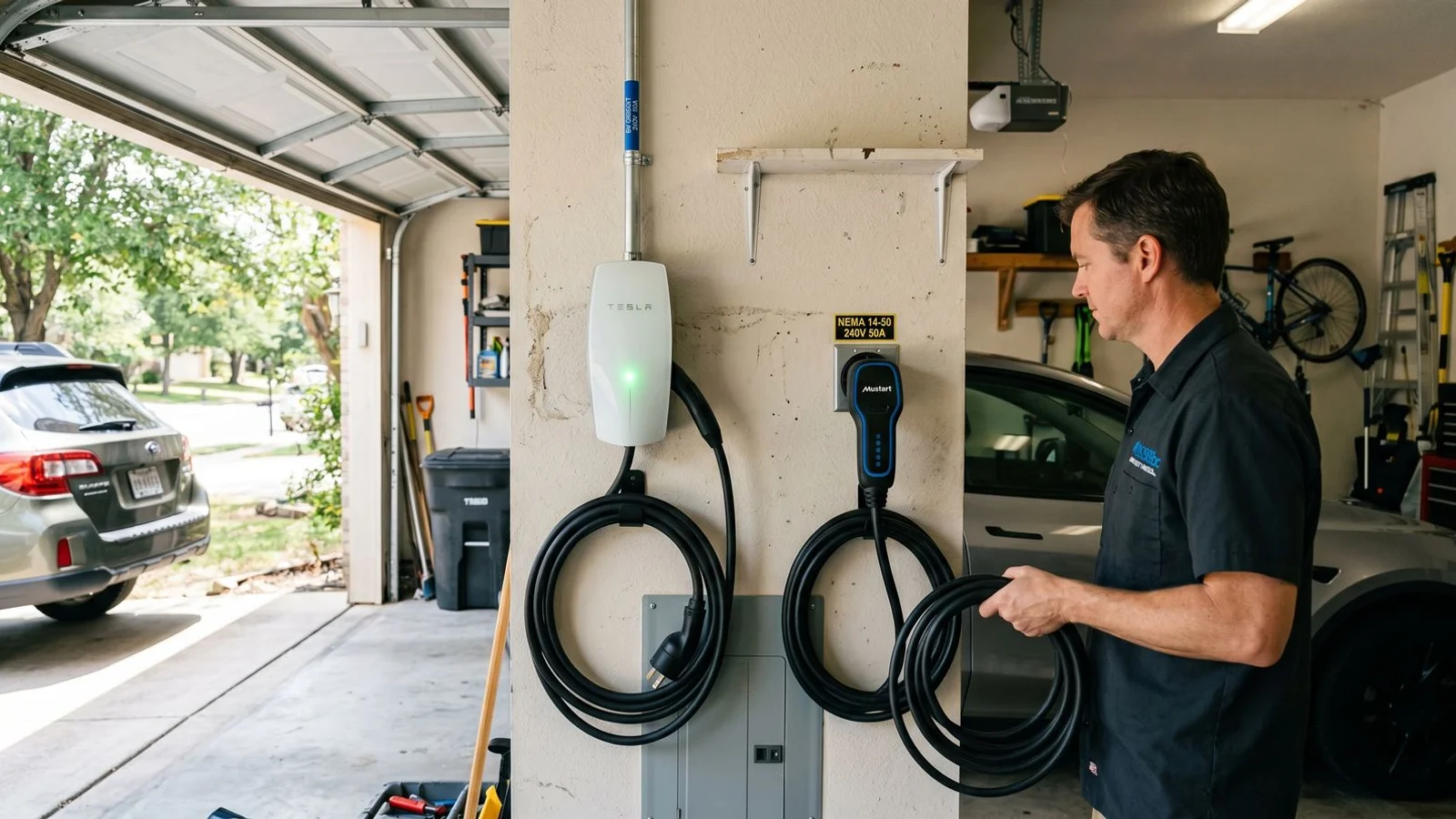
Our standard operating procedure requires a comprehensive site walkthrough before anyone touches a drill. For every single clean EV install, the preparation phase dictates the final result. Careful evaluation guarantees that your Tesla Wall Connector or ChargePoint Home Flex looks absolutely perfect.
- We always start by looking directly at the main electrical panel. The technician must note the conduit knockout positions and the available routing space. A quick 2026 NEC load calculation confirms if the existing breaker location can handle the new demand.
- Our next step involves looking closely at the desired charger wall. Confirming the mounting height and checking for hidden insulation behind the drywall prevents costly mistakes. Knowing what sits between the studs dictates the safest possible path.
- We physically walk the entire proposed route with you. Dropping down a stud bay or running along the top corner of the ceiling provides a much cleaner aesthetic. An attic run hides the bulk of the wiring completely out of sight.
Our priority is always picking the cleanest path that remains fully code-compliant. The final plan is completely confirmed with you before any cutting begins. Most garages have at least one hidden option that looks better than the default surface mount. Clean routing is one piece of what a hardwired EV charger installation involves from panel to charger.
Where surface conduit is unavoidable
We acknowledge that sometimes the cleanest path still requires running a line along a visible wall. Detached garages, finished basements with limited access, and unconditioned spaces often present significant routing challenges. A typical 60-foot underground trench to a detached building adds up to $1,200 to the project cost.
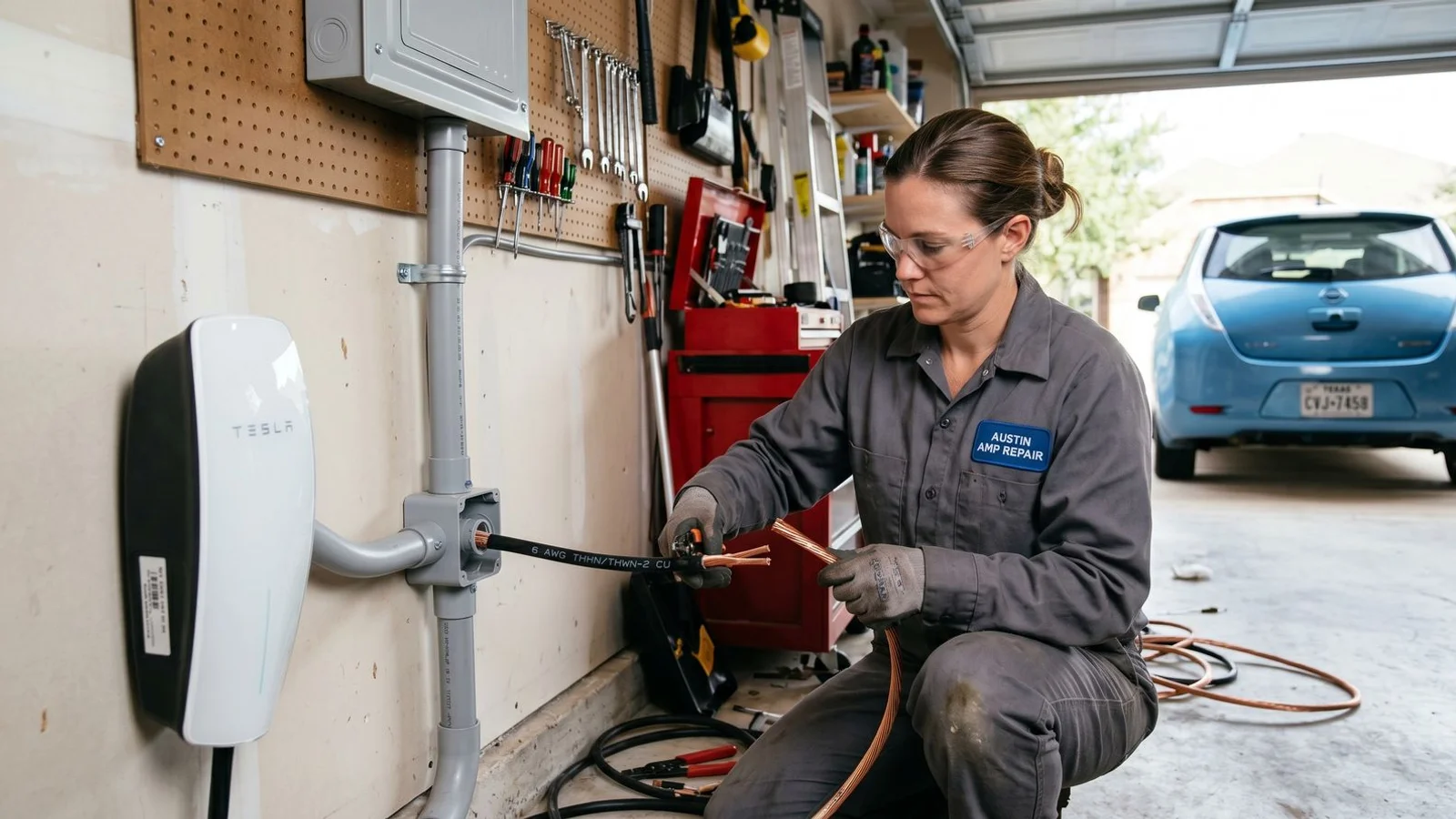
Our installers use premium materials when a surface run is the only logical choice. Using the correct protective casing makes a massive visual difference. A high-quality installation still looks intentional and professional.
- We strictly use schedule 40 PVC in a color that perfectly matches the wall. Exposed flexible metal looks incredibly industrial and out of place in a residential setting. Painting the pipe helps it blend quietly into the background.
- Our technicians route everything tightly along corners instead of cutting across the middle of a highly visible wall. Straight runs and clean 90-degree fittings look sharp and orderly. Lazy sweeping curves immediately signal a cheap, rushed job.
- We apply strap spacing exactly per the current building code. Randomly placing fasteners just because they were loose in the truck looks terrible. Consistent spacing proves that the installer cared about the final presentation.
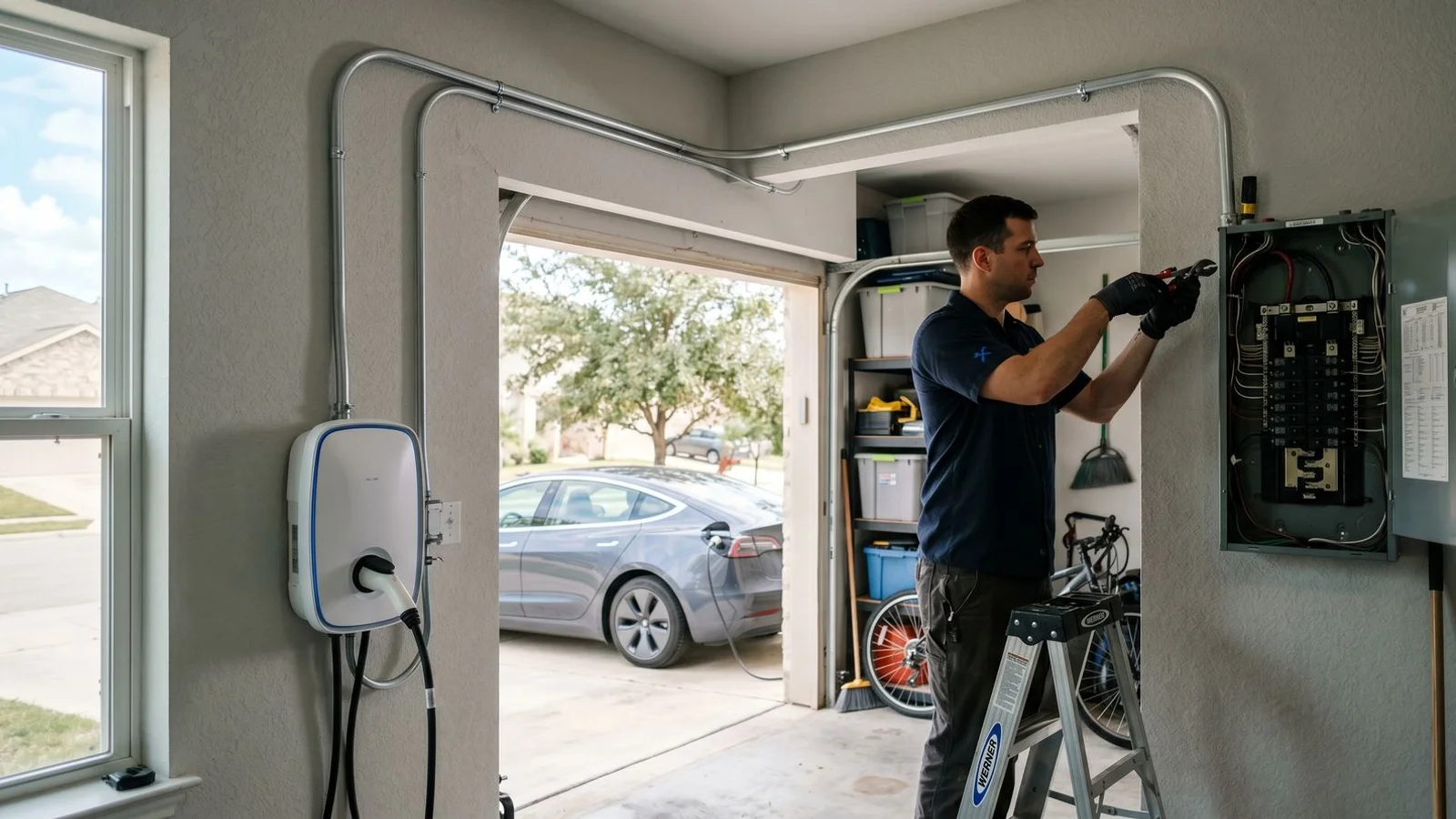
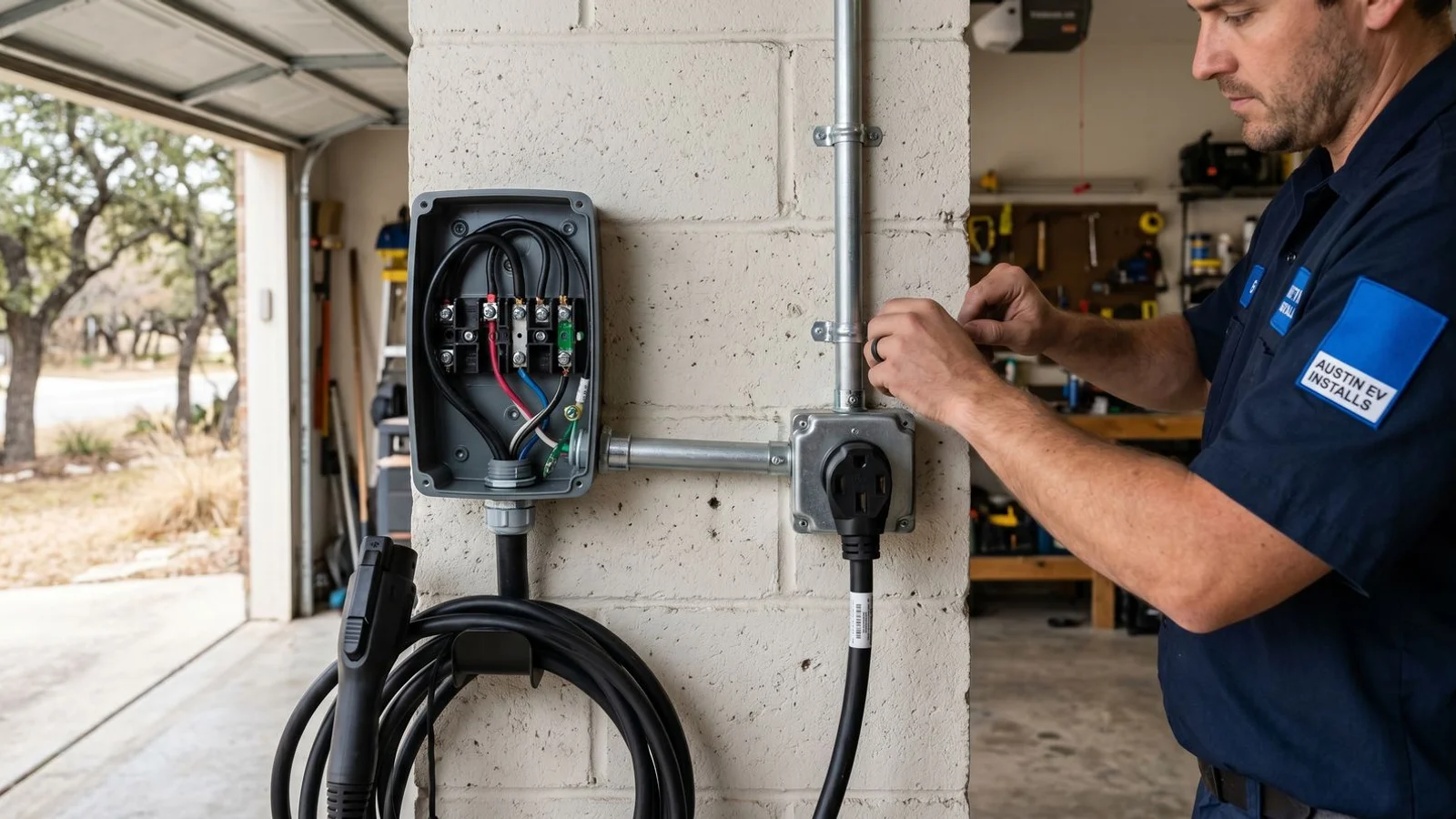
Our main goal is to create a concealed conduit EV charger effect even when the pipe is technically visible. The wiring should be something you have to actively look for. It should never be the very first thing you notice when you park your car.
Before and after, what good looks like
We document every project to show new electric vehicle owners exactly what a premium job entails. A clean installation transforms the entire feel of your parking space. The difference between a generic bid and a professional finish is striking.
Our portfolio clearly demonstrates the contrast between a basic install and a true craftsmanship approach. Comparing the specific details helps you spot red flags before hiring a contractor. Here is a quick breakdown of the visible differences.
| Element | The Rushed Approach | The Professional Standard |
|---|---|---|
| Charger Mounting | Crooked or placed at random heights | Level, plumb, and at your specified height |
| Conduit Path | Slapped diagonally across the wall | Dropped straight down through a hidden stud bay |
| Panel Termination | Messy wiring with zero identification | Cleanly routed and clearly labeled for safety |
| Workspace Cleanup | Plastic shavings left all over the floor | Broom-swept area with zero leftover debris |
We work from a strict internal factsheet that emphasizes long-term visual appeal. A garage with clean conduit routing speaks louder than a five-star rating from a total stranger. That specific philosophy explains why our online gallery is so incredibly photo-heavy.
What to ask your installer (anyone, not just us)
Our team encourages you to ask tough questions when gathering quotes for your home upgrade. Vetting a contractor properly saves you from a massive headache later. Three specific questions will reveal exactly what kind of quality you are buying.
- We suggest asking exactly where the final wire will run. A good electrician will physically walk you through the proposed layout. Vague answers usually mean they plan to use the ugliest surface route possible.
- Our second recommendation is to demand a detailed portfolio of completed installs. Look specifically for clean, straight pipes rather than just a picture of the final box. Proof of past performance is the only way to guarantee future results.
- We also advise checking if the cleanest path through the attic costs extra. Some companies charge a massive premium for taking the harder, hidden route. A transparent contractor includes the best aesthetic choice in their initial flat-rate price.
Bottom line
Our standard policy is that clean EV charger conduit routing is never a luxury option. A high-powered station is an appliance you will look at every single day for the next decade. That kind of permanent fixture deserves a flawless, beautiful installation.
We invite you to explore your options and prioritize quality for your home. You can explore our hardwired installation service to learn more about the process. Or, you can request your free flat-rate quote today.
Frequently Asked Questions
Will the wiring be visible? +
Do you run conduit through living spaces? +
What if the panel is far from the garage? +
Ready to talk specifics?
See our Hardwired Install service page for pricing and what's included, or get a free flat-rate quote.