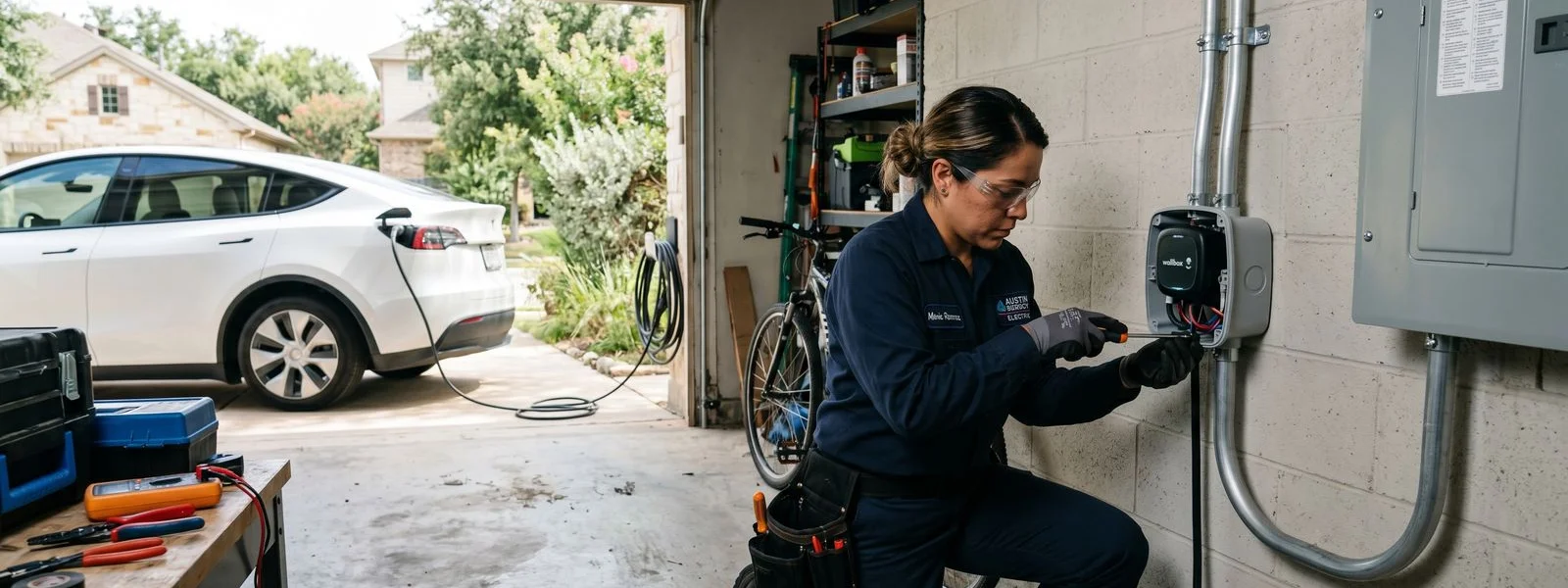
Why Hardwired Chargers Charge Faster and Last Longer
Hardwired runs 48A continuous vs 40A plug-in, with no receptacle to fail. When the speed difference matters for your vehicle.
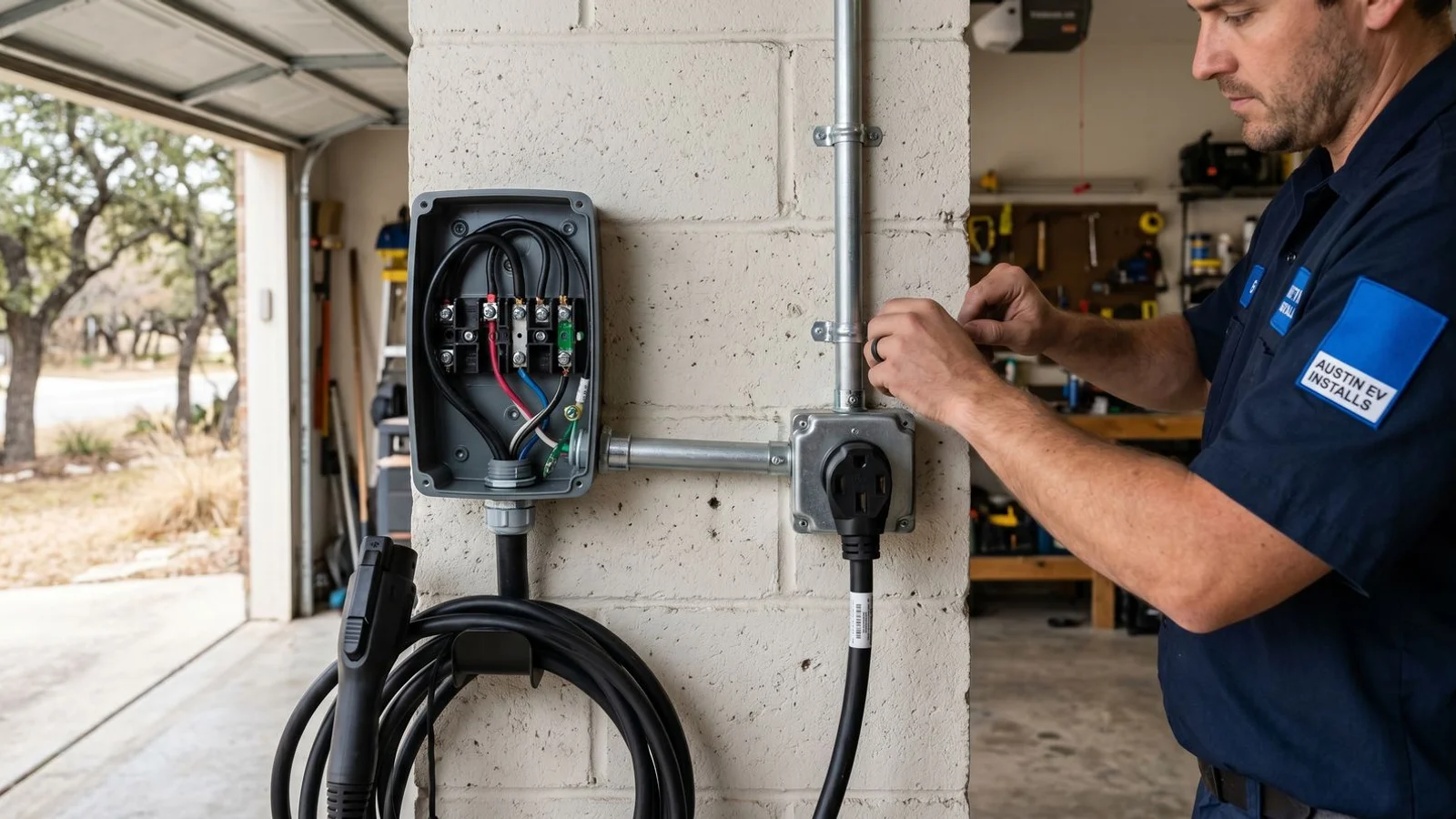
We constantly see homeowners debating hardwired vs plug in charging speed and safety when setting up a new EV station.
This choice dictates both your daily charging routine and the long-term safety of your home.
Our team knows the shift from a standard 120V Level 1 cord to a dedicated Level 2 setup is a major upgrade.
Let’s look at the electrical data and explore the practical benefits.
The two real reasons to choose a hardwired Level 2 install over a plug-in NEMA 14-50 setup are more current and fewer failure points.
Here is the practical version.
Reason 1: Higher continuous current for hardwired vs plug in charging speed
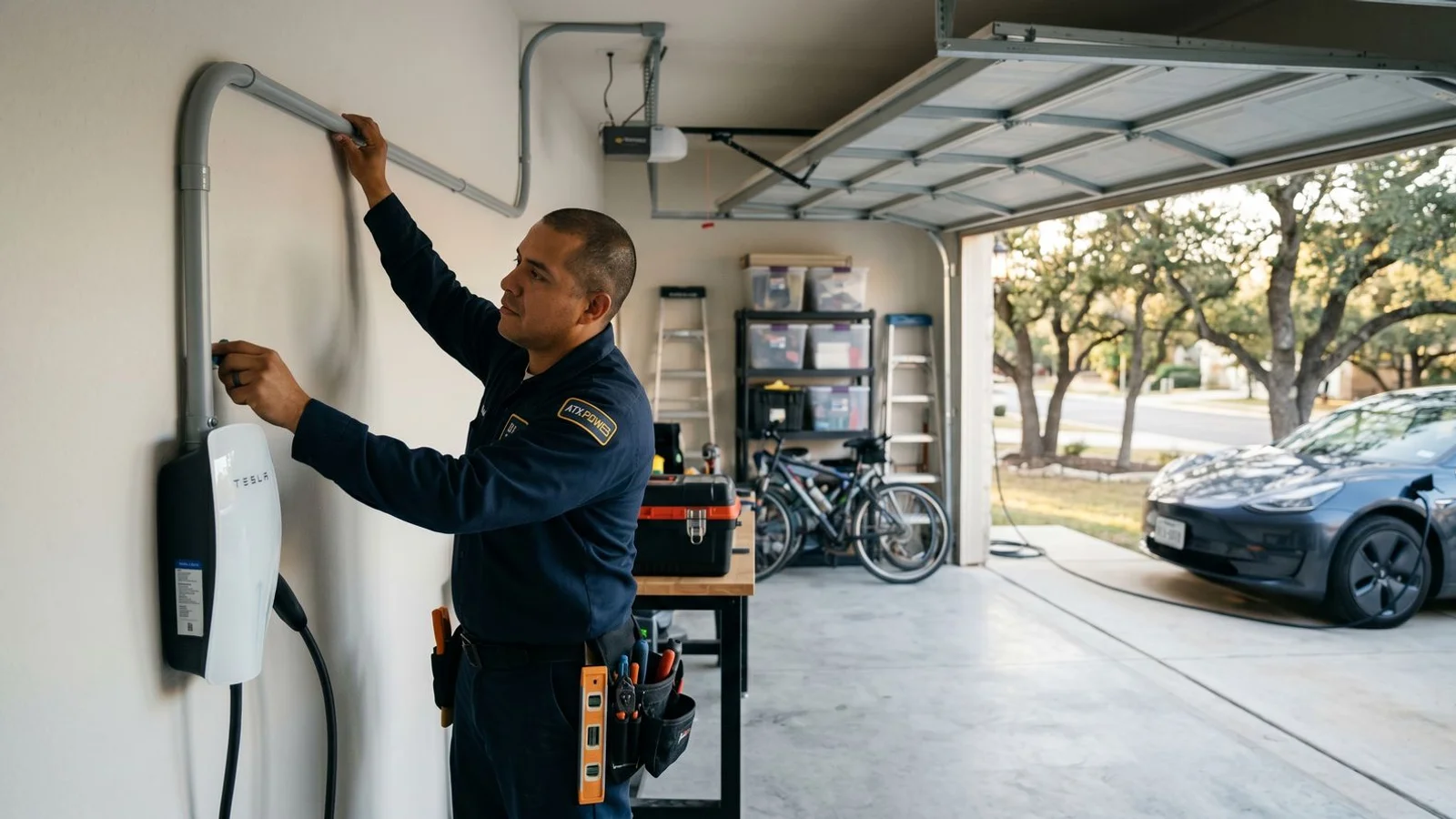
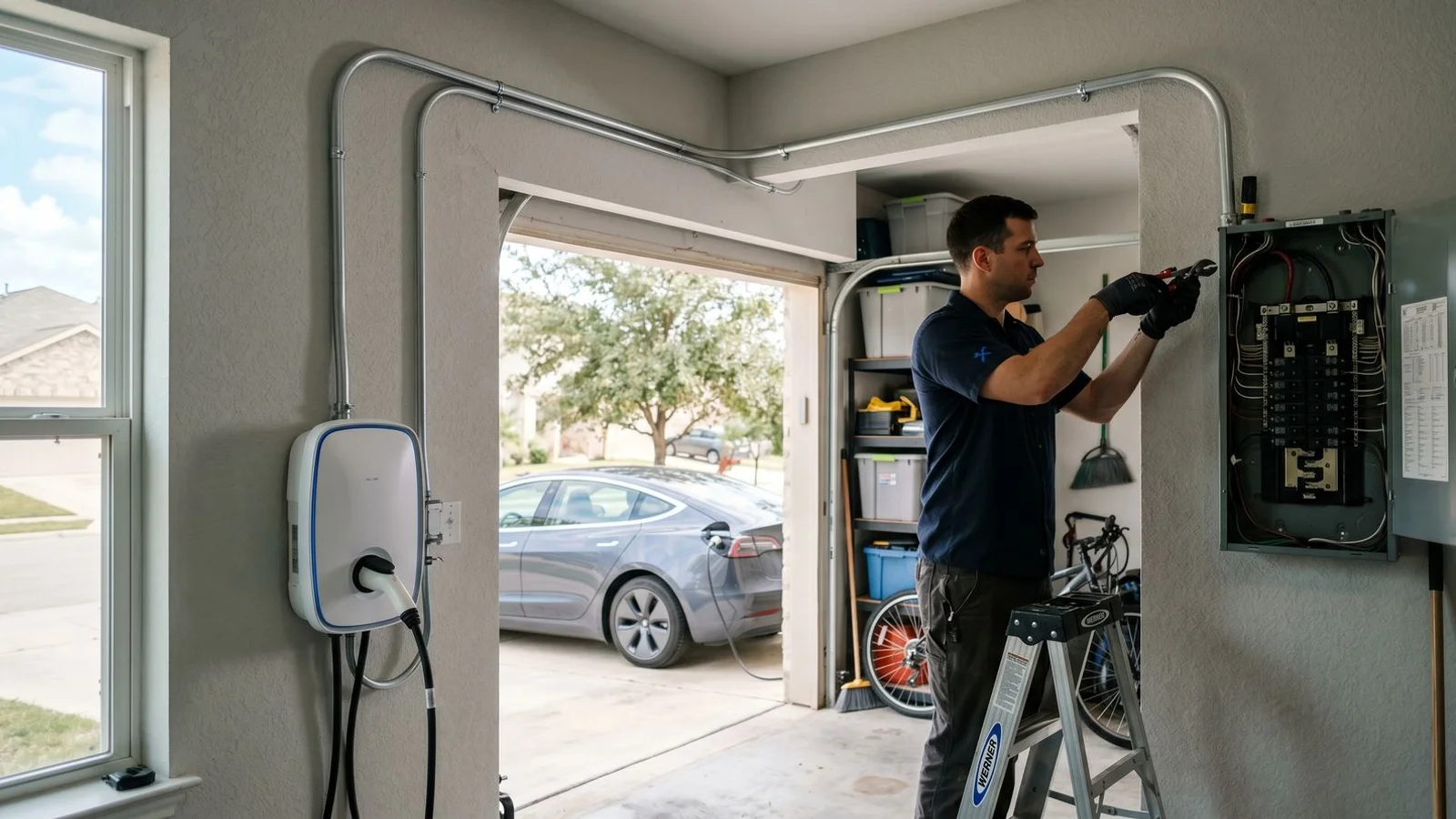
A hardwired EV charger safely delivers higher continuous current by bypassing the amperage limits of a standard plug.
We consistently recommend this setup because it maximizes your vehicle’s overnight charging potential.
The National Electrical Code (NEC) Article 625 treats EV charging as a continuous load, meaning it operates for three hours or more.
Our electricians follow the NEC 125% rule, which requires the circuit breaker to handle 125% of the charger’s output.
This safety margin applies differently based on your installation method:
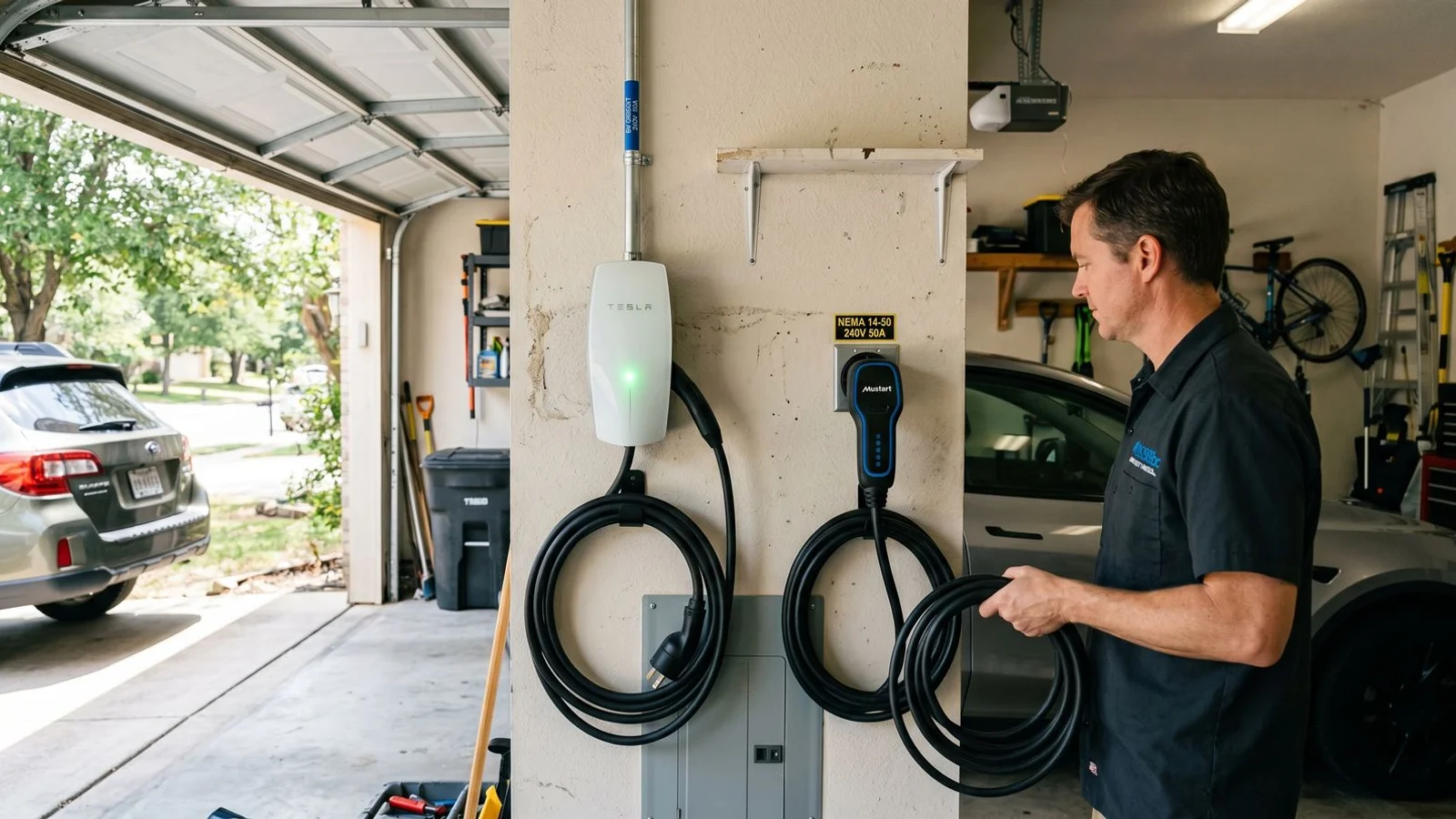
- Plug-in (NEMA 14-50, 50A receptacle): The charger is capped at 80% of the 50A limit, providing a maximum of 40A continuous power.
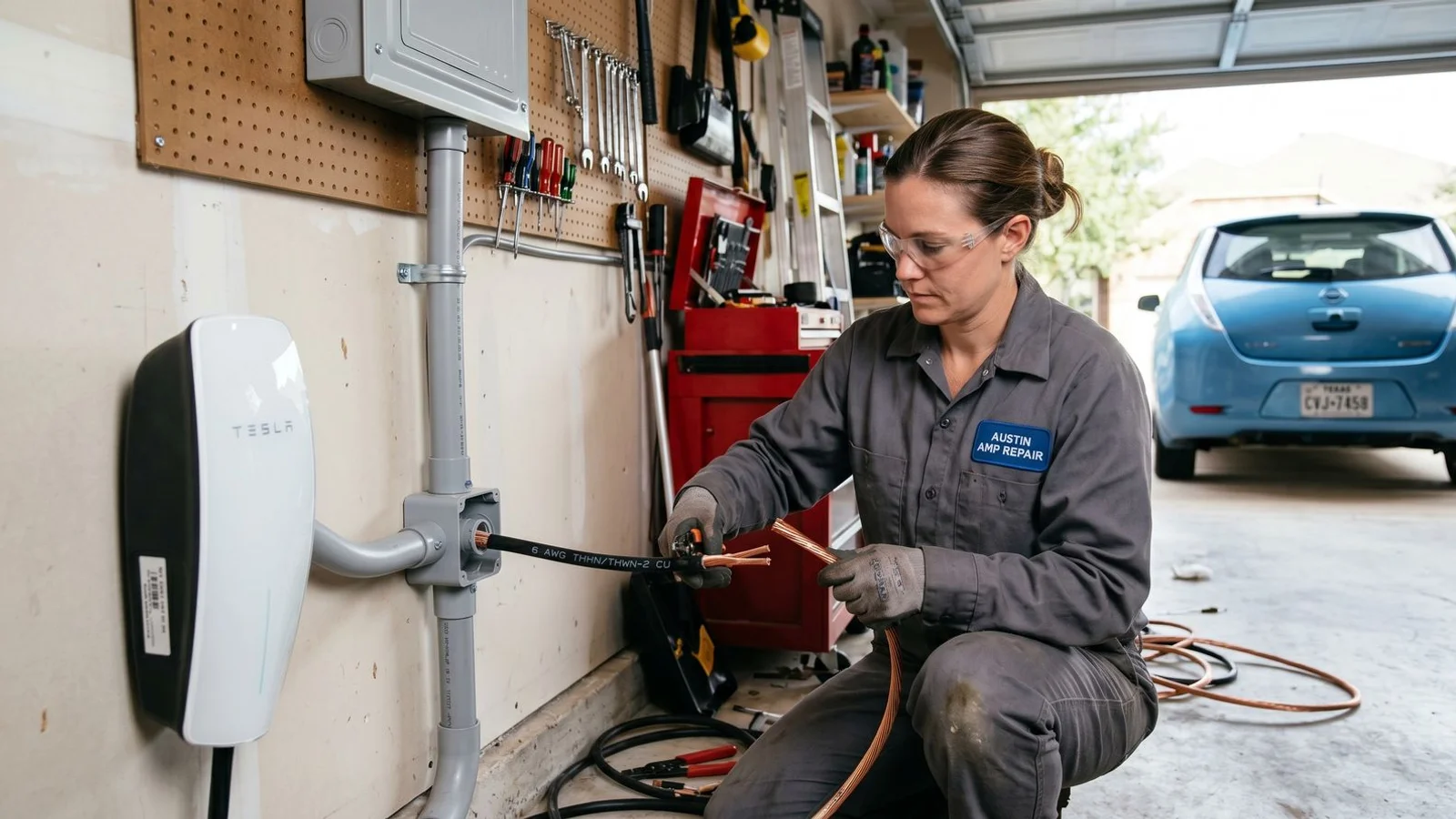
- Hardwired: By dropping the plug and receptacle limit, the charger pulls whatever the breaker and conductor allow. You get 48A continuous power on a 60A breaker with 6 AWG copper wiring.
When comparing a 48 amp vs 40 amp charger, that 8-amp difference is meaningful for your daily routine.
We calculate that at 240V, 48A provides 11.5 kW of power compared to the 9.6 kW from a 40A setup.
This translates to charging speeds about 20% faster.
For a 2026 Tesla Model Y, that is the difference between adding 32 miles per hour with a plug-in versus 44 miles per hour when hardwired.
Over a typical six-hour overnight session, you gain 264 miles hardwired versus 192 miles plugged in.
Our customers find this buffer crucial during busy travel weeks.
Most nights, it does not matter.
Some nights, it makes all the difference.
Reason 2: No plug to fail
Hardwiring eliminates the physical NEMA 14-50 receptacle, removing the most common failure point in residential EV charging.
We pull melted residential-grade plugs out of garages constantly.
A standard receptacle is a real piece of hardware with real failure modes when subjected to daily EV charging demands:
- Heat at the interface: Continuous high current on a cheap residential-grade receptacle generates extreme heat. Repeated thermal cycling loosens the metal connections over time.
- Cheap component risks: A standard $15 hardware store outlet is designed for an electric range, not ten hours of maximum capacity EV charging.
- Plug fatigue: The portable charger plug wears out with repeated insertion and removal.
Upgrading to a commercial-grade Hubbell HBL9450A receptacle costs about $60 to $90 and helps mitigate heat.
Our crews still prefer hardwiring because it removes the entire receptacle question completely.
The conductor is torqued tightly inside the charger unit once during installation.
It never moves, and it avoids the thermal cycling of a loose wall plug.
When 48A actually matters for your car
The 48A advantage only helps if your car’s onboard AC charger can accept that much power.
We always check a customer’s specific vehicle specifications before suggesting a 60A circuit upgrade.
Onboard chargers act as rectifiers that convert alternating current from your wall to direct current for your battery, and they have strict rated maximums.
| Vehicle | Max onboard AC charging |
|---|---|
| Tesla Model 3 LR, Model Y | 48A (~44 mi/hr) |
| Tesla Model 3 SR | 32A (~30 mi/hr) |
| Ford F-150 Lightning & Mach-E | 48A |
| Rivian R1S / R1T | 48A |
| Chevy Silverado EV / Blazer EV | 48A |
| Hyundai Ioniq 5 / Kia EV6 (Newer) | 48A |
| Chevy Bolt | 32A |
A massive vehicle like the Rivian R1S holds a battery pack up to 149 kWh.
We note that charging that massive battery at 48A takes around 12 hours, while dropping to 40A pushes the session past 14 hours.
Those two hours become incredibly important if your local utility company offers strict off-peak pricing windows.
If you drive a 32A-capable car like an older Bolt, you are limited by the car regardless of the install.
A basic plug-in setup is perfectly fine for those smaller capacities.
For more on matching the install to your specific vehicle, see Vehicle-Specific Charging.
The reliability factor over years
Even setting speed aside, hardwired charging reliability makes it the most durable long-term investment for a modern garage.
Our data shows that eliminating the plug drastically reduces maintenance calls and nuisance breaker trips over a decade of use.
The 2026 National Electrical Code requires Ground Fault Circuit Interrupter (GFCI) protection for all 240V garage receptacles.
Plug-in chargers also feature their own internal GFCI protection.
We frequently see these two competing safety systems trigger false faults, leaving you with an uncharged car in the morning.
Hardwiring directly bypasses the need for a GFCI breaker in most local jurisdictions.
- A hardwired install with quality components and correct torque just keeps working flawlessly.
- Hardwired chargers receive superior NEMA 4 or NEMA 4X weather ratings for outdoor driveways because they lack a vulnerable plug connection.
- A plug-in install on cheap components is the leading cause of failed charging sessions.
Quality matters significantly more for a plug-in setup.
Hardwired configurations are simply more forgiving and resilient.
Bottom line
When weighing hardwired vs plug in charging speed, a hardwired installation guarantees up to 48A of continuous power and completely removes the risk of a melted receptacle.
We view this method as the fastest, safest, and most durable setup for your daily driving routine.
For 48A-capable cars, it provides a real charging speed advantage.
For everyone, it provides unmatched peace of mind.
Frequently Asked Questions
How much faster is hardwired? +
Why is plug-in capped at 40A? +
Does my car actually pull 48A? +
Ready to talk specifics?
See our Hardwired Install service page for pricing and what's included, or get a free flat-rate quote.