How Fast Does a Tesla Wall Connector Charge at Home?
A Tesla Wall Connector delivers up to 48A, about 30-44 miles/hour by model. Onboard limits and the circuit needed for full speed.
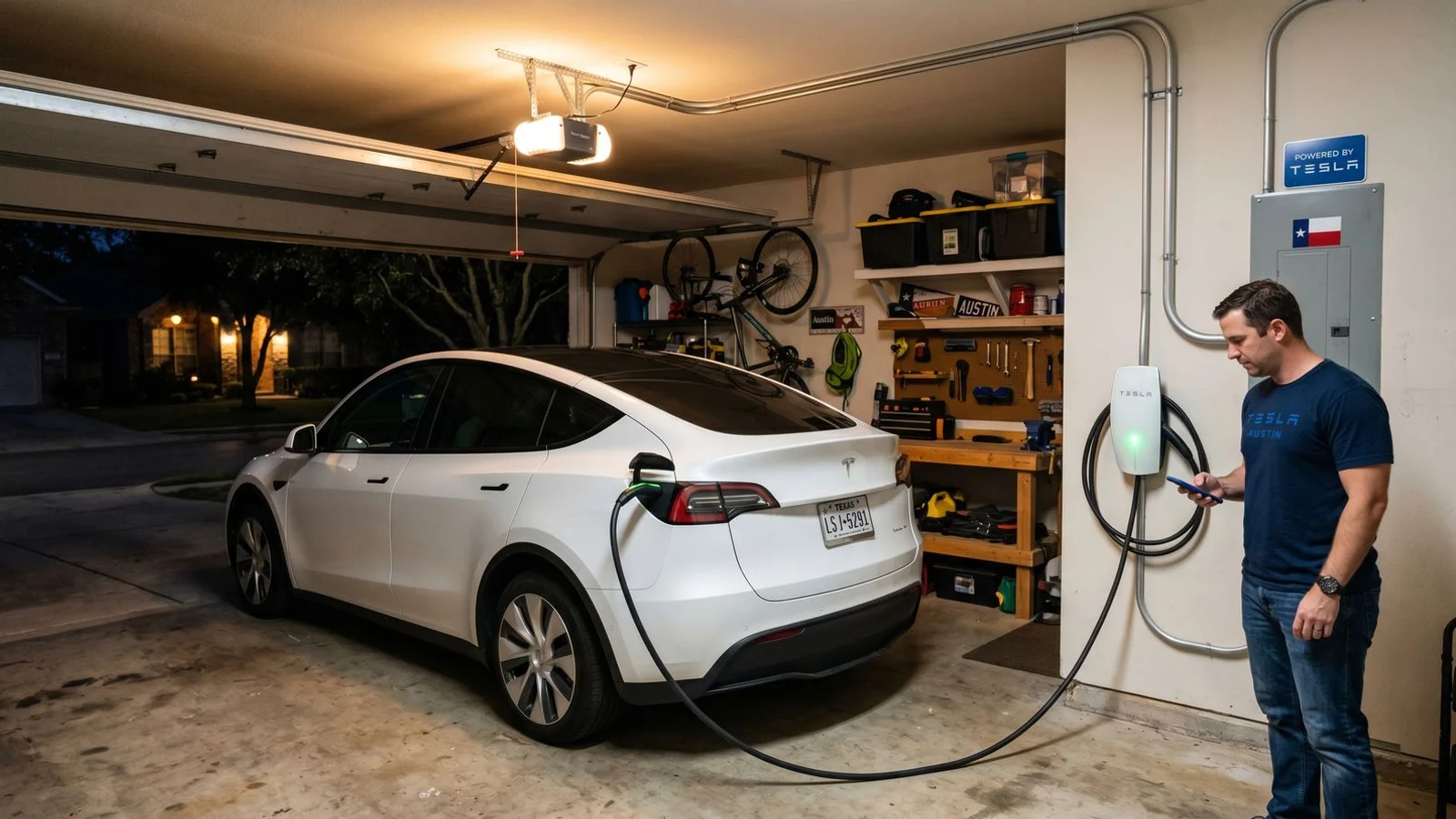
Every new electric vehicle owner eventually faces the same realization about slow Level 1 charging. Waiting days for a full battery simply does not work for a busy schedule.
We founded Austin EV Charger Installation with a clear mission to provide exceptional EV charger installation and electrical services. Installing a dedicated home charger transforms the daily driving experience. The difference is night and day.
Our team sees daily how upgrading to a Level 2 setup changes everything. Upgrading to a tesla 48 amp charger is the dividing line between constantly calculating range and waking up to a full battery every morning. This shifts your tesla home charging speed from a slow drip to a reliable overnight fill-up.
Let’s break down the exact tesla wall connector charging speed you can expect, how different models perform, and why your car’s internal hardware might actually be the limiting factor.
Charging speed by Tesla model
A Tesla Wall Connector on a 48-amp circuit delivers between 30 and 44 miles of range per hour. Your specific charging speed is determined by the onboard charger built into your vehicle model.
We regularly install these units for the newest 2026 vehicles. A Model Y Long Range easily pulls the maximum 11.5 kilowatts. The standard Rear-Wheel Drive trims are electronically capped lower.
| Model | Onboard max | Mi/hr at 48A |
|---|---|---|
| Model 3 LR / AWD | 48A | ~44 |
| Model 3 RWD (2026) | 32A | ~30 (limited by car) |
| Model Y LR / Performance | 48A | ~44 |
| Model Y RWD | 32A | ~30 (limited by car) |
| Model S | 48A | ~32-37 (less efficient) |
| Model X | 48A | ~30-35 (less efficient) |
| Cybertruck | 48A | ~38-42 (up to 44 max) |
Several variables impact these real-world estimates:
- Battery temperature affects the initial power draw.
- State of charge changes the battery absorption rate.
- Cabin climate control uses auxiliary power during the session.
What “48A” actually requires
Delivering a true 48-amp continuous charge requires a dedicated 60-amp double-pole breaker and a hardwired connection. National Electrical Code rules prevent standard plug-in outlets from reaching these speeds.
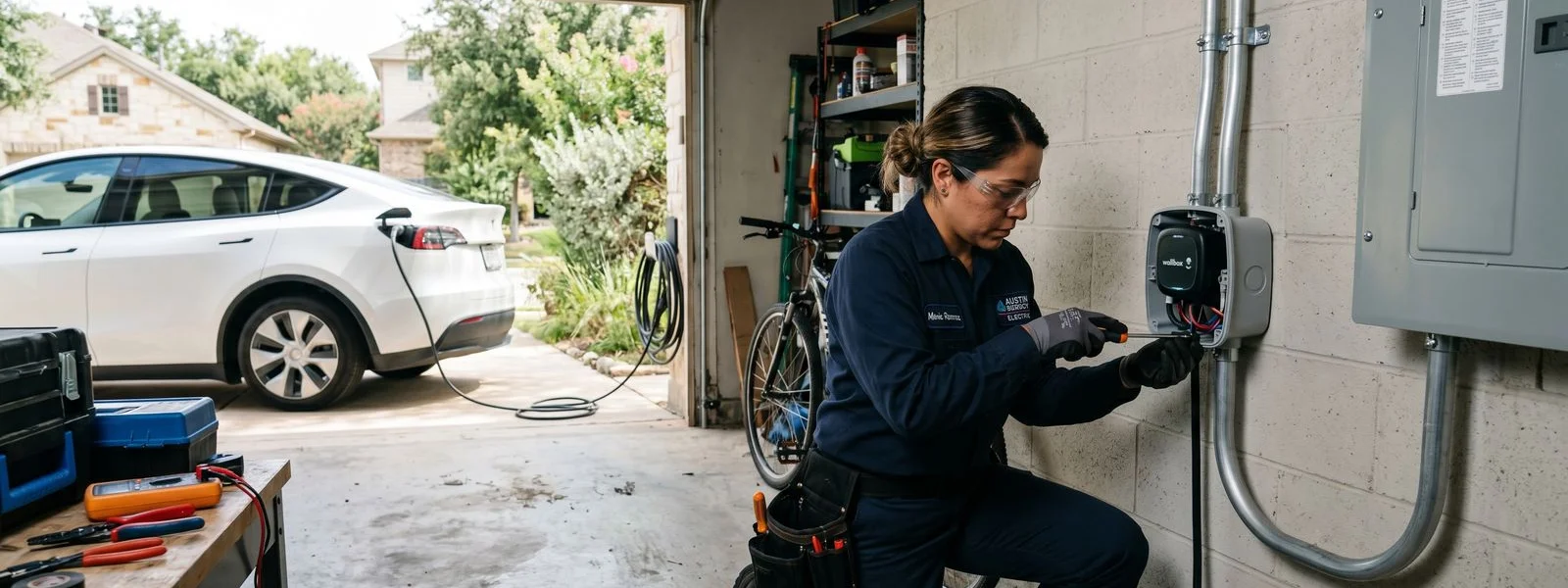
Our technicians always verify your electrical panel capacity before starting a job. Article 625 of the 2026 National Electrical Code classifies EV charging as a continuous load. This classification mandates the 125 percent rule for circuit sizing.
We use this math to ensure your system operates safely without nuisance tripping. Multiplying your 48-amp target by 125 percent equals the required 60-amp breaker. Any corner-cutting here creates a serious fire hazard.
To deliver the full 48-amp output safely, your installation needs:
- Hardwired connection: Plug-in NEMA 14-50 caps the charger at 40 amps by code.
- 60A double-pole breaker: Required to satisfy the continuous load safety margin.
- 6 AWG copper conductors: Required to carry the load safely across long distances.
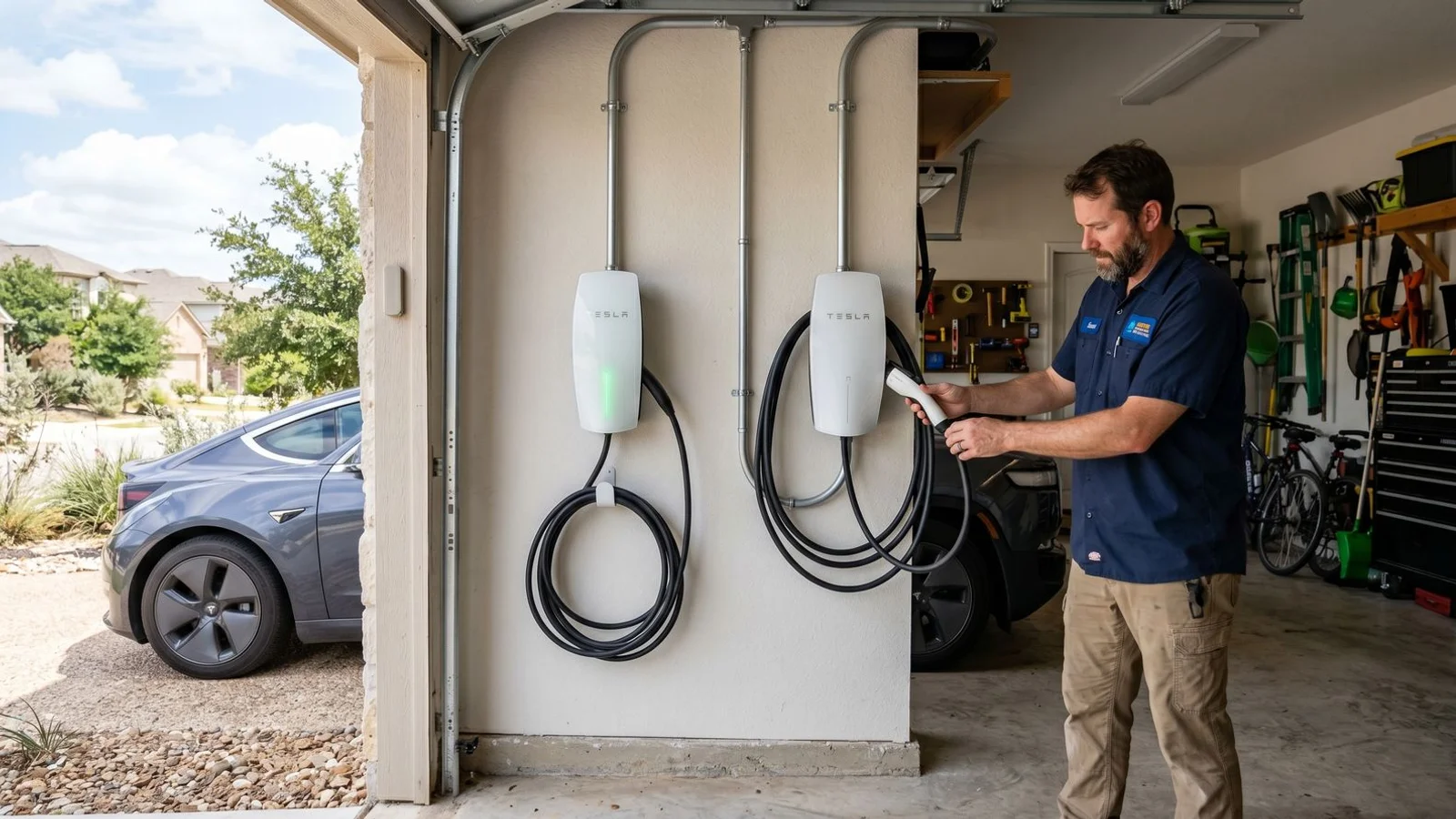
- Tesla Wall Connector: The official home unit rated for this maximum output.
Voltage drop forces the charger to throttle if the wiring is undersized. See Why 48-Amp Hardwired Charging Needs the Right Wire Gauge for a detailed technical breakdown.
Why your car may be the bottleneck
The wall unit sets the maximum power the system can deliver, but the car’s onboard charger dictates what it can actually accept. The lower of these two numbers always wins.
For example, the 2026 Model 3 Rear-Wheel Drive features a 7.7-kilowatt onboard charger. This internal hardware creates a hard ceiling of 32 amps.
Our customers are sometimes surprised when their new standard range vehicle will not pull the full 48 amps. Long Range and Performance variants feature an 11.5-kilowatt charger. These upgraded models will readily accept the maximum available current.
Identifying Your Specific Hardware Limit
It is easy to misinterpret the display numbers. The screen might show 48 amps available from the wall. If your car is limited to 32 amps, it will only draw that lower amount.
We recommend checking the app immediately after plugging in to confirm the active draw. A quick check prevents confusion about your installation quality. The vehicle always regulates the power flow to protect the battery pack.
You can quickly verify your vehicle’s active limit using two simple methods:
- Through the Tesla App: Open the charging screen to view the active amperage slider.
- On the Touchscreen: Tap the lightning bolt icon from the driver’s seat to see the maximum accepted current.
Real-world overnight numbers
A proper 48-amp installation adds roughly 44 miles of range per hour for most Long Range models. This speed effectively guarantees a 100 percent charge by morning, regardless of how far you drove that day.
For most Austin EV owners, this setup eliminates range anxiety entirely. You simply plug in after work and wake up to a full tank of electrons.
Our data shows that a typical daily commute requires less than two hours to replenish. Adding 200 miles to a heavily depleted battery takes only five to six hours. The practical benefit is never having to visit a public fast charger for daily driving.
To illustrate, here is a typical overnight charging scenario:
- 7:00 PM: Arrive home and plug in the connector.
- 12:00 AM: Scheduled off-peak charging begins automatically.
- 4:30 AM: Vehicle reaches its daily limit and stops drawing power.
- 7:00 AM: Unplug a fully charged vehicle for the morning commute.
We find that this routine makes fueling completely effortless. The car is ready whenever you need it. You completely bypass the inconvenience of waiting at a commercial station.
What about a NEMA 14-50 instead?
A standard NEMA 14-50 outlet is limited by code to a 40-amp continuous draw. This configuration will charge a Model Y at about 32 miles of range per hour.
If you are considering a NEMA 14-50 plug-in install for a portable mobile connector, the speed difference is noticeable but rarely a dealbreaker. A 40-amp plug-in setup still easily handles overnight top-offs.
Our team installs hundreds of these outlets for drivers who prefer a removable charger. The 12-mile-per-hour speed difference only matters if you frequently drain the battery completely. A hardwired connection eliminates the need for an expensive GFCI breaker.
| Installation Type | Max Continuous Output | Required Breaker | Estimated Model Y Speed |
|---|---|---|---|
| Hardwired Wall Connector | 48 Amps | 60 Amps | ~44 miles per hour |
| NEMA 14-50 Receptacle | 40 Amps | 50 Amps | ~32 miles per hour |
Hardwiring also provides a cleaner look on your garage wall. It avoids the wear and tear associated with plugging and unplugging a heavy cable.
Scheduling overnight charging
Setting a charging schedule aligns your power draw with the cheapest utility rates. You can automate this entirely through the vehicle’s touchscreen or your smartphone app.
Local utilities like Austin Energy and Pedernales Electric Cooperative offer Time-of-Use rate plans that heavily discount overnight electricity. Austin Energy residential rates average around 12 to 14 cents per kilowatt-hour, but off-peak charging provides significant savings.
Our installers frequently help new owners configure these settings before leaving the driveway. You can program the car to delay pulling current until midnight. This strategy reduces stress on the local Texas power grid.
To align your charging with the cheapest utility rates, follow these steps:
- Open the Tesla app and navigate to the Schedule menu.
- Select the Scheduled Departure tab.
- Input your desired morning departure time.
- Toggle on the Off-Peak Charge setting to restrict heavy power draw to the cheapest hours.
See our Summer 2026 overnight charging post for detailed setup instructions to beat the Texas heat.
Bottom line
A Tesla Wall Connector paired with a 60-amp hardwired circuit delivers the maximum possible Level 2 charging speed. It provides roughly 44 miles of range per hour for Long Range models.
Older or standard range models will cap out closer to 30 miles per hour due to their internal hardware. Either configuration guarantees a full battery every single morning.
Our team is ready to evaluate your electrical panel and recommend the best path forward. A professional assessment ensures your equipment meets all safety codes. You can enjoy the convenience of fast, reliable home fueling immediately.
See our Tesla install service to schedule a consultation.
Frequently Asked Questions
How many miles/hour does it add? +
What circuit do I need for full speed? +
Why is my Model 3 Standard Range only pulling 32A? +
Ready to talk specifics?
See our Tesla Wall Connector service page for pricing and what's included, or get a free flat-rate quote.