Austin EV Charger Installation helps homeowners across Austin, TX add fast Level 2 charging without tearing apart their electrical panel. With 87+ home charger installs completed and UL3141-certified load management specialists on staff, the team handles full-panel situations that most general electricians solve with an expensive upgrade. If you are tired of plugging your car into a standard wall outlet and only getting three miles of range per hour, you already know the frustration of waking up to a battery that is barely half full.
Many of our customers in Round Rock, Pflugerville, and Lakeway assume a faster charger means spending thousands on a full panel overhaul.
Group Power Management (Smart Load Management) is a much simpler solution. It lets you get the fast charging you need without rebuilding your entire electrical system, and it is a core part of our flat-rate home EV charger installation in Austin.
How Dynamic Load Shedding Keeps Your Panel Safe
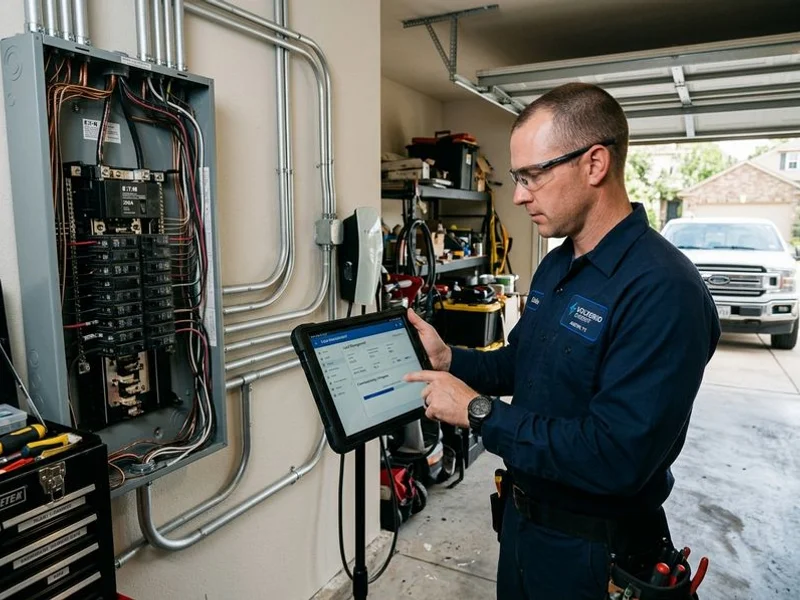
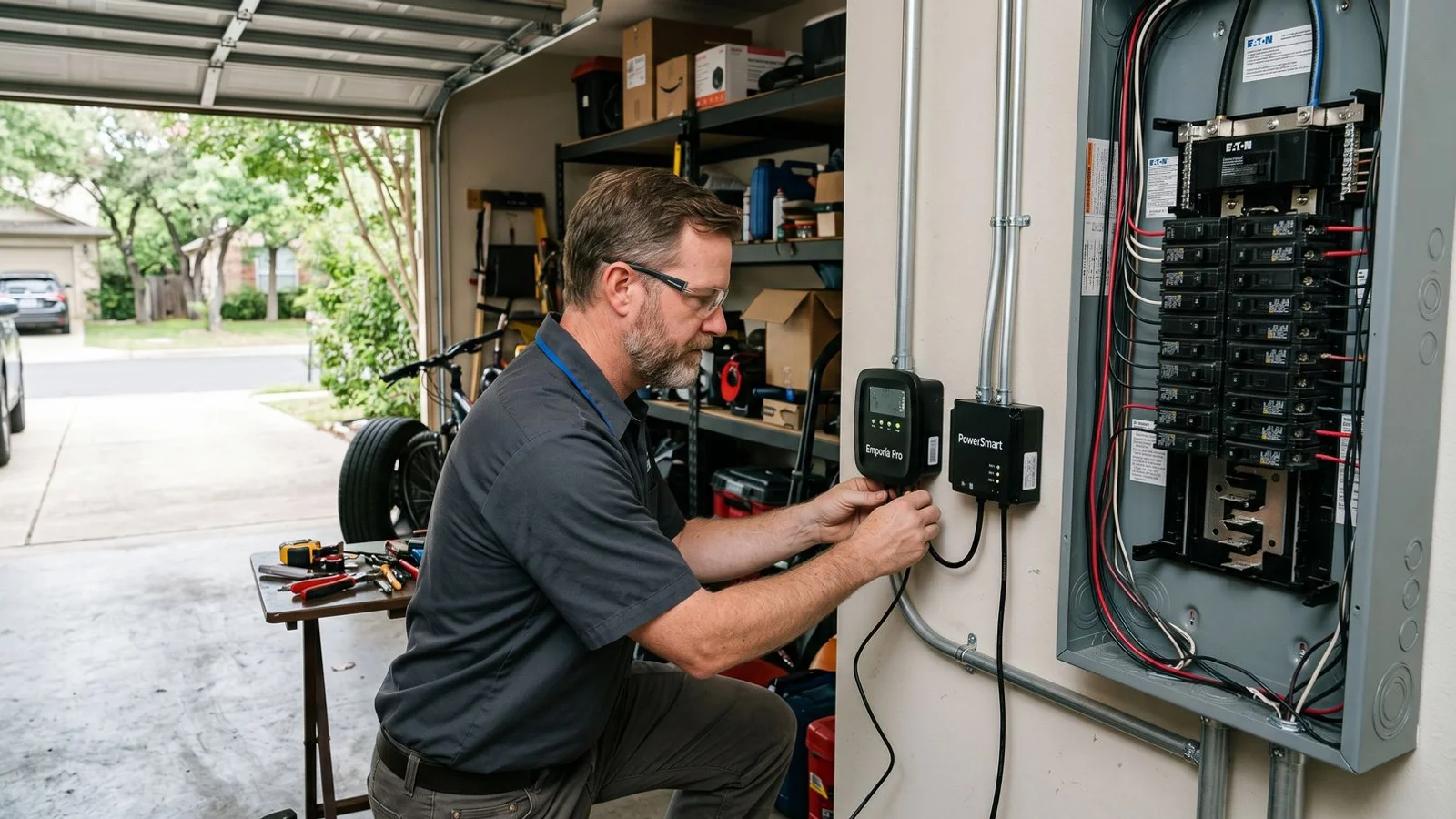
If you have ever been told you need a full 200-amp panel upgrade just to add a Level 2 EV charger, Group Power Management is the way around that expensive project. The system uses current transformer (CT) clamps attached to your main service conductors to read your home’s electrical draw in real time. When your dryer, AC, and oven all kick on at once, the charger simply throttles down.
We install it as part of our hardwired EV charger installation when the panel calls for it. You will always get a straight answer from the technician if your panel can take a regular install without the extra hardware.
Recent 2026 market data shows that a standard 200-amp panel upgrade costs between $1,500 and $4,000 across the US. This smart technology helps you skip that massive bill entirely. You never exceed your panel’s safe capacity limit.
Why Most Austin Homes Skip the Panel Upgrade
Most general electricians quote a full panel upgrade because a bigger box seems like the simplest answer. Single-family homes and older ranch-style properties across Austin with 100-amp or 150-amp service rarely use that full capacity all at the same time.
Industry reports for 2026 confirm that a massive 31% of homes with older 100-amp panels can completely avoid a service upgrade by using load management technology. Your house simply does not draw its maximum limit all at once.
Our certified electricians use the NEC Article 220.87 peak-demand method to measure your actual peak load. This gives a true picture of your power needs instead of assuming a worst-case mathematical sum. In most Austin homes evaluated, the measured peak leaves plenty of headroom for a 48-amp EV charger when paired with dynamic load shedding.
The result is the exact same fast charging speeds without the inflated price tag. You also stay fully compliant with National Electrical Code safety standards and Austin Energy interconnection requirements. Best of all, you avoid the massive cost and week-long delays of coordinating a whole-house rewiring project with your utility.
Emporia Pro, DCC-12, and Other Hardware Options
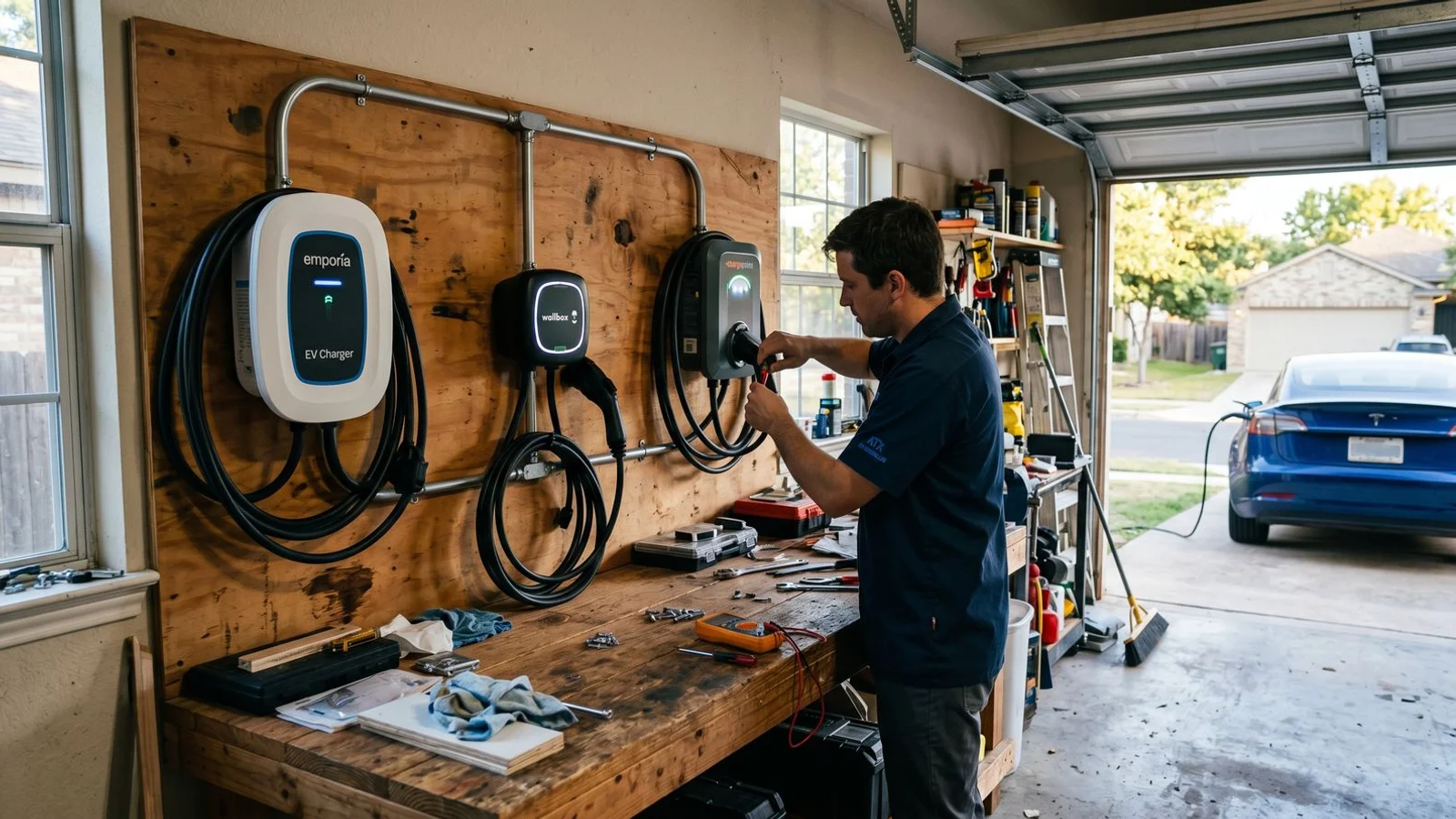
Our default choice is the Emporia Pro with PowerSmart technology. It integrates tightly with Emporia chargers and adjusts the power flow dynamically in real time. For Tesla Wall Connector, ChargePoint, or Wallbox setups, the popular DCC-12 load-shedding contactor is a reliable alternative that works with any brand.
Both options protect your home, but they work in slightly different ways.
| Feature | Emporia Pro with PowerSmart | DCC-12 Contactor |
|---|---|---|
| How it Manages Load | Throttles charging speed up or down | Pauses charging if home hits 80% capacity |
| Best Application | Works directly with Emporia chargers | Universal compatibility with any charger brand |
| Outdoor Rating | NEMA 4 (Highly weather resistant) | NEMA 3R (Indoor and outdoor approved) |
How We Compare
| Feature | Typical Electrician | Austin EV Charger Installation |
|---|---|---|
| Load Management Certification | Not typically certified | UL3141 certified installers |
| Pricing Model | Hourly or time-and-materials | Flat-rate, quoted upfront |
| Permit Handling | Often homeowner’s responsibility | City of Austin permit pulled and inspected |
| Panel Assessment Method | Worst-case sum calculation | NEC 220.87 peak-demand measurement |
Every installation includes everything you need for a safe, code-compliant setup. Whatever the hardware, the install day covers the following deliverables:
- CT clamps mounted directly on the main service conductors
- A load-shedding contactor or smart breaker for the EV circuit
- App commissioning so you can see real-time demand and charge sessions
- A documented Article 220.87 load calculation for your local inspection
Two-Hour Install Day, Start to Finish
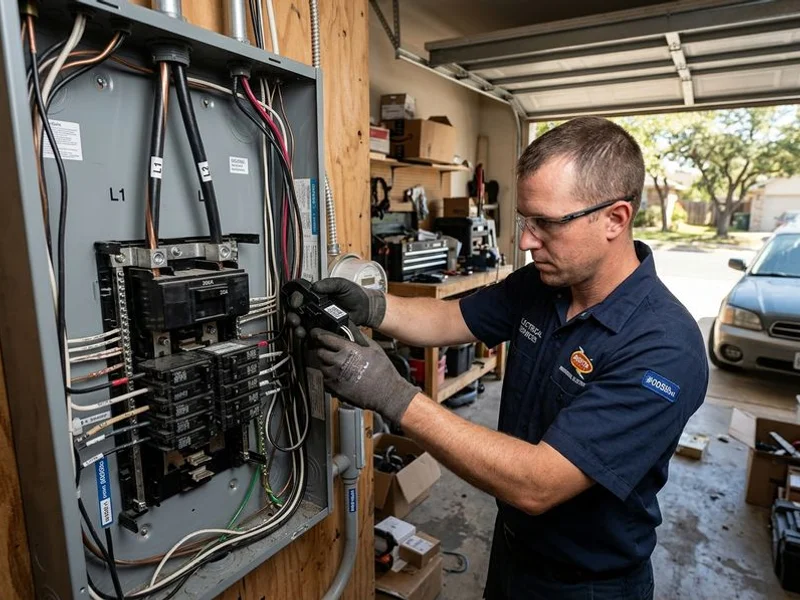
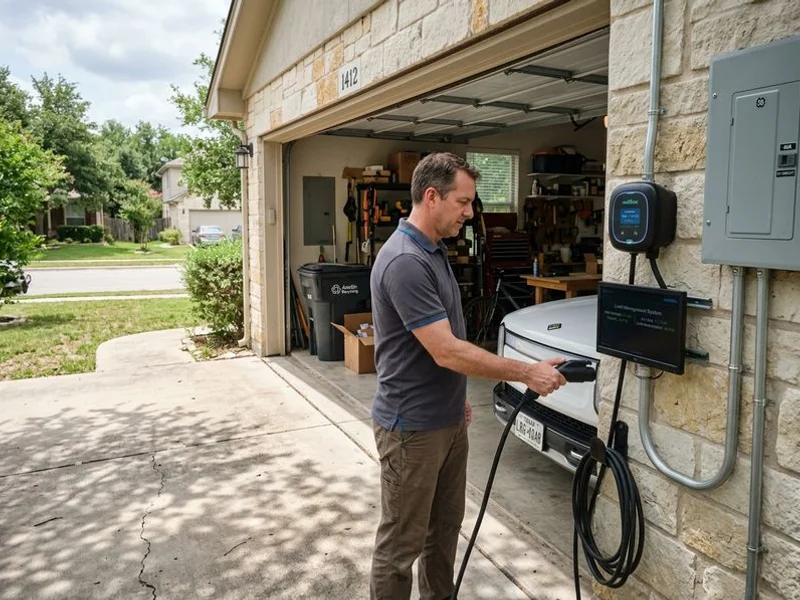
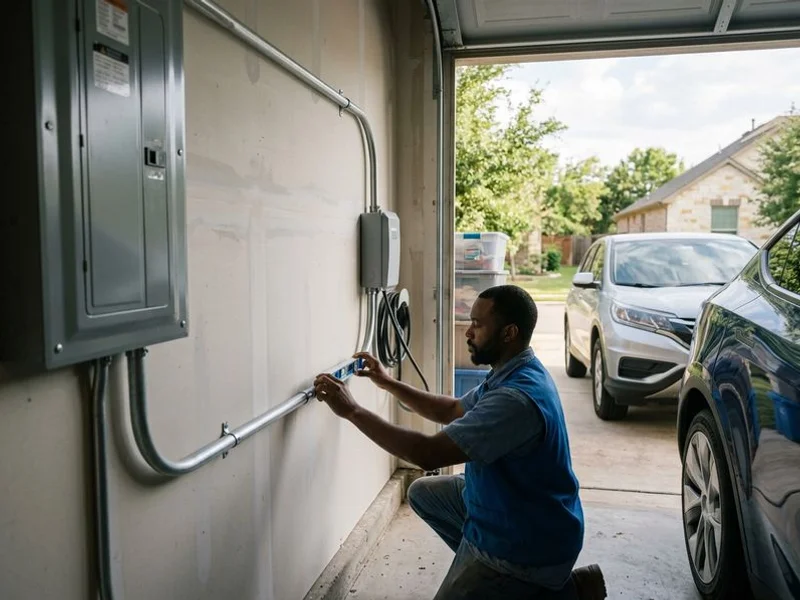
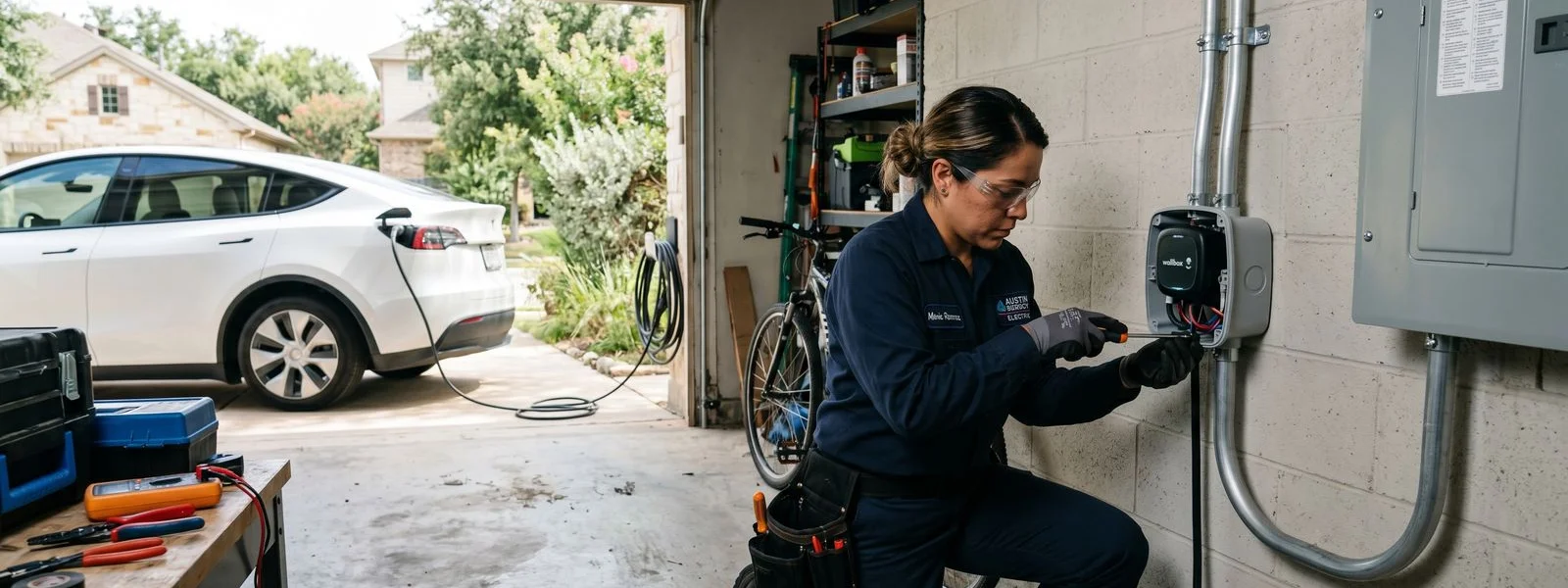
Standard residential installs run roughly two hours from start to finish. We mount the load management module beside your panel, attach the CT clamps to your main conductors, run the dedicated EV charger circuit, and mount the charger on the wall.
This quick timeline is a huge relief compared to a traditional panel replacement, especially during Texas summer months when ERCOT grid demand peaks. Full service upgrades often require coordinating with Austin Energy to completely shut off your home’s power for a full day.
Our team handles all the complicated paperwork for you. The City of Austin permit is pulled before anyone arrives at your house, and final inspections are coordinated immediately after the work is complete. You get to start charging your car the very same day. Same-week install slots are available.
Flat-Rate Load Management Pricing
Flat-rate pricing starts at $895 for the installation labor across Austin, Cedar Park, and the greater Travis County area (2026 pricing). Complete projects that include the hardware, labor, and permits typically run between $1,200 and $1,850 total.
You see one single number upfront before any tools come out of the truck. There are absolutely no surprise fees or hidden costs, because we hate those surprise calls from the garage as much as you do.
Do you want the actual number for your specific home setup? Get your free flat-rate quote today. Quotes are processed within the same business day to get your project moving fast.
Start Charging Faster Without Rewiring Your Home
Upgrading your daily commute should not require rewiring your entire house. Group Power Management saves Austin homeowners $3,000 to $8,000 compared to a full panel upgrade while delivering the same Level 2 charging speeds.
The Austin EV Charger Installation team handles the permit, the install, and the inspection in a single visit. Book your free assessment to find out if load management is the right fit for your panel.
Last updated:
Load Management Includes
- ✓ Emporia Pro with PowerSmart dynamic load shedding
- ✓ Real-time demand monitoring with CT clamps
- ✓ NEC Article 220.87 compliant load calculation
- ✓ Avoids $3,000-$8,000 panel upgrades
- ✓ Supports charging two EVs on shared circuits
How Load Management Works
- 1
Free in-home or virtual assessment
We confirm your panel size, free breaker spaces, and household peak load to decide if load management is the right call.
- 2
Flat-rate quote, no surprises
You see the hardware, labor, and permit fee in one upfront number before we book the install.
- 3
Install in about two hours
We mount the load management module, attach CT clamps to the main conductors, and run a dedicated charger circuit.
- 4
Commissioning and proof of compliance
We verify NEC 220.87 calculations, document the setup, and walk you through the monitoring app.
Why Choose Our Load Management Service
UL3141 certified installers
Our team is certified specifically for automatic load management systems. Many general electricians aren't.
Honest 'do you actually need it' check
If your panel can take a regular hardwired install, we'll tell you. We don't push hardware you don't need.
Flat-rate pricing, full permit handled
One number includes hardware, labor, and the City of Austin permit.
Recent Load Management Installs in Austin