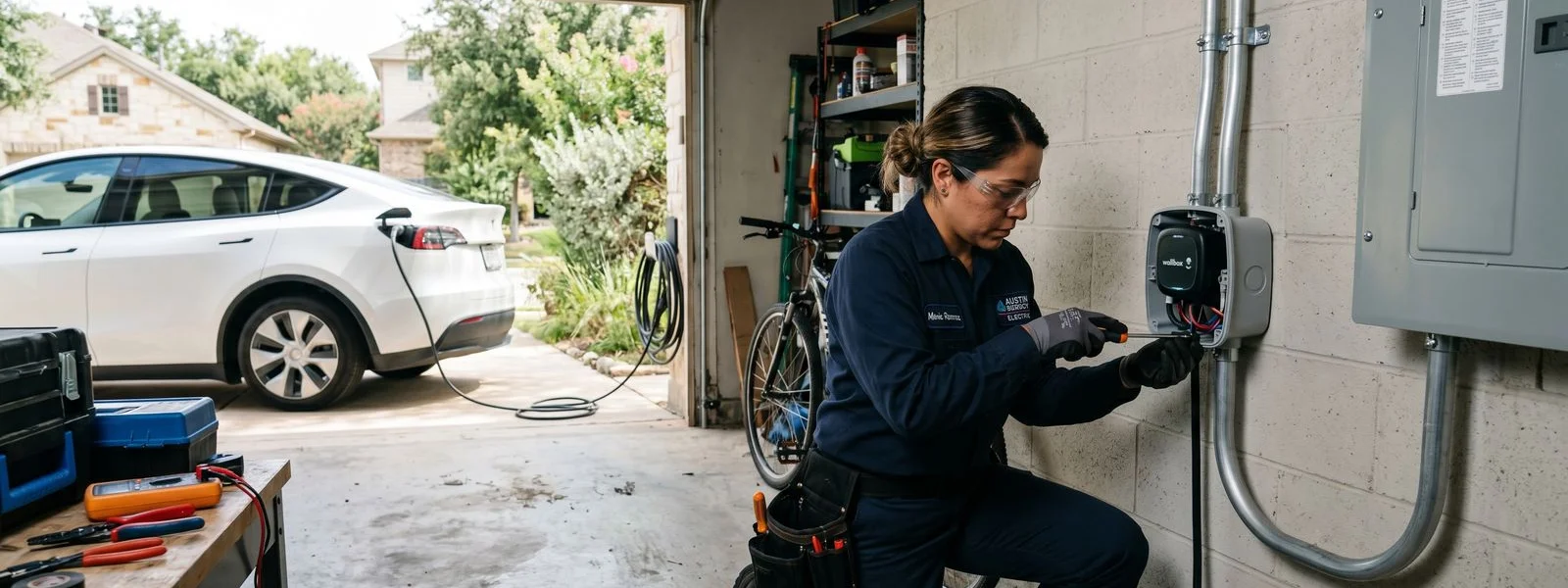
Planning a Home Charger for a Two-EV Household
Going from one EV to two? Load sharing, reserving panel space, the right wire gauge, and when load management is required.
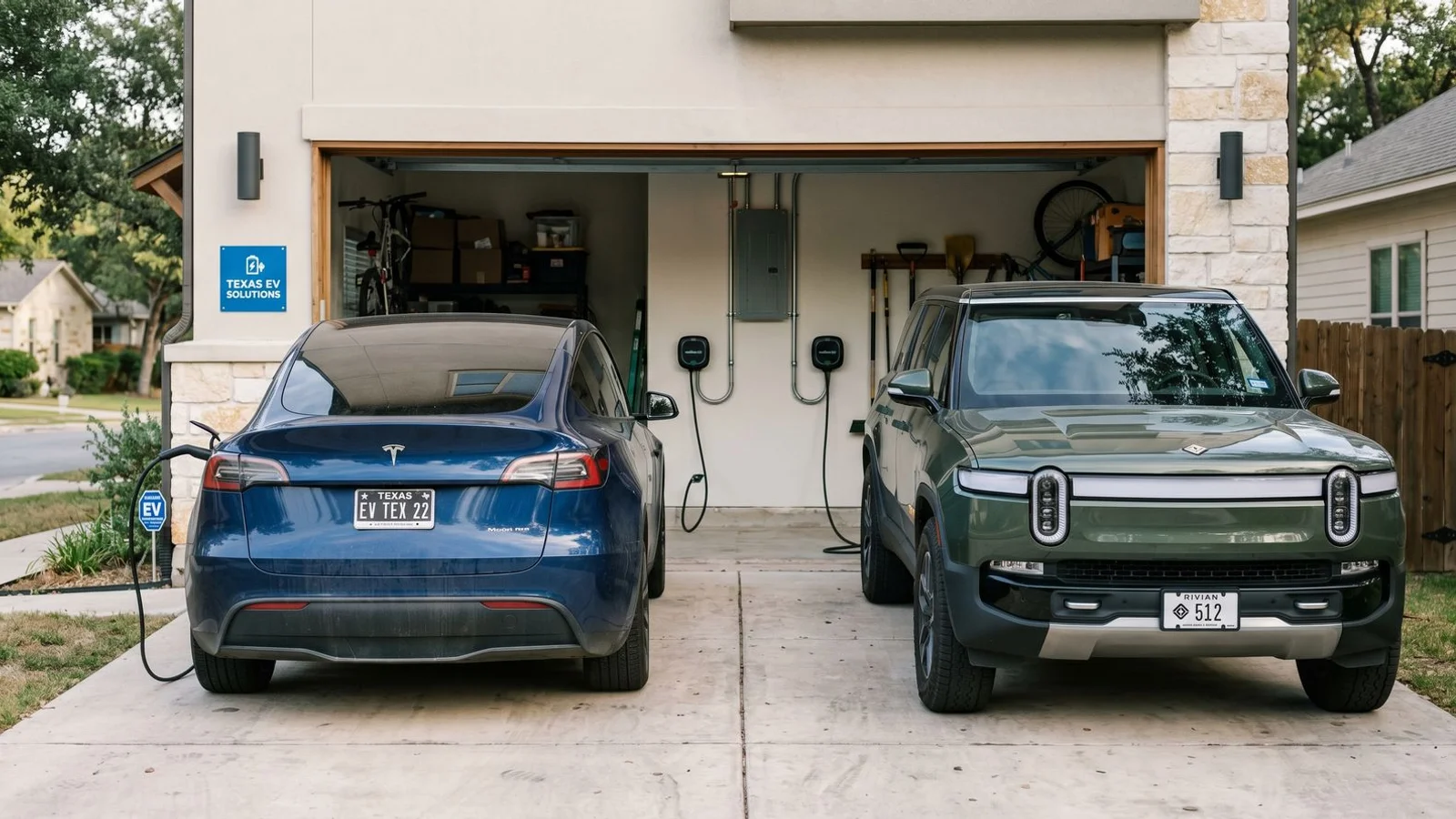
We founded Austin EV Charger Installation to provide exceptional EV charger installation and electrical services, and we know exactly how quickly a single electric vehicle turns a household into a multi-EV home. Charging two evs at home becomes a bottleneck much faster than most drivers anticipate.
The hardware choices you make today during your home EV charger installation in Austin will directly dictate your future upgrade costs.
Our team highly recommends preparing for dual capacity during the very first installation. Let’s look at the current load-sharing options, the hidden electrical expenses, and the exact strategy to future-proof your panel right now.
The three ways to charge two EVs
The three main approaches are installing two independent circuits, sharing power on one circuit, or actively managing the load against your whole house. We evaluate these options based on your existing panel capacity. Here is a breakdown of how each method impacts your electrical system.
| Charging Method | Panel Capacity Required | Average Hardware Setup | Simultaneous Speed |
|---|---|---|---|
| Independent Circuits | Very High (100A+ dedicated) | Two separate breakers and runs | 100% for both cars |
| Circuit Sharing | Moderate (40A to 60A total) | Single circuit with linked chargers | 50% for each car |
| Active Load Management | Low (Fits within existing limits) | Smart energy monitor plus chargers | Variable based on home use |
Option 1: Two Fully Independent Circuits
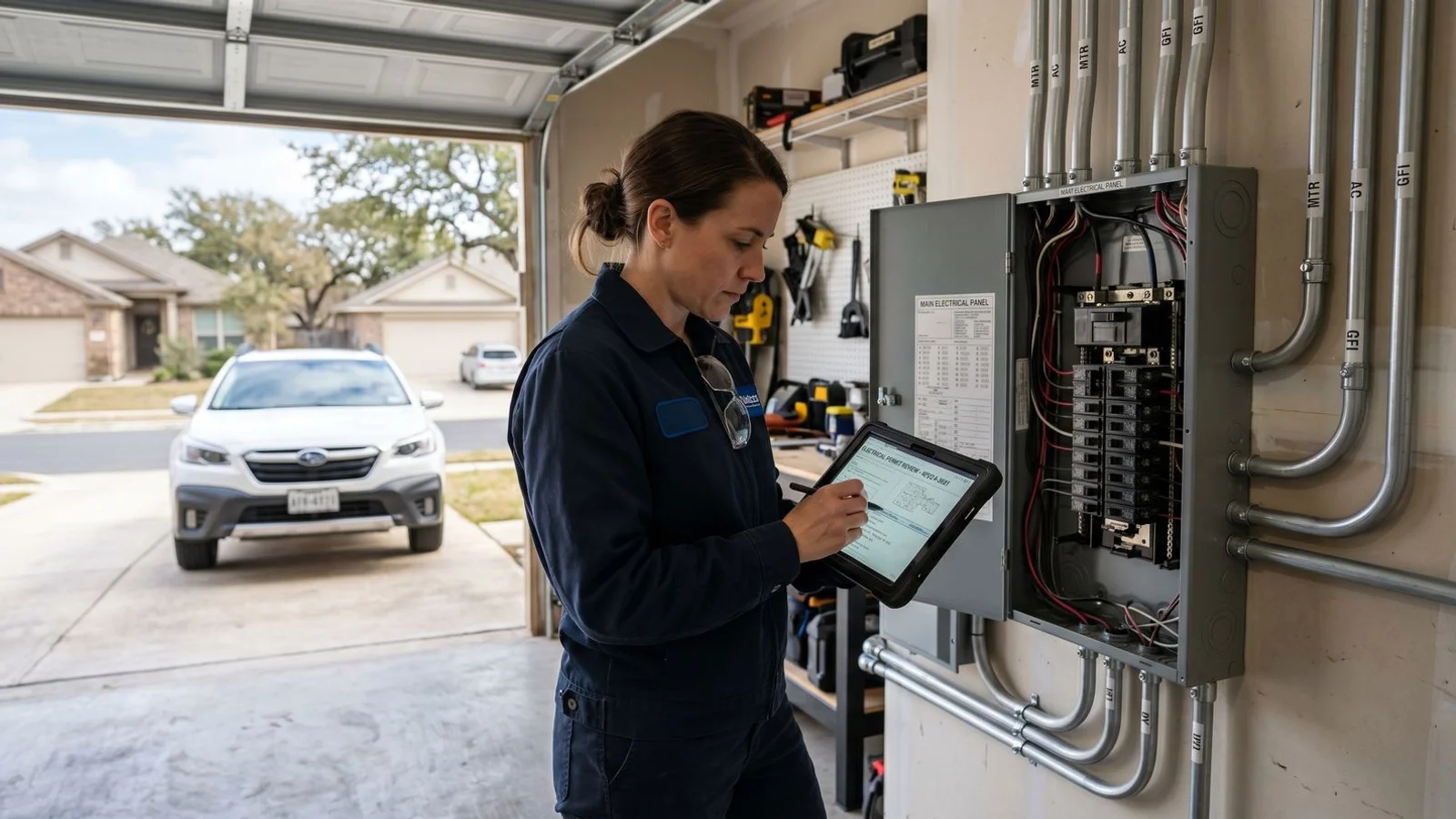
Each EV gets its own dedicated 240V circuit, breaker, and charger. We often see this setup require an immediate electrical panel upgrade. In 2026, a standard 200-amp service upgrade in the United States costs between $2,500 and $4,500.
This steep price tag makes dual independent circuits the most expensive route. The National Electrical Code requires an 80 percent continuous load limit. Two 48-amp chargers would demand two 60-amp breakers, consuming 120 amps of panel space just for the garage.
Option 2: One Circuit, Two Chargers, Load-Sharing
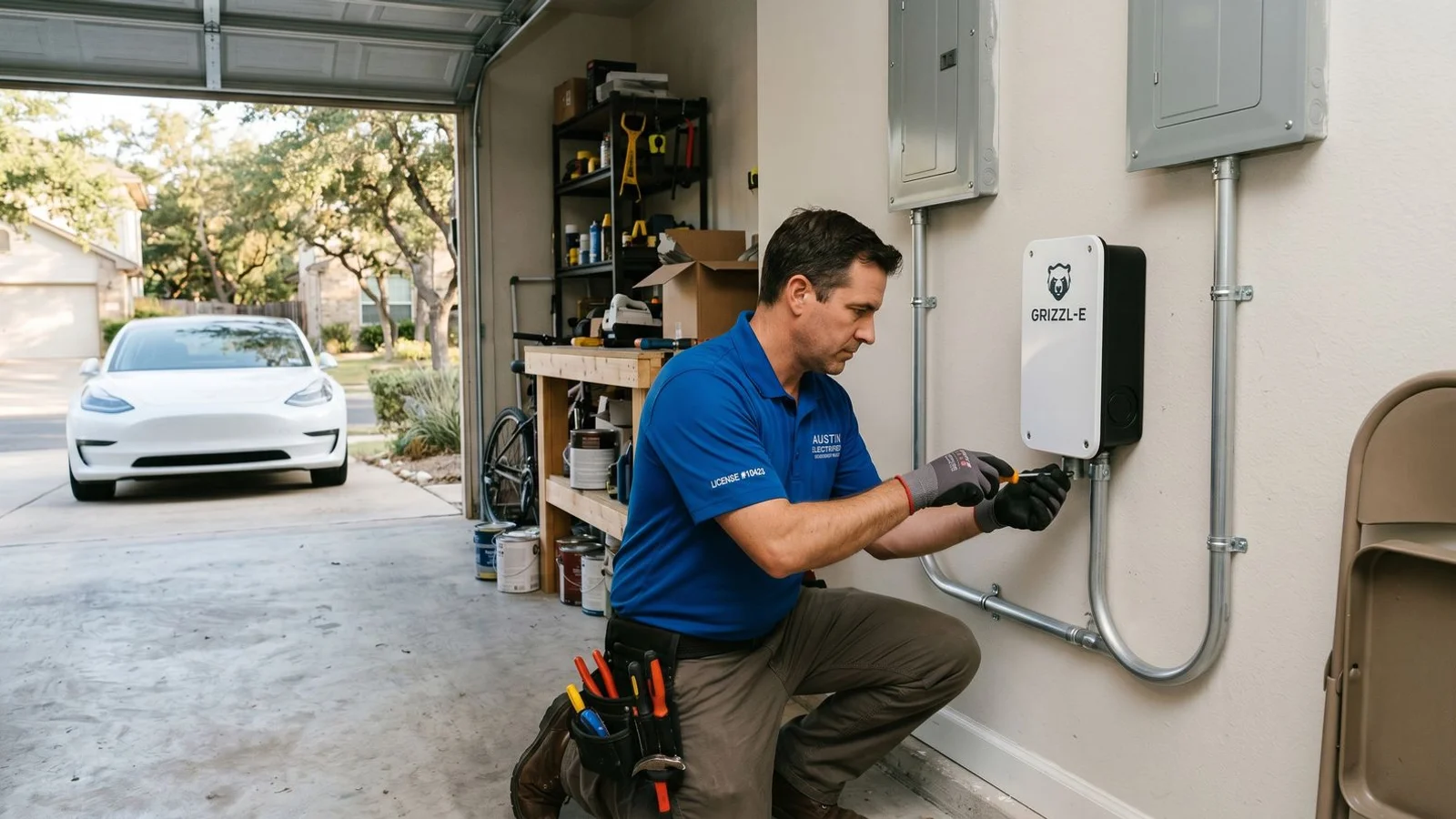
A single dedicated 240V circuit serves both chargers. Smart hardware splits the available power automatically to keep the circuit safe. When one vehicle finishes, the active car receives full speed.
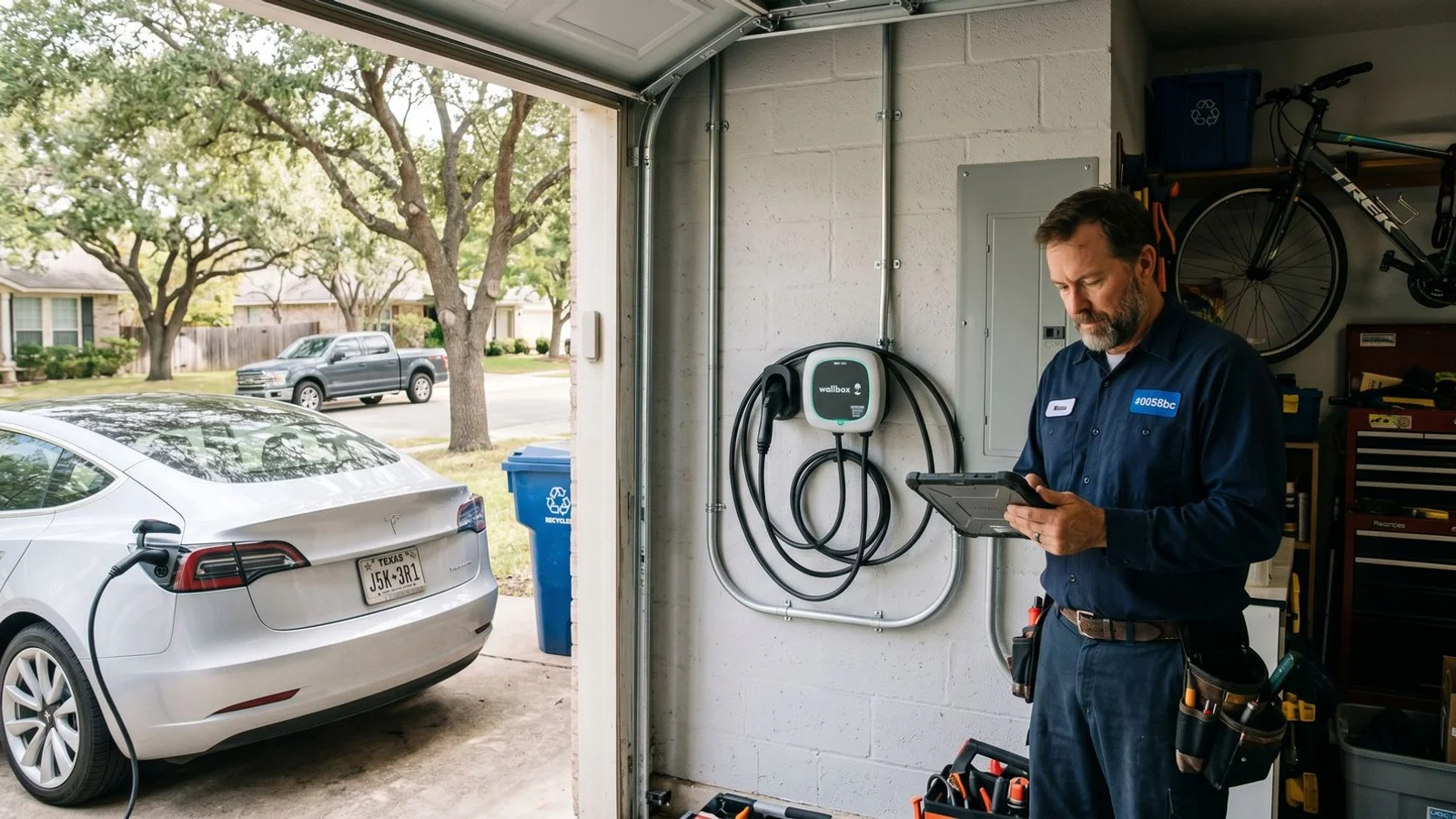
Both cars can charge together, just at half the total capacity each. We install this specific configuration frequently because it avoids costly utility service upgrades. Two Wallbox Pulsar Plus 48A units can be linked over WiFi to split a single 60-amp circuit flawlessly.
Option 3: Two Chargers, Active Household Load Management
Each charger operates on its own circuit, but the entire system monitors real-time home energy consumption. The charging current throttles down instantly when household demand spikes. This advanced setup perfectly combines independent operation with smart load management.
Our electricians typically install monitoring clamps directly on your main service lines to achieve this. If your central air conditioning and electric oven turn on, the EV power drops to prevent a tripped main breaker. Once the appliances cycle off, the vehicles resume pulling maximum amps.
What to spec for future-readiness
To future-proof your garage, you must install oversized wiring, reserve breaker slots, and run empty conduit during the first job. We save customers hundreds of dollars by planning ahead. The cost to lay the groundwork for two ev household charging during the initial visit is very small.
- Two open breaker slots: Keep space in the panel for a future 50-amp or 60-amp breaker.
- Conduit run to both locations: Install PVC or metal pipe to the second planned spot immediately.
- Load-sharing capable hardware: Choose a primary unit like the Emporia Pro or Tesla Wall Connector Gen 3.
- 6 AWG THHN copper wire: Specify thick copper conductors to handle up to 48 amps continuously.
Opening a finished wall to run a second conduit pipe later typically costs over $800 in drywall patching and labor. Our crews can add that empty pipe during the first visit for roughly $150 in materials. Doing it right the first time is a massive financial advantage.
When load management changes the math
Active load management eliminates the need for expensive electrical panel upgrades by reading your home’s actual power usage. We use this technology to fit heavy EV demands into older, limited panels safely. Older properties simply cannot handle two vehicles pulling 11.5 kilowatts simultaneously.
Smart systems calculate exactly how much capacity is available second by second. If your panel lacks the space for two full-speed circuits, a service replacement is not your only option. An Emporia Pro system equipped with PowerSmart technology tracks your main electrical feed.
It scales back the vehicle charge rate during peak evening hours when family energy usage is highest. Our certified technicians calibrate these limits perfectly to match your specific panel rating.
“Intelligent load management transforms a maxed-out 100-amp panel into a fully capable dual-EV charging station without a single infrastructure upgrade.”
This careful sizing happens during the quote process to guarantee a safe setup. For the deeper how-to, see Charging Two EVs on One Circuit: Load Sharing Explained.
Real-world charge speeds when sharing
Load sharing delivers plenty of speed because most drivers only need a fraction of their battery replenished each night. We find that both vehicles easily reach a full state of charge by morning. People often worry that sharing power means painfully slow recovery times.
In practice, both cars finish their cycles effortlessly in nearly every Austin household we set up. Federal Highway Administration data from 2026 shows the average American drives just 37 miles per day. That distance requires only 10 to 12 kilowatt-hours of energy to replace.
Our data shows that a shared 60-amp circuit provides roughly 22 miles of range per hour to each plugged-in vehicle.
- Single car charging: Receives full speed, up to 48 amps (adding around 44 miles of range per hour).
- Both cars charging at once: Power splits evenly, delivering 24 amps to each vehicle simultaneously.
- One full, one needs charge: The hardware detects the completed car and instantly redirects all 48 amps to the empty battery.
Most days, only one vehicle needs a serious deep charge. The load sharing two evs software automatically handles the overlap during those rare heavy-usage nights.
Bottom line
You must plan for dual vehicle capacity now to avoid steep renovation costs down the road. We strongly suggest reserving the panel slot and running the conduit today. Pick hardware that is fully capable of power-sharing right out of the box.
The future addition will be dramatically cheaper and faster to finish.