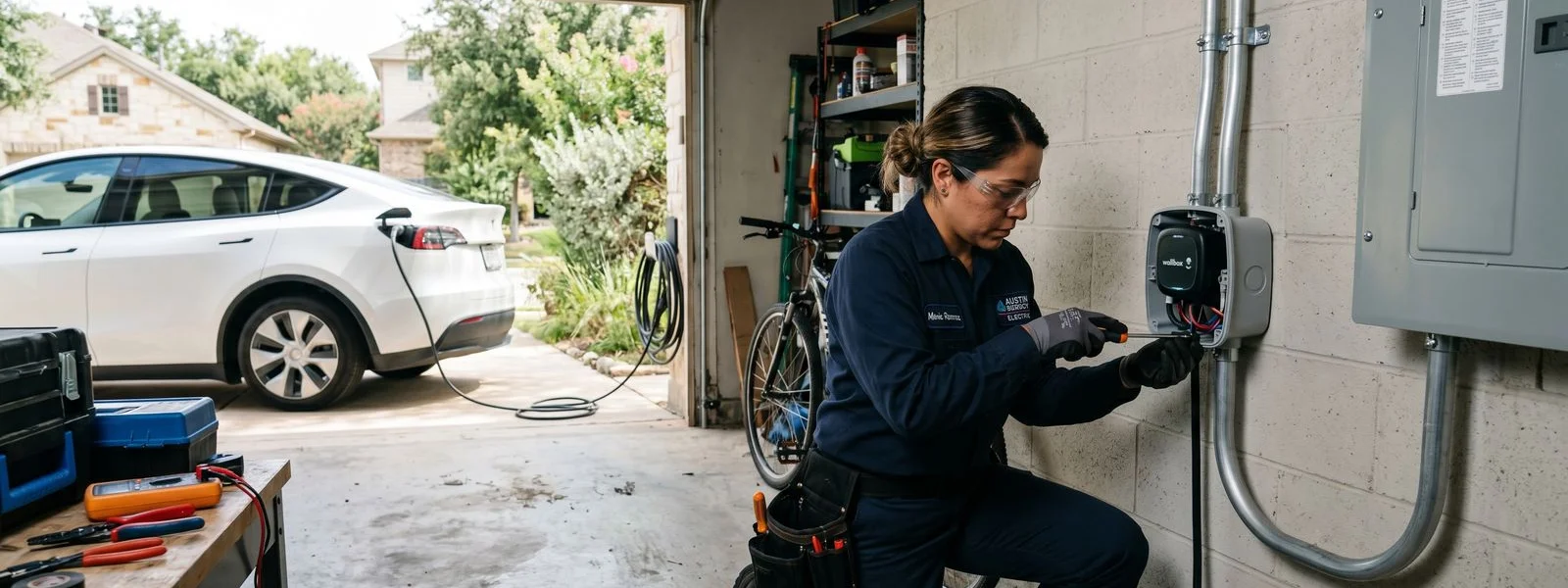
New Construction EV Charger Pre-Wiring & Future-Proofing
Roughing in EV conduit before drywall saves money later. Correct wire gauge, panel space to reserve, and multi-vehicle readiness.
We see new electric vehicle owners struggle with slow Level 1 charging every single day.
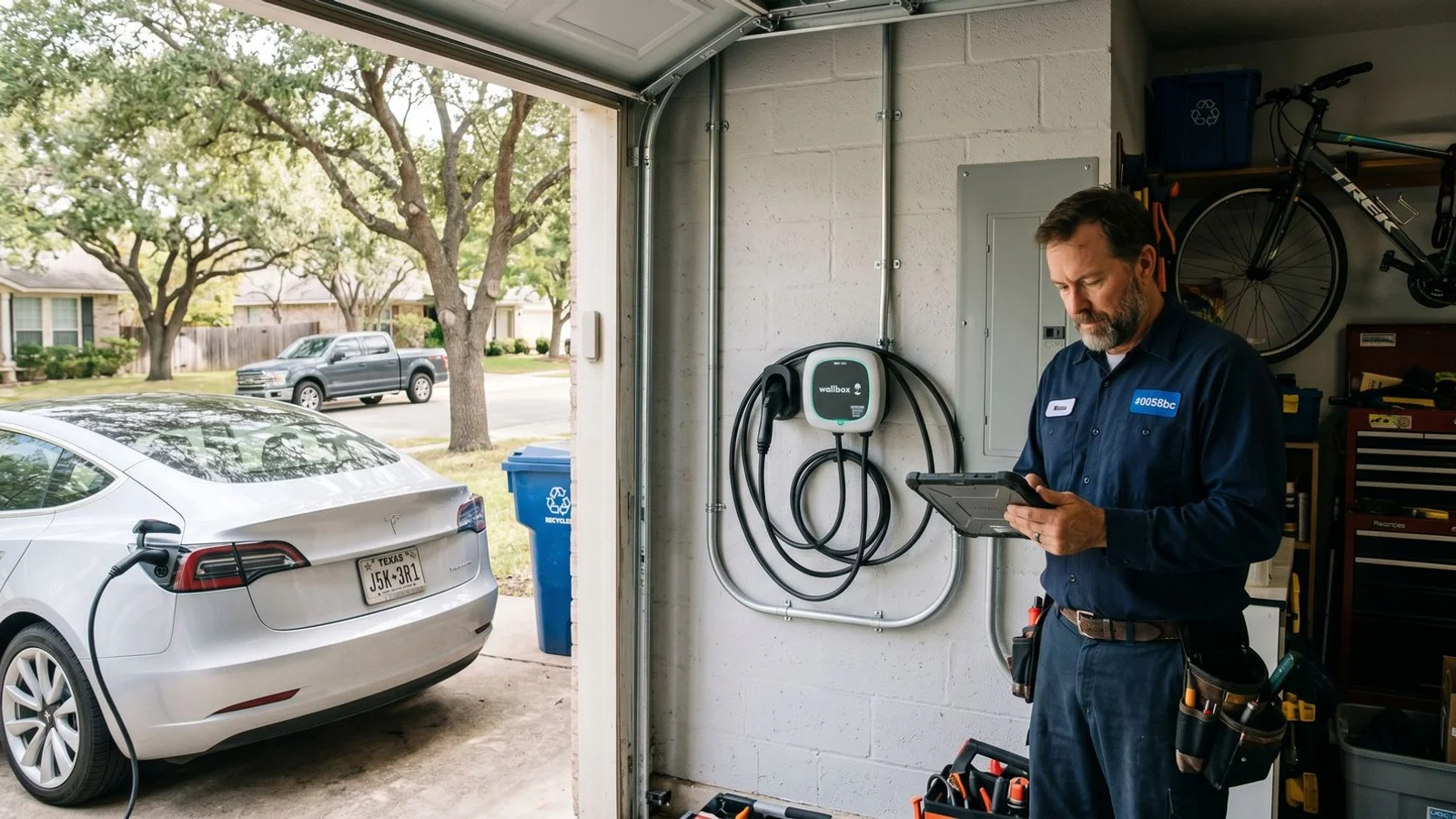
Upgrading to a faster Level 2 overnight setup often brings an expensive surprise for finished homes. Recent 2025 and 2026 data shows the average retrofit installation in Texas costs approximately $2,186.
Our Austin EV Charger Installation team was founded with a simple mission to provide exceptional EV charger installation and electrical services that prioritize customer value. The absolute cheapest path to home EV charger installation in Austin involves planning your ev charger pre-wiring new construction project while building your Greater Austin area home.
Planning ahead before the drywall goes up makes the final activation incredibly simple.
We always advise homeowners to prepare early, even if they do not own an electric vehicle yet. Let us examine the real cost differences between retrofits and new builds.
Then, you will see the exact specifications you need to hand to your contractor.
Why EV charger pre-wiring new construction is so much cheaper
Our experience shows that a standard retrofit installation requires cutting into finished walls. Pre-wiring during new construction completely eliminates those expensive labor hours. This proactive approach immediately reduces your future installation bill by thousands of dollars.
We route conduit cleanly and hide it wherever possible during a retrofit. This process takes significant effort and careful planning. An open stud bay simply requires a quick drill path before the drywall goes up.
| Installation Factor | New Construction Pre-Wire | Finished Home Retrofit |
|---|---|---|
| Wall Access | Open studs | Drywall cutting and patching |
| Average Labor Time | 1 to 2 hours | 4 to 8 hours |
| Typical Cost | Under $300 | $1,200 to $3,000+ |
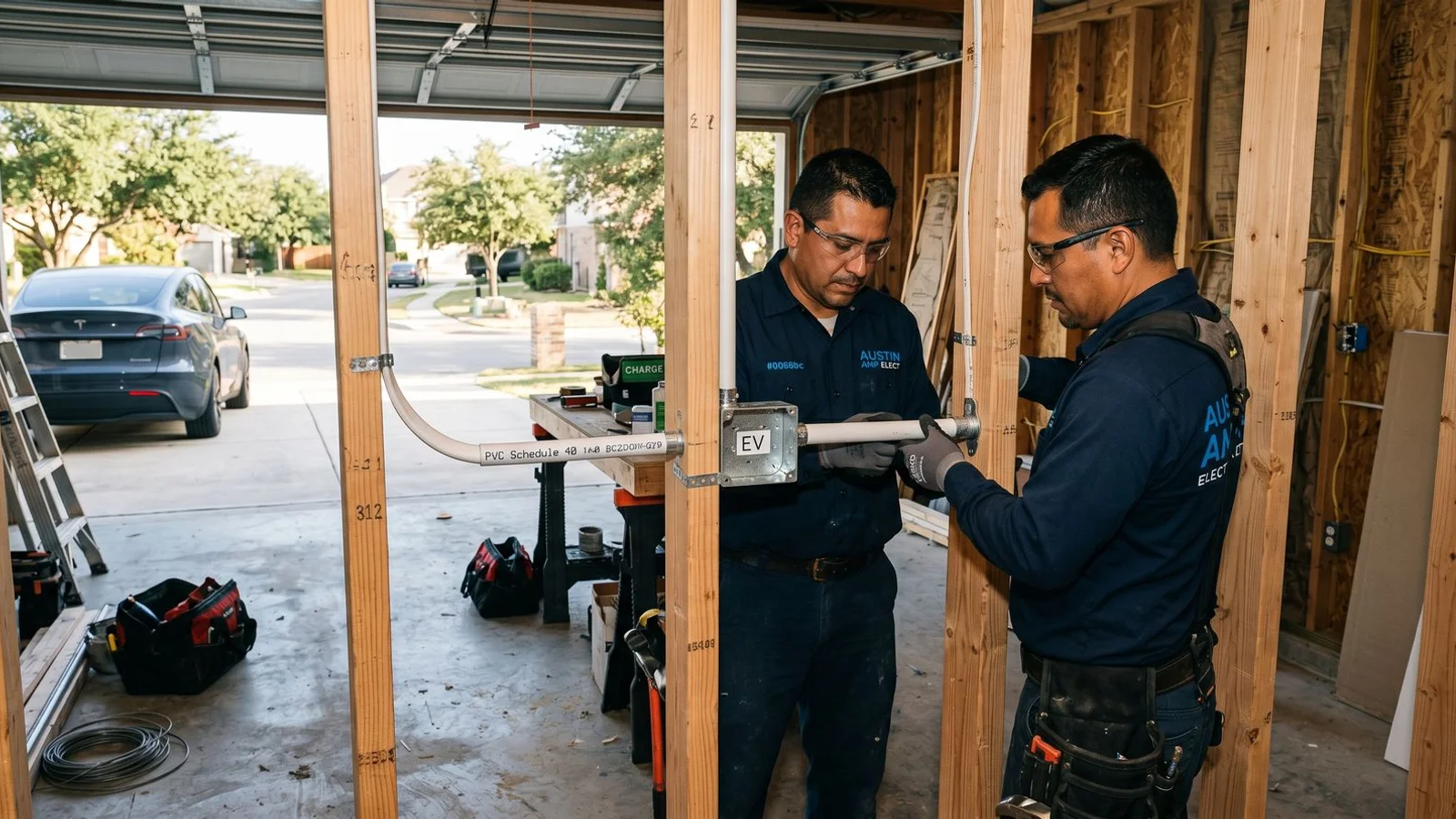
Our standard material cost for an ev rough in new build using Schedule 40 PVC pipe usually sits well under $300. The installer pulls 6 AWG copper wire or leaves a pull string for the future.
The panel space is secured and the initial phase is completely finished.
We see the true value of this preparation when homeowners are ready for the actual hardware. Completing the final activation six months or six years later is a fraction of the cost.
The hardest part of the job is already complete.
What to spec with the builder
Our team provides a specific, field-tested list of requirements that guarantees your garage is fully prepared. Handing this exact checklist to your general contractor ensures compliance with the latest safety standards.
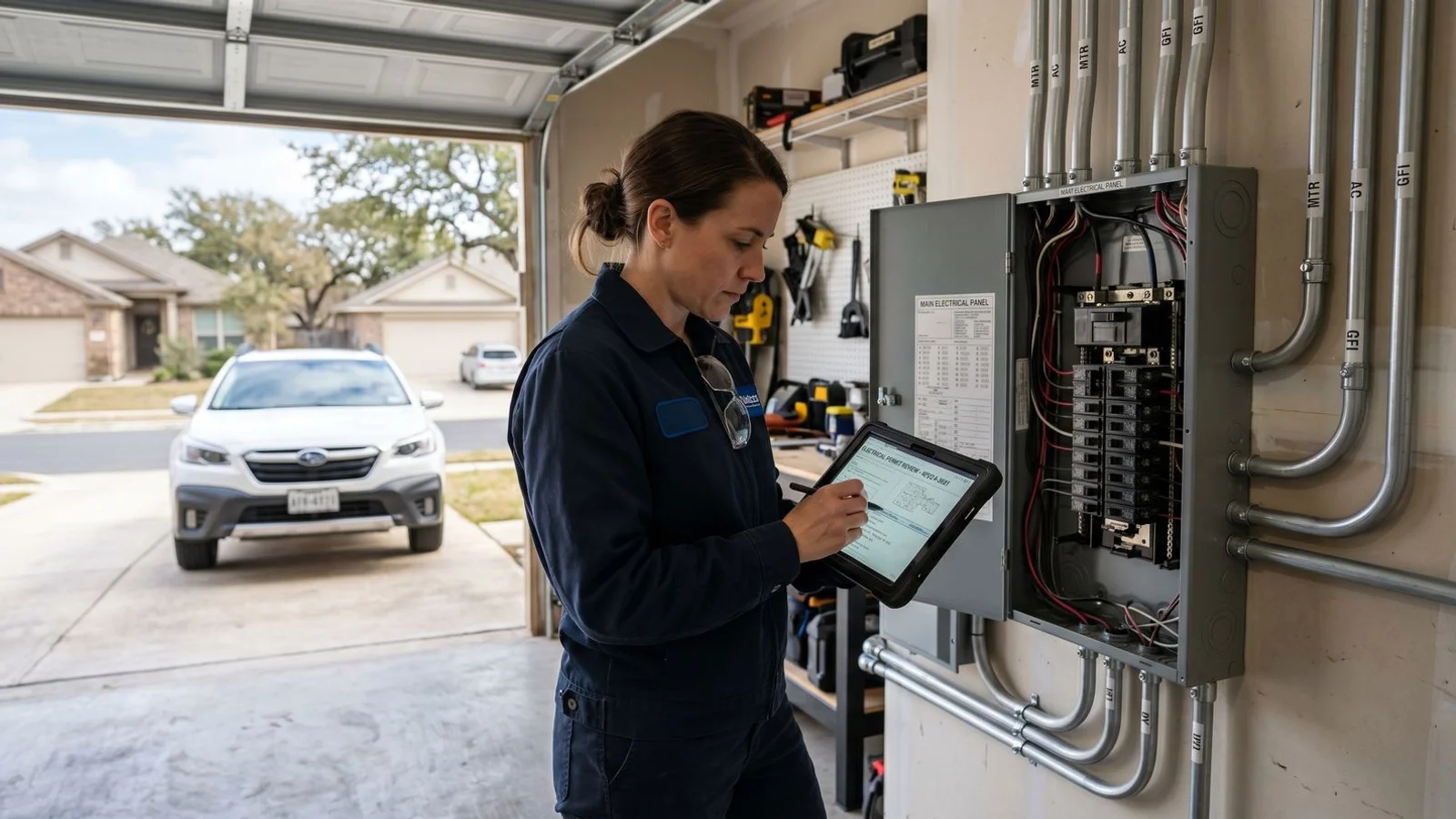
The 2026 National Electrical Code updates introduced stricter guidelines, making specific hardware choices crucial. We highly recommend using these exact specifications to avoid costly rework.
- Panel space: Start by reserving at least one open double-pole breaker slot, which requires two adjacent panel positions. A dedicated 60-amp circuit provides the maximum 48-amp continuous charge rate most new vehicles support.
- Conduit path: Our standard recommendation is to run a 3/4-inch Schedule 40 PVC pipe from the panel to the planned location. Upsizing to a 1-inch pipe provides extra room for thicker gauge wires later.
- Wire type: Your next step is to pull 6 AWG copper THHN wire while the walls are open. We prefer this specific wire type because it handles heat better than standard non-metallic sheathed cable.
- Stub-out point: Capping the conduit with a junction box exactly where the unit will mount is also essential. Hardwiring directly into this box avoids the new NEC 2026 requirement for a 5-milliamp GFCI breaker, saving you over $100.
- Service capacity: Our final check involves confirming the main electrical service is at least 200A. Smaller electrical panels can still function perfectly using a smart load management system like the Emporia Vue. These smart devices automatically balance power usage across your entire home.
We consider that list to be the baseline standard package for a single electric vehicle setup. Planning for a two-EV household requires doubling this initial request.
Two breaker slots, two ev conduit pre-wire runs, and two separate stub-outs will future-proof your multi-car garage.
Wire gauge matters even on pre-wire
Our technicians strongly advise installing the correct wire gauge for your planned charging amperage during the initial construction phase. Using inadequate wiring for high-powered circuits causes excessive heat buildup and severe safety risks.
A typical 48-amp charging session requires a durable electrical path to operate safely for hours. We see homeowners regret going cheap on wire gauge during the rough-in phase almost immediately.
Pushing heavy continuous currents through undersized materials leads to system failures and costly rewiring jobs. You must follow specific sizing rules to ensure peak performance.
- Standard Distances: Our standard installation for 48A charging relies on a 6 AWG copper minimum. This size safely handles the constant thermal load of daily overnight charging.
- Longer Runs: Extending circuits over 75 feet introduces the problem of voltage drop. We require bumping up to a thicker 4 AWG copper wire for these longer distances. This upgrade guarantees the full electrical capacity reaches your vehicle without dangerous resistance.
You can review our deeper technical analysis in Why 48-Amp Hardwired Charging Needs the Right Wire Gauge.
Working with the builder
Our conversations with Austin-area home builders confirm that most will easily rough in an EV circuit upon request. The city actually updated local regulations to make this process standard practice.
The Austin City Council adopted the 2024 International Energy Conservation Code, which makes EV-ready infrastructure mandatory for new residential applications starting in mid-2025. We find that the cost added to a new build is incredibly modest, typically just a few hundred dollars in material and labor.
Comparing that small addition to an expensive future retrofit highlights the incredible financial value.
Local compliance means builders are now fully expected to accommodate your electric vehicle needs.
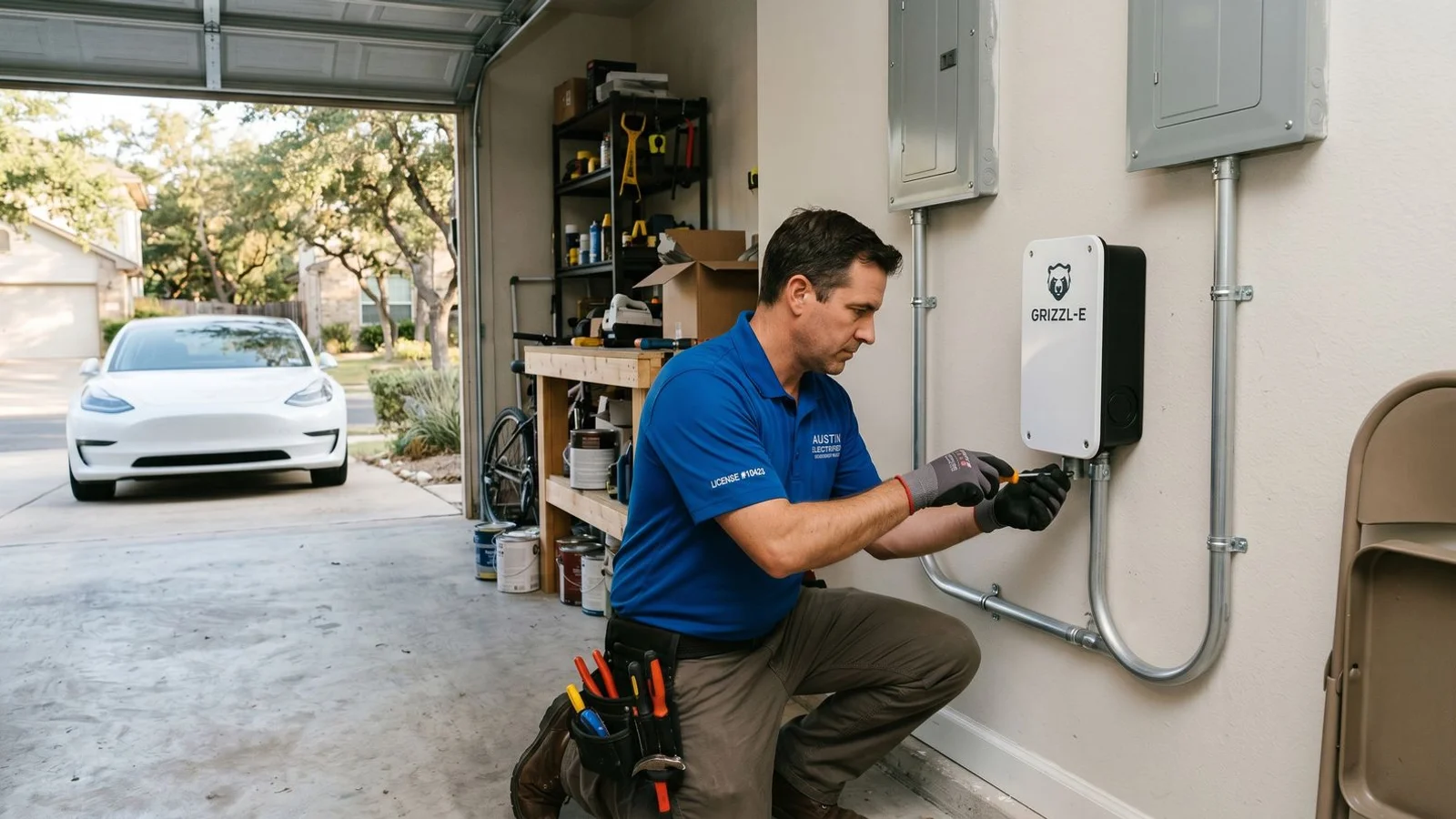
Our team can coordinate directly with your general contractor if they are unfamiliar with EV rough-ins. The builder simply runs the conduit and pulls the wire during the framing stage. Your chosen electrician comes in later to mount the hardware and pull the final City of Austin permit.
We always ensure our clients apply for the Austin Energy home charging rebate after the final inspection. This specific 2026 utility program pays 50 percent of your purchase and installation costs, up to a $1,200 maximum. Securing this financial incentive requires a licensed professional and an approved city permit.
Bottom line on EV charger pre-wiring new construction
We strongly encourage every new home buyer to prioritize ev charger pre-wiring new construction while the walls are open. Reserve the required panel space now to save headaches later.
The future installation becomes dramatically cheaper and noticeably cleaner.
We are here to help you manage this exciting transition. You can secure expert advice for your upcoming project today.
Get a free pre-construction consult right now to ensure your new build is completely ready.