What a Code-Compliant 240V EV Outlet Install Includes
A proper 240V EV outlet means a dedicated circuit, correct breaker and gauge, GFCI, and permit. What a cheap install skips.
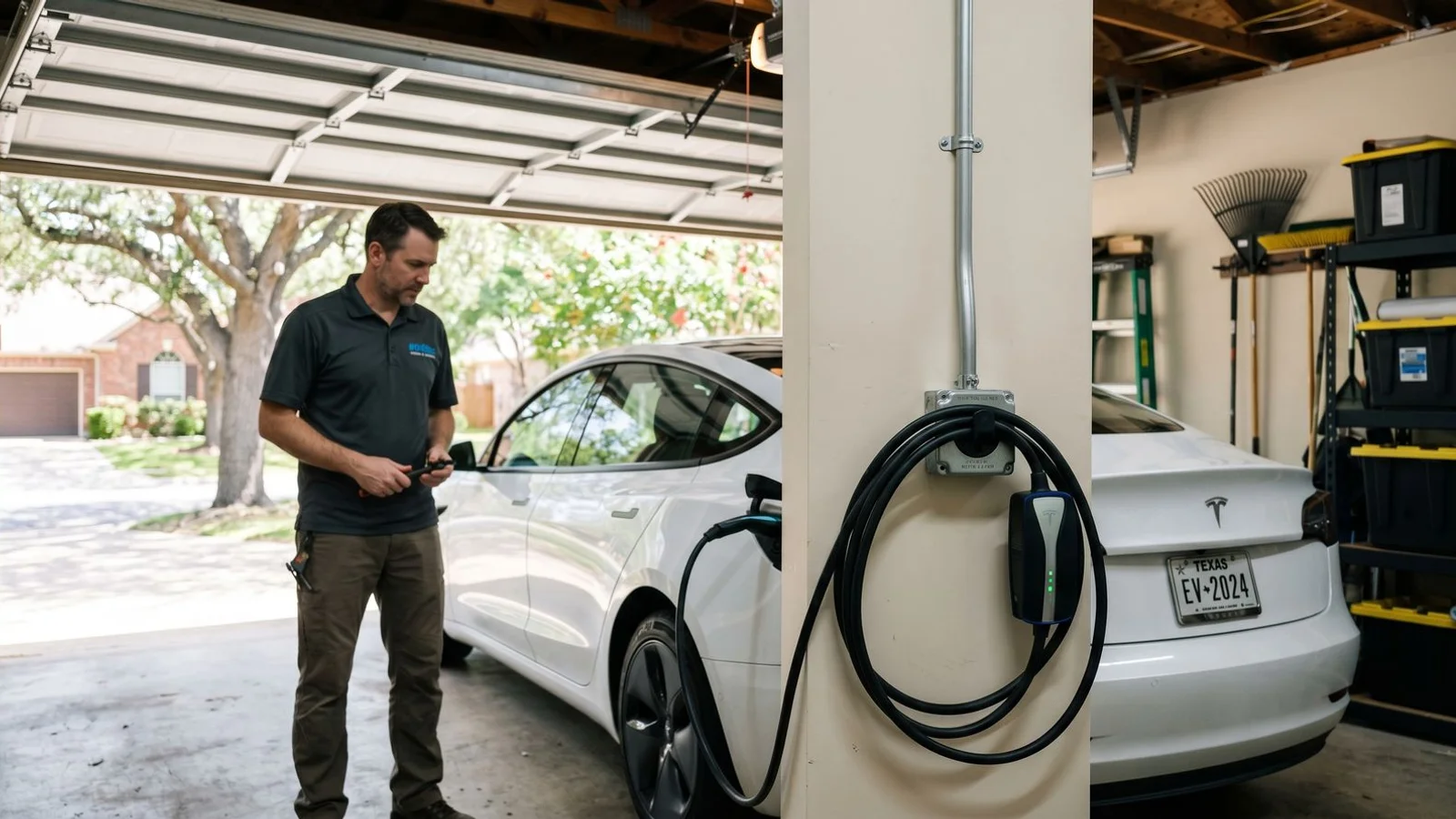
You know how slow a standard Level 1 household plug feels. Waiting for a trickle charge of just three miles per hour simply does not cut it. A code-compliant 240v ev outlet installation solves the speed problem.
We founded Austin EV Charger Installation with a simple mission: to provide exceptional EV charger installation and electrical services that customers can rely on.
It delivers up to 30 miles of range per hour overnight. The upgrade transforms your daily routine.
Let us look at the exact requirements for a safe setup, the red flags of a cheap job, and the components that matter most.
The code-compliant checklist
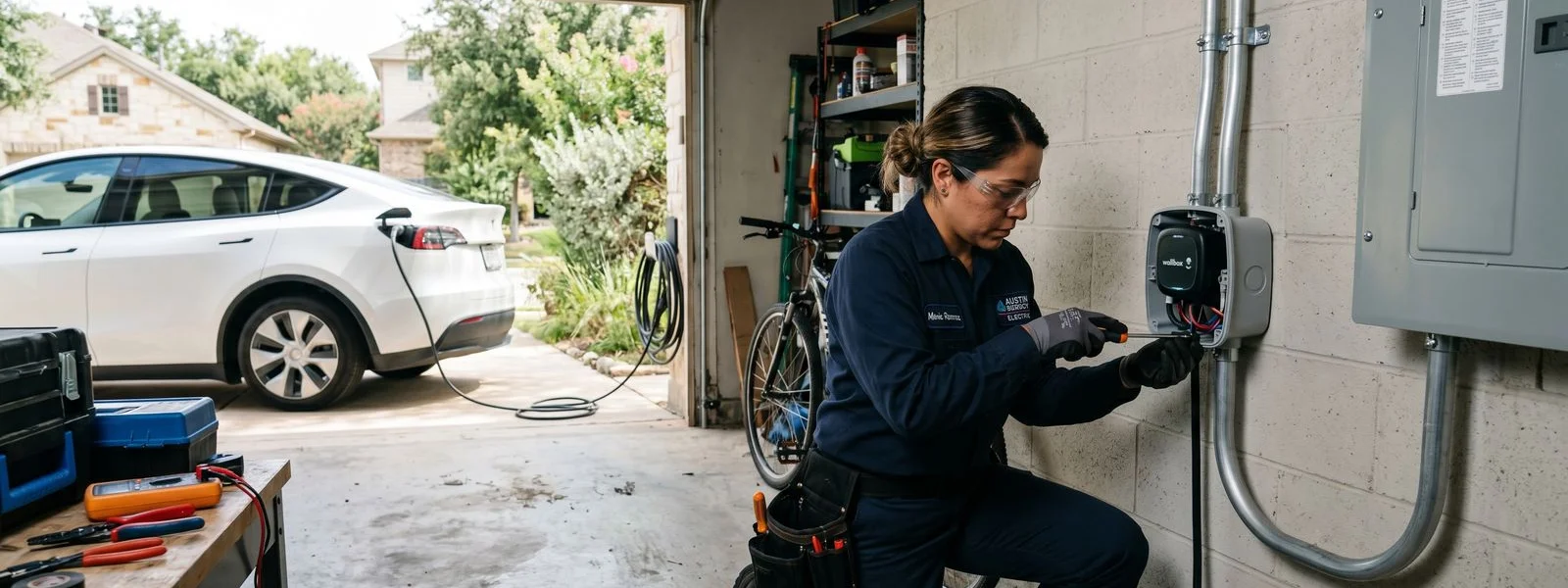
A code compliant ev outlet requires a dedicated 50-amp circuit, thick copper wiring, a commercial-grade receptacle, and a breaker-style GFCI. This combination ensures safe continuous power delivery under strict National Electrical Code guidelines. A proper installation leaves zero room for error.
Core Electrical and Wiring Components
The physical hardware carries heavy loads for hours. Every piece must be rated for continuous duty.
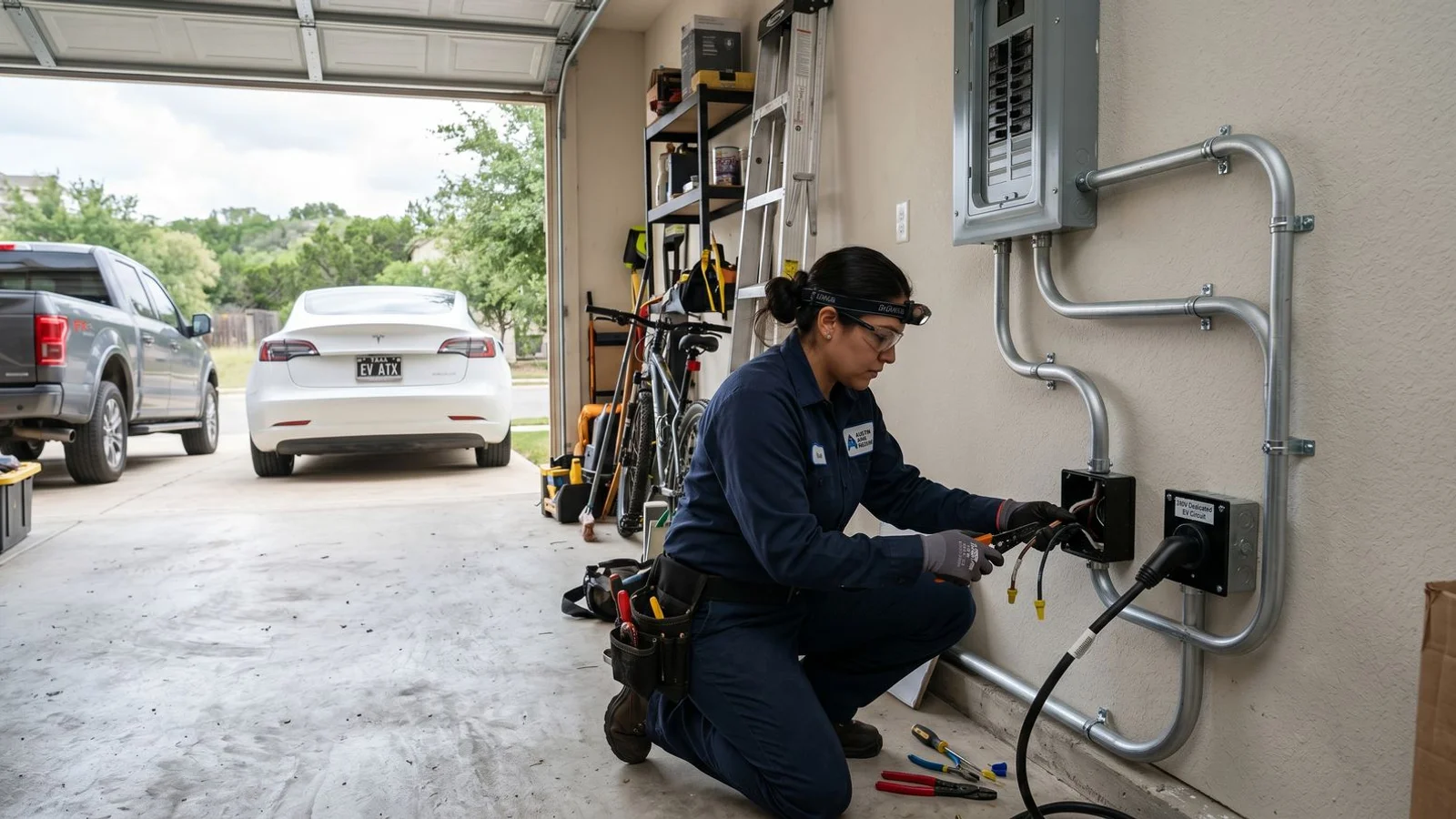
- Dedicated circuit. The power runs from a new breaker in the panel directly to the outlet without sharing the line.
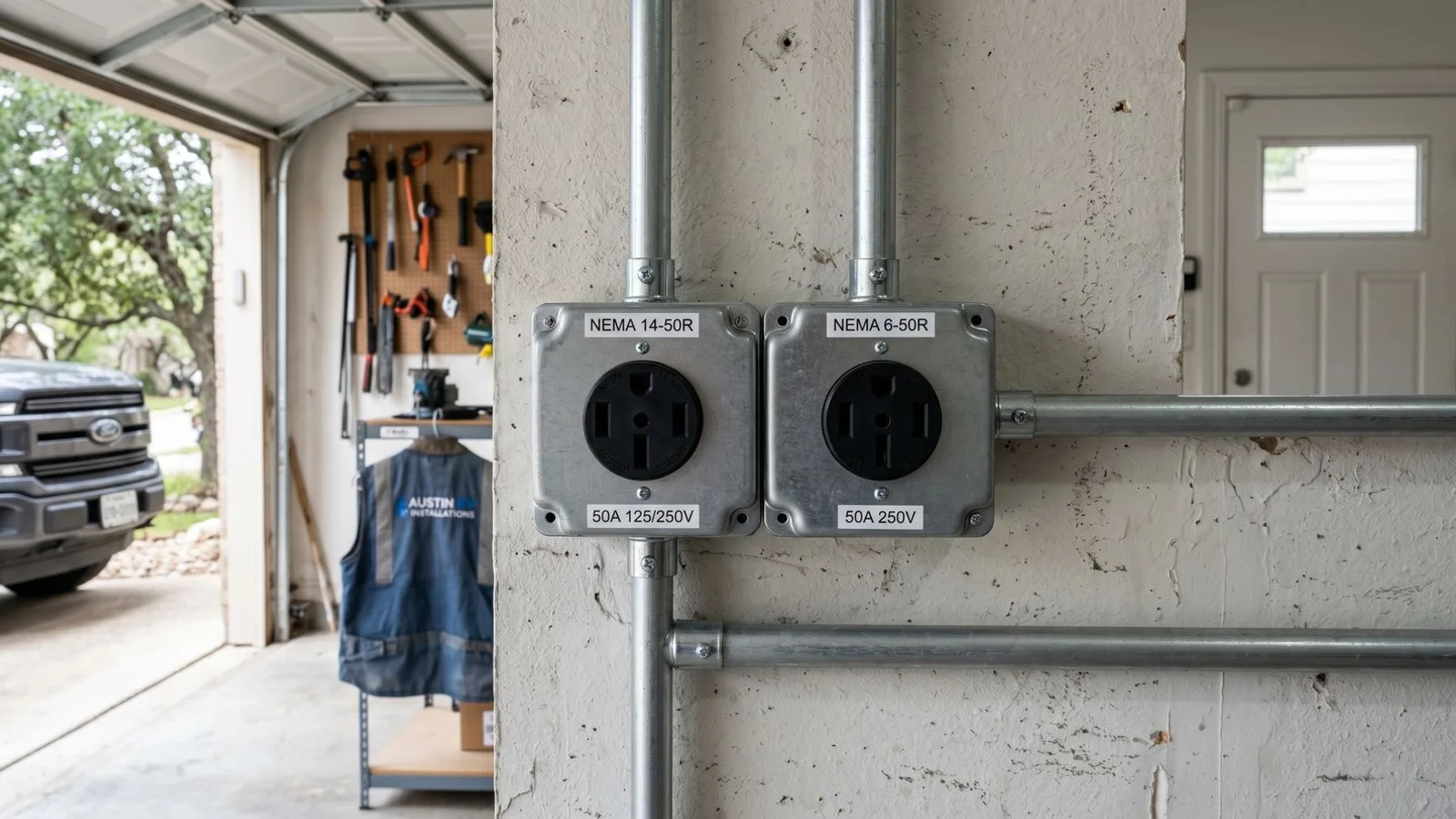
- 50A double-pole breaker. This component is sized specifically for a NEMA 14-50 receptacle.
- 6 AWG copper conductors. We use minimum 6-gauge wire to limit voltage drops, upgrading to 4 AWG on long runs. THHN wire inside conduit handles the heat perfectly.
- Schedule 40 PVC conduit. The plastic piping routes cleanly from your panel to the outlet location.
- Commercial-grade receptacle. High-quality units like the Hubbell HBL9450A or Bryant 9450FR are mandatory.
Safety and Compliance Requirements
Hardware is only half the equation. Legal compliance protects your home and your insurance policy.
- Breaker-style GFCI protection. National Electrical Code Article 210.8 requires this for garage outlets.
- Grounding electrode. A properly bonded ground prevents electrical shocks.
- Official ev outlet permit. The City of Austin and suburban jurisdictions mandate this paperwork.
- Post-install inspection. A city inspector provides the final safety sign-off.
What “a cheap install” actually skips
Budget installations frequently omit the mandatory electrical permit, the required GFCI breaker, and the expensive commercial-grade receptacle. Skipping these essentials drops the upfront price but creates serious fire risks. Craigslist quotes for a $300 EV outlet install always cut dangerous corners.
To see the difference, look at the component breakdown.
| Component | Budget Install | Code-Compliant Install |
|---|---|---|
| Receptacle | $15 residential grade | $80 Hubbell HBL9450A |
| Circuit | Shared dryer line | Dedicated 50A run |
| Protection | Standard $20 breaker | $150 GFCI breaker |
| Wire Gauge | 8 AWG (Runs hot) | 6 AWG copper (Runs cool) |
Our technicians constantly replace melted $15 hardware store outlets. A cheap receptacle overheats rapidly under daily EV use. Unlicensed contractors also skip the permit to save $100 in city fees and 30 minutes of paperwork. This shortcut costs you your insurance coverage and the official inspection sign-off.
Some installers deliberately skip the required GFCI on 240V circuits because of nuisance-trip history. Modern code in most jurisdictions strictly requires it. They might also use incorrect wire sizes, installing 10 AWG or 8 AWG instead of 6 AWG. The smaller wire runs much hotter than its rating allows.
If you skip enough of these steps, the installation will fail inspection immediately. These omissions represent critical safety hazards.
Why each piece matters
Every component in a 240V electrical setup works together to manage continuous heat and prevent fires. A failure in one single part compromises the entire charging system. You need to understand the function behind each rule.
Managing Continuous Electrical Load
Electric vehicle charging creates a sustained, high-current draw for many hours. Sharing a line with the dryer means both appliances cannot run at once without nuisance trips. A shared circuit simply is not sized for both loads simultaneously.
Code requires the breaker to be sized so the continuous load never exceeds 80 percent of the rating. A 50A breaker carries 40A of continuous power. This 40A mark is the maximum cap for plug-in installations. A smaller 30A breaker only carries 24A, which forces your car to throttle its charging speed.
Conductor gauge also dictates safety. Thick 6 AWG copper handles 50A safely. Smaller gauges overheat under continuous draw. Voltage drops on long wire runs add another compelling reason to increase the wire size.
Receptacle Safety and Code Requirements
The receptacle is the biggest single point of failure on plug-in installations. Cheap receptacles melt and cause garage fires. See Is a Plug-In EV Charger Safe for more details on this risk.
A Ground Fault Circuit Interrupter is a modern code requirement in most areas. You must use a breaker-style GFCI to avoid nuisance trips while protecting against electrical shock.
Permits and inspections validate the safety of the entire project. Homeowners insurance requires permitted work for any major electrical changes. The city inspection serves as an independent sanity check on the installation.
What we hand over
You receive full documentation of the compliant install, including warranty details and necessary tax forms. This paperwork proves your system is safe and legally permitted. A clean handoff prepares you for years of reliable charging.
Our team provides a complete final package. The deliverable has no hidden corners.
- Itemized invoice. You need this receipt for the 2026 IRS Form 8911 tax credit and local rebate applications.
- City permit closeout document. This paper secures your homeowners insurance compliance.
- Manufacturer information. We include the spec sheets for the commercial receptacle and breaker. The manual helps you understand your hardware.
- A personal walkthrough. We show you how to safely plug and unplug the connector. You will also learn how to schedule charging and what warning signs to watch for.
Why this matters more for plug-in than hardwired
Plug-in installations introduce a physical connection point that experiences constant heat cycling and wear. Hardwired stations eliminate this vulnerable outlet entirely. Cutting corners on plug-in installs carries significantly higher risks.
A hardwired installation has fewer pieces that can fail over the long term. A plug-in setup relies heavily on the physical receptacle, which is exactly where most electrical failures happen.
Consider the three main advantages of choosing a hardwired system:
- Higher power delivery. Hardwired systems deliver up to 48 amps of power on a 60-amp breaker.
- Fewer points of failure. The system removes the industrial receptacle and the plug entirely.
- Code leniency. City permitting offices often waive the expensive GFCI requirement for hardwired units.
If you choose the plug-in option, do not choose budget components. The receptacle quality, breaker sizing, and GFCI are not the places to save $50.
Bottom line
A proper 240v ev outlet installation is the only kind worth doing. It guarantees you will wake up to a fully charged battery without worrying about electrical fires.
You must insist on a dedicated circuit, proper sizing, GFCI protection, a commercial-grade receptacle, and a valid permit.
We do it the right way on every single project. Your safety depends on a flawless execution.
See our outlet install service or get your free flat-rate quote.
Frequently Asked Questions
Does a 240V EV outlet need a permit? +
What does a cheap install skip? +
Can I install one myself if I have electrical experience? +
Ready to talk specifics?
See our NEMA 14-50 Outlet service page for pricing and what's included, or get a free flat-rate quote.