seasonal
Summer 2026: Set Up Overnight Charging to Beat Texas Heat and Peak Rates
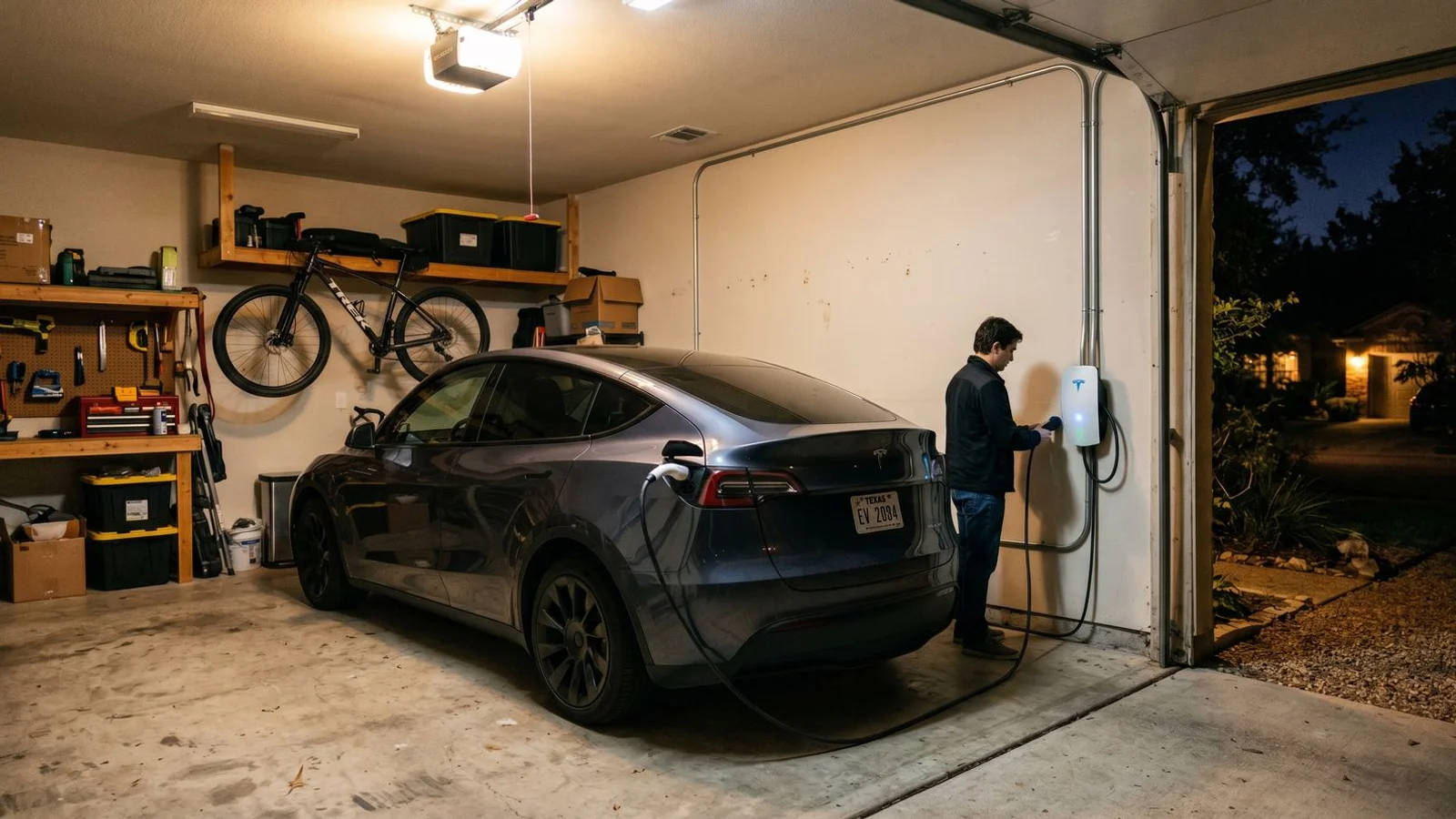
Summer in Texas is hard on the grid and hard on EV charging costs. Daytime air-conditioning peaks push demand sky-high; peak utility rates and conservation appeals come right along with it. The simplest fix — and the one that costs almost nothing once your Level 2 charger is in — is scheduled overnight charging.
If you’re still using a Level 1 wall outlet to top up your EV, the slow charge speed means you can’t really choose when to charge — you just plug in and hope. Once you upgrade to Level 2 with a proper home EV charger installation in Austin, you regain control: you can be plugged in by 6pm and not draw any current until midnight when rates drop and the grid relaxes. Here’s how to set it up before peak summer hits.
Why summer makes this matter
Three things stack up in a Texas summer:
- Daytime AC load is enormous. Statewide demand records routinely fall in July and August.
- TOU and conservation-event rates spike. Many utility plans charge more during 2-7pm.
- Grid stress alerts ask you not to charge during peak hours. Compliance is voluntary, but if your car charges at 4pm anyway, you’re contributing to the problem you’re being asked to help solve.
Overnight charging fixes all three at once. The car still hits 100% by morning. You just don’t draw current during the hours that matter.
The two ways to schedule
You have two places to set the schedule, and the right answer depends on your charger and car:
Option A — schedule from the car
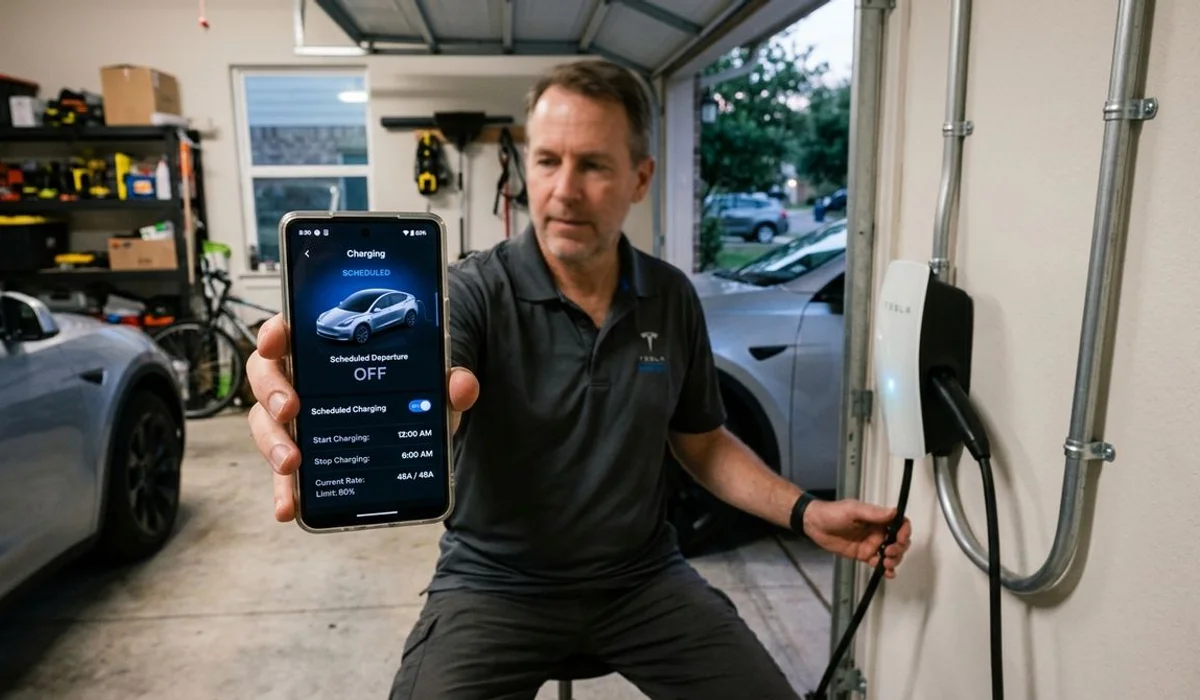
Every modern EV (Tesla, Ford, Hyundai, Chevy, Rivian) has a “scheduled charging” setting in the car or its app. You set a depart-by time or a charging window. The car waits to draw current.
This works with any Level 2 charger including a bare NEMA 14-50 outlet, since the logic is in the car. It’s the simplest option.
Option B — schedule from the charger
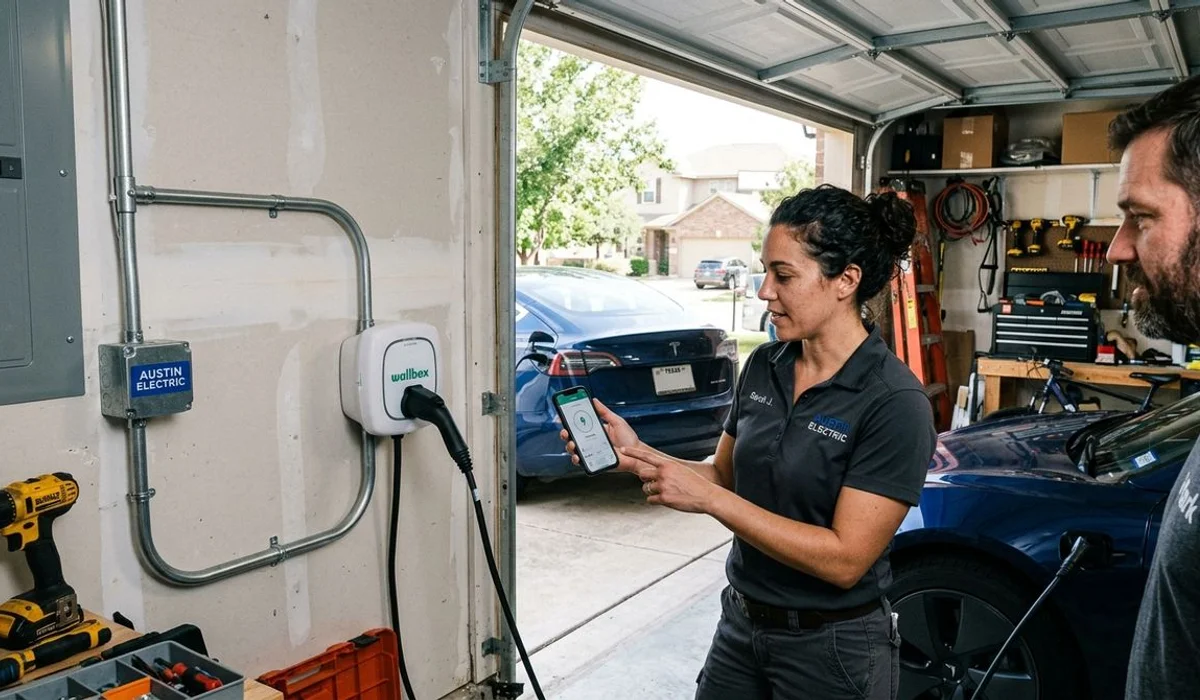
A smart Level 2 charger (Tesla Wall Connector, Emporia, Wallbox, ChargePoint Home Flex, etc.) can also schedule on its own. This is useful if multiple people share the car or you want the charger to enforce off-peak hours regardless of the car’s setting.
For households with two cars sharing one circuit through load management, the charger’s schedule is usually the better place — it coordinates both cars cleanly.
If you don’t yet have a smart charger, our Multi-Brand Install service walks you through the brands worth the money.
Why Level 1 doesn’t really cut it in summer
If you’re still on a standard 120V Level 1 outlet (~4 miles per hour of charging), you’re basically forced to charge whenever the car is parked. There’s no headroom to “wait until 11pm.” A 70-mile commute day means you’re plugged in the whole evening, drawing during the worst hours, and still not fully charged by morning.
A Level 2 install (25-44 miles per hour) gives you the time budget to actually pick when to charge. That’s the whole game for summer.
If you’re not sure which option suits your home, our guide on Level 1 vs Level 2 home charging breaks it down.
A quick setup playbook
If you already have a Level 2 charger, you can do this today:
- Pick your window. Most Austin homeowners on TOU plans pick something like midnight to 6am.
- Open the car app. Set “Scheduled Departure” or “Charging Schedule” to that window.
- (Optional) Mirror it in the charger app. If both car and charger can schedule, set them to the same window.
- Plug in when you get home — every time. The system handles the rest.
If you don’t have a Level 2 charger yet and you want to be ready before July: book now. Standard installs take about two hours and our summer slots fill up quickly.
Get your free flat-rate quote — same business day response.
About Marcus Hill
Marcus is the lead installer at Austin EV Charger Installation, overseeing 87+ home Level 2 installs across the Greater Austin area.